
Matthew 20:1 to 16 · Passage · Servanthood
The Last Will Be First
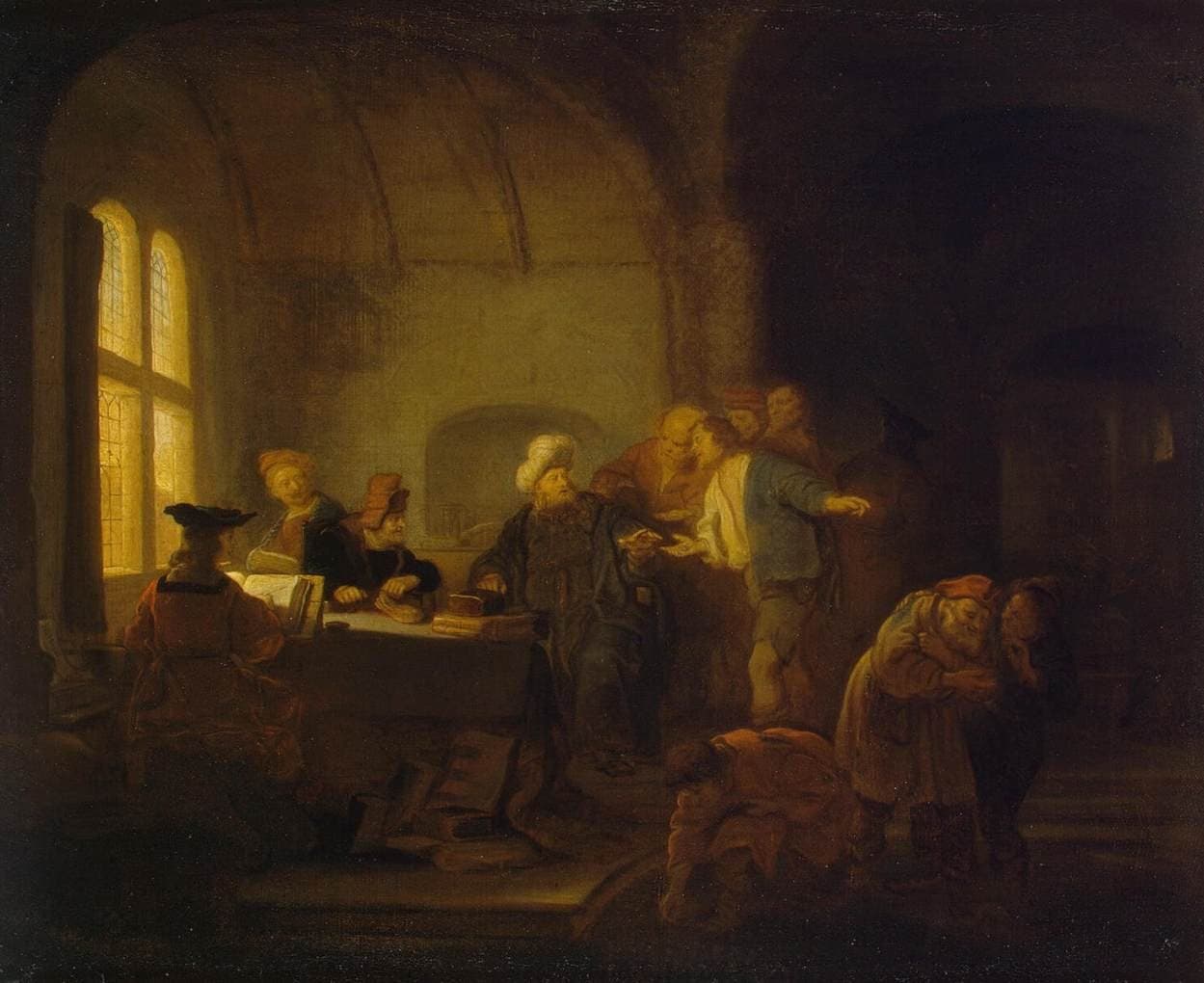
In the parable of the workers in the vineyard, the landowner pays the men hired last the same wage as those hired first.
Peter had just asked Jesus what the Twelve would receive for leaving everything to follow Him.
So the last will be first, and the first will be last.”
- The passage
- Matthew 20:1 to 16, Matthew 19:27 to 30
- Book
- Matthew
- Hold in memory
- Matthew 20:15
Summary
The parable speaks to servants who measure their reward against one another. The owner did the first workers no wrong, because he paid them the wage they had agreed for the day. He was also free to give from what was his as he chose, and the men who grumbled showed an eye that begrudged the good he did to others.
- The saying about the first and the last stands both before the parable (Matthew 19:30) and after it (Matthew 20:16).
- The parable is told of the kingdom of heaven, which it likens to a landowner who hires workers for his vineyard.
- The hours of the parable count the working day from sunrise, so the last men hired worked about one hour.
What Will There Be for Us?
The parable continues an answer Jesus was giving the Twelve.
The Last Will Be First studies Matthew 20:1 to 16, the parable of the workers in the vineyard, with the exchange between Peter and Jesus that leads into it. It belongs to the value of servanthood, because its workers are servants hired by one master, and he pays them by his own generosity.
The question the study answers is what the parable teaches those who have served long about those who came late. It follows the hours of hiring and the order of pay and reads the grumbling and the owner's answer. It then sets out four readings of the parable with their holders.
“Look,” Peter replied, “we have left everything to follow You. What then will there be for us?” Jesus said to them, “Truly I tell you, in the renewal of all things, when the Son of Man sits on His glorious throne, you who have followed Me will also sit on twelve thrones, judging the twelve tribes of Israel. And everyone who has left houses or brothers or sisters or father or mother or wife or children or fields for the sake of My name will receive a hundredfold and will inherit eternal life. But many who are first will be last, and the last will be first.Jesus answers Peter with a promise and a warning, and the parable that follows opens by explaining the warning.
The Hours of Hiring and the Order of Pay
Matthew 20:1 to 7 tells the hiring, and Matthew 20:8 sets the order of pay.
The owner hired from early morning to the eleventh hour, and at evening he paid in the reverse order.
- The first workersEarly in the morning“He agreed to pay them a denarius for the day and sent them into his vineyard.”Paid lastMatthew 20:2
- Men idle in the marketplaceAbout the third hour“‘and I will pay you whatever is right.’”Paid before the first workersMatthew 20:4
- More men hiredAbout the sixth hour and the ninth hour“He went out again about the sixth hour and the ninth hour and did the same thing.”Paid before the third-hour menMatthew 20:5
- The last men hiredAbout the eleventh hour“‘Because no one has hired us,’ they answered.”Paid firstMatthew 20:7
A timeline of four stations, each with its Berean words.
Jamieson, Fausset and Brown reckon the working day of twelve hours from six to six, so the eleventh hour fell about five in the afternoon, an hour before evening.
The Pay and the Grumbling
The first workers hoped for more when they saw the last paid.
When evening came, the owner of the vineyard said to his foreman, ‘Call the workers and pay them their wages, starting with the last ones hired and moving on to the first.’ The workers who were hired about the eleventh hour came and each received a denarius. So when the original workers came, they assumed they would receive more. But each of them also received a denarius.The verses stand here because the order of pay sets up the complaint that follows.
On receiving their pay, they began to grumble against the landowner. ‘These men who were hired last worked only one hour,’ they said, ‘and you have made them equal to us who have borne the burden and the scorching heat of the day.’The verses give the workers' own case, so the owner's answer can be weighed against it.
Are You Envious Because I Am Generous?
The owner answered one grumbler with three questions.
But he answered one of them, ‘Friend, I am not being unfair to you. Did you not agree with me on one denarius? Take your pay and go. I want to give this last man the same as I gave you. Do I not have the right to do as I please with what is mine? Or are you envious because I am generous?’These verses stand at the centre of the page because the owner's reply gives the parable its teaching.
The Greek of the last question names the worker's eye, ophthalmos, and calls it poneros, the word the Berean text renders “envious”. Deuteronomy 15:9 joins the same two ideas in Hebrew, and the Berean text renders them as looking on a poor brother “begrudgingly”.
Voices on the One Denarius
Two fathers read the coin every worker received as God's gift.
died 420 · Jerome
Jerome draws his reading from what was stamped on the coin.
“A denarius bears the figure of the king. You have therefore received the reward which I promised you, that is, my image and likeness; what desirest thou more?”
Jerome · Catena Aurea by Aquinas · on Matthew 20:13Patristic
died 444 · Cyril of Alexandria
Cyril of Alexandria gives the coin a meaning beyond wages.
Read the page on Cyril of Alexandria
“He gives to all ‘their single denarius,’ which is the grace of the Spirit, perfecting the saints in conformity with God and impressing the heavenly stamp on their souls and leading them to life and immortality.”
Cyril of Alexandria · FRAGMENT 226 · on Matthew 20:2Patristic
What Does the Parable Teach?
Commentators have read the parable in four ways, and each reading meets an objection from the text.
God rewards by grace that no one earnsCharles Spurgeon
Charles Spurgeon preached on the parable in Early and Late, sermon 664 of the Metropolitan Tabernacle Pulpit (1865). He took its design to be a rebuke “to those who fall into a legal spirit and begin calculating as to what their reward ought to be”. Of the kingdom of heaven he said that “its reward is not of debt, but of Divine Grace”.
The objection: the owner agreed a wage with the first workers and paid it to them in full (Matthew 20:2 and Matthew 20:13), so the parable keeps a place for an agreed reward.
The first are Israel and the last are the GentilesJohn Wesley
John Wesley read the parable in his Explanatory Notes upon the New Testament (1755). He gave the owner's meaning as “It is my will to give to this last called among the heathens even as to the first called among the Jews”. He added the “late converted publicans and sinners” to the same class.
The objection: the parable names no nation, and it answers a question asked by the Twelve about themselves (Matthew 19:27).
The hours are the ages of a life, and the last are late convertsGregory the Great
Gregory the Great, in his nineteenth homily on the Gospels, set childhood, adolescence, youth, old age and extreme age beside the hours. In his words, “workers are called to the vineyard at different hours, as it were”. Those called last, he said, “often they are rewarded first, because they depart from the body to the kingdom before those who seemed to have been called from childhood”.
The objection: the parable sets every hiring within one day and pays every man that same evening (Matthew 20:8), so its hours measure one working day.
Jesus corrects the disciples' reckoning of reward and rankJamieson, Fausset and Brown
Jamieson, Fausset and Brown (1871) saw in the first workers' hope of more “that calculating, mercenary spirit which had peeped out” in Peter's question. They judged that the parable “was designed once for all to put down among the servants of Christ”.
The objection: the owner rebukes envy of another man's pay (Matthew 20:15), and Peter's question showed no envy of anyone.
On the Road to Jerusalem
The chapter turns next from wages to rank.
Matthew follows the parable with the third prediction of the passion and the request of Zebedee's sons (Matthew 20:17 to 28). The workers of the parable wanted more than the last, and the two brothers wanted more than the ten.
Sources
Scripture is the Berean Standard Bible.
- STEP Bible, Translators Amalgamated Greek New Testament and Hebrew Old Testament, the tagged texts (Tyndale House, Cambridge), CC BY 4.0.
- Cyril of Alexandria, Fragment 226, on Matthew 20:2.
- Jerome, as Thomas Aquinas gives him in the Catena Aurea on Matthew 20:13.
- Charles Spurgeon, Early and Late, sermon number 664 in the Metropolitan Tabernacle Pulpit (1865), on Matthew 20:1 to 7.
- John Wesley, Explanatory Notes upon the New Testament (1755), on Matthew 20:14.
- Gregory the Great, Forty Gospel Homilies, Homily 19, on Matthew 20:6 to 7.
- Robert Jamieson, A. R. Fausset and David Brown, Commentary Critical and Explanatory on the Whole Bible (1871), on Matthew 20:3 and Matthew 20:10.
Keep Studying
Read it1
Studies7
People and groups7
Values1