
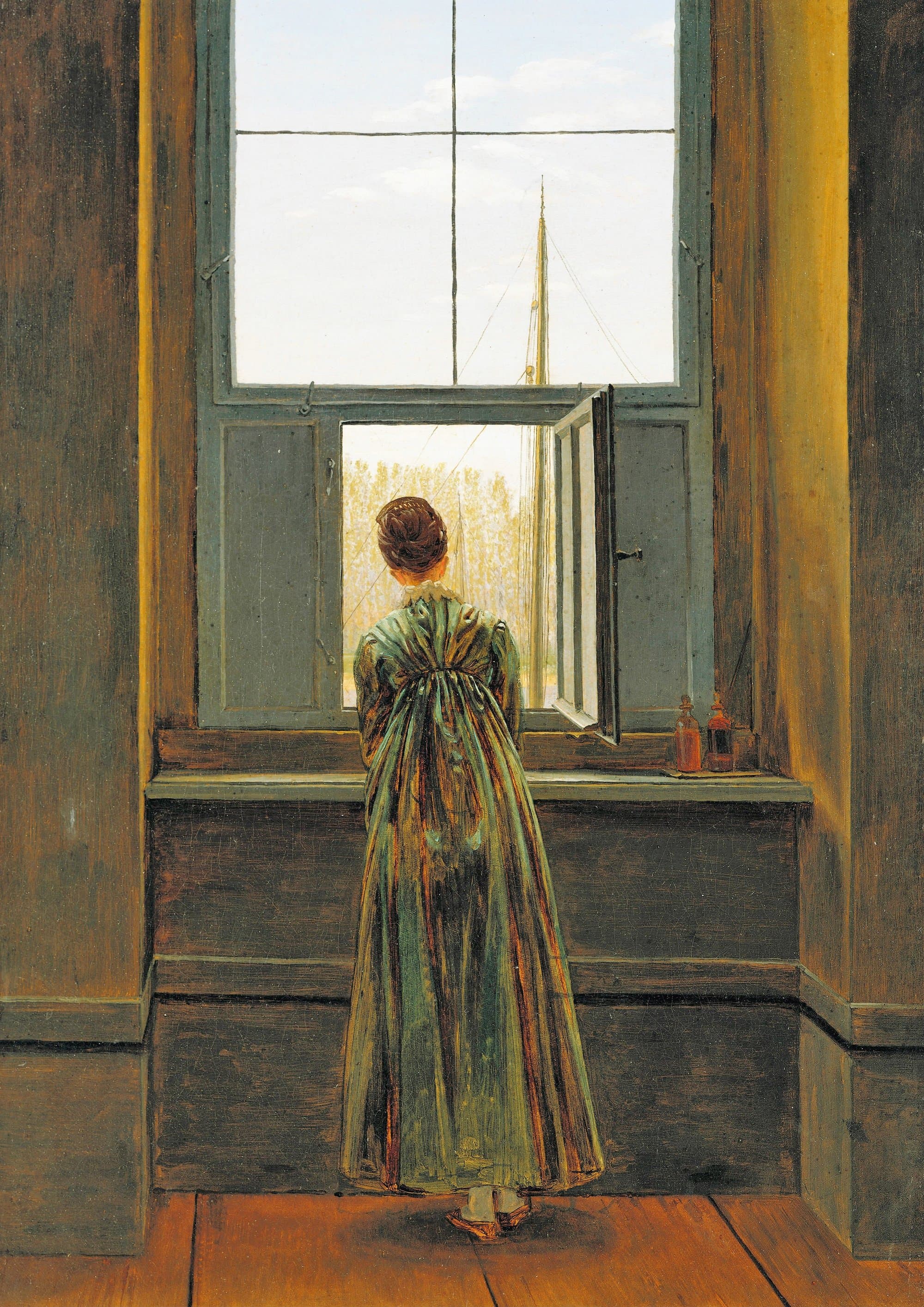
John 8:29 · Symbol · Loneliness
The Words Yachid and Monos
Three Hebrew words and two Greek words stand behind the English only, alone and lonely.
The word for alone in John 8:29 is monos, which also means only.
He who sent Me is with Me. He has not left Me alone, because I always do what pleases Him.”
- The word
- יָחִיד (yachid), H3173
- First appears
- Genesis 22:2 “Take your son,” God said, “your only son…”
Summary
Yachid is a Hebrew adjective for the one who is the only one. Badad means apart or by oneself, and the first verse of Lamentations uses it for Jerusalem emptied of her people. In the Gospels the Greek word eremos names the solitary place where Jesus went early in the morning to pray (Mark 1:35).
- Psalm 68:6 uses the plural of yachid for the lonely, whom God settles in families.
- Mark 6:47 uses monos for Jesus alone on land while the boat was in the middle of the sea.
- Paul calls God "the only God" in 1 Timothy 1:17, and Jesus calls the Father "the only true God" in John 17:3, both with monos.
The Words Behind Lonely and Alone
Lonely stands in three verses of the Berean text, two in the Psalms and one in Lamentations.
The Words Yachid and Monos studies what Scripture says of the one who is only, apart or alone. It belongs to the trial of loneliness, because Scripture speaks of the lonely through these words. The Berean text has no noun loneliness, so the Bible's own words for the lonely are read in their own verses.
The question it answers is what each word means where it stands, and how a word for an only child also names a person left alone in the psalms.
Every Verse of Yachid
In the psalms the King James Version chose other English words for yachid than the Berean text does.
Most verses of yachid name an only child, and two name the lonely.
| Verse | The Berean words | Gloss of the Hebrew form | The King James words |
|---|---|---|---|
| An only child | |||
| Genesis 22:2 | "your only son Isaac, whom you love" | only [son] your | thine only son |
| Genesis 22:12 | "you have not withheld your only son from me" | only [son] your | thine only son |
| Genesis 22:16 | "and have not withheld your only son" | only [son] your | thine only son |
| Judges 11:34 | "She was his only child; he had no son or daughter besides her." | [was] an only [child] | his only child |
| Proverbs 4:3 | "tender and the only child of my mother" | and only [child] | only beloved |
| Jeremiah 6:26 | "Mourn with bitter wailing, as you would for an only son" | an only [child] | an only son |
| Amos 8:10 | "I will make it like a time of mourning for an only son" | an only [son] | an only son |
| Zechariah 12:10 | "They will mourn for Him as one mourns for an only child" | (the) only [son] | his only son |
| A precious life | |||
| Psalm 22:20 | "my precious life from the power of wild dogs" | only [life] my | my darling |
| Psalm 35:17 | "my precious life from these lions" | only [life] my | my darling |
| The lonely | |||
| Psalm 25:16 | "Turn to me and be gracious, for I am lonely and afflicted." | [am] solitary | desolate |
| Psalm 68:6 | "God settles the lonely in families" | solitary [people] | the solitary |
Jeremiah 6:26, Amos 8:10, Zechariah 12:10, A precious life, Psalm 22:20, Psalm 35:17, The lonely, Psalm 25:16 and 1 more
An Only Child
In the order of the canon, yachid first stands in the command to offer Isaac.
In Genesis 22 the word names Isaac three times, in the command, in the angel's word that stops the sacrifice, and in the LORD's oath that follows. The word stands although Abraham had fathered Ishmael, whom he had sent away with Hagar in Genesis 21:14, so it names Isaac as the one son left in Abraham's house.
Judges 11:34 uses the word for Jephthah's daughter, who came out dancing to meet her father after his vow, and the verse adds that he had no other child. Proverbs 4:3 uses it of the teacher himself as his mother's only child.
A Precious Life and the Lonely
Three psalms use yachid of the one who prays.
Strong's Concordance says that the feminine form of yachid names "the life (as not to be replaced)". Psalm 22:20 and Psalm 35:17 use that form with "my", and in both the psalmist asks God to deliver that life.
In Psalm 25:16 David asks God to turn to him because he is yachid. Matthew Henry, in his Commentary on the Whole Bible, wrote on that verse that when people are afflicted "their friends desert them then, and they are themselves disposed to sit alone and keep silence".
Badad, Apart
Badad describes a person or a people set apart, in grief and in safety.
How lonely lies the city, once so full of people! She who was great among the nations has become a widow. The princess of the provinces has become a slave.Lamentations 1:1 is the one place the Berean text gives badad as lonely, which makes badad the Hebrew word behind the city's grief.
In Leviticus 13:46 the same word sets apart the man with the infection, who must live outside the camp. In Jeremiah 15:17 it describes the prophet who sat by himself because the LORD's hand was on him. Lamentations 3:28 counsels the man under God's discipline to sit alone in silence.
Badad is also a word of safety. In Numbers 23:9 Balaam saw Israel as "a people dwelling apart", and in Deuteronomy 32:12 the Song of Moses says that the LORD alone led His people. In Psalm 4:8 the psalmist lies down in peace, because the LORD alone makes him dwell in safety.
The adverb alone in Genesis 2:18, "It is not good for the man to be alone", is a third word, bad.
Five Words in Strong's Concordance
The Hebrew and Greek words differ in their senses and in how often they stand.
Yachid, יָחִיד
12 uses in the canon
Strong's defines this Hebrew adjective as "properly, united, i.e. sole".
Badad, בָּדָד
11 uses in the canon
Its gloss is "separate", and the noun serves as an adverb for alone or apart.
Bad, בַּד
200 uses in the canon
This noun means "properly, separation", and in other verses it names a bar for carrying.
Monos, μόνος
110 uses in the canon
In Greek it means "remaining, i.e. sole or single".
Eremos, ἔρημος
48 uses in the canon
Strong's reads it as "lonesome, i.e. (by implication) waste", and it also names the wilderness.
One Sense in Each Verse
A word's range of senses belongs to the word, and each verse takes the sense its own words give.
Genesis 22 names Isaac as Abraham's only son and says nothing of Isaac being lonely, and Psalm 68:6 speaks of the lonely and says nothing of an only child. To read the sorrow of Psalm 25:16 into Genesis 22, or the prized only son into Psalm 25:16, carries one verse's sense into another where its own words do not put it.
Monos, Alone and Only
Monos names Jesus when the disciples scatter, and Elijah when he thought himself the last prophet left.
“Look, an hour is coming and has already come when you will be scattered, each to his own home, and you will leave Me all alone. Yet I am not alone, because the Father is with Me.The verse sets Jesus left by His disciples beside the Father who stays with Him, and the Greek has monos in both clauses.
“Lord, they have killed Your prophets and torn down Your altars. I am the only one left, and they are seeking my life as well”?Paul quotes Elijah's complaint from 1 Kings 19:10 with monos where the Hebrew has bad, and the next verse gives God's reply of seven thousand who had not bowed to Baal.
What Yachid Means in Psalm 22:20
Three commentators read the psalmist's only one in three ways.
The only one is the psalmist's lifeCharles Spurgeon
Charles Spurgeon, in The Treasury of David, read the line as "his soul, his life, which is most dear to every man". He wrote that "therefore is our soul dear, because it is our only soul".
Against this reading, Psalm 25:16 and Psalm 68:6 use the same word for a person alone, the sense the second reading hears in this verse.
The only one is the soul left without helpersJohn Wesley
John Wesley, in his Explanatory Notes upon the Old Testament, wrote that the psalmist calls his soul his only one "because it was left alone and destitute of friends and helpers".
Against this reading, the line stands in parallel with "Deliver my soul from the sword", so the only one is the life in danger.
The only one is Christ, the Only SonAdam Clarke
Adam Clarke, in his Commentary on the Bible, read the word of Christ, writing that "the man Christ Jesus is the Only Son of God; God is his Father, and he is his Only One".
Against this reading, the word's form with "my" names the speaker's own life in Psalm 22:20 and in Psalm 35:17 alike.
The Only God
to the only God our Savior be glory, majesty, dominion, and authority through Jesus Christ our Lord before all time, and now, and for all eternity. Amen.Jude ends his letter by giving glory to God with monos, the word that elsewhere names the one left alone.
Sources
Scripture is the Berean Standard Bible.
- The Holy Bible, King James Version (1611)
- STEP Bible, Translators Amalgamated Hebrew Old Testament and Greek New Testament, the tagged texts (Tyndale House, Cambridge), CC BY 4.0.
- STEP Bible TBESH and TBESG lexicons (Tyndale House, Cambridge), CC BY 4.0, with the definitions of James Strong, Strong's Exhaustive Concordance of the Bible (1890)
- John Wesley, Explanatory Notes upon the Old Testament (1765), on Psalm 22:20.
- Adam Clarke, Commentary on the Bible (1832), on Psalm 22:20.
- Charles Spurgeon, The Treasury of David, vol. 1 (1869), on Psalm 22:20.
- Matthew Henry, Commentary on the Whole Bible (1710), on Psalm 25:16.
Keep Studying
In this trial7
People and groups10
Subjects1