
Psalms 25 and 142 · Passage · Loneliness
I Am Lonely and Afflicted
Psalm 25:16 to 21 and Psalm 142 are prayers of David spoken by a man with no one beside him.
The Hebrew word behind lonely in Psalm 25:16 is the word God used for Isaac when He told Abraham, “Take your son, your only son Isaac” (Genesis 22:2).
Turn to me and be gracious, for I am lonely and afflicted.
- The passage
- Psalm 25:16 to 21, Psalm 142:1 to 7, 1 Samuel 22:1, 1 Samuel 24:1 to 4
- Books
- Psalms, 1 Samuel
- Hold in memory
- Psalm 25:16, Psalm 142:5
Summary
Psalm 25 and Psalm 142 give the lonely words to pray. In Psalm 25 David asks the LORD to turn to him, and in the same breath he names the troubles of his heart, his sins and his enemies. In Psalm 142 he cries out from a cave, telling God that no one stands with him. Both prayers move from complaint to trust in the LORD as refuge, and both end with more people than the one who began alone.
- The Berean text uses the word lonely in three verses, Psalm 25:16, Psalm 68:6 and Lamentations 1:1.
- Psalm 25 joins the cry of a lonely man to a prayer for pardon, so his isolation and his guilt are brought to God together.
- Psalm 142 is headed as a prayer of David in the cave, from the years when Saul hunted him.
The Turn of Psalm 25
The plea of Psalm 25:16 comes after fifteen verses of asking to be taught.
I Am Lonely and Afflicted studies Psalm 25:16 to 21 and Psalm 142. It belongs to the trial of loneliness, the pain of being alone or of having no one who cares. Both psalms speak in the first person, and in both the speaker addresses God about the people who have failed him.
The question it answers is what a lonely person may say to God and what these prayers teach him to expect. It reads the turn of Psalm 25 and the cry of Psalm 142 line by line and sets the two prayers side by side. It places Psalm 142 in David's flight from Saul and gives the readings of its title.
Psalm 25 runs through the Hebrew alphabet, one letter to a verse. Adam Clarke noted in his Commentary on the Bible (1832) that the letter vau is lost at Psalm 25:5 and that Psalm 25:22 stands outside the alphabetical order.
The opening verses ask the LORD to show His ways and teach His paths. The word for afflicted in Psalm 25:16 is ani, which Strong's glosses “depressed, in mind or circumstances”, so the cry names a trouble of the mind and a trouble of life together.
Consider my affliction and trouble, and take away all my sins.It stands in the turn as the one line in which the psalmist names his own sins.
He names enemies who “hate me with vicious hatred” (Psalm 25:19).
Psalm 25 and Psalm 142 Side by Side
Each psalm moves from complaint to plea, to trust and to a closing prayer.
Each prayer moves from complaint through plea and trust to an ending that reaches past the one who prays.
| Movement | Psalm 25 | Psalm 142 |
|---|---|---|
| The complaint | “The troubles of my heart increase; free me from my distress.” (Psalm 25:17) | “Look to my right and see; no one attends to me. There is no refuge for me; no one cares for my soul.” (Psalm 142:4) |
| The plea | “Guard my soul and deliver me; let me not be put to shame” (Psalm 25:20) | “Listen to my cry, for I am brought quite low. Rescue me from my pursuers, for they are too strong for me.” (Psalm 142:6) |
| The trust | “May integrity and uprightness preserve me, because I wait for You.” (Psalm 25:21) | “You are my refuge, my portion in the land of the living.” (Psalm 142:5) |
| The end | “Redeem Israel, O God, from all its distress.” (Psalm 25:22) | “The righteous will gather around me because of Your goodness to me.” (Psalm 142:7) |
Psalm 25 keeps this order. Psalm 142 sets its words of trust in Psalm 142:5 before its plea against pursuers in Psalm 142:6.
The Cry from the Cave
Psalm 142 opens with a voice raised aloud and ends with a prayer for freedom.
David begins aloud: “I cry aloud to the LORD; I lift my voice to the LORD for mercy” (Psalm 142:1). He goes on, “I pour out my complaint before Him; I reveal my trouble to Him” (Psalm 142:2), so in this psalm the complaint is itself a prayer.
Although my spirit grows faint within me, You know my way. Along the path I travel they have hidden a snare for me.David tells the LORD that He knows the path his enemies have snared, before he says that no one else will know him.
In the Hebrew of Psalm 142:4 the man at his right hand would be a makir, one who recognizes, and the one who cares is a doresh, one who seeks out. The word for portion in Psalm 142:5 is cheleq, a share, so David names the LORD as his share while he is still among the living.
The verb in Psalm 142:7 for the gathering of the righteous is katar, to surround.
The Cave and the Flight from Saul
First Samuel tells of the caves where David hid while Saul hunted him.
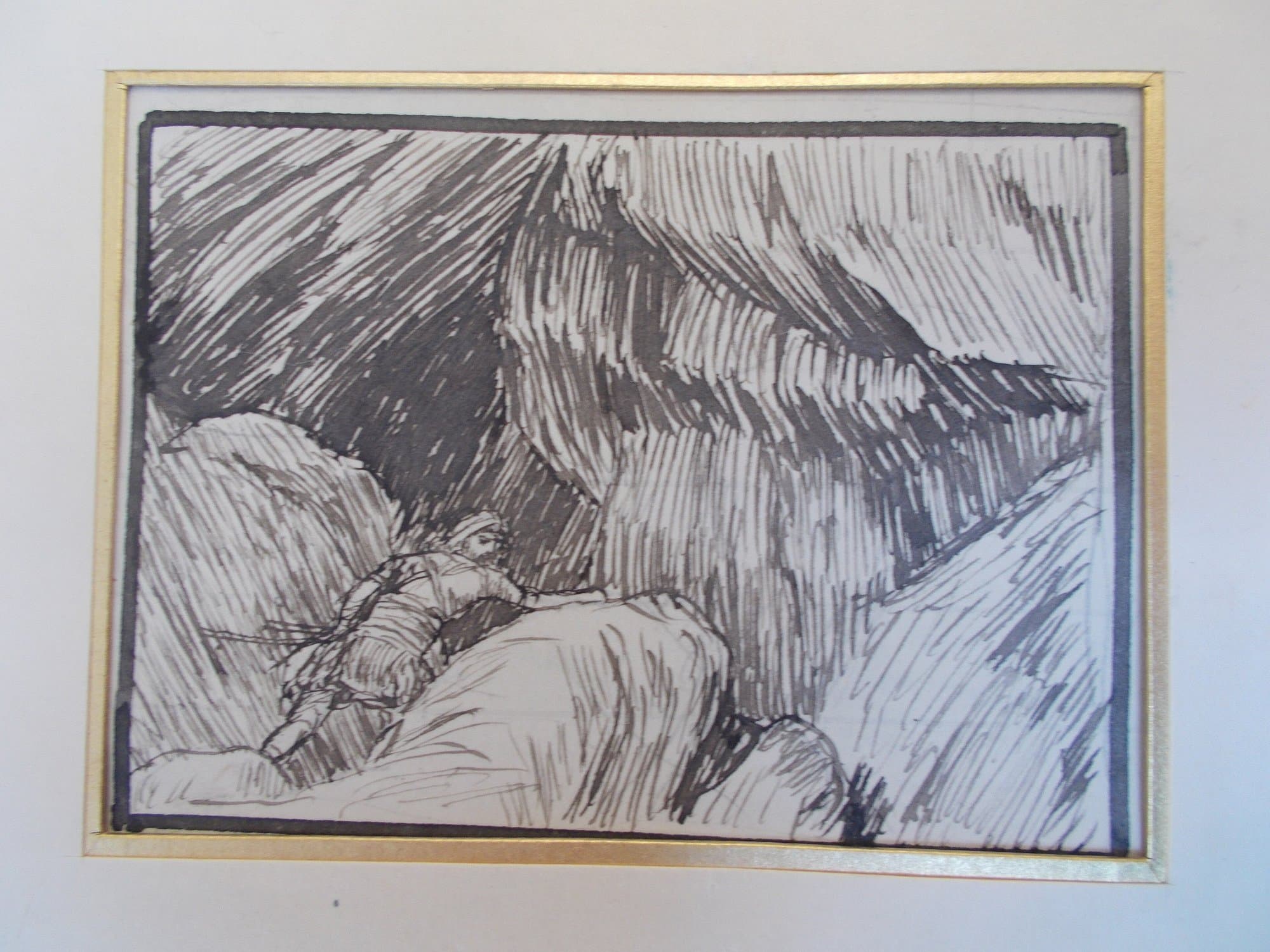
So David left Gath and took refuge in the cave of Adullam. When his brothers and the rest of his father’s household heard about it, they went down to him there.The cave of Adullam is the first cave of David's flight, and he reached it before his family came down to him.
At En-gedi Saul went into a cave to relieve himself, “And David and his men were hiding in the recesses of the cave” (1 Samuel 24:3). There David cut off a corner of Saul's robe and spared his life.
Thirteen psalms carry a title from David's life, and a separate study sets them in the order of the events of First and Second Samuel.
Read the study of David's Life in the Psalms, the thirteen historical titles
The LORD Who Knows the Way
Both psalms send the lonely to God first.
The lonely in these psalms pray from inside their trouble. They speak to God from the cave and wait on His goodness.
A reader whose loneliness has become despair may pray these words. He should also seek the help of a pastor, and of a doctor where the mind or the body is unwell, beside prayer and never in its place.
Desertion and Fear in the Commentaries
Teachers of the church read both psalms as prayers spoken under desertion and fear.
1509 to 1564 · John Calvin
John Calvin taught that David met his danger in the cave with prayer. In his Commentaries on Psalm 142:1 he wrote that David “composedly addressed himself to the exercise of prayer”.
1662 to 1714 · Matthew Henry
Matthew Henry taught that the afflicted are often left alone by their friends. In his Commentary on the Whole Bible (1710) he wrote on Psalm 25:16, “It is common for those that are afflicted to be desolate; their friends desert them then”.
Which Cave, and How to Read the Title
Readers differ over the cave the title of Psalm 142 names and over how the title should be read.
En-gedi, where David spared SaulJerome; Rashi; Adam Clarke
Jerome, in his Homily 52 on the psalm, read the title as history. He placed it “when David was fleeing from the face of Saul in the desert of Engaddi, hidden in a cave”. Rashi placed it “in the cave where he severed the skirt of Saul’s robe”, in the translation of A. J. Rosenberg. Adam Clarke wrote on Psalm 142:4 of “the case of David in the cave of En-gedi”.
The objection: Psalm 142 names neither Saul nor the robe, and First Samuel shows David in the cave of Adullam before he came to En-gedi.
Adullam or another hiding place, left openCharles Spurgeon
Spurgeon, in his note on the title in The Treasury of David, wrote that David “was in one of his many lurking places, either Engedi, Adullam, or some other lone cavern”.
The objection: the psalm speaks of pursuers stronger than David, which fits the three thousand chosen men Saul took to En-gedi (1 Samuel 24:2).
The title read as David's historyAdam Clarke
Clarke read the prison of Psalm 142:7 as the cave itself, praying to bring “my life, out of this cave in which it is now imprisoned”, with Saul's men holding its entrance.
The objection: the title calls the psalm a maskil, which Strong's glosses “instructive, i.e. a didactic poem”, so it was kept to teach as well as to record.
The title read spirituallyJerome; Augustine of Hippo
Jerome added, “we ought to understand the psalm spiritually”. Augustine, in his Exposition on Psalm 142, wrote, “That which is the cave, the same is also the prison”, and he set out the readings of that prison as this world or as the body.
The objection: the title names a cave and a time of David's life, and First Samuel records both.
Praying from the Cave
The psalms leave the lonely a prayer to use.
Anyone who has looked to the right hand and found no one may pray David's words and wait for the LORD as David did.
Sources
Scripture is the Berean Standard Bible.
- STEP Bible, the tagged Hebrew Bible (Tyndale House, Cambridge), CC BY 4.0.
- STEP Bible brief lexicon of Extended Strongs for Hebrew (Tyndale House, Cambridge), CC BY 4.0, with the Strong's glosses.
- Adam Clarke, Commentary on the Bible (1832), on Psalm 25:5, Psalm 25:22, Psalm 142:4 and Psalm 142:7.
- Matthew Henry, Commentary on the Whole Bible (1710), on Psalm 25:16 and Psalm 142:7.
- Charles Spurgeon, The Treasury of David, Vol. 7 (1885), the note on the title of Psalm 142.
- John Calvin, Commentaries on the Book of Psalms, on Psalm 142:1.
- Jerome, Homily 52, on Psalm 141 (Psalm 142 in the Hebrew count), on its title, in an English translation whose translator the store row does not name.
- Augustine of Hippo, Exposition on Psalm 142 (Nicene and Post-Nicene Fathers, first series, volume 8), on verse 7.
- Rashi on Psalm 142:1, in The Judaica Press complete Tanach with Rashi, translated by A. J. Rosenberg, CC BY.
Keep Studying
Read it4
In this trial7
People and groups9
Places1