
Numbers 16:6
in Numbers 16You, Korah, and all your followers are to do as follows: Take censers,
BSB
The same verse in ASV and KJV ▾
ASV
This do: take you censers, Korah, and all his company;
KJV
This do; Take you censers, Korah, and all his company;
⋯
This verse in Numbers 16
Commentary
4 notes on this verseA commentator
Jamieson, Fausset & Brown1802–1910
Commentary Critical and Explanatory on the Whole Bible (1871)
Take your censers, Korah, and all his company, &c.--that is, since you aspire to the priesthood, then go, perform the highest function of the office--that of offering incense; and if you are accepted well. How magnanimous the conduct of Moses, who was now as willing that God's people should be priests, as formerly that they should be prophets (Nu 11:29).
This site's exposition
Take you censers, Korah, and all his company
on Numbers 16:6-7
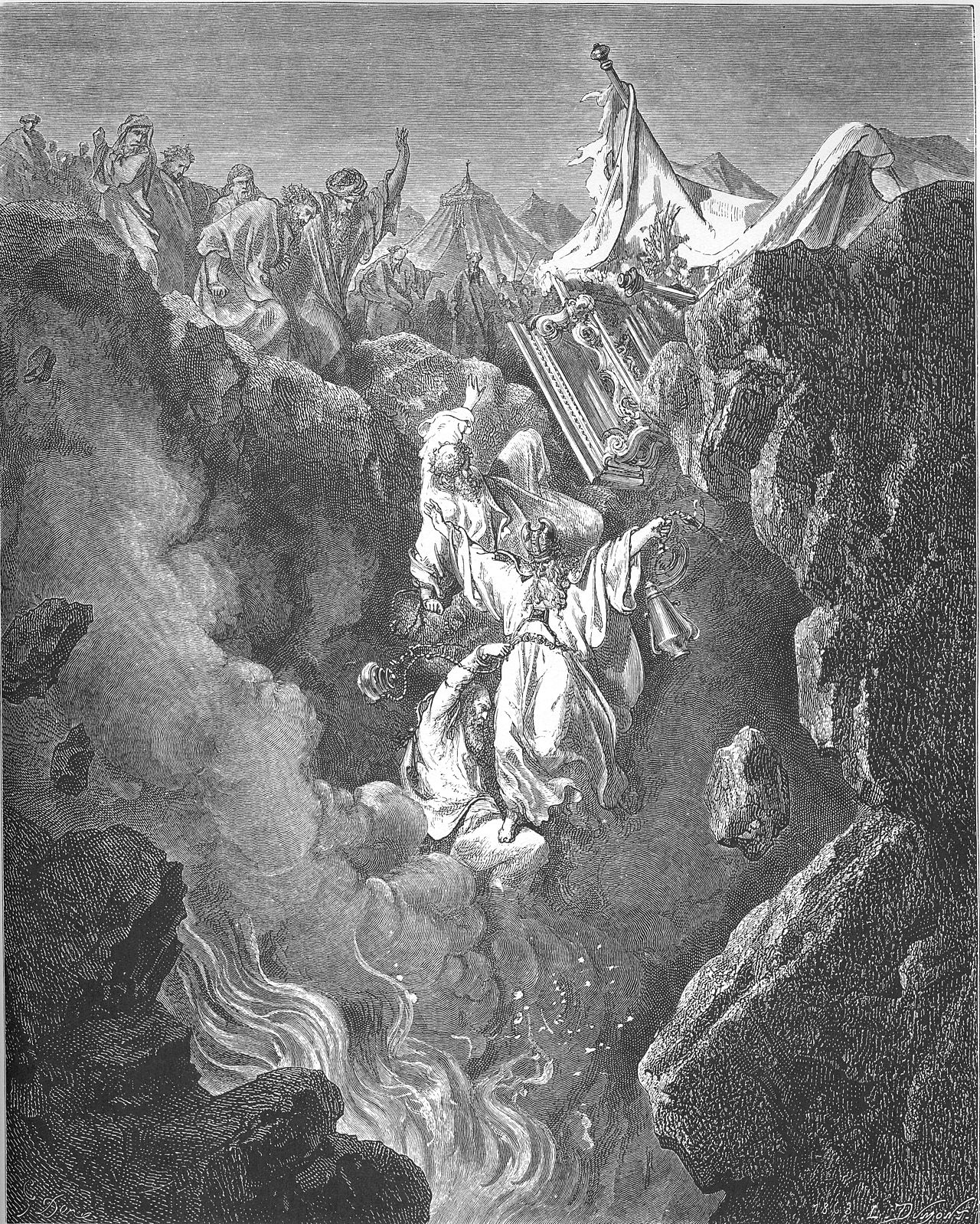
The test is the exact act that killed the sons of Aaron. Leviticus 10:1 has Nadab and Abihu take every man his censer, put fire therein and put incense thereon, and verse 2 says there went out fire from the Lord and devoured them. Verse 35 of this chapter reports the outcome in almost those words. Moses proposes a trial whose precedent stood in the high priest's own family, and two hundred and fifty men accept it.
The record, by era
The Puritans and the Awakening2 voices
This do, take you censers,.... Vessels to put incense in to offer, which was the business of the priests: Korah, and all his company; the two hundred fifty princes that were with him, for so many we read took censers, and offered incense, Num 16:18.
Let Korah and his partisans bring their censers, and offer incense before the Lord, and, if he testify his acceptance of them, well and good; Moses is now as willing that all the Lord's people should be priests, if God so pleased, as before that they should all be prophets, ch. xi.
The words behind it
8 Hebrew wordsEvery Hebrew word of this verse in the order it stands, with what it means and the door to its own study. The last column counts the times a word stands in the whole Bible: the rarer the word, the more the places it appears belong together.
| Hebrew | Sound | Meaning | Word study | In the Bible |
|---|---|---|---|---|
| זֹ֖את | zot | this | H2063 → | 603 times |
| עֲשׂ֑וּ | ʾasu | do | H6213 → | 2628 times |
| קְחוּ־ | kechu- | take | H3947 → | 966 times |
| לָכֶ֣ם | lakhem | for <the> yourselves | ||
| מַחְתּ֔וֹת | machtot | censers | H4289 → | 22 times |
| קֹ֖רַח | korach | O Korah | H7141 → | 26 times |
| וְכָל־ | vekhol | and all | H3605 → | 5413 times |
| עֲדָתֽוֹ׃ | adato | company his | H5712 → | 149 times |
זֹ֖אתthis
zotH2063 →603 times
עֲשׂ֑וּdo
ʾasuH6213 →2628 times
קְחוּ־take
kechu-H3947 →966 times
לָכֶ֣םfor <the> yourselves
lakhem
מַחְתּ֔וֹתcensers
machtotH4289 →22 times
קֹ֖רַחO Korah
korachH7141 →26 times
וְכָל־and all
vekholH3605 →5413 times
עֲדָתֽוֹ׃company his
adatoH5712 →149 times
A shaded row is a word that stands 400 times or fewer in the Bible.
The walk
5 stopsEach card is a verse this one points to, and under it the verses that one points to in turn. Where several paths arrive at the same place, that place is listed first: the text keeps returning to it.
Through
Leviticus 10:1Now Aaron’s sons Nadab and Abihu took their censers, put fire in them and added incense, and offered unauthorized fire before the LORD, contrary to His command.
it leads to
- Numbers 26:61
but Nadab and Abihu died when they offered unauthorized fire before the LORD.
- Leviticus 16:12
Then he must take a censer full of burning coals from the altar before the LORD, and two handfuls of finely ground fragrant incense, and take them inside the veil.
- Deuteronomy 12:32
See that you do everything I command you; do not add to it or subtract from it.
- Numbers 16:46
Moses said to Aaron, “Take your censer, place fire from the altar in it, and add incense. Go quickly to the congregation and make atonement for them, because wrath has come out from the…
- Exodus 24:1
Then the LORD said to Moses, “Come up to the LORD—you and Aaron, Nadab and Abihu, and seventy of Israel’s elders—and you are to worship at a distance.
- Numbers 26:61
Where this verse is studied
On this page
Studies3
On this verse
On this chapter
About Numbers
Who and where
1 name in this verse with a page on the site.
This page draws on Jamieson, Fausset & Brown, Commentary Critical and Explanatory on the Whole Bible; John Gill, Exposition of the Old Testament; John Gill, Exposition of the Old Testament (1748-1763); Keil and Delitzsch, Biblical Commentary on the Old Testament: The Pentateuch and Matthew Henry, Commentary on the Whole Bible.