
Nehemiah 8:3
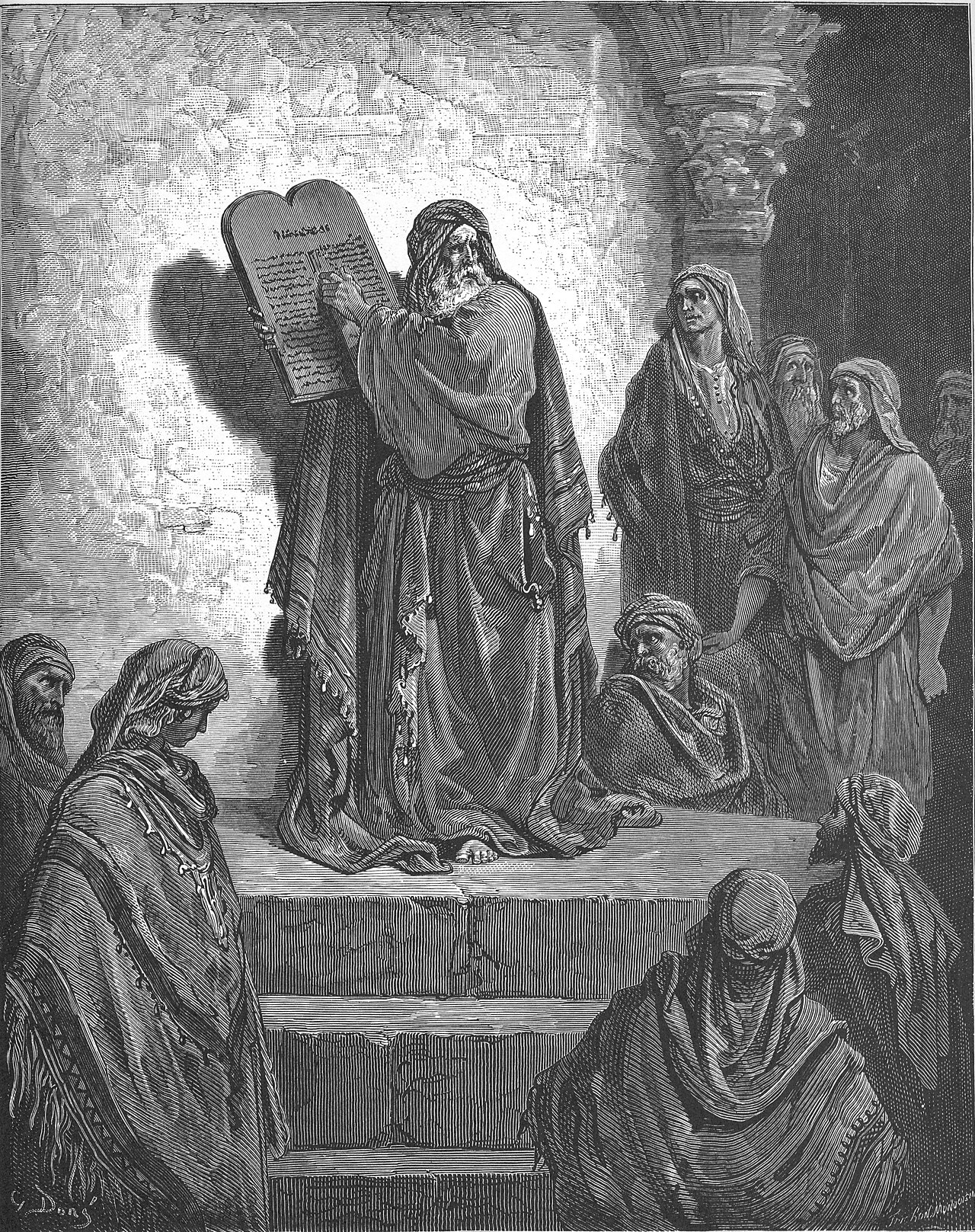
in Nehemiah 8So Ezra read it aloud from daybreak until noon as he faced the square before the Water Gate, in front of the men and women and those who could understand. And all the people listened attentively to the Book of the Law.
BSB
The same verse in ASV and KJV ▾
ASV
And he read therein before the broad place that was before the water gate from early morning until midday, in the presence of the men and the women, and of those that could understand; and the ears of all the people were attentive unto the book of the law.
KJV
And he read therein before the street that was before the water gate from the morning until midday, before the men and the women, and those that could understand; and the ears of all the people were attentive unto the book of the law.
⋯
This verse in Nehemiah 8
Commentary
4 notes on this verseThis site's exposition
to bring out the Book of the Law of Moses
on Nehemiah 8:1-3
The demand comes from below: "all the people gathered together" and asked Ezra "to bring out the Book of the Law of Moses" (8:1). The wall was finished at 6:15, and the first public act inside it is Scripture read aloud.
This site's exposition
from daybreak until noon
Jamieson, Fausset and Brown note that the men on the platform shared the long labour of reading from daybreak to noon. Albert Barnes places the square between the temple's eastern gate and the Water Gate, which stood on the east side by Ophel, 3:26. The crowd listened throughout.
The record, by era
The Puritans and the Awakening2 voices
If through carelessness we let much slip in hearing, there is danger that through forgetfulness we shall let all slip after hearing. 9 And Nehemiah, which is the Tirshatha, and Ezra the priest the scribe, and the Levites that taught the people, said unto all the people, This day is holy unto the L ORD your God; mourn not, nor weep.
quarantine:scripture (2026-07-29) — verbatim-run:30w-of-60
And he read therein,....
How the passage was read
On Nehemiah 8:1-18On Nehemiah 8:1-18
The seventh month, rediscovered
Everything in this chapter happens on the calendar of Leviticus 23. Ezra reads the Law on “the first day of the seventh month”: that is the Day of Trumpets, kept today as Rosh Hashanah, the Jewish new year, announced by the ram's-horn trumpet (shofar). Then the people find the command about booths and keep Tabernacles (Sukkot) for the first time “since the days of Joshua”: seven days living in leafy shelters, remembering the wilderness. Jewish families still build these booths every autumn: a hut in the yard or on the balcony, roofed with branches you can see the stars through, where meals are eaten all week.
The chapter also gives the day its enduring tone: “the joy of the LORD is your strength” was said on Rosh Hashanah, to a congregation weeping under the words of the Law and told instead to feast.
This section is reception history: how the passage was read and kept in the Jewish tradition. Where a reading parts from an essential of the Christian faith, the section says so at that point.
Sources: Leviticus 23:23–43 (the seventh month's appointments) · Mishnah Sukkah 1:1 (the booth's rules)
The words behind it
23 Hebrew wordsEvery Hebrew word of this verse in the order it stands, with what it means and the door to its own study. The last column counts the times a word stands in the whole Bible: the rarer the word, the more the places it appears belong together.
| Hebrew | Sound | Meaning | Word study | In the Bible |
|---|---|---|---|---|
| וַיִּקְרָא־ | vaiyikra'- | and he read aloud | H7121 → | 733 times |
| בוֹ֩ | vo | in it | ||
| לִפְנֵ֨י | lifnei | <to> before | H6440 → | 2123 times |
| הָרְח֜וֹב | harechov | the open space | H7339 → | 43 times |
| אֲשֶׁ֣ר׀ | ʾasher | which | H834 → | 5497 times |
| לִפְנֵ֣י | lifnei | [was] <to> before | H6440 → | 2123 times |
| שַֽׁעַר־ | shaar- | [the] gate of | H8179 → | 374 times |
| הַמַּ֗יִם | hamayim | the water | H4325 → | 581 times |
| מִן־ | min- | from | H4480 → | 1188 times |
| הָאוֹר֙ | haor | the light | H216 → | |
| עַד־ | ʾad- | until | H5704 → | 1261 times |
| מַחֲצִ֣ית | machatzit | [the] middle of | H4276 → | |
| הַיּ֔וֹם | haiyom | the day | H3117 → | 2304 times |
| נֶ֛גֶד | neged | before | H5048 → | 151 times |
| הָאֲנָשִׁ֥ים | haanashim | the men | H582 → | 566 times |
| וְהַנָּשִׁ֖ים | vehanashim | and the women | H802 → | 781 times |
| וְהַמְּבִינִ֑ים | vehamevinim | and the [ones who] understood | H995 → | 170 times |
| וְאָזְנֵ֥י | veazenei | and [the] ears of | H241 → | 187 times |
| כָל־ | khol- | all | H3605 → | 5413 times |
| הָעָ֖ם | haam | the people | H5971 → | 1873 times |
| אֶל־ | ʾel- | [were] to | H413 → | 5510 times |
| סֵ֥פֶר | sefer | [the] scroll of | H5612 → | 186 times |
| הַתּוֹרָֽה׃ | hatorah | the law | H8451 → | 219 times |
וַיִּקְרָא־and he read aloud
vaiyikra'-H7121 →733 times
בוֹ֩in it
vo
לִפְנֵ֨י<to> before
lifneiH6440 →2123 times
הָרְח֜וֹבthe open space
harechovH7339 →43 times
אֲשֶׁ֣ר׀which
ʾasherH834 →5497 times
לִפְנֵ֣י[was] <to> before
lifneiH6440 →2123 times
שַֽׁעַר־[the] gate of
shaar-H8179 →374 times
הַמַּ֗יִםthe water
hamayimH4325 →581 times
מִן־from
min-H4480 →1188 times
הָאוֹר֙the light
haorH216 →
עַד־until
ʾad-H5704 →1261 times
מַחֲצִ֣ית[the] middle of
machatzitH4276 →
הַיּ֔וֹםthe day
haiyomH3117 →2304 times
נֶ֛גֶדbefore
negedH5048 →151 times
הָאֲנָשִׁ֥יםthe men
haanashimH582 →566 times
וְהַנָּשִׁ֖יםand the women
vehanashimH802 →781 times
וְהַמְּבִינִ֑יםand the [ones who] understood
vehamevinimH995 →170 times
וְאָזְנֵ֥יand [the] ears of
veazeneiH241 →187 times
כָל־all
khol-H3605 →5413 times
הָעָ֖םthe people
haamH5971 →1873 times
אֶל־[were] to
ʾel-H413 →5510 times
סֵ֥פֶר[the] scroll of
seferH5612 →186 times
הַתּוֹרָֽה׃the law
hatorahH8451 →219 times
A shaded row is a word that stands 400 times or fewer in the Bible.
The walk
8 stopsEach card is a verse this one points to, and under it the verses that one points to in turn. Where several paths arrive at the same place, that place is listed first: the text keeps returning to it.
Through
Revelation 2:29He who has an ear, let him hear what the Spirit says to the churches.
it leads to
- Revelation 2:7
He who has an ear, let him hear what the Spirit says to the churches. To the one who overcomes, I will grant the right to eat from the tree of life in the…
Reached by 2 separate paths from here.
- Revelation 2:7
Through
Revelation 3:22He who has an ear, let him hear what the Spirit says to the churches.”
it leads to
- Revelation 2:11
He who has an ear, let him hear what the Spirit says to the churches. The one who overcomes will not be harmed by the second death.
- Revelation 2:17
He who has an ear, let him hear what the Spirit says to the churches. To the one who overcomes, I will give the hidden manna. I will also give him a white stone…
- Revelation 3:13
He who has an ear, let him hear what the Spirit says to the churches.
- Revelation 3:6
He who has an ear, let him hear what the Spirit says to the churches.
- Revelation 2:11
Through
Luke 19:48Yet they could not find a way to do so, because all the people hung on His words.
it leads to
- Luke 20:19–20
When the scribes and chief priests realized that Jesus had spoken this parable against them, they sought to arrest Him that very hour. But they were afraid of the people.
- Matthew 22:15–16
Then the Pharisees went out and conspired to trap Jesus in His words.
- John 7:46–49
“Never has anyone spoken like this man!” the officers answered.
- Luke 20:19–20
Where this verse is studied
On this page
About Nehemiah
Who and where
1 name in this verse with a page on the site.
This page draws on Albert Barnes, Notes, Explanatory and Practical, on the Old and New Testaments (1832-1869); Jamieson, Fausset & Brown, Commentary Critical and Explanatory on the Whole Bible; John Gill, Exposition of the Old Testament (1748-1763); Keil, The Books of Ezra, Nehemiah, and Esther; Matthew Henry, Commentary on the Whole Bible and W. F. Adeney, Ezra, Nehemiah and Esther (Expositor's Bible).