
Matthew 23:33
in Matthew 23You snakes! You brood of vipers! How will you escape the sentence of hell?
BSB
The same verse in ASV and KJV ▾
ASV
Ye serpents, ye offspring of vipers, how shall ye escape the judgment of hell?
KJV
Ye serpents, ye generation of vipers, how can ye escape the damnation of hell?
⋯
This verse in Matthew 23
Commentary
17 notes on this verse(v. 33) Serpents, ((Al. additur et)) offspring of vipers, how can you escape the judgment of Gehenna? This very thing John the Baptist also said (Luke III). Therefore, just as vipers give birth to vipers, so you, he says, are born of murderers fathers, are murderers.
This site's exposition
Fill ye up then the measure of your fathers
on Matthew 23:32-33
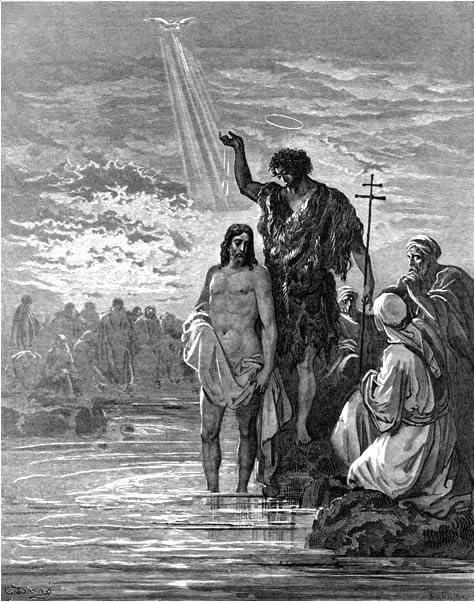
Fill ye up then the measure of your fathers is spoken with the bitterest edge of the whole chapter, a command that reads as permission because the pattern is already set in motion and about to complete itself in the plot against Jesus himself. Ye serpents, ye generation of vipers, how can ye escape the damnation of hell repeats John the Baptist's own words to this same class of hearers at 3:7, the Baptist's warning now sealed by the one John pointed to. The bench reads the measure as filled precisely in what follows, the killing of the Son the prophets had only foretold.
The record, by era
The Church Fathers5 voices
Because then they will fill up the measure of their fathers' purposes, therefore are they serpents, and an offspring of vipers.
The same had been said by John the Baptist. Wherefore as of vipers are born vipers, so of your fathers who were murderers are you born murderers.
He calls them offspring of vipers, because the nature of vipers is such that the young burst the womb of their dam, and so come forth; and in like manner the Jews condemned their fathers, finding fault with their deeds. He says, How shall ye escape the damnation of hell? By building the tombs of the saints? But the first step of piety is to love holiness, the next, to love the saints; for it is not reasonable in him to honour the righteous, who despises righteousness. The saints cannot be friends to those to whom God is an enemy. Shall ye be saved by a mere name, because ye seem to be among God's people! Forasmuch as an open enemy is better than a false friend, so is he more hateful to God, who calls himself the servant of God, and does the commands of the Devil. Indeed, before God he who has resolved to kill a worm is a murderer before the deed is done, for it is the will that is rewarded for good, or punished for evil. Deeds are evidence of the will. God then does not require deeds on His own account that He may know how to judge, but for the sake of other men, that they may perceive that God is righteous. And God affords the opportunity of sin to the wicked, not to make them sin, but to manifest the sinner; and also to the good He gives opportunity to show the purpose of their will. In this way then He gave the Scribes and Pharisees opportunity of showing their purposes, Behold, I send unto you Prophets, and wise men, and Scribes.
The punishment of all the murders committed in the past will fall on the last generation of murderers according to a certain pattern, although God speaking through the prophet does say that "the fathers will not die for the sins of the children" … and indeed, "each will die for his own sin." What then should we think about this? How can a later generation be punished for the murders committed by others, concerning whom Christ says these things? Won't Cain be punished for the murder of Abel?… How is it that these poor souls will be subjected to the punishment due to all these people? For God is not unjust but is the righteous judge, powerful and patient, according to the testimony of the Scripture. Therefore we think there is a certain intention contained within the things that have been spoken that applies to the present case and helps us to fit one thing to another. Let it be taken for granted then that this may be so in the present case. Let us say that they have become robbers in that land. These men were plundering the surrounding villages and killing their inhabitants. But the prince of the realm did not immediately strip them of the ruler's sword. Rather, he was eager to teach them differently through the use of threats.… But I suppose someone of the last who have been cruelly punished will say that they have received the penalty due to all.… You will also understand something such as this concerning God. For God was extremely patient in the preceding times until he deemed it necessary to set a boundary on his longsuffering. For it was also necessary that the divine anger fall upon these. On the one hand, they continued to sin against people and their fellow servants. On the other hand, they killed the Lord of all. […]
A commentator
John ChrysostomHomily on the Gospel of Matthew 74 · Written in the 5th century.
proposed
And this is manifest too by what comes after; He adds at least, "Ye serpents, ye generation of vipers." For as those beasts are like their parents, in the destructiveness of their venom, so also are ye like your fathers in murderousness. Ye serpents, ye generation of vipers, that is, wicked sons of wicked men, and more wicked than those who begat them. For He showeth that they are committing greater crimes, both by their committing them after those others, and by their doing much more grievous things than they, and this, while positively affirming that they never would have fallen into the same. For they add that which is both the end and the crown of their evil deeds. For the others slew them that came to the vineyard, but these, both the son, and them that were bidding them to the wedding. But these things He saith, to separate them off from the affinity to Abraham, and to show that they had no advantage from thence, unless they followed his works; wherefore also He adds, "How can ye flee from the damnation of hell," when following them that have committed such acts? And here He recalls to their remembrance John's accusation, for he too called them by this name, and reminded them of the judgment to come.
10 more voices on this verse
The Church Fathers1 voice
A commentator
John ChrysostomHomily on the Gospel of Matthew 74 · Written in the 5th century.
proposed
Then, because He was searching their temper of mind, which is to the more part obscure, He doth, from those things also which they were about to perpetrate, which would be manifest to all, establish His words. For, because He had said, "Wherefore ye be witnesses unto yourselves that ye are the children of them which killed the prophets," making it evident, that of their affinity in wickedness He is speaking, and that it was a pretense to say, "We should not have been partakers with them," He added, "Fill ye up therefore the measure of your fathers," not commanding, but declaring beforehand, what was to be, that is, His own murder. Therefore, having brought in their refutation, and having shown that they were pretenses which they said in their own defense, as, for instance, "We would not have been partakers with them," (for they who refrain not from the Lord, how should they have refrained from the servants), He makes after this His language more condemnatory, calling them "serpents, and generation of vipers," and saying, "How shall ye escape the damnation of hell," at once perpetrating such things, and denying them, and dissembling your purpose? Then rebuking them more exceedingly from another cause also, He Saith, "I will send unto you prophets, and wise men, and scribes, and some of them shall ye kill and crucify, and some of them shall ye scourge in your synagogues." For that they should not say, "Though we crucified the Lord, yet from the servants we should have refrained, if we had been then;" "Behold," He saith, "I send servants also to you, prophets likewise themselves, and neither will ye spare them." But these things He saith, showing that it was nothing strange, that He should be murdered by those sons, being both murderous and deceitful, and having much guile, and surpassing their fathers in their outrages. And besides what hath been said, He shows them […]
The Medieval Church2 voices
Then he adds concerning the punishment: you serpents, generation of vipers, etc. And it seems that he speaks fittingly about the guilt. A serpent is a venomous animal and kills by its venom: so they are called serpents because they killed the prophets. Of the …
He neither bids them nor impels them towards their plan to kill Him when He says, "Fill ye up also the measure of your fathers." Rather, this is what He means: since you are serpents and the offspring of such fathers, and have been plunged …
The Puritans and the Awakening1 voice
Ye servants, ye generation of vipers,....
The Nineteenth Century5 voices
A commentator
Albert Barnes1798–1870
Notes, Explanatory and Practical, on the Old and New Testaments (1832-1869)
Ye serpents - This name is given to them on account of their pretending to be pious, and very much devoted to God, but being secretly evil, At the heart, with all their pretensions, they were filled with evil designs, as the serpent was, Gen 3:1-5 Generation of vipers - See the notes at Mat 12:34. Damnation of hell - This refers, beyond all question, to future punishment. So great was their wickedness and hypocrisy, that, if they persevered in this course, it was impossible to escape the damnation that should come on the guilty.
We have in these verses the charges of our Lord against the Jewish teachers, ranged under eight heads. Standing in the midst of the temple, with a listening crowd around him, he publicly denounces the main errors of the scribes and the Pharisees, in unsparing terms. Eight times he uses the solemn expression, “Woe unto you;” seven times he calls them “hypocrites;” twice he speaks of them as “blind guides”—twice as “fools and blind”—once as “serpents! And a generation of vipers!” Let us mark that language well. It teaches a solemn lesson.
A commentator
Jamieson, Fausset & Brown1802–1910
Commentary Critical and Explanatory on the Whole Bible (1871)
Ye serpents, ye generation of vipers, how can ye escape the damnation of hell?--In thus, at the end of His ministry, recalling the words of the Baptist at the outset of his, our Lord would seem to intimate that the only difference between their condemnation now and then was, that now they were ripe for their doom, which they were not then.
We have in these verses the charges of our Lord against the Jewish teachers, ranged under eight heads. Standing in the midst of the temple, with a listening crowd around him, he publicly denounces the main errors of the scribes and the Pharisees, in unsparing terms. Eight times he uses the solemn expression, “Woe unto you;” seven times he calls them “hypocrites;” twice he speaks of them as “blind guides”—twice as “fools and blind”—once as “serpents! And a generation of vipers!” Let us mark that language well. It teaches a solemn lesson. It shows how utterly abominable the spirit of the scribes and the Pharisees is in God’s sight, in whatever form it may be found. Let us glance shortly at the eight charges which our Lord brings forward, and then seek to draw from the whole passage some general instruction. The first “woe” in the list is directed against the systematic opposition of the scribes and Pharisees to the progress of the Gospel. They “shut up the kingdom of heaven;” they would neither go in themselves, nor suffer others go in. They rejected the warning voice of John the Baptist; they refused to acknowledge Jesus when he appeared among them as the Messiah; they tried to keep back Jewish inquirers. They would not believe the Gospel themselves, and they did all in their power to prevent others believing it: this was a great sin. The second “woe” in the list is directed against the covetousness and self-aggrandizing spirit of the scribes and Pharisees. They “devour widows’ houses and for a pretence made long prayer.” They imposed on the credulity of weak and unprotected women by an affection of great devoutness, until they were regarded as their spiritual directors. They scrupled not to abuse the influence thus unrighteously obtained to their own temporal advantage, and, in a word, to make money by their religion: this, again, was a great sin.
Ye serpents, ye generation of vipers - What a terrible stroke! - Ye are serpents, and the offspring of serpents. This refers to Mat 23:31: they confessed that they were the children of those who murdered the prophets; and they are now going to murder Christ and his followers, to show that they have not degenerated - an accursed seed, of an accursed breed. My old MS. translates this passage oddly - Gee serpentis, fruytis of burrownyngis of eddris that sleen her modris. There seems to be here an allusion to a common opinion, that the young of the adder or viper which are brought forth alive eat their way through the womb of their mothers. Hence that ancient enigma attributed to Lactantius: - Non possum nasci, si non occidero matrem Occidi matrem: sed me manet exitus idem Id mea mors faciet, quod jam mea fecit origo Cael. Firm. Symposium, N. xv I never can be born, nor see the day, Till through my parent’s womb I eat my way Her I have slain; like her must yield my breath; For that which gave me life, shall cause my death Every person must see with what propriety this was applied to the Jews, who were about to murder the very person who gave them their being and all their blessings.
Modern Voices1 voice
The tremendous figure which fills the Gospels towers in this respect, as in every other, above all the thinkers who ever thought themselves tall. His pathos was natural, almost casual. The Stoics, ancient and modern, were proud of concealing their tears. He never concealed His …
How the passage was read
On Matthew 23:1-39On Matthew 23:1-39
The woes, read from inside Israel's own tradition
Read the chapter's own frame before its fire. Jesus opens by AFFIRMING the teaching office: the scribes and Pharisees “sit in Moses' seat,” the expositor's chair of the synagogue (stone seats of honor survive in excavated synagogues), “so practice and observe whatever they tell you” (23:2-3). And in the sharpest woe He still says of the tithe, “these you ought to have done” (23:23). The target throughout is hypocrisy in practice, never Torah observance itself. Each image is concrete: tefillin (the small Scripture boxes bound on arm and forehead in prayer, still worn today) made extra broad to be seen; tzitzit (the commanded tassels, Numbers 15:38, which Jesus Himself wore, Matthew 9:20) made extra long; the oath casuistry of Temple versus gold; herbs tithed while justice goes unweighed.
“Whited sepulchres” is seasonal and local: before Passover, graves were freshly marked with white lime so that pilgrims would not contract corpse impurity unawares; the Mishnah schedules the grave-marking in the month of Adar, a month before the feast (Shekalim 1:1). The pilgrim crowds hearing Jesus had just walked roads lined with newly whitened tombs. And the register of the speech is one Israel's own tradition could use of itself: the Talmud preserves a list of seven types of Pharisee, most of them bad, and warns against the “plague of Pharisees” (Sotah 22b), a self-critique sharper than most sermons. The chapter is a woe-oracle in the prophets' own tradition (Isaiah 1, Malachi 1-2), spoken in the Temple, and it ends not in triumph but in a lament that aches: “O Jerusalem, Jerusalem... how often would I have gathered thy children together” (23:37).
This section is reception history: how the passage was read and kept in the Jewish tradition. Where a reading parts from an essential of the Christian faith, the section says so at that point.
Sources: Mishnah Shekalim 1:1 (graves marked in Adar, before Passover) · Sotah 22b (Babylonian Talmud, the seven types of Pharisee) · Mishnah Menachot 4:1 (tefillin and tzitzit in practice)
The words behind it
10 Greek wordsEvery Greek word of this verse in the order it stands, with what it means and the door to its own study. The last column counts the times a word stands in the whole Bible: the rarer the word, the more the places it appears belong together.
| Greek | Sound | Meaning | Word study | In the Bible |
|---|---|---|---|---|
| ὄφεις | opheis | Serpents | G3789 → | 13 times |
| γεννήματα | gennemata | Offspring | G1081 → | 4 times |
| ἐχιδνῶν, | echidnon | of vipers! | G2191 → | 5 times |
| πῶς | pos | How | G4459 → | 103 times |
| φύγητε | phugete | shall you escape | G5343 → | 29 times |
| ἀπὸ | apo | from | G575 → | 640 times |
| τῆς | tes | the | G3588 → | 19766 times |
| κρίσεως | kriseos | sentence | G2920 → | 47 times |
| τῆς | tes | <the> | G3588 → | 19766 times |
| γεέννης; | geennes | of hell? | G1067 → | 12 times |
ὄφειςSerpents
opheisG3789 →13 times
γεννήματαOffspring
gennemataG1081 →4 times
ἐχιδνῶν,of vipers!
echidnonG2191 →5 times
πῶςHow
posG4459 →103 times
φύγητεshall you escape
phugeteG5343 →29 times
ἀπὸfrom
apoG575 →640 times
τῆςthe
tesG3588 →19766 times
κρίσεωςsentence
kriseosG2920 →47 times
τῆς<the>
tesG3588 →19766 times
γεέννης;of hell?
geennesG1067 →12 times
A shaded row is a word that stands 400 times or fewer in the Bible.
The walk
8 stopsEach card is a verse this one points to, and under it the verses that one points to in turn. Where several paths arrive at the same place, that place is listed first: the text keeps returning to it.
Through
Matthew 12:34You brood of vipers, how can you who are evil say anything good? For out of the overflow of the heart, the mouth speaks.
it leads to
- Luke 6:45
The good man brings good things out of the good treasure of his heart, and the evil man brings evil things out of the evil treasure of his heart. For out of the overflow…
- Matthew 15:18
But the things that come out of the mouth come from the heart, and these things defile a man.
- Ephesians 4:29
Let no unwholesome talk come out of your mouths, but only what is helpful for building up the one in need and bringing grace to those who listen.
- Luke 6:45
Through
Matthew 5:22But I tell you that anyone who is angry with his brother will be subject to judgment. Again, anyone who says to his brother, ‘Raca,’ will be subject to the Sanhedrin. But anyone who…
it leads to
- 1 John 3:14–15
We know that we have passed from death to life, because we love our brothers. The one who does not love remains in death.
- 1 John 4:20–21
If anyone says, “I love God,” but hates his brother, he is a liar. For anyone who does not love his brother, whom he has seen, cannot love God, whom he has not seen.
- 1 John 2:9
If anyone claims to be in the light but hates his brother, he is still in the darkness.
- Ephesians 4:26–27
“Be angry, yet do not sin.” Do not let the sun set upon your anger,
- Ephesians 4:31–32
Get rid of all bitterness, rage and anger, outcry and slander, along with every form of malice.
- 1 John 3:14–15
Where this verse is studied
About Matthew
This page draws on 16 works. Open the list of works
This page draws on Adam Clarke, Commentary on the Bible; Albert Barnes, Notes, Explanatory and Practical, on the Gospels; Albert Barnes, Notes, Explanatory and Practical, on the Old and New Testaments (1832-1869); Cyril of Alexandria, FRAGMENT 261.13; GK Chesterton, Orthodoxy, Ch. 9: Authority and the Adventurer (1908); Hilary of Poitiers, Catena Aurea by Aquinas; J.C. Ryle, Expository Thoughts on the Gospels: Matthew; Jamieson, Fausset & Brown, Commentary Critical and Explanatory on the Whole Bible; Jerome, Commentary on Matthew; Jerome, Catena Aurea by Aquinas; John Chrysostom, Homily on the Gospel of Matthew 74; John Gill, Exposition of the New Testament (1746-1748); Matthew Henry, Commentary on the Whole Bible; Pseudo-Chrysostom, Catena Aurea by Aquinas; Theophylact of Ohrid, Commentary on Matthew and Thomas Aquinas, Commentary on Matthew.