
Matthew 23:20
in Matthew 23So then, he who swears by the altar swears by it and by everything on it.
BSB
The same verse in ASV and KJV ▾
ASV
He therefore that sweareth by the altar, sweareth by it, and by all things thereon.
KJV
Whoso therefore shall swear by the altar, sweareth by it, and by all things thereon.
⋯
This verse in Matthew 23
Commentary
11 notes on this verseOne of the Pharisaical traditions regarded oath taking. Some were swearing by the temple, others by the gold of the temple; some by the altar, others by the gifts of the altar. The Pharisees were teaching that one who swore by the gold of the altar or by the gift of the altar was obligated, whereas one who swore by the temple or by the altar was not under obligation. Our Savior spoke against these traditions. He wished to call them back from human traditions to divine revelation. Those who hand on such traditions are blind and foolish.
This site's exposition
swears by the altar swears by
on Matthew 23:20-22
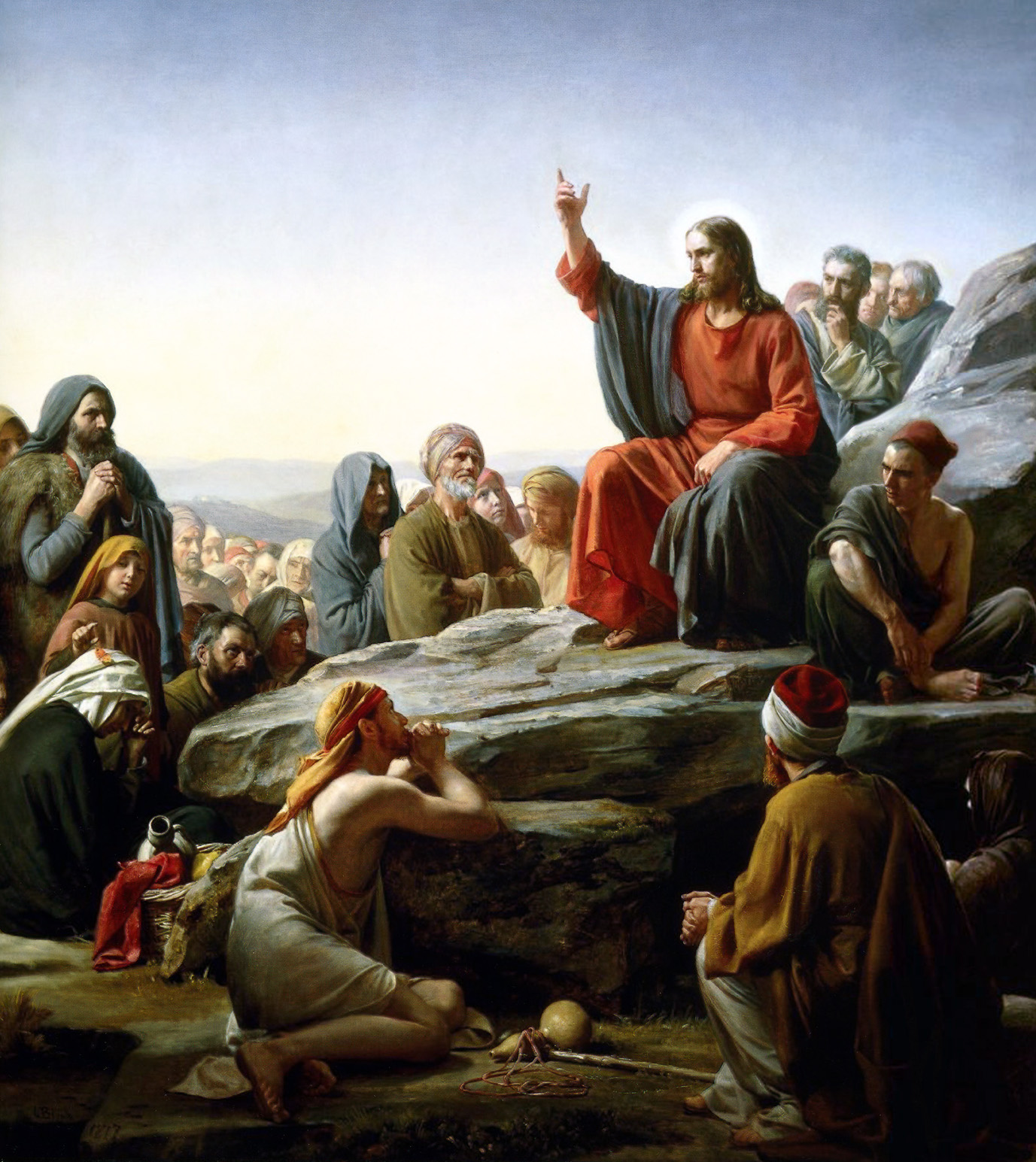
The ruling that "he who swears by the altar swears by it and by everything on it" closes the loophole. Swearing by heaven reaches "God’s throne and by the One who sits on it," so every oath reaches God. The saying stands beside the Sermon's command against swearing at all.
The record, by era
The Church Fathers1 voice
Now an oath is in confirmation of somewhat that has been spoken. The oath here then may signify testimony of Scripture which we produce in confirmation of that word which we speak. So that Divine Scripture is the temple of God, the gold is the meaning which it contains. As the gold which is outside the Temple is not sanctified, so all thoughts which are without divine Scripture, however admirable they may seem, are not hallowed. We ought not therefore to bring any speculations of our own for the confirmation of doctrine, unless such as we can show are hallowed by being contained in divine Scripture. The altar is the human heart, which is the chief thing in man. The offerings and gifts that are hid upon the altar, are every thing which are done in the heart, as to pray, to sing, to do alms, to fast. Every offering of a man then is sanctified by his heart, by which the offering is made. There cannot therefore be a more honourable offering than the heart of man, out of which the offering proceeds. If then one's conscience does not smite him, he has confidence towards God, not by reason of his gifts, but so to speak because he has rightly ordered the altar of his heart. Thirdly, we may say that over the temple, that is over every Scripture, and over the altar, that is over every heart, there is a certain meaning which is called the Heaven, the throne of God Himself, in which we shall be able to see the things that are revealed face to face, when that which is perfect is come.
The Medieval Church3 voices
He therefore that swears by the altar, swears by it and by all things that are upon it. Here he sets forth another reason. The temple contains the gold, and not conversely; similarly, the altar contains the gift, and not conversely. Hence he who swears …
(non occ.) And lest their infatuation should go so far, that they should affirm that the gold was more holy than the temple, and the gift than the altar, He argues on another ground, that in the oath which is sworn by the temple and the altar is contained the oath by the gold or by the gift.
He calls them blind for not wanting to teach what was right, but instead valuing what was of lesser importance, and giving second place to that which was worthy of honor. For they valued the gold in the temple, the images of the Cherubim and …
The Puritans and the Awakening1 voice
), by reducing all the oaths they had invented to the true intent of an oath, which is, By the name of the Lord: so that though an oath by the temple, or the altar, or heaven, be formally bad, yet it is binding. Quod fieri non debuit, factum valet--Engagements which ought not to have been made, are yet, when made, binding.
quarantine:debris (2026-07-29) — leading-punctuation+unbalanced-parens
4 more voices on this verse
The Puritans and the Awakening1 voice
Whosoever therefore shall swear by the altar,....
The Nineteenth Century3 voices
Whoso - shall swear by the altar - As an oath always supposes a person who witnesses it, and will punish perjury; therefore, whether they swore by the temple or the gold, (Mat 23:16), or by the altar or the gift laid on it, (Mat 23:18), the oath necessarily supposes the God of the temple, of the altar, and of the gifts, who witnessed the whole, and would, even in their exempt cases, punish the perjury.
We have in these verses the charges of our Lord against the Jewish teachers, ranged under eight heads. Standing in the midst of the temple, with a listening crowd around him, he publicly denounces the main errors of the scribes and the Pharisees, in unsparing terms. Eight times he uses the solemn expression, “Woe unto you;” seven times he calls them “hypocrites;” twice he speaks of them as “blind guides”—twice as “fools and blind”—once as “serpents! And a generation of vipers!” Let us mark that language well. It teaches a solemn lesson.
We have in these verses the charges of our Lord against the Jewish teachers, ranged under eight heads. Standing in the midst of the temple, with a listening crowd around him, he publicly denounces the main errors of the scribes and the Pharisees, in unsparing terms. Eight times he uses the solemn expression, “Woe unto you;” seven times he calls them “hypocrites;” twice he speaks of them as “blind guides”—twice as “fools and blind”—once as “serpents! And a generation of vipers!” Let us mark that language well. It teaches a solemn lesson. It shows how utterly abominable the spirit of the scribes and the Pharisees is in God’s sight, in whatever form it may be found. Let us glance shortly at the eight charges which our Lord brings forward, and then seek to draw from the whole passage some general instruction. The first “woe” in the list is directed against the systematic opposition of the scribes and Pharisees to the progress of the Gospel. They “shut up the kingdom of heaven;” they would neither go in themselves, nor suffer others go in. They rejected the warning voice of John the Baptist; they refused to acknowledge Jesus when he appeared among them as the Messiah; they tried to keep back Jewish inquirers. They would not believe the Gospel themselves, and they did all in their power to prevent others believing it: this was a great sin. The second “woe” in the list is directed against the covetousness and self-aggrandizing spirit of the scribes and Pharisees. They “devour widows’ houses and for a pretence made long prayer.” They imposed on the credulity of weak and unprotected women by an affection of great devoutness, until they were regarded as their spiritual directors. They scrupled not to abuse the influence thus unrighteously obtained to their own temporal advantage, and, in a word, to make money by their religion: this, again, was a great sin.
How the passage was read
On Matthew 23:1-39On Matthew 23:1-39
The woes, read from inside Israel's own tradition
Read the chapter's own frame before its fire. Jesus opens by AFFIRMING the teaching office: the scribes and Pharisees “sit in Moses' seat,” the expositor's chair of the synagogue (stone seats of honor survive in excavated synagogues), “so practice and observe whatever they tell you” (23:2-3). And in the sharpest woe He still says of the tithe, “these you ought to have done” (23:23). The target throughout is hypocrisy in practice, never Torah observance itself. Each image is concrete: tefillin (the small Scripture boxes bound on arm and forehead in prayer, still worn today) made extra broad to be seen; tzitzit (the commanded tassels, Numbers 15:38, which Jesus Himself wore, Matthew 9:20) made extra long; the oath casuistry of Temple versus gold; herbs tithed while justice goes unweighed.
“Whited sepulchres” is seasonal and local: before Passover, graves were freshly marked with white lime so that pilgrims would not contract corpse impurity unawares; the Mishnah schedules the grave-marking in the month of Adar, a month before the feast (Shekalim 1:1). The pilgrim crowds hearing Jesus had just walked roads lined with newly whitened tombs. And the register of the speech is one Israel's own tradition could use of itself: the Talmud preserves a list of seven types of Pharisee, most of them bad, and warns against the “plague of Pharisees” (Sotah 22b), a self-critique sharper than most sermons. The chapter is a woe-oracle in the prophets' own tradition (Isaiah 1, Malachi 1-2), spoken in the Temple, and it ends not in triumph but in a lament that aches: “O Jerusalem, Jerusalem... how often would I have gathered thy children together” (23:37).
This section is reception history: how the passage was read and kept in the Jewish tradition. Where a reading parts from an essential of the Christian faith, the section says so at that point.
Sources: Mishnah Shekalim 1:1 (graves marked in Adar, before Passover) · Sotah 22b (Babylonian Talmud, the seven types of Pharisee) · Mishnah Menachot 4:1 (tefillin and tzitzit in practice)
The words behind it
15 Greek wordsEvery Greek word of this verse in the order it stands, with what it means and the door to its own study. The last column counts the times a word stands in the whole Bible: the rarer the word, the more the places it appears belong together.
| Greek | Sound | Meaning | Word study | In the Bible |
|---|---|---|---|---|
| ὁ | ho | The [one] | G3588 → | 19766 times |
| οὖν | oun | therefore | G3767 → | 497 times |
| ὀμόσας | omosas | having sworn | G3660 → | 26 times |
| ἐν | en | by | G1722 → | 2738 times |
| τῷ | to | the | G3588 → | 19766 times |
| θυσιαστηρίῳ | thusiasterio | altar | G2379 → | 23 times |
| ὀμνύει | omnuei | swears | G3660 → | 26 times |
| ἐν | en | by | G1722 → | 2738 times |
| αὐτῷ | auto | it | G846 → | 5565 times |
| καὶ | kai | and | G2532 → | 9120 times |
| ἐν | en | by | G1722 → | 2738 times |
| πᾶσιν | pasin | all things | G3956 → | 1235 times |
| τοῖς | tois | that [are] | G3588 → | 19766 times |
| ἐπάνω | epano | upon | G1883 → | 19 times |
| αὐτοῦ, | autou | it, | G846 → | 5565 times |
ὁThe [one]
hoG3588 →19766 times
οὖνtherefore
ounG3767 →497 times
ὀμόσαςhaving sworn
omosasG3660 →26 times
ἐνby
enG1722 →2738 times
τῷthe
toG3588 →19766 times
θυσιαστηρίῳaltar
thusiasterioG2379 →23 times
ὀμνύειswears
omnueiG3660 →26 times
ἐνby
enG1722 →2738 times
αὐτῷit
autoG846 →5565 times
καὶand
kaiG2532 →9120 times
ἐνby
enG1722 →2738 times
πᾶσινall things
pasinG3956 →1235 times
τοῖςthat [are]
toisG3588 →19766 times
ἐπάνωupon
epanoG1883 →19 times
αὐτοῦ,it,
autouG846 →5565 times
A shaded row is a word that stands 400 times or fewer in the Bible.
Where this verse is studied
On this page
About Matthew
This page draws on 10 works. Open the list of works
This page draws on Adam Clarke, Commentary on the Bible; Glossa Ordinaria, Catena Aurea by Aquinas; J.C. Ryle, Expository Thoughts on the Gospels: Matthew; Jamieson, Fausset & Brown, Commentary Critical and Explanatory on the Whole Bible; John Gill, Exposition of the New Testament (1746-1748); Matthew Henry, Commentary on the Whole Bible; Origen of Alexandria, COMMENTARY ON MATTHEW 17; Origen of Alexandria, Catena Aurea by Aquinas; Theophylact of Ohrid, Commentary on Matthew and Thomas Aquinas, Commentary on Matthew.