
Luke 11:44
in Luke 11Woe to you! For you are like unmarked graves, which men walk over without even noticing.”
BSB
The same verse in ASV and KJV ▾
ASV
Woe unto you! for ye are as the tombs which appear not, and the men that walk over them know it not.
KJV
Woe unto you, scribes and Pharisees, hypocrites! for ye are as graves which appear not, and the men that walk over them are not aware of them.
⋯
This verse in Luke 11
Commentary
14 notes on this verseAnd like graves which appear not, they deceive by their outside beauty, and by their look impose upon the passers by; as it follows, And the men that walk over them are not aware of them; so much that in truth, though they give outward promise of what is beautiful, inwardly they enclose all manner of pollution.
The record, by era
The Church Fathers4 voices
By means of those things for which He blames us He makes us better. For He would have us be free from ambition, and not desire after vain show rather than the reality, which the Pharisees were then doing. For the greetings of men, and the rule over them, do not move us to be really useful, for these things fall to men though they be not good men. Therefore he adds, Woe unto you, who are as graves which appear not.
(Hom. 73.) But that the Pharisees were so, cannot be wondered at. But if we who are counted worthy to be the temples of God suddenly become graves full only of corruption, this is indeed the lowest wretchedness.
Those who desire to be greeted by everyone in the marketplace and anxiously consider it a great matter to have the foremost seats in the synagogue do not differ in any way from graves that do not appear as graves. On the outside, they are beautifully decorated but are full of all impurity. See here, I pray that hypocrisy is utterly blamed. It is a hateful malady toward God and humanity. The hypocrite is not whatever he seems to be and is thought to be. He borrows the reputation of goodness and conceals his real shame. He will not practice the very thing that he praises and admires. It is impossible for you to hide your hypocrisy for long. Just as the figures painted in pictures fall off as time dries up the colors, so also hypocrisies, after escaping observation for a very little time, are soon convicted of being really nothing.
The sentence of condemnation is also pronounced against those who deceive others with a false appearance, like hidden tombs that are not visible and deceive by their outward beauty; they promise good things on the outside, but inside they are full of decayed bones. This is what many teachers do, demanding things from others that they themselves cannot accomplish. And therefore these are their monuments, as it is also said elsewhere: Their sepulcher is open throat.
The Medieval Church1 voice
Woe to you who are like unseen tombs, and men walking over them do not know it. And this challenges the hypocrisy of the Pharisees, who outwardly present an appearance of correct doctrine, but within conceal what filth they carry, like tombs which, while showing …
8 more voices on this verse
The Medieval Church2 voices
The Lord says: you are like tombs that are full of every kind of rottenness, but on the outside gleam with marble; people by their outward appearance do not know what principles they are guided by in life (by what they walk), but if they …
Thirdly, He repeats this denunciation on account of fraudulence, when He adds: Woe to you!, who are as monuments that do not appear, namely as to what they are within, because they are fetid and unclean within, but outwardly they are beautiful: whence He adds: …
The Puritans and the Awakening3 voices
Woe unto you Scribes and Pharisees, hypocrites,.... As they are all along called by Matthew; though only here by Luke.
As graves which appear not, being overgrown with grass, so that men are not aware, till they stumble upon them, and either hurt themselves, or at least are defiled by touching them. On another occasion Christ compared them to whited sepulchres, fair without, but foul within;
Prayer is one of the great laws of natural religion. That man is a brute, is a monster, that never prays, that never gives glory to his Maker, nor feels his favour, nor owns his dependence upon him. One great design therefore of Christianity is to assist us in prayer, to enforce the duty upon us, to instruct us in it, and encourage us to expect advantage by it.
The Nineteenth Century3 voices
Ye are as graves which appear not - In Mat 23:27, our Lord tells them that they exactly resembled white-washed tombs: they had no fairness but on the outside: (see the note there) but here he says they are like hidden tombs, graves which were not distinguished by any outward decorations, and were not elevated above the ground, so that those who walked over them did not consider what corruption was within; so they, under the veil of hypocrisy, covered their iniquities, so that those who had any intercourse or connection with them did not perceive what accomplished knaves they had to do with.
A commentator
J.C. Ryle1816–1900
Expository Thoughts on the Gospels: Luke (lightly modernized text, Grace Gems edition) (1858)
Let us notice in this passage — our Lord Jesus Christ's readiness, when needful, to go into the company of the unconverted. We read that a certain Pharisee invited Jesus to eat with him. The man was evidently not one of our Lord's disciples. Yet we are told that "Jesus went in and reclined at the table." The conduct of our Lord on this occasion, as on others — is meant to be an example to all Christians. Christ is our pattern — as well as our atoning sacrifice .
A commentator
J.C. Ryle1816–1900
Expository Thoughts on the Gospels: Luke (lightly modernized text, Grace Gems edition) (1858)
proposed
Let us notice in this passage — our Lord Jesus Christ's readiness, when needful, to go into the company of the unconverted. We read that a certain Pharisee invited Jesus to eat with him. The man was evidently not one of our Lord's disciples. Yet we are told that "Jesus went in and reclined at the table." The conduct of our Lord on this occasion, as on others — is meant to be an example to all Christians. Christ is our pattern — as well as our atoning sacrifice . There are evidently times and occasions when the servant of Christ must mix with the ungodly and the people of this world. There may be seasons when it may be a duty to hold social dealings with them, to accept their invitations, and sit down at their tables. Nothing, of course, must induce the Christian to be a partaker in the sins or frivolous amusements of the world. But he must not be discourteous. He must not entirely withdraw himself from the society of the unconverted, and become a hermit or an ascetic. He must remember that good may be done in the private room — as well as in the pulpit. One qualification, however, should never be forgotten, when we act upon our Lord's example in this matter. Let us take heed that we go down into the company of the unconverted — in the same spirit in which Christ went. Let us remember His boldness in speaking of the things of God. He was always "about His Father's business." Let us remember His faithfulness in rebuking sin. He did not even spare the sins of those who entertained Him, when His attention was publicly called to them. Let us go into company in the same frame of mind — and our souls will take no harm. If we feel that we dare not imitate Christ in the company which we are invited to join — then we may be sure that we had better stay at home.
How the passage was read
On Luke 11:37-54On Luke 11:37-54
The dinner-table woes: cups, herbs, and proportion
The setting is a Pharisee's dinner table, and the host “marvelled that he had not first washed before dinner”: netilat yadayim, the ritual hand-pouring before bread (explained in this site's Mark 7 note). Jesus answers with the tradition's own vocabulary of vessels: “Now do ye Pharisees make clean the outside of the cup and the platter.” The purity law genuinely distinguished a vessel's outside from its inside; the Mishnah's tractate on vessels opens a chapter with exactly that: “All vessels have different laws for their outer and inner sides” (Kelim 25:1). Jesus turns the technical distinction into a mirror: the inside of the person is the part that counts.
Luke's tithing woe is sharper than Matthew's, and knowing the law shows why: “ye tithe mint and rue and all manner of herbs.” The Mishnah exempts rue from tithes (Sheviit 9:1 lists it first among the exempt plants). The Pharisees of the woe are tithing beyond what even their own tradition required, while “judgment and the love of God” go passed over. As in Matthew 23:23, Jesus affirms the scruple (“these ought ye to have done”) and indicts the inversion of weight.
This section is reception history: how the passage was read and kept in the Jewish tradition. Where a reading parts from an essential of the Christian faith, the section says so at that point.
Sources: Mishnah Kelim 25:1 (a vessel's outside and inside) · Mishnah Sheviit 9:1 (rue exempt from tithes)
The words behind it
17 Greek wordsEvery Greek word of this verse in the order it stands, with what it means and the door to its own study. The last column counts the times a word stands in the whole Bible: the rarer the word, the more the places it appears belong together.
| Greek | Sound | Meaning | Word study | In the Bible |
|---|---|---|---|---|
| Οὐαὶ | ouai | Woe | G3759 → | 46 times |
| ὑμῖν | humin | to you | G4771 → | 2973 times |
| ὅτι | hoti | for | G3754 → | 1292 times |
| ἐστὲ | este | you are | G1510 → | 2333 times |
| ὡς | hos | like | G5613 → | 500 times |
| τὰ | ta | <the> | G3588 → | 19766 times |
| μνημεῖα | mnemeia | graves | G3419 → | 40 times |
| τὰ | ta | <the> | G3588 → | 19766 times |
| ἄδηλα, | adela | unmarked, | G82 → | |
| καὶ | kai | and | G2532 → | 9120 times |
| οἱ | hoi | the | G3588 → | 19766 times |
| ἄνθρωποι | anthropoi | men | G444 → | 549 times |
| οἱ | hoi | who | G3588 → | 19766 times |
| περιπατοῦντες | peripatountes | are walking | G4043 → | 94 times |
| ἐπάνω | epano | above | G1883 → | 19 times |
| οὐκ | ouk | not | G3756 → | 1664 times |
| οἴδασιν.¶ | oidasin | do know [it]. |
ΟὐαὶWoe
ouaiG3759 →46 times
ὑμῖνto you
huminG4771 →2973 times
ὅτιfor
hotiG3754 →1292 times
ἐστὲyou are
esteG1510 →2333 times
ὡςlike
hosG5613 →500 times
τὰ<the>
taG3588 →19766 times
μνημεῖαgraves
mnemeiaG3419 →40 times
τὰ<the>
taG3588 →19766 times
ἄδηλα,unmarked,
adelaG82 →
καὶand
kaiG2532 →9120 times
οἱthe
hoiG3588 →19766 times
ἄνθρωποιmen
anthropoiG444 →549 times
οἱwho
hoiG3588 →19766 times
περιπατοῦντεςare walking
peripatountesG4043 →94 times
ἐπάνωabove
epanoG1883 →19 times
οὐκnot
oukG3756 →1664 times
οἴδασιν.¶do know [it].
oidasin
A shaded row is a word that stands 400 times or fewer in the Bible.
The walk
8 stopsEach card is a verse this one points to, and under it the verses that one points to in turn. Where several paths arrive at the same place, that place is listed first: the text keeps returning to it.
Through
Psalms 5:9For not a word they speak can be trusted; destruction lies within them. Their throats are open graves; their tongues practice deceit.
it leads to
- Jeremiah 9:3–6
“They bend their tongues like bows; lies prevail over truth in the land. For they proceed from evil to evil, and they do not take Me into account,” declares the LORD.
- Romans 3:13
“Their throats are open graves; their tongues practice deceit.” “The venom of vipers is on their lips.”
- Psalms 62:4
They fully intend to cast him down from his lofty perch; they delight in lies; with their mouths they bless, but inwardly they curse. Selah
- Micah 6:12
For the wealthy of the city are full of violence, and its residents speak lies; their tongues are deceitful in their mouths.
- Proverbs 29:5
A man who flatters his neighbor spreads a net for his feet.
- Jeremiah 9:3–6
Through
Acts 23:3Then Paul said to him, “God will strike you, you whitewashed wall! You sit here to judge me according to the law, yet you yourself violate the law by commanding that I be struck.”
it leads to
- Deuteronomy 25:1–2
If there is a dispute between men, they are to go to court to be judged, so that the innocent may be acquitted and the guilty condemned.
- John 7:51
“Does our law convict a man without first hearing from him to determine what he has done?”
- Deuteronomy 25:1–2
Through
Hosea 9:8The prophet is Ephraim’s watchman, along with my God, yet the snare of the fowler lies on all his paths. Hostility is in the house of his God!
it leads to
- Ezekiel 3:17
“Son of man, I have made you a watchman for the house of Israel. Whenever you hear a word from My mouth, give them a warning from Me.
- Ezekiel 3:17
Where this verse is studied
About Luke
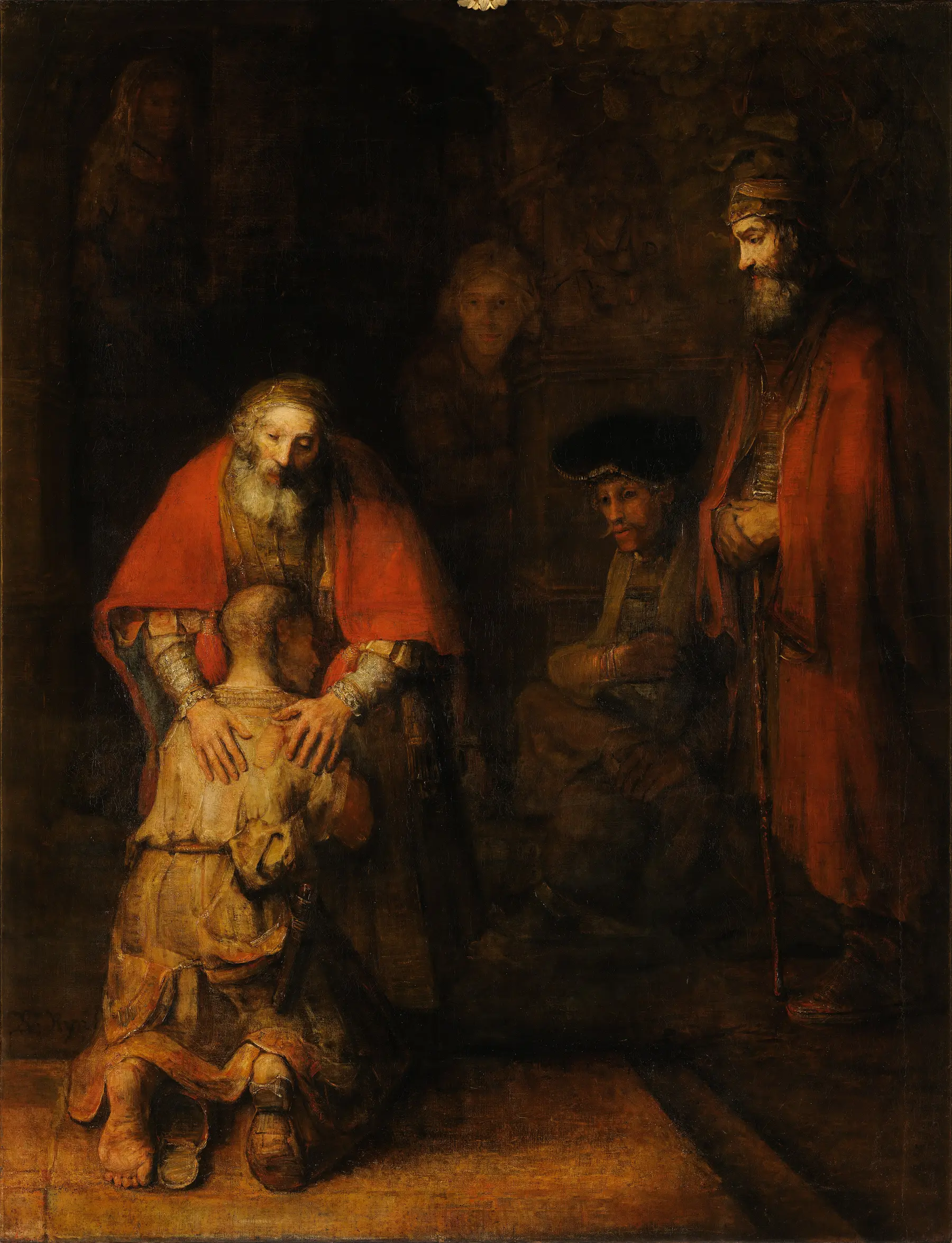
This page draws on 13 works. Open the list of works
This page draws on Adam Clarke, Commentary on the Bible; Ambrose of Milan, Catena Aurea by Aquinas; Ambrose of Milan, Exposition of the Gospel of Luke, 7.105; Bede, On the Gospel of Luke; Bonaventure, Commentary on Luke, Chapter 11; Cyril of Alexandria, Catena Aurea by Aquinas; Cyril of Alexandria, COMMENTARY ON LUKE, HOMILY 84; J.C. Ryle, Expository Thoughts on the Gospels: Luke (lightly modernized text, Grace Gems edition); John Chrysostom, Catena Aurea by Aquinas; John Gill, Exposition of the New Testament (1746-1748); John Wesley, Explanatory Notes upon the New Testament; Matthew Henry, Commentary on the Whole Bible and Theophylact of Ohrid, Commentary on Luke.