
Joshua 11:19
in Joshua 11No city made peace with the Israelites except the Hivites living in Gibeon; all others were taken in battle.
BSB
The same verse in ASV and KJV ▾
ASV
There was not a city that made peace with the children of Israel, save the Hivites the inhabitants of Gibeon: they took all in battle.
KJV
There was not a city that made peace with the children of Israel, save the Hivites the inhabitants of Gibeon: all other they took in battle.
⋯
This verse in Joshua 11
Commentary
2 notes on this verseIt is intimated that other cities might have made as good terms for themselves, without ragged clothes and clouted shoes, if they would have humbled themselves, but they never so much as desired conditions of peace. We here are told whence this unaccountable infatuation came: It was of the Lord to harden their hearts,
This site's exposition
There was not a city that
on Joshua 11:19-20
Deuteronomy 20:10 required terms of peace to be offered to a city before it was fought, and verse 19 says no city took them except Gibeon, which had obtained its treaty by deceit in chapter 9. Verse 20 then gives the reason in the vocabulary of the plagues, that it was of the Lord to harden their hearts, and this is the only place hardening appears in the book of Joshua. Gill reads a divine determination standing behind the whole action, and Clarke reads God withdrawing restraint from men whose guilt was already full, pointing back to Genesis 15:16 on the iniquity of the Amorites. Exodus carries both kinds of statement, with Pharaoh hardening his own heart at 8:15 before the same thing is said of God at 9:12.
How the passage was read
What the Jewish commentators add
On the verses either side of this one
For many days did Yehoshua. This verse was said to criticize Yehoshua, who intended to delay the conquest of the land, in order to lengthen his days, for it is said, “And you will apportion it to them.
This section is reception history: how the passage was read and kept in the Jewish tradition. Where a reading parts from an essential of the Christian faith, the section says so at that point.
Texts and citation data: Sefaria; each excerpt follows its version’s licence. 4 further sources are cited on this chapter that carry no English text this site may quote or only restate the verse.
The words behind it
16 Hebrew wordsEvery Hebrew word of this verse in the order it stands, with what it means and the door to its own study. The last column counts the times a word stands in the whole Bible: the rarer the word, the more the places it appears belong together.
| Hebrew | Sound | Meaning | Word study | In the Bible |
|---|---|---|---|---|
| לֹֽא־ | lo'- | not | H3808 → | 5168 times |
| הָיְתָ֣ה | hayetah | it was | H1961 → | 3559 times |
| עִ֗יר | ʾir | a city | H5892 → | 1090 times |
| אֲשֶׁ֤ר | ʾasher | which | H834 → | 5497 times |
| הִשְׁלִ֙ימָה֙ | hishlimah | it made peace | H7999 → | 116 times |
| אֶל־ | ʾel- | to | H413 → | 5510 times |
| בְּנֵ֣י | benei | [the] people of | H1121 → | 4930 times |
| יִשְׂרָאֵ֔ל | yisrael | Israel | H3478 → | 2507 times |
| בִּלְתִּ֥י | bilti | except | H1115 → | 112 times |
| הַחִוִּ֖י | hachivi | the Hivite[s] | H2340 → | 25 times |
| יֹשְׁבֵ֣י | yoshevei | [the] inhabitants of | H3427 → | 1079 times |
| גִבְע֑וֹן | givon | Gibeon | H1391 → | 38 times |
| אֶת־ | ʾet- | <obj.> | H853 → | 10935 times |
| הַכֹּ֖ל | hakol | <the> everything | H3605 → | 5413 times |
| לָקְח֥וּ | lakechu | they took | H3947 → | 966 times |
| בַמִּלְחָמָֽה׃ | vamilchamah | in <the> battle | H4421 → | 320 times |
לֹֽא־not
lo'-H3808 →5168 times
הָיְתָ֣הit was
hayetahH1961 →3559 times
עִ֗ירa city
ʾirH5892 →1090 times
אֲשֶׁ֤רwhich
ʾasherH834 →5497 times
הִשְׁלִ֙ימָה֙it made peace
hishlimahH7999 →116 times
אֶל־to
ʾel-H413 →5510 times
בְּנֵ֣י[the] people of
beneiH1121 →4930 times
יִשְׂרָאֵ֔לIsrael
yisraelH3478 →2507 times
בִּלְתִּ֥יexcept
biltiH1115 →112 times
הַחִוִּ֖יthe Hivite[s]
hachiviH2340 →25 times
יֹשְׁבֵ֣י[the] inhabitants of
yosheveiH3427 →1079 times
גִבְע֑וֹןGibeon
givonH1391 →38 times
אֶת־<obj.>
ʾet-H853 →10935 times
הַכֹּ֖ל<the> everything
hakolH3605 →5413 times
לָקְח֥וּthey took
lakechuH3947 →966 times
בַמִּלְחָמָֽה׃in <the> battle
vamilchamahH4421 →320 times
A shaded row is a word that stands 400 times or fewer in the Bible.
Where this verse is studied
About Joshua
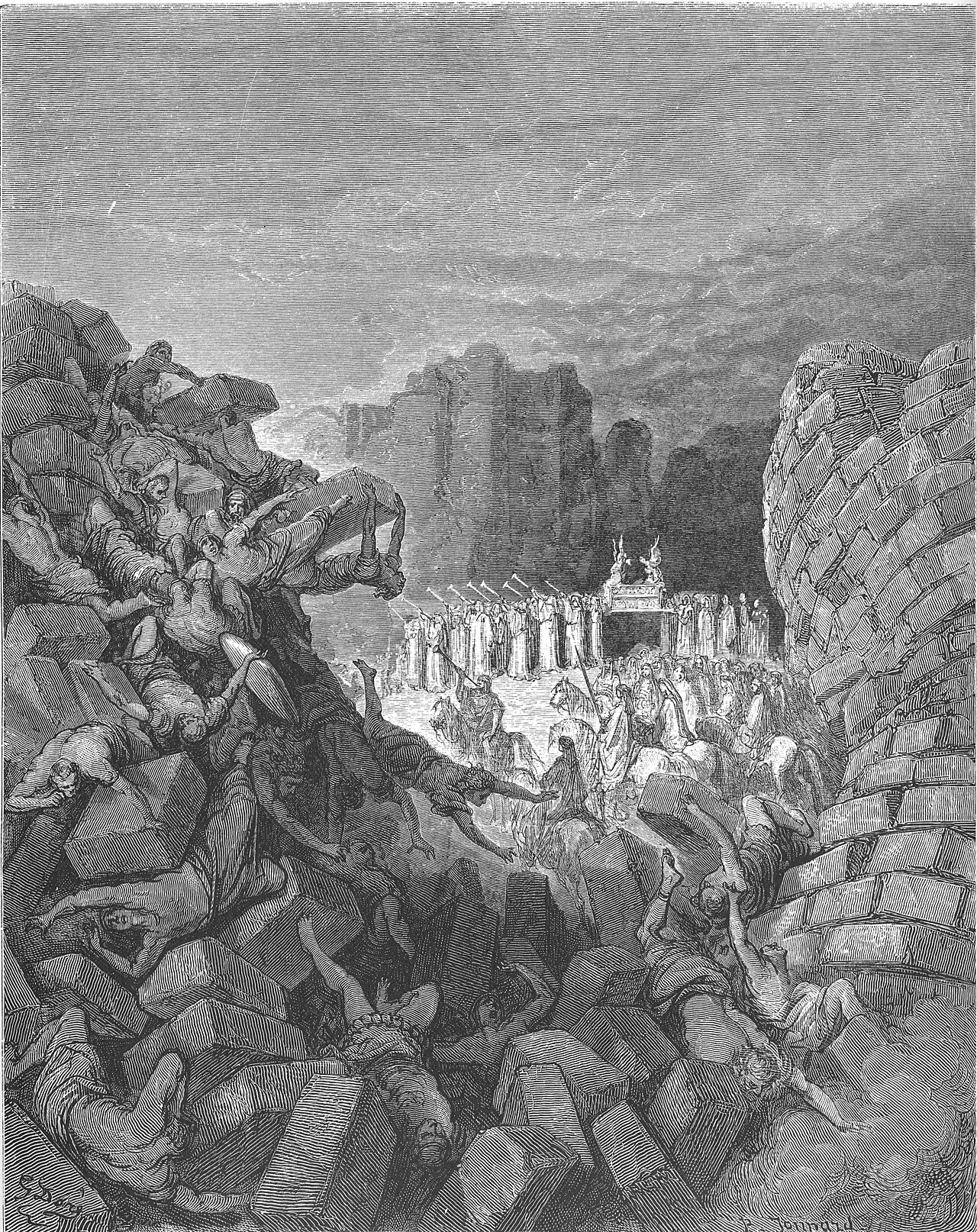
This page draws on Adam Clarke, Commentary on the Bible; John Gill, Exposition of the Old Testament and Matthew Henry, Commentary on the Whole Bible.