
Judges 19:16
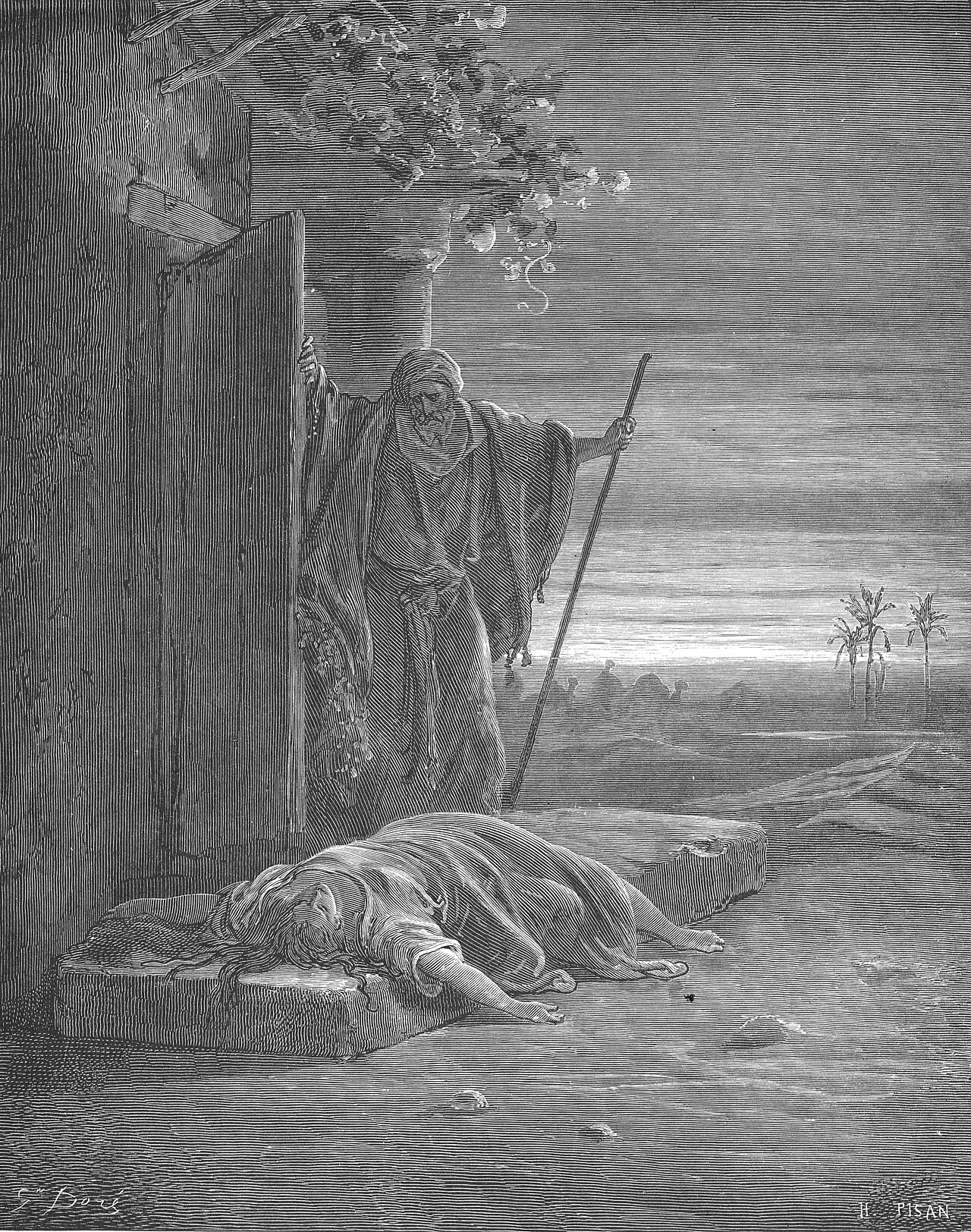
in Judges 19That evening an old man from the hill country of Ephraim, who was residing in Gibeah (the men of that place were Benjamites), came in from his work in the field.
BSB
The same verse in ASV and KJV ▾
ASV
And, behold, there came an old man from his work out of the field at even: now the man was of the hill-country of Ephraim, and he sojourned in Gibeah; but the men of the place were Benjamites.
KJV
And, behold, there came an old man from his work out of the field at even, which was also of mount Ephraim; and he sojourned in Gibeah: but the men of the place were Benjamites.
⋯
This verse in Judges 19
Commentary
8 notes on this verseA commentator
Albert Barnes1798–1870
Notes, Explanatory and Practical, on the Old and New Testaments (1832-1869)
Which was also of Mount Ephraim - i. e., of the country of the Levite. This single giver of hospitality was himself a stranger and sojourner at Gibeah.
This site's exposition
an old man from the hill country of Ephraim
on Judges 19:16-17
Their one host is from Ephraim himself and only “residing in Gibeah”, and the verse adds that “the men of that place were Benjamites”. Lot was the same kind of sojourner at Sodom, as Genesis 19:1 and 19:9 show. He asks a host's two questions, “Where are you going, and where have you come from”.
The record, by era
The Church Fathers2 voices
The Gabanites lived there, unfriendly, harsh, unbearable people, who could stand anything but to receive people hospitably. Indeed, it would have been much more suitable had the Levite not sought hospitality in Gaba [Gibeah]. That his treatment be utterly offensive, he found on entering the city that there was no inn. And when he sat on the road imploring the mercy of these strangers, an old man from the fields happened to stumble on him, for evening had compelled him to leave his work in the fields at night. Seeing him, he asked where he was from and where he was going.
When some little progress was made, though night was threatening to come on, and they were close by the town of the Jebusites, on the slave's request that his lord should turn aside there, he refused, because it was not a city of the children of Israel. He meant to get as far as Gibeah, which was inhabited by the people of the tribe of Benjamin. But when they arrived there was no one to receive them with hospitality, except a stranger of advanced age.
The Puritans and the Awakening3 voices
Benjamites - This was indeed one of the cities belonging to the priests; but the cities which were given to the priests, and whereof they were owners, were not inhabited by the priests or Levites only, especially at this time when they were but few in number, but by many other persons of different professions.
And, behold, there came an old man from his work out of the field at even,....
Yet they were hard-hearted to a traveller in distress, while an honest Ephraimite had compassion on him, and, no doubt, was the more kind to him, when, upon enquiry, he found that he was his countryman, of Mount Ephraim likewise. He that was himself but a sojourner in Gibeah was the more compassionate to a wayfaring man, for he knew the heart of a stranger, Exod. xxiii.
1 more voice on this verse
The Nineteenth Century1 voice
A commentator
Jamieson, Fausset & Brown1802–1910
Commentary Critical and Explanatory on the Whole Bible (1871)
proposed
there came an old man from his work out of the field at even, which was also of mount Ephraim--Perhaps his hospitality was quickened by learning the stranger's occupation, and that he was on his return to his duties at Shiloh.
quarantine:debris (2026-07-29) — starts-lowercase
The words behind it
19 Hebrew wordsEvery Hebrew word of this verse in the order it stands, with what it means and the door to its own study. The last column counts the times a word stands in the whole Bible: the rarer the word, the more the places it appears belong together.
| Hebrew | Sound | Meaning | Word study | In the Bible |
|---|---|---|---|---|
| וְהִנֵּ֣ה׀ | vehineh | and there! | H2009 → | 843 times |
| אִ֣ישׁ | ʾish | a man | H376 → | 1663 times |
| זָקֵ֗ן | zaken | old | H2205 → | 178 times |
| בָּ֣א | ba' | [was] coming | H935 → | 2568 times |
| מִֽן־ | min- | from | H4480 → | 1188 times |
| מַעֲשֵׂ֤הוּ | maasehu | work his | H4639 → | 236 times |
| מִן־ | min- | from | H4480 → | 1188 times |
| הַשָּׂדֶה֙ | hasadeh | the field | H7704 → | 334 times |
| בָּעֶ֔רֶב | baerev | in the evening | H6153 → | 134 times |
| וְהָאִישׁ֙ | vehaish | and the man | H376 → | 1663 times |
| מֵהַ֣ר | mehar | [was] from [the] hill country of | H2022 → | 546 times |
| אֶפְרַ֔יִם | ʾefrayim | Ephraim | H669 → | 180 times |
| וְהוּא־ | vehu'- | and he | H1931 → | 1879 times |
| גָ֖ר | gar | [was] sojourning | H1481 → | 97 times |
| בַּגִּבְעָ֑ה | bagivah | in <the> Gibeah | H1390 → | 45 times |
| וְאַנְשֵׁ֥י | veanshei | and [the] men of | H582 → | 566 times |
| הַמָּק֖וֹם | hamakom | the place | H4725 → | 401 times |
| בְּנֵ֥י | benei | [were] Ben- | H1145 → | 15 times |
| יְמִינִֽי׃ | yemini | jaminites | H1145 → | 15 times |
וְהִנֵּ֣ה׀and there!
vehinehH2009 →843 times
אִ֣ישׁa man
ʾishH376 →1663 times
זָקֵ֗ןold
zakenH2205 →178 times
בָּ֣א[was] coming
ba'H935 →2568 times
מִֽן־from
min-H4480 →1188 times
מַעֲשֵׂ֤הוּwork his
maasehuH4639 →236 times
מִן־from
min-H4480 →1188 times
הַשָּׂדֶה֙the field
hasadehH7704 →334 times
בָּעֶ֔רֶבin the evening
baerevH6153 →134 times
וְהָאִישׁ֙and the man
vehaishH376 →1663 times
מֵהַ֣ר[was] from [the] hill country of
meharH2022 →546 times
אֶפְרַ֔יִםEphraim
ʾefrayimH669 →180 times
וְהוּא־and he
vehu'-H1931 →1879 times
גָ֖ר[was] sojourning
garH1481 →97 times
בַּגִּבְעָ֑הin <the> Gibeah
bagivahH1390 →45 times
וְאַנְשֵׁ֥יand [the] men of
veansheiH582 →566 times
הַמָּק֖וֹםthe place
hamakomH4725 →401 times
בְּנֵ֥י[were] Ben-
beneiH1145 →15 times
יְמִינִֽי׃jaminites
yeminiH1145 →15 times
A shaded row is a word that stands 400 times or fewer in the Bible.
The walk
8 stopsEach card is a verse this one points to, and under it the verses that one points to in turn. Where several paths arrive at the same place, that place is listed first: the text keeps returning to it.
Through
Psalms 128:2For when you eat the fruit of your labor, blessings and prosperity will be yours.
it leads to
- Isaiah 3:10
Tell the righteous it will be well with them, for they will enjoy the fruit of their labor.
- Isaiah 62:8
The LORD has sworn by His right hand and by His mighty arm: “Never again will I give your grain to your enemies for food, nor will foreigners drink the new wine for which…
- Isaiah 65:21–23
They will build houses and dwell in them; they will plant vineyards and eat their fruit.
- Ecclesiastes 5:18–19
Here is what I have seen to be good and fitting: to eat and drink, and to find satisfaction in all the labor one does under the sun during the few days of life…
- Deuteronomy 28:4
The fruit of your womb will be blessed, as well as the produce of your land and the offspring of your livestock—the calves of your herds and the lambs of your flocks.
- Isaiah 3:10
Through
Proverbs 14:23There is profit in all labor, but mere talk leads only to poverty.
it leads to
- Proverbs 28:19
The one who works his land will have plenty of food, but whoever chases fantasies will have his fill of poverty.
- Proverbs 12:24
The hand of the diligent will rule, but laziness ends in forced labor.
- 2 Thessalonians 3:10–12
For even while we were with you, we gave you this command: “If anyone is unwilling to work, he shall not eat.”
- Proverbs 28:19
About Judges
Who and where
2 names in this verse with a page on the site.
This page draws on 9 works. Open the list of works
This page draws on Albert Barnes, Notes, Explanatory and Practical, on the Old and New Testaments (1832-1869); Albert Barnes, Notes on the Old Testament; Ambrose of Milan, LETTER 33; Ambrose of Milan, On the Duties of the Clergy 3.19.113; Jamieson, Fausset & Brown, Commentary Critical and Explanatory on the Whole Bible; John Gill, Exposition of the Old Testament (1748-1763); John Wesley, Explanatory Notes upon the Old Testament; Keil and Delitzsch, Biblical Commentary on the Old Testament: Joshua, Judges, Ruth and Matthew Henry, Commentary on the Whole Bible.