
Judges 19:15
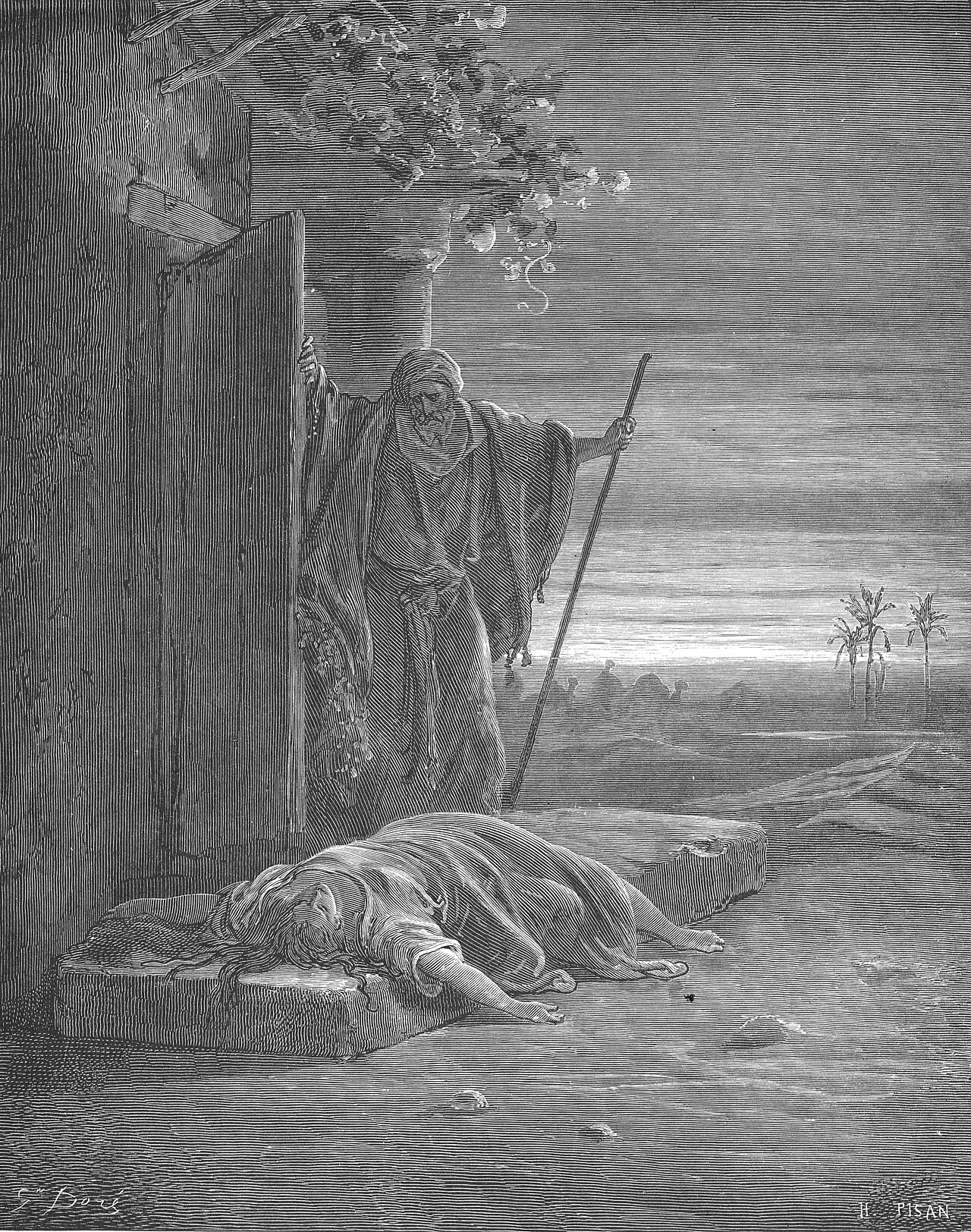
in Judges 19They stopped to go in and lodge in Gibeah. The Levite went in and sat down in the city square, but no one would take them into his home for the night.
BSB
The same verse in ASV and KJV ▾
ASV
And they turned aside thither, to go in to lodge in Gibeah: and he went in, and sat him down in the street of the city; for there was no man that took them into his house to lodge.
KJV
And they turned aside thither, to go in and to lodge in Gibeah: and when he went in, he sat him down in a street of the city: for there was no man that took them into his house to lodging.
⋯
This verse in Judges 19
Commentary
8 notes on this verseA commentator
Albert Barnes1798–1870
Notes, Explanatory and Practical, on the Old and New Testaments (1832-1869)
A street - Probably the square or place within the gates, where courts were held, bargains made, and where the chief men and strangers congregated.
This site's exposition
let us try to reach one of these towns
on Judges 19:13-15
Gibeah and Ramah are Benjamite towns, and Gibeah is Saul's home when the kingdom begins, called Gibeah of Saul at 1 Samuel 11:4, 15:34 and 2 Samuel 21:6. Verse 15 states the failure without comment, “no one would take them into his home for the night”. Genesis 18 and 19 turn on taking in the traveller, and Hosea 9:9 and 10:9 measure Israel by the days of Gibeah.
This site's exposition
sat down in the city square
Barnes describes the city square as the open place inside the gate where strangers gathered. Clarke adds that Gibeah probably had no inn, so the Levite needs a home to take him in. No one in the city opened a door.
The record, by era
The Church Fathers2 voices
The Gabanites lived there, unfriendly, harsh, unbearable people, who could stand anything but to receive people hospitably. Indeed, it would have been much more suitable had the Levite not sought hospitality in Gaba [Gibeah]. That his treatment be utterly offensive, he found on entering the city that there was no inn. And when he sat on the road imploring the mercy of these strangers, an old man from the fields happened to stumble on him, for evening had compelled him to leave his work in the fields at night. Seeing him, he asked where he was from and where he was going.
When some little progress was made, though night was threatening to come on, and they were close by the town of the Jebusites, on the slave's request that his lord should turn aside there, he refused, because it was not a city of the children of Israel. He meant to get as far as Gibeah, which was inhabited by the people of the tribe of Benjamin. But when they arrived there was no one to receive them with hospitality, except a stranger of advanced age.
The Puritans and the Awakening1 voice
And they turned aside thither to go in and lodge in Gibeah,....
The Nineteenth Century2 voices
A commentator
Jamieson, Fausset & Brown1802–1910
Commentary Critical and Explanatory on the Whole Bible (1871)
Hence we conclude that the custom, which is still frequently witnessed in the cities of the East, was then not uncommon, for travellers who were late in arriving and who had no introduction to a private family, to spread their bedding in the streets, or wrapping themselves up in their cloaks, pass the night in the open air.
No man - took them into his house to lodging - There was probably no inn or house of public entertainment in this place, and therefore they could not have a lodging unless furnished by mere hospitality. To say that there were no inns in those primitive times, is not true; there were such places, though not very frequent. Joseph’s brethren found their money in their sacks when they loosed them at an inn, Gen 42:27. The house of Rahab was an inn, Jos 2:1. And the woman whose house Samson frequented at Gaza was a hostess, or one who kept a place of public entertainment.
The words behind it
15 Hebrew wordsEvery Hebrew word of this verse in the order it stands, with what it means and the door to its own study. The last column counts the times a word stands in the whole Bible: the rarer the word, the more the places it appears belong together.
| Hebrew | Sound | Meaning | Word study | In the Bible |
|---|---|---|---|---|
| וַיָּסֻ֣רוּ | vaiyasuru | and they turned aside | H5493 → | 299 times |
| שָׁ֔ם | sham | there | H8033 → | 834 times |
| לָב֖וֹא | lavo' | to go | H935 → | 2568 times |
| לָל֣וּן | lalun | to spend [the] night | H3885 → | 84 times |
| בַּגִּבְעָ֑ה | bagivah | in <the> Gibeah | H1390 → | 45 times |
| וַיָּבֹ֗א | vaiyavo' | and he went | H935 → | 2568 times |
| וַיֵּ֙שֶׁב֙ | vaiyeshev | and he sat | H3427 → | 1079 times |
| בִּרְח֣וֹב | birchov | in [the] open square of | H7339 → | 43 times |
| הָעִ֔יר | hair | the city | H5892 → | 1090 times |
| וְאֵ֥ין | veein | and not | H369 → | 789 times |
| אִ֛ישׁ | ʾish | anyone | H376 → | 1663 times |
| מְאַסֵּֽף־ | measef- | [was] receiving | H622 → | 200 times |
| אוֹתָ֥ם | ʾotam | <obj.> them | H853 → | 10935 times |
| הַבַּ֖יְתָה | habaytah | the house towards | H1004 → | 2046 times |
| לָלֽוּן׃ | lalun | to spend [the] night | H3885 → | 84 times |
וַיָּסֻ֣רוּand they turned aside
vaiyasuruH5493 →299 times
שָׁ֔םthere
shamH8033 →834 times
לָב֖וֹאto go
lavo'H935 →2568 times
לָל֣וּןto spend [the] night
lalunH3885 →84 times
בַּגִּבְעָ֑הin <the> Gibeah
bagivahH1390 →45 times
וַיָּבֹ֗אand he went
vaiyavo'H935 →2568 times
וַיֵּ֙שֶׁב֙and he sat
vaiyeshevH3427 →1079 times
בִּרְח֣וֹבin [the] open square of
birchovH7339 →43 times
הָעִ֔ירthe city
hairH5892 →1090 times
וְאֵ֥יןand not
veeinH369 →789 times
אִ֛ישׁanyone
ʾishH376 →1663 times
מְאַסֵּֽף־[was] receiving
measef-H622 →200 times
אוֹתָ֥ם<obj.> them
ʾotamH853 →10935 times
הַבַּ֖יְתָהthe house towards
habaytahH1004 →2046 times
לָלֽוּן׃to spend [the] night
lalunH3885 →84 times
A shaded row is a word that stands 400 times or fewer in the Bible.
The walk
8 stopsEach card is a verse this one points to, and under it the verses that one points to in turn. Where several paths arrive at the same place, that place is listed first: the text keeps returning to it.
Through
Hebrews 13:2Do not neglect to show hospitality to strangers, for by so doing some people have entertained angels without knowing it.
it leads to
- Matthew 25:35
For I was hungry and you gave Me something to eat, I was thirsty and you gave Me something to drink, I was a stranger and you took Me in,
- Genesis 18:1
Then the LORD appeared to Abraham by the Oaks of Mamre in the heat of the day, while he was sitting at the entrance of his tent.
- 1 Peter 4:9
Show hospitality to one another without complaining.
- Romans 12:13
Share with the saints who are in need. Practice hospitality.
- Matthew 25:35
Through
Matthew 25:35For I was hungry and you gave Me something to eat, I was thirsty and you gave Me something to drink, I was a stranger and you took Me in,
it leads to
- 1 John 3:16–19
By this we know what love is: Jesus laid down His life for us, and we ought to lay down our lives for our brothers.
- James 2:15–16
Suppose a brother or sister is without clothes and daily food.
- Deuteronomy 15:7–11
If there is a poor man among your brothers within any of the gates in the land that the LORD your God is giving you, then you are not to harden your heart or…
- Ezekiel 18:16
He does not oppress another, or retain a pledge, or commit robbery. He gives his bread to the hungry and covers the naked with clothing.
- 1 John 3:16–19
About Judges
Who and where
1 name in this verse with a page on the site.
This page draws on 9 works. Open the list of works
This page draws on Adam Clarke, Commentary on the Bible; Albert Barnes, Notes, Explanatory and Practical, on the Old and New Testaments (1832-1869); Albert Barnes, Notes, Explanatory and Practical, on the Old and New Testaments; Ambrose of Milan, LETTER 33; Ambrose of Milan, On the Duties of the Clergy 3.19.113; Jamieson, Fausset & Brown, Commentary Critical and Explanatory on the Whole Bible; John Gill, Exposition of the Old Testament (1748-1763); Keil and Delitzsch, Biblical Commentary on the Old Testament: Joshua, Judges, Ruth and Matthew Henry, Commentary on the Whole Bible.