
Genesis 9:8
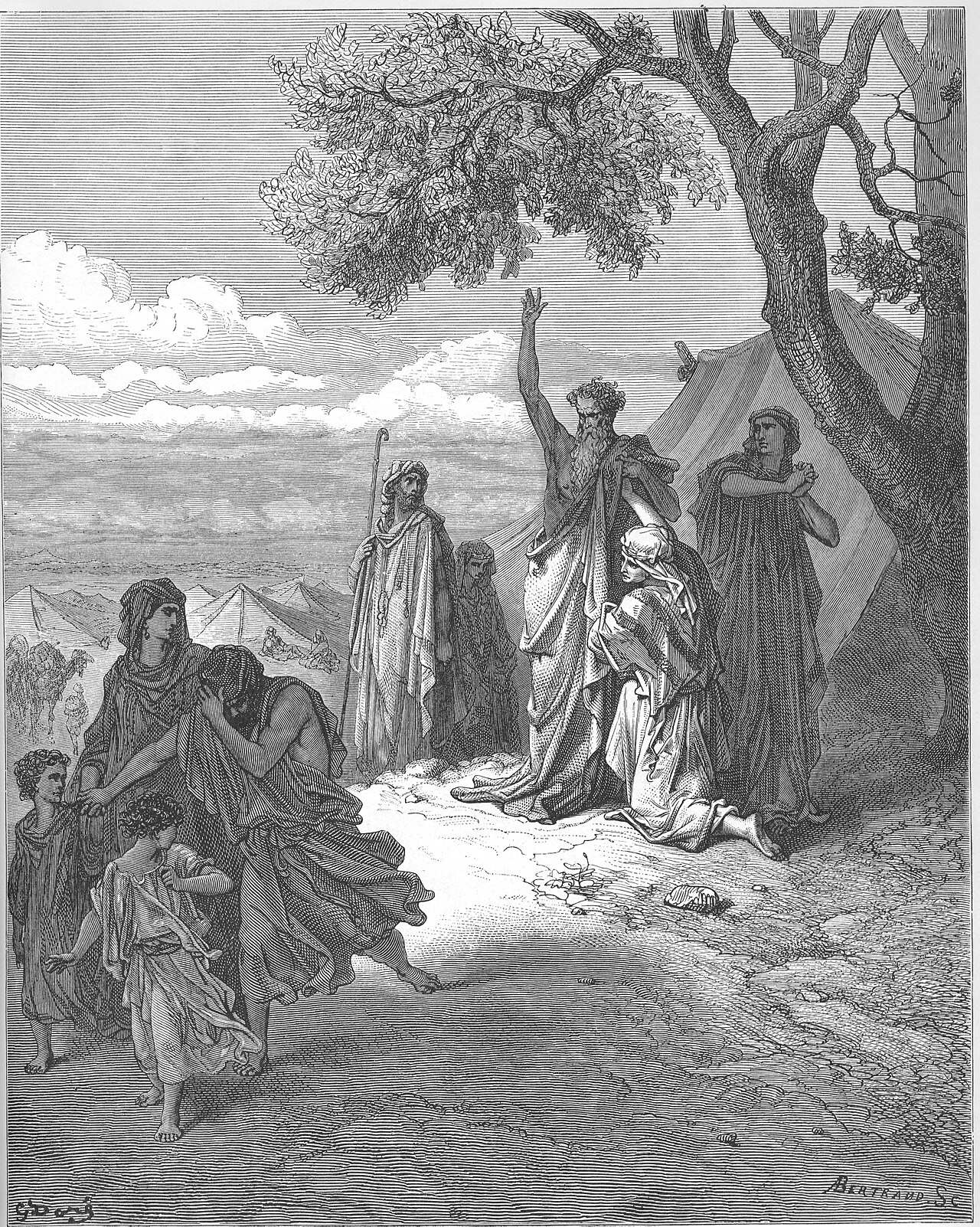
in Genesis 9Then God said to Noah and his sons with him,
BSB
The same verse in ASV and KJV ▾
ASV
And God spake unto Noah, and to his sons with him, saying,
KJV
And God spake unto Noah, and to his sons with him, saying,
⋯
This verse in Genesis 9
Commentary
5 notes on this verseThis site's exposition
Then God said to Noah and his sons with him
on Genesis 9:8-11
The word covenant first enters the Bible at 6:18, spoken to this same man before the ark was built. Here it is established on the far side of the water, and it runs one way: God binds Himself and asks nothing back. The parties are Noah, his descendants after him, and every living creature that came out of the ark. The promise is exact: no flood will destroy the earth again.
The record, by era
The Church Fathers1 voice
And his Lord spoke to [Noah], as he desired that Noah hear, "Because of your righteousness, a remnant was preserved and did not perish in that flood that took place.
The Puritans and the Awakening2 voices
And God spake unto Noah, and to his sons with him,.... Not only what is contained in the preceding verses, but in the subsequent ones: saying; as follows.
And God spake unto Noah, and to his sons with him,.... Not only what is contained in the preceding verses, but in the subsequent ones: saying; as follows.
The Nineteenth Century1 voice
A commentator
Albert Barnes1798–1870
Notes, Explanatory and Practical, on the Old and New Testaments (1832-1869)
proposed
- XXIX. The Covenant with Noah 13. קשׁת qeshet, “bow; related: be bent.” 14. ענן ‛ānan, “cover, cast over; noun: cloud.” The covenant made with Noah Gen 6:18 is now formally confirmed. The purpose conceived in the heart Gen 8:21 now receives significant expression. Not only a new blessing is bestowed, but also a new covenant is formed with Noah. For he that has offered an acceptable sacrifice is not only at peace with God, but renewed in mind after the image of God. He is therefore a fit subject for entering into a covenant.
The words behind it
8 Hebrew wordsEvery Hebrew word of this verse in the order it stands, with what it means and the door to its own study. The last column counts the times a word stands in the whole Bible: the rarer the word, the more the places it appears belong together.
| Hebrew | Sound | Meaning | Word study | In the Bible |
|---|---|---|---|---|
| וַיֹּ֤אמֶר | vaiyomer | and he said | H559 → | 5305 times |
| אֱלֹהִים֙ | ʾelohim | God | H430 → | 2601 times |
| אֶל־ | ʾel- | to | H413 → | 5510 times |
| נֹ֔חַ | noach | Noah | H5146 → | 46 times |
| וְאֶל־ | veel- | and to | H413 → | 5510 times |
| בָּנָ֥יו | banav | sons his | H1121 → | 4930 times |
| אִתּ֖וֹ | ʾito | with him | H854 → | 929 times |
| לֵאמֹֽר׃ | lemor | <to> saying | H559 → | 5305 times |
וַיֹּ֤אמֶרand he said
vaiyomerH559 →5305 times
אֱלֹהִים֙God
ʾelohimH430 →2601 times
אֶל־to
ʾel-H413 →5510 times
נֹ֔חַNoah
noachH5146 →46 times
וְאֶל־and to
veel-H413 →5510 times
בָּנָ֥יוsons his
banavH1121 →4930 times
אִתּ֖וֹwith him
ʾitoH854 →929 times
לֵאמֹֽר׃<to> saying
lemorH559 →5305 times
A shaded row is a word that stands 400 times or fewer in the Bible.
Where this verse is studied
On this page
Studies6
About Genesis
Who and where
1 name in this verse with a page on the site.
This page draws on Albert Barnes, Notes, Explanatory and Practical, on the Old and New Testaments (1832-1869); Ephrem the Syrian, COMMENTARY ON GENESIS 6.13.2; John Calvin, Commentary on Genesis; John Gill, Exposition of the Old Testament (1748-1763) and Matthew Henry, Commentary on the Whole Bible.