
Genesis 9:20
in Genesis 9Now Noah, a man of the soil, proceeded to plant a vineyard.
BSB
The same verse in ASV and KJV ▾
ASV
And Noah began to be a husbandman, and planted a vineyard:
KJV
And Noah began to be an husbandman, and he planted a vineyard:
⋯
This verse in Genesis 9
Commentary
9 notes on this verseWhen Christ says, "I am the true vine," the blood of Christ is assuredly not water but wine. We are redeemed and made alive by his blood. But in the cup it is not wine as such that redeems but his blood. This is declared by the sacrament and testimony of all the Scriptures. For we find this even in Genesis also, in respect of the sacrament prefigured in Noah. That he drank wine was to them a precursor and figure of the Lord's passion.
This site's exposition
a man of the soil
on Genesis 9:20-23
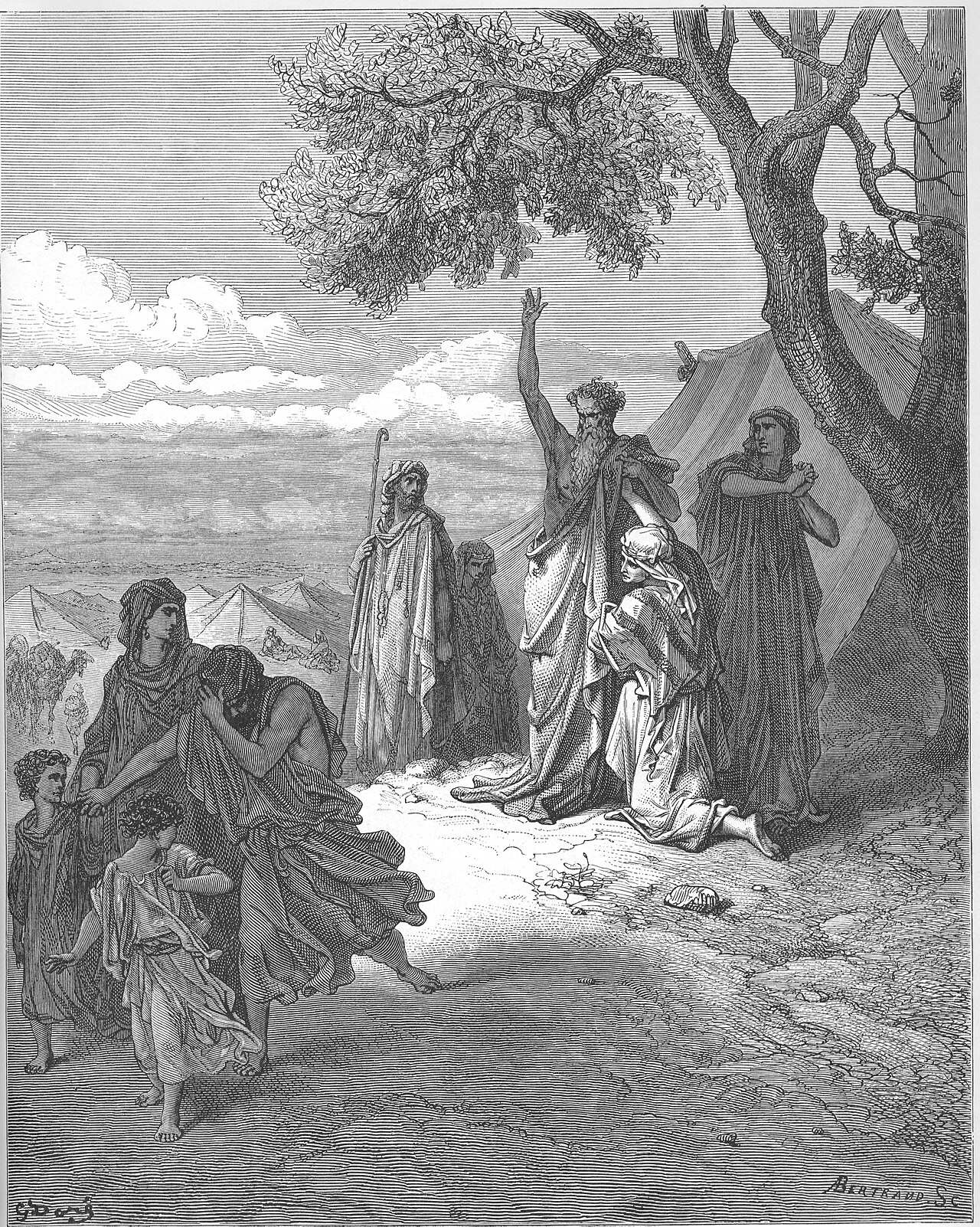
Noah plants a vineyard, drinks its wine and lies uncovered inside his tent. Ham sees his father's nakedness and goes out to tell it, while Shem and Japheth walk in backward and cover him without looking, the garment on their shoulders answering the garments of skin God made at 3:21. The beats of Eden run again: planting, fruit, nakedness, covering.
The record, by era
The Church Fathers4 voices
Perhaps, on the other hand, someone might say, "Why was vine dressing, source of such terrible wickedness, introduced into life?" Do not idly blurt out what comes into your head, O man: vine dressing is not wicked nor is wine evil—rather, it is use of them in excess. You see, dreadful sins arise not from wine as such but from intemperate attitudes of human depravity that undermine the benefit that should naturally come from it. The reason that now after the deluge he shows you the use of wine is that you may learn that before using wine the human race had to come to grief from it. Before wine had even appeared, human history gave evidence of the extremity of sinfulness and unbridled licentiousness. This was intended to teach you that when you see the way wine is used, you will not attribute it all to wine as such but to depraved human intention bent on evil. Consider especially where wine has proved useful, and tremble, O man. For wine is used in good things by which our salvation is made real. Those who have an insight into spiritual realities understand this saying.
A commentator
IrenaeusThe Demonstration of the Apostolic Preaching, Sections 19-21 · Written before 202.
proposed
Now the three sons of Noah were Shem, Ham and Japheth, from whom again the race was multiplied: for these were the beginning of mankind after the flood. Now of these one fell under a curse, and the two (others) inherited a blessing by reason of their works.
Noah's drunkenness was not from an excess of wine but because it had been a long time since he had drunk any wine. In the ark he had drunk no wine.
Why was Noah not blamed for falling into drunkenness? His falling was not due to intemperance but inexperience. For he was the first man to press the fruit of the vine and was ignorant not only of the power of the drink but also of …
The Medieval Church1 voice
Noah, a man of the earth, began to cultivate the ground and planted a vineyard, etc. It is often pleasing to repeat the word of the Lord, which he said to the Jews: "If you believed Moses, you would perhaps believe me as well, for …
2 more voices on this verse
The Puritans and the Awakening1 voice
And Noah began to be an husbandman,....
The Nineteenth Century1 voice
Noah began to be a husbandman - איש האדמה ish haadamah, A man of the ground, a farmer; by his beginning to be a husbandman we are to understand his recommencing his agricultural operations, which undoubtedly he had carried on for six hundred years before, but this had been interrupted by the flood. And the transaction here mentioned might have occurred many years posterior to the deluge, even after Canaan was born and grown up, for the date of it is not fixed in the text.
The words behind it
6 Hebrew wordsEvery Hebrew word of this verse in the order it stands, with what it means and the door to its own study. The last column counts the times a word stands in the whole Bible: the rarer the word, the more the places it appears belong together.
| Hebrew | Sound | Meaning | Word study | In the Bible |
|---|---|---|---|---|
| וַיָּ֥חֶל | vaiyachel | and he began | H2490 → | 143 times |
| נֹ֖חַ | noach | Noah | H5146 → | 46 times |
| אִ֣ישׁ | ʾish | [the] man of | H376 → | 1663 times |
| הָֽאֲדָמָ֑ה | haadamah | the ground | H127 → | 225 times |
| וַיִּטַּ֖ע | vaiyita' | and he planted | H5193 → | 58 times |
| כָּֽרֶם׃ | karem | a vineyard | H3754 → |
וַיָּ֥חֶלand he began
vaiyachelH2490 →143 times
נֹ֖חַNoah
noachH5146 →46 times
אִ֣ישׁ[the] man of
ʾishH376 →1663 times
הָֽאֲדָמָ֑הthe ground
haadamahH127 →225 times
וַיִּטַּ֖עand he planted
vaiyita'H5193 →58 times
כָּֽרֶם׃a vineyard
karemH3754 →
A shaded row is a word that stands 400 times or fewer in the Bible.
The walk
8 stopsEach card is a verse this one points to, and under it the verses that one points to in turn. Where several paths arrive at the same place, that place is listed first: the text keeps returning to it.
Through
Proverbs 12:11The one who works his land will have plenty of food, but whoever chases fantasies lacks judgment.
it leads to
- Proverbs 28:19
The one who works his land will have plenty of food, but whoever chases fantasies will have his fill of poverty.
- Proverbs 14:23
There is profit in all labor, but mere talk leads only to poverty.
- 1 Thessalonians 4:11–12
and to aspire to live quietly, to attend to your own matters, and to work with your own hands, as we instructed you.
- Psalms 128:2
For when you eat the fruit of your labor, blessings and prosperity will be yours.
- Proverbs 28:19
Through
Proverbs 10:11The mouth of the righteous is a fountain of life, but the mouth of the wicked conceals violence.
it leads to
- Proverbs 13:14
The teaching of the wise is a fountain of life, turning one from the snares of death.
- Ephesians 4:29
Let no unwholesome talk come out of your mouths, but only what is helpful for building up the one in need and bringing grace to those who listen.
- Proverbs 10:6
Blessings are on the head of the righteous, but the mouth of the wicked conceals violence.
- Proverbs 18:4
The words of a man’s mouth are deep waters; the fountain of wisdom is a bubbling brook.
- Proverbs 13:14
Where this verse is studied
On this page
Studies6
About Genesis
Who and where
1 name in this verse with a page on the site.
This page draws on 9 works. Open the list of works
This page draws on Adam Clarke, Commentary on the Bible; Bede, Commentary on Genesis (Hexaemeron); Cyprian, Epistle LXII.2-3; Ephrem the Syrian, COMMENTARY ON GENESIS 7.1.1; Irenaeus, The Demonstration of the Apostolic Preaching, Sections 19-21; John Chrysostom, HOMILIES ON GENESIS 29.10; John Gill, Exposition of the Old Testament (1748-1763); Matthew Henry, Commentary on the Whole Bible and Theodoret of Cyrus, QUESTIONS ON GENESIS 56.