
Genesis 8:9
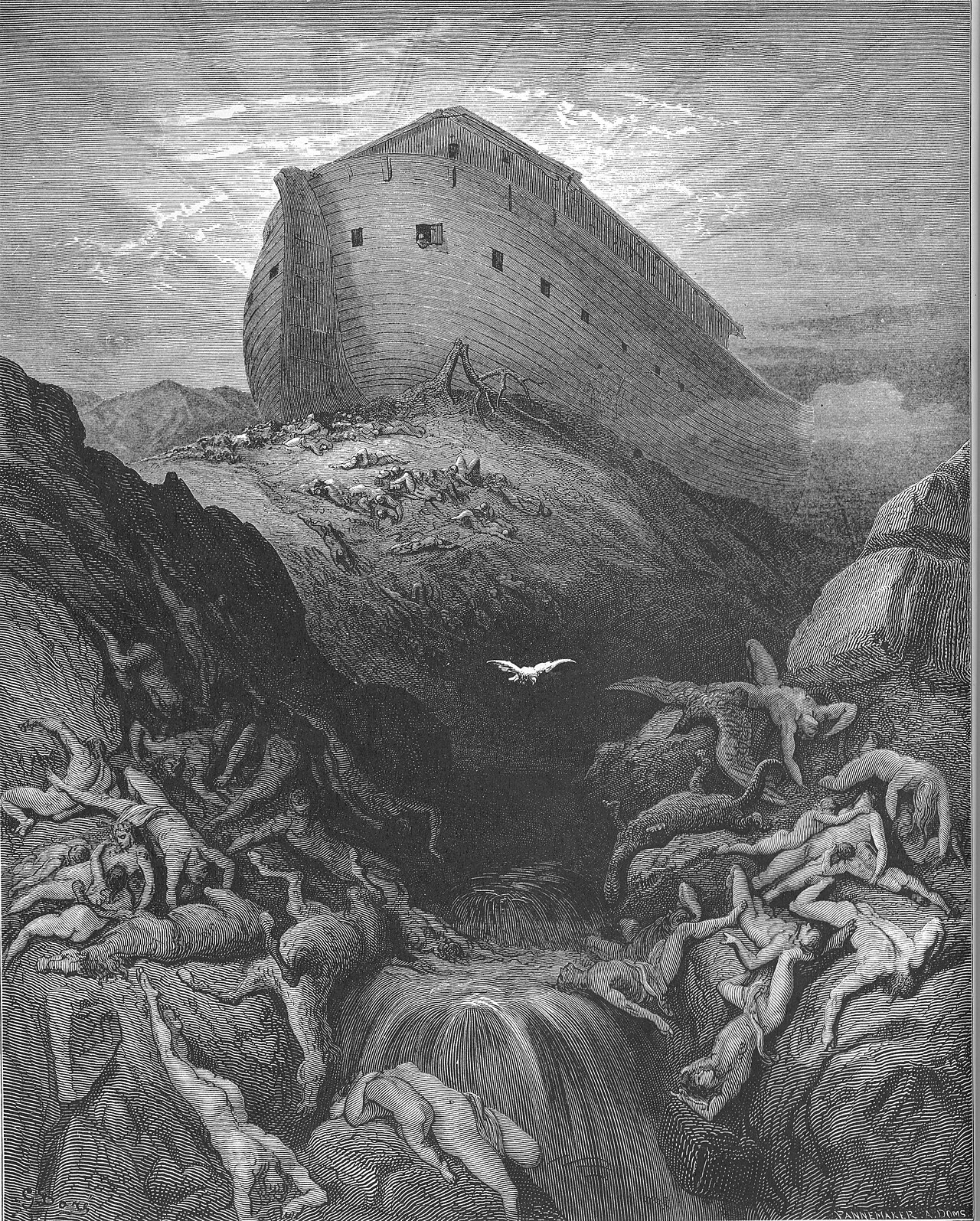
in Genesis 8But the dove found no place to rest her foot, and she returned to him in the ark, because the waters were still covering the surface of all the earth. So he reached out his hand and brought her back inside the ark.
BSB
The same verse in ASV and KJV ▾
ASV
but the dove found no rest for the sole of her foot, and she returned unto him to the ark; for the waters were on the face of the whole earth: and he put forth his hand, and took her, and brought her in unto him into the ark.
KJV
But the dove found no rest for the sole of her foot, and she returned unto him into the ark, for the waters were on the face of the whole earth: then he put forth his hand, and took her, and pulled her in unto him into the ark.
⋯
This verse in Genesis 8
Commentary
9 notes on this verseTHE sending forth of the raven and of the dove have furnished ready materials for numerous allegories with which Divines in different ages have sometimes edified and more frequently amused their hearers. We cannot afford time to mention many of them, but one of the host may serve as a specimen. Certain expositors have fancied that the mission of the raven prefigured the sending forth of the Law, which was black and terrible and which came not back to man bearing any token of comfort, or sign of hope.
This site's exposition
Noah sent out a dove
on Genesis 8:8-9
Verse 8 gives Noah's own reason for sending the dove, to see whether the waters had receded from the ground. She finds no place to rest her foot and comes back, and Noah reaches out his hand and brings her inside the ark. Water still covers the whole surface. Deuteronomy 28:65 gives scattered Israel the same picture, no resting place for the foot.
This site's exposition
no place to rest her foot
John Gill notes that a dove flies low, loves clean ground and keeps close to people, so her return was a sure sign the water still stood. Charles Spurgeon records that preachers made the raven and the dove into allegories. Some cast the raven as the Law.
The record, by era
The Church Fathers1 voice
Christ is a dove because he commands his holy ones to be as doves when he says, "Be simple as doves." But the prophet speaks of what Christ the dove is when, in his person, he describes his return to heaven after his suffering: "Who …
The Medieval Church1 voice
He also sent out a dove after him, to see if the waters had ceased upon the face of the earth; but when she did not find where her foot might rest, she returned to him in the ark.
The Puritans and the Awakening2 voices
But the dove found no rest for the sole of her foot, and she returned unto him into the ark,....
But the dove found no rest for the sole of her foot, and she returned unto him into the ark,....
The Nineteenth Century1 voice
THE sending forth of the raven and of the dove have furnished ready materials for numerous allegories with which Divines in different ages have sometimes edified and more frequently amused their hearers. We cannot afford time to mention many of them, but one of the host may serve as a specimen. Certain expositors have fancied that the mission of the raven prefigured the sending forth of the Law, which was black and terrible and which came not back to man bearing any token of comfort, or sign of hope. And that afterwards the Lord sent forth the Gospel, foreshadowed by the dove, which by-and-by came back to sinful man, bearing the olive branch of peace. Thus they illustrated the great Truth of God that there is no peace in the terms of the Law, for that raven can only croak hoarsely and fiercely. But there is peace in the ground of the Gospel, for the dove bears the olive branch in her mouth. Such far-fetched allegories as these, at the time when they were contrived and carried out, may have had their value and have been instructive to an undiscerning age. It is not, however, to be regretted that the Church of today has far less taste for such childish things. We are quite as willing as any men to see allegories where they are really clear, for we remember the words of Paul concerning Hagar and Sarah, "which things are an allegory," but we are not ready to follow the quaint and strange inventions of spiritualists whether ancient or modern. The clue must be evident or we had rather not enter the labyrinth. There is one adaptation of the incident before us which seems so naturally to suggest itself that I can not help using it this morning. The dove may well picture the Believer's soul. That soul sometimes flies abroad to and fro and takes a survey of all things—but it finds no rest for the soles of its feet anywhere except in Christ Jesus.
1 more voice on this verse
The Nineteenth Century1 voice
A commentator
Charles Spurgeon1834–1892
The Metropolitan Tabernacle Pulpit, Sermon No. 2373: “The Weary Dove's Return” (lightly modernized text, CCEL edition) · Written before 1892.
proposed
NOAH knew that God would, in due time, let him out of the ark. He was quite sure that the Lord had not put him into the ark to make a great coffin of it—that he and all those living creatures that went in with him should perish there. And, because he believed in God, he, therefore, removed the covering of the ark and looked abroad, expecting, by-and-by, to see not only the tops of the mountains, but also a dry and green earth once more. True faith often goes to the window. If your faith turns her face to the wall and expects nothing, I do not think it is genuine faith. Faith has eyes and, therefore, she looks afar off, and she often watches as the watchman of the night looks for the gray dawn of the morning. You remember the story of the child who went to a Prayer Meeting which was called together to pray for rain? She expected that God would send the rain, so she took her umbrella with her because she needed to get home dry. I wish that you and I had learned the same simple art of faith. Having prayed, and having believed, let us expect! Let us open the window and look out! God never failed an expectant people, yet, but a great many of His people fail to expect. And if you do not expect, you are not likely to receive! David said, "My soul, wait only upon God, for my expectation is from Him." And when your expectation is from Him, it will not be disappointed. It is a great pity when we keep the shutters up so that we cannot look out of the window to see the dry land. Next, because Noah expected the earth to be dry, he sent out the raven. And when the raven did not answer his purpose, he sent out the dove. After the dove came back with no tidings, he waited seven days and then sent her out again. And when she returned with only an olive leaf in her mouth, he waited seven more days and then sent her out again.
How the passage was read
What the Jewish commentators add
On the verses either side of this one
[AND HE STAYED.] Va-yachel (and he stayed) is, I believe, derived from the word techillah (beginning). 18 From the root chet, lamed, lamed. Cf.
This section is reception history: how the passage was read and kept in the Jewish tradition. Where a reading parts from an essential of the Christian faith, the section says so at that point.
Texts and citation data: Sefaria; each excerpt follows its version’s licence. 3 further sources are cited on this chapter that carry no English text this site may quote or only restate the verse.
The words behind it
24 Hebrew wordsEvery Hebrew word of this verse in the order it stands, with what it means and the door to its own study. The last column counts the times a word stands in the whole Bible: the rarer the word, the more the places it appears belong together.
| Hebrew | Sound | Meaning | Word study | In the Bible |
|---|---|---|---|---|
| וְלֹֽא־ | velo'- | and not | H3808 → | 5168 times |
| מָצְאָה֩ | matzeah | <it> found | H4672 → | 455 times |
| הַיּוֹנָ֨ה | haiyonah | the dove | H3123 → | 31 times |
| מָנ֜וֹחַ | manoach | a resting place | H4494 → | |
| לְכַף־ | lekhaf- | for [the] sole of | H3709 → | 192 times |
| רַגְלָ֗הּ | raglah | foot its | H7272 → | 247 times |
| וַתָּ֤שָׁב | vatashov | and it returned | H7725 → | 1056 times |
| אֵלָיו֙ | ʾelav | to him | H413 → | 5510 times |
| אֶל־ | ʾel- | into | H413 → | 5510 times |
| הַתֵּבָ֔ה | hatevah | the ark | H8392 → | 28 times |
| כִּי־ | ki- | for | H3588 → | 4482 times |
| מַ֖יִם | mayim | water | H4325 → | 581 times |
| עַל־ | ʾal- | [was] on | H5921 → | 5755 times |
| פְּנֵ֣י | penei | [the] surface of | H6440 → | 2123 times |
| כָל־ | khol- | all | H3605 → | 5413 times |
| הָאָ֑רֶץ | haaretz | the earth | H776 → | 2504 times |
| וַיִּשְׁלַ֤ח | vaiyishlach | and he stretched out | H7971 → | 845 times |
| יָדוֹ֙ | yado | hand his | H3027 → | 1618 times |
| וַיִּקָּחֶ֔הָ | vaiyikacheha | and he took it | H3947 → | 966 times |
| וַיָּבֵ֥א | vaiyave' | and he brought | H935 → | 2568 times |
| אֹתָ֛הּ | ʾotah | <obj.> it | H853 → | 10935 times |
| אֵלָ֖יו | ʾelav | to him | H413 → | 5510 times |
| אֶל־ | ʾel- | into | H413 → | 5510 times |
| הַתֵּבָֽה׃ | hatevah | the ark | H8392 → | 28 times |
וְלֹֽא־and not
velo'-H3808 →5168 times
מָצְאָה֩<it> found
matzeahH4672 →455 times
הַיּוֹנָ֨הthe dove
haiyonahH3123 →31 times
מָנ֜וֹחַa resting place
manoachH4494 →
לְכַף־for [the] sole of
lekhaf-H3709 →192 times
רַגְלָ֗הּfoot its
raglahH7272 →247 times
וַתָּ֤שָׁבand it returned
vatashovH7725 →1056 times
אֵלָיו֙to him
ʾelavH413 →5510 times
אֶל־into
ʾel-H413 →5510 times
הַתֵּבָ֔הthe ark
hatevahH8392 →28 times
כִּי־for
ki-H3588 →4482 times
מַ֖יִםwater
mayimH4325 →581 times
עַל־[was] on
ʾal-H5921 →5755 times
פְּנֵ֣י[the] surface of
peneiH6440 →2123 times
כָל־all
khol-H3605 →5413 times
הָאָ֑רֶץthe earth
haaretzH776 →2504 times
וַיִּשְׁלַ֤חand he stretched out
vaiyishlachH7971 →845 times
יָדוֹ֙hand his
yadoH3027 →1618 times
וַיִּקָּחֶ֔הָand he took it
vaiyikachehaH3947 →966 times
וַיָּבֵ֥אand he brought
vaiyave'H935 →2568 times
אֹתָ֛הּ<obj.> it
ʾotahH853 →10935 times
אֵלָ֖יוto him
ʾelavH413 →5510 times
אֶל־into
ʾel-H413 →5510 times
הַתֵּבָֽה׃the ark
hatevahH8392 →28 times
A shaded row is a word that stands 400 times or fewer in the Bible.
The walk
8 stopsEach card is a verse this one points to, and under it the verses that one points to in turn. Where several paths arrive at the same place, that place is listed first: the text keeps returning to it.
Through
Matthew 11:28Come to Me, all you who are weary and burdened, and I will give you rest.
it leads to
- Matthew 11:29
Take My yoke upon you and learn from Me; for I am gentle and humble in heart, and you will find rest for your souls.
- John 7:37
On the last and greatest day of the feast, Jesus stood up and called out in a loud voice, “If anyone is thirsty, let him come to Me and drink.
- John 6:37
Everyone the Father gives Me will come to Me, and the one who comes to Me I will never drive away.
- Galatians 5:1
It is for freedom that Christ has set us free. Stand firm, then, and do not be encumbered once more by a yoke of slavery.
- Isaiah 55:1–3
“Come, all you who are thirsty, come to the waters; and you without money, come, buy, and eat! Come, buy wine and milk without money and without cost!
- Matthew 11:29
Through
John 16:33I have told you these things so that in Me you may have peace. In the world you will have tribulation. But take courage; I have overcome the world!”
it leads to
- John 14:27
Peace I leave with you; My peace I give to you. I do not give to you as the world gives. Do not let your hearts be troubled; do not be afraid.
- 1 John 5:4
because everyone born of God overcomes the world. And this is the victory that has overcome the world: our faith.
- 2 Thessalonians 3:16
Now may the Lord of peace Himself give you peace at all times and in every way. The Lord be with all of you.
- John 14:27
Where this verse is studied
On this page
About Genesis
This page draws on Bede, Commentary on Genesis (Hexaemeron); Charles Spurgeon, The Metropolitan Tabernacle Pulpit, Sermon No. 637: “The Dove'S Return To The Ark” (lightly modernized text, CCEL edition); Charles Spurgeon, The Metropolitan Tabernacle Pulpit, Sermon No. 2373: “The Weary Dove's Return” (lightly modernized text, CCEL edition); John Calvin, Commentary on Genesis; John Gill, Exposition of the Old Testament (1748-1763); Matthew Henry, Commentary on the Whole Bible and Maximus of Turin, SERMONS 64.2.