
Genesis 35:13
in Genesis 35Then God went up from the place where He had spoken with him.
BSB
The same verse in ASV and KJV ▾
ASV
And God went up from him in the place where he spake with him.
KJV
And God went up from him in the place where he talked with him.
⋯
This verse in Genesis 35
Commentary
5 notes on this verseAnd God went up from him - This was not a vision, nor a strong mental impression, but a real manifestation of God. Jacob saw and heard him speak, and before his eyes he went up - ascended to heaven. This was no doubt the future Savior, the Angel of the covenant. See Gen 16:7.
This site's exposition
God went up from the place
on Genesis 35:13-15
The same line closes the covenant scene with Abraham at Genesis 17:22. Jacob answers with a pillar, as he had on the night he fled at Genesis 28:18, and this stone takes a drink offering as well as the oil. It is the first drink offering in Scripture. He gives the place the name he had given it twenty years before, so the vow and the paying of it carry one name.
The record, by era
The Puritans and the Awakening2 voices
And God went up from him,....
Note, The sweetest communions the saints have with God in this world are short and transient, and soon have an end. Our vision of God in heaven will be everlasting; there we shall be ever with the Lord; it is not so here.
The Nineteenth Century1 voice
A commentator
Jamieson, Fausset & Brown1802–1910
Commentary Critical and Explanatory on the Whole Bible (1871)
proposed
God went up from him--The presence of God was indicated in some visible form and His acceptance of the sacrifice shown by the miraculous descent of fire from heaven, consuming it on the altar.
How the passage was read
What the Jewish commentators add
On the verses either side of this one
“As I have given it to them so will I give it to you.” This alludes to an oath, for the land was given to them with an oath so that sin should not cause annulment of the gift, but to Jacob it was originally given without an oath.
1 more on this passage, in their own words ▾
Rabbi Abraham ibn Ezra explained it as meaning: “And Jacob had previously. See above,:18; also Ramban, ibid., Verse. set up a pillar, and now he poured out a drink-offering thereon, and poured oil thereon.” This is correct.
This section is reception history: how the passage was read and kept in the Jewish tradition. Where a reading parts from an essential of the Christian faith, the section says so at that point.
Texts and citation data: Sefaria; each excerpt follows its version’s licence. 3 further sources are cited on this chapter that carry no English text this site may quote or only restate the verse.
The words behind it
7 Hebrew wordsEvery Hebrew word of this verse in the order it stands, with what it means and the door to its own study. The last column counts the times a word stands in the whole Bible: the rarer the word, the more the places it appears belong together.
| Hebrew | Sound | Meaning | Word study | In the Bible |
|---|---|---|---|---|
| וַיַּ֥עַל | vaiyaal | and he went up | H5927 → | 890 times |
| מֵעָלָ֖יו | mealav | from with <the> him | H5921 → | 5755 times |
| אֱלֹהִ֑ים | ʾelohim | God | H430 → | 2601 times |
| בַּמָּק֖וֹם | bamakom | at the place | H4725 → | 401 times |
| אֲשֶׁר־ | ʾasher- | where | H834 → | 5497 times |
| דִּבֶּ֥ר | diber | he had spoken | H1696 → | 1141 times |
| אִתּֽוֹ׃ | ʾito | with him | H854 → | 929 times |
וַיַּ֥עַלand he went up
vaiyaalH5927 →890 times
מֵעָלָ֖יוfrom with <the> him
mealavH5921 →5755 times
אֱלֹהִ֑יםGod
ʾelohimH430 →2601 times
בַּמָּק֖וֹםat the place
bamakomH4725 →401 times
אֲשֶׁר־where
ʾasher-H834 →5497 times
דִּבֶּ֥רhe had spoken
diberH1696 →1141 times
אִתּֽוֹ׃with him
ʾitoH854 →929 times
A shaded row is a word that stands 400 times or fewer in the Bible.
The walk
8 stopsEach card is a verse this one points to, and under it the verses that one points to in turn. Where several paths arrive at the same place, that place is listed first: the text keeps returning to it.
Through
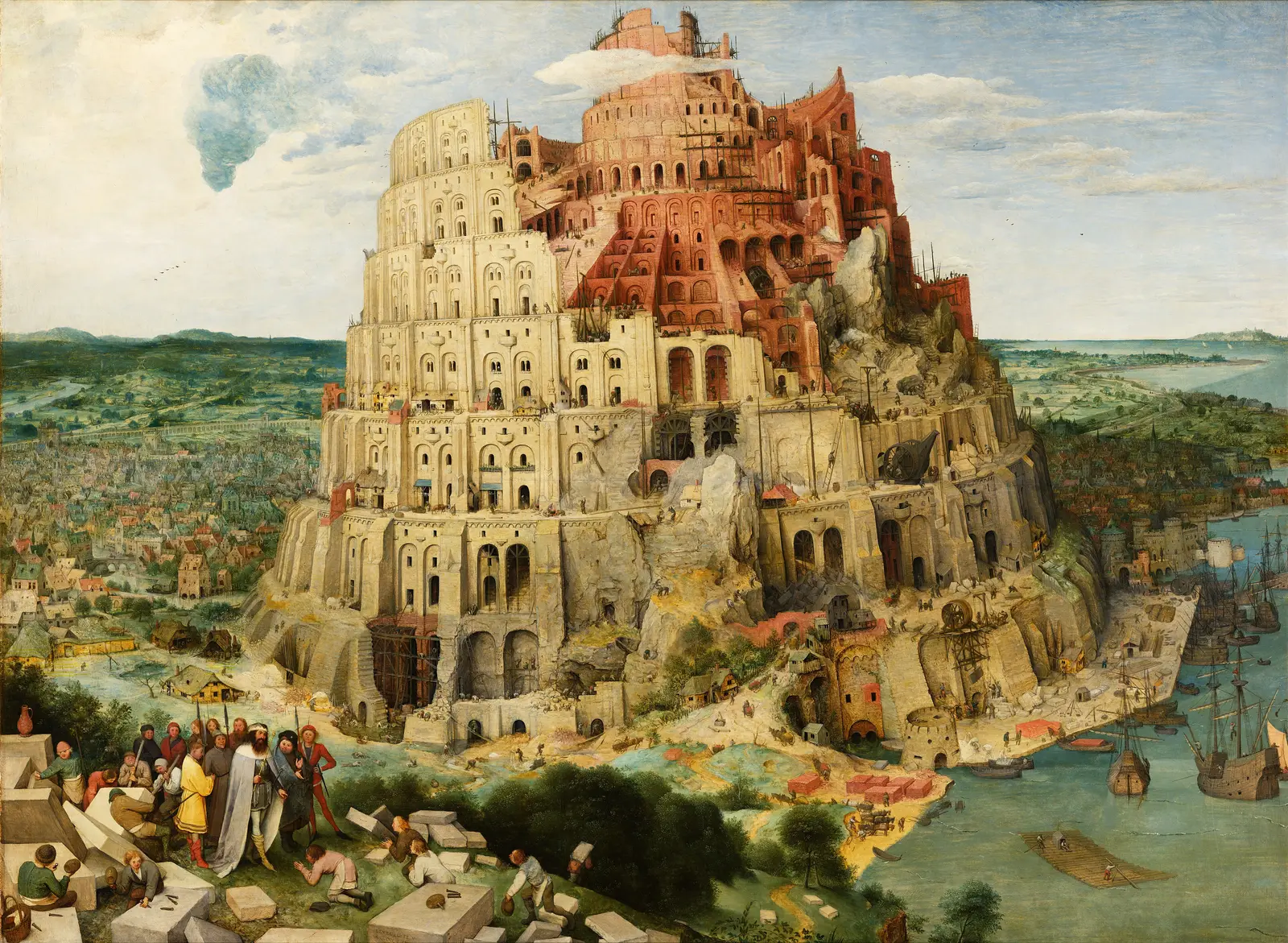
Genesis 11:5Then the LORD came down to see the city and the tower that the sons of men were building.
it leads to
- Psalms 33:13–14
The LORD looks down from heaven; He sees all the sons of men.
- Genesis 18:21
I will go down to see if their actions fully justify the outcry that has reached Me. If not, I will find out.”
- John 3:13
No one has ascended into heaven except the One who descended from heaven—the Son of Man.
- Jeremiah 23:23–24
“Am I only a God nearby,” declares the LORD, “and not a God far away?”
- Hebrews 4:13
Nothing in all creation is hidden from God’s sight; everything is uncovered and exposed before the eyes of Him to whom we must give account.
- Psalms 33:13–14
Through
Judges 13:20When the flame went up from the altar to the sky, the angel of the LORD ascended in the flame. When Manoah and his wife saw this, they fell facedown to the ground.
it leads to
- Leviticus 9:24
Fire came out from the presence of the LORD and consumed the burnt offering and the fat portions on the altar. And when all the people saw it, they shouted for joy and fell…
- Leviticus 9:24
Through
Luke 24:31Then their eyes were opened and they recognized Jesus—and He disappeared from their sight.
it leads to
- Luke 24:16
But their eyes were kept from recognizing Him.
- Luke 24:16
Through
Genesis 18:33When the LORD had finished speaking with Abraham, He departed, and Abraham returned home.
it leads to
- Genesis 32:26
Then the man said, “Let me go, for it is daybreak.” But Jacob replied, “I will not let you go unless you bless me.”
- Genesis 32:26
Where this verse is studied
On this page
About Genesis
This page draws on Adam Clarke, Commentary on the Bible; Jamieson, Fausset & Brown, Commentary Critical and Explanatory on the Whole Bible; John Gill, Exposition of the Old Testament (1748-1763) and Matthew Henry, Commentary on the Whole Bible.