
Genesis 18:5
in Genesis 18And I will bring a bit of bread so that you may refresh yourselves. This is why you have passed your servant’s way. After that, you may continue on your way.” “Yes,” they replied, “you may do as you have said.”
BSB
The same verse in ASV and KJV ▾
ASV
and I will fetch a morsel of bread, and strengthen ye your heart; after that ye shall pass on: forasmuch as ye are come to your servant. And they said, So do, as thou hast said.
KJV
And I will fetch a morsel of bread, and comfort ye your hearts; after that ye shall pass on: for therefore are ye come to your servant. And they said, So do, as thou hast said.
⋯
This verse in Genesis 18
Commentary
5 notes on this verseI will fetch a morsel of bread - This was the third requisite, and is introduced in its proper order; as eating immediately after exertion or fatigue is very unwholesome. The strong action of the lungs and heart should have time to diminish before any food is received into the stomach, as otherwise concoction is prevented, and fever in a less or greater degree produced. For therefore are ye come - In those ancient days every traveler conceived he had a right to refreshment, when he needed it, at the first tent he met with on his journey.
This site's exposition
if I have found favor in your sight
on Genesis 18:3-5
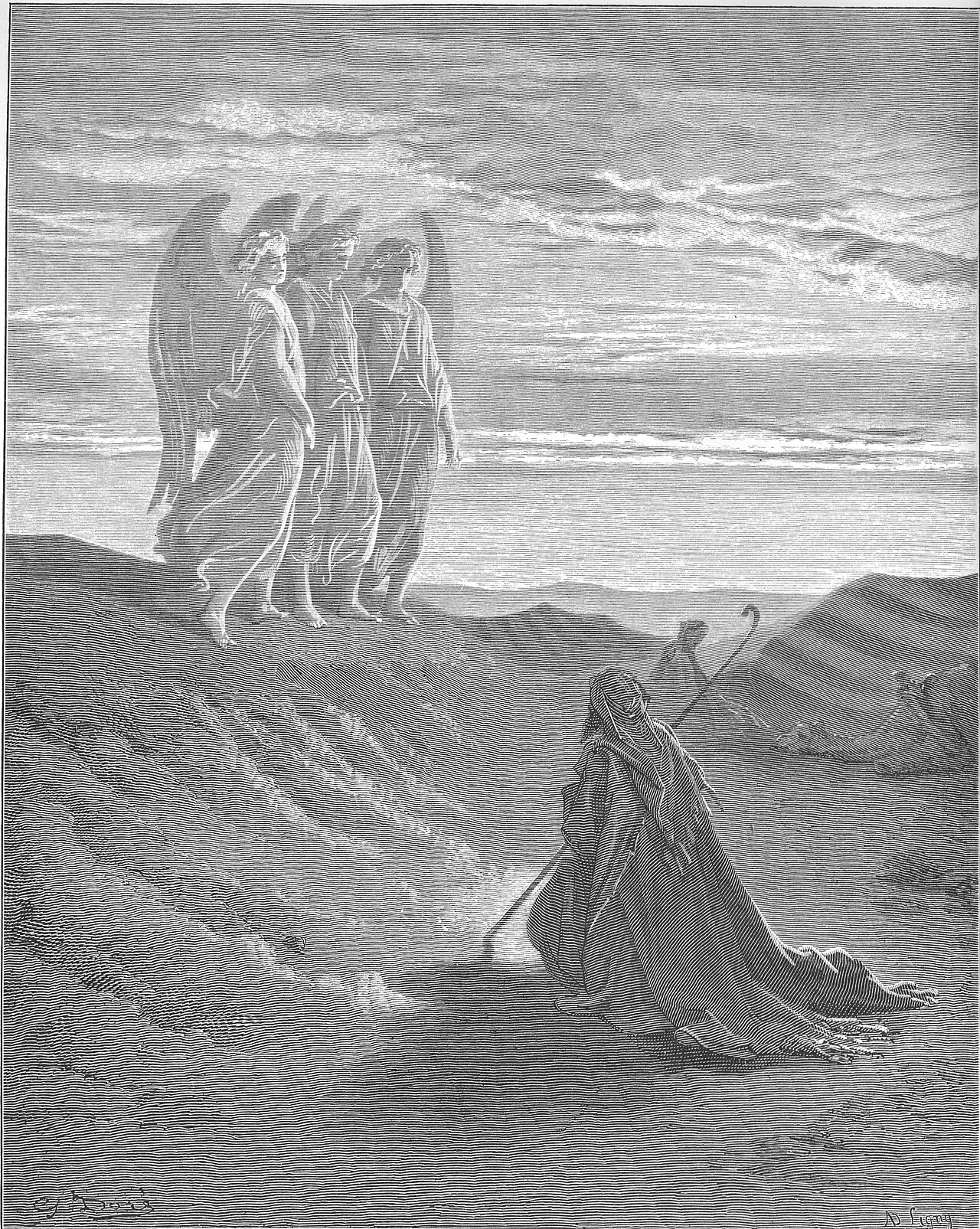
Abraham addresses him as lord, Adonai in Hebrew, the word for a man of rank, and Clarke takes that as a sign he still did not know who stood there. The offer is small, a little water, a bit of bread, a wash for their feet and rest under the tree. He calls himself their servant twice.
The record, by era
The Medieval Church1 voice
He refreshed them with the feasts that were prepared because he understood that from his seed would be born the one who, although he is God before the ages, consubstantial with the Father, appearing at the end of the ages as a true man, would …
The Puritans and the Awakening1 voice
And I will fetch a morsel of bread,....
The Nineteenth Century1 voice
A commentator
Jamieson, Fausset & Brown1802–1910
Commentary Critical and Explanatory on the Whole Bible (1871)
proposed
for therefore are ye come--No questions were asked. But Abraham knew their object by the course they took--approaching directly in front of the chief sheik's tent, which is always distinguishable from the rest and thus showing their wish to be his guests.
quarantine:debris (2026-07-29) — starts-lowercase
The words behind it
18 Hebrew wordsEvery Hebrew word of this verse in the order it stands, with what it means and the door to its own study. The last column counts the times a word stands in the whole Bible: the rarer the word, the more the places it appears belong together.
| Hebrew | Sound | Meaning | Word study | In the Bible |
|---|---|---|---|---|
| וְאֶקְחָ֨ה | veekchah | so let me bring | H3947 → | 966 times |
| פַת־ | fat- | a piece of | H6595 → | |
| לֶ֜חֶם | lechem | bread | H3899 → | 298 times |
| וְסַעֲד֤וּ | vesaadu | and sustain <you> | H5582 → | |
| לִבְּכֶם֙ | libekhem | heart your | H3820 → | 595 times |
| אַחַ֣ר | ʾachar | after | H310 → | 715 times |
| תַּעֲבֹ֔רוּ | taavoru | you will pass on | H5674 → | 556 times |
| כִּֽי־ | ki- | for | H3588 → | 4482 times |
| עַל־ | ʾal- | since | H5921 → | 5755 times |
| כֵּ֥ן | ken | <thus> | H3651 → | 771 times |
| עֲבַרְתֶּ֖ם | ʾavartem | you have passed by | H5674 → | 556 times |
| עַֽל־ | ʾal- | at | H5921 → | 5755 times |
| עַבְדְּכֶ֑ם | ʾavdekhem | servant your | H5650 → | 799 times |
| וַיֹּ֣אמְר֔וּ | vaiyomeru | and they said | H559 → | 5305 times |
| כֵּ֥ן | ken | thus | H3651 → | 771 times |
| תַּעֲשֶׂ֖ה | taaseh | you will do | H6213 → | 2628 times |
| כַּאֲשֶׁ֥ר | kaasher | just as | H834 → | 5497 times |
| דִּבַּֽרְתָּ׃ | dibarta | you have said | H1696 → | 1141 times |
וְאֶקְחָ֨הso let me bring
veekchahH3947 →966 times
פַת־a piece of
fat-H6595 →
לֶ֜חֶםbread
lechemH3899 →298 times
וְסַעֲד֤וּand sustain <you>
vesaaduH5582 →
לִבְּכֶם֙heart your
libekhemH3820 →595 times
אַחַ֣רafter
ʾacharH310 →715 times
תַּעֲבֹ֔רוּyou will pass on
taavoruH5674 →556 times
כִּֽי־for
ki-H3588 →4482 times
עַל־since
ʾal-H5921 →5755 times
כֵּ֥ן<thus>
kenH3651 →771 times
עֲבַרְתֶּ֖םyou have passed by
ʾavartemH5674 →556 times
עַֽל־at
ʾal-H5921 →5755 times
עַבְדְּכֶ֑םservant your
ʾavdekhemH5650 →799 times
וַיֹּ֣אמְר֔וּand they said
vaiyomeruH559 →5305 times
כֵּ֥ןthus
kenH3651 →771 times
תַּעֲשֶׂ֖הyou will do
taasehH6213 →2628 times
כַּאֲשֶׁ֥רjust as
kaasherH834 →5497 times
דִּבַּֽרְתָּ׃you have said
dibartaH1696 →1141 times
A shaded row is a word that stands 400 times or fewer in the Bible.
The walk
8 stopsEach card is a verse this one points to, and under it the verses that one points to in turn. Where several paths arrive at the same place, that place is listed first: the text keeps returning to it.
Through
Psalms 104:15wine that gladdens the heart of man, oil that makes his face to shine, and bread that sustains his heart.
it leads to
- Psalms 23:5
You prepare a table before me in the presence of my enemies. You anoint my head with oil; my cup overflows.
- Ecclesiastes 9:7
Go, eat your bread with joy, and drink your wine with a cheerful heart, for God has already approved your works:
- Ecclesiastes 10:19
A feast is prepared for laughter, and wine makes life merry, but money is the answer for everything.
- Judges 9:13
But the grapevine replied, ‘Should I stop giving my wine that cheers both God and man, to hold sway over the trees?’
- Psalms 92:10
But You have exalted my horn like that of a wild ox; with fine oil I have been anointed.
- Psalms 23:5
Through
Genesis 19:8Look, I have two daughters who have never slept with a man. Let me bring them to you, and you can do to them as you please. But do not do anything to these…
it leads to
- Judges 19:24
Look, let me bring out my virgin daughter and the man’s concubine, and you can use them and do with them as you wish. But do not do such a vile thing to this…
- Judges 19:24
Through
Genesis 33:10But Jacob insisted, “No, please! If I have found favor in your sight, then receive this gift from my hand. For indeed, I have seen your face, and it is like seeing the face…
it leads to
- Job 33:26
He prays to God and finds favor; he sees God’s face and shouts for joy, and God restores His righteousness to that man.
- Job 33:26
Through
Judges 6:18Please do not depart from this place until I return to You. Let me bring my offering and set it before You.” And the LORD said, “I will stay until you return.”
it leads to
- Judges 13:15
“Please stay here,” Manoah said to the angel of the LORD, “and we will prepare a young goat for you.”
- Judges 13:15
Where this verse is studied
About Genesis
This page draws on Adam Clarke, Commentary on the Bible; Bede, Commentary on Genesis (Hexaemeron); Jamieson, Fausset & Brown, Commentary Critical and Explanatory on the Whole Bible; John Calvin, Commentary on Genesis and John Gill, Exposition of the Old Testament (1748-1763).