
Genesis 11:8
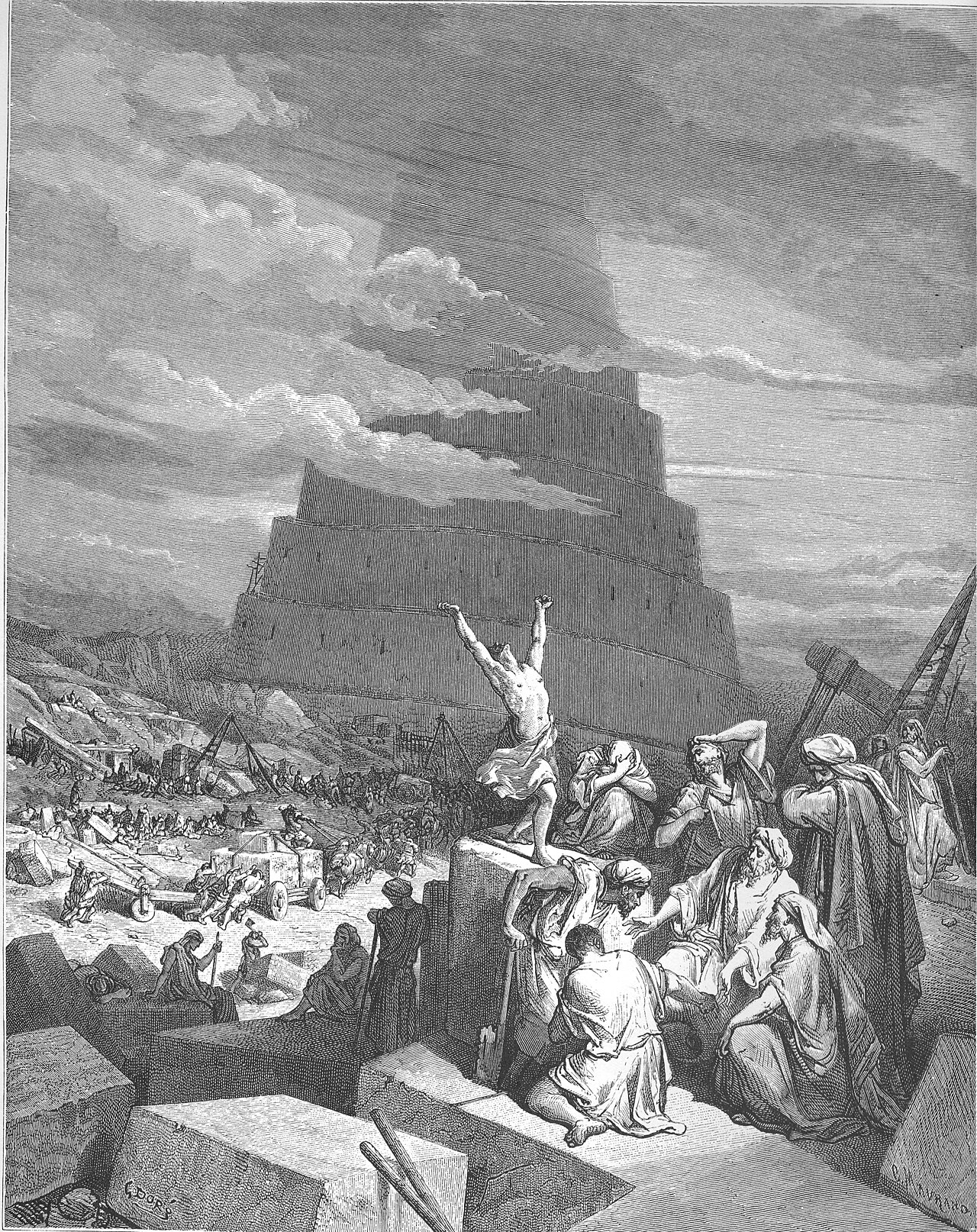
in Genesis 11So the LORD scattered them from there over the face of all the earth, and they stopped building the city.
BSB
The same verse in ASV and KJV ▾
ASV
So Jehovah scattered them abroad from thence upon the face of all the earth: and they left off building the city.
KJV
So the Lord scattered them abroad from thence upon the face of all the earth: and they left off to build the city.
⋯
This verse in Genesis 11
Commentary
12 notes on this verse(5.) We may here lament the loss of the universal use of the Hebrew tongue, which from this time was the vulgar language of the Hebrews only, and continued so till the captivity in Babylon, where, even among them, it was exchanged for the Syriac.
This site's exposition
Come, let Us go down
on Genesis 11:7-8
The men say Come, let us make bricks; the LORD says Come, let Us go down. Genesis 1:26 carries the same plural in God's own speech. What the city was built to prevent is what falls on them, and the LORD scatters them over the face of all the earth.
This site's exposition
they stopped building the city
The building that stops is the city, the thing the people built to stay together. Henry held that the whole world's first language was Hebrew, and that from that day the Hebrews alone kept it until the exile in Babylon. Gregory of Nyssa read it as one language confused.
The record, by era
The Church Fathers5 voices
A commentator
Book of JubileesBook of Jubilees Chapter 10, sections 18-27, Charles' 1913 translation · Written before -100.
proposed
And in the three and thirtieth jubilee, in the first year in the second week, Peleg took to himself a wife, whose name was Lomna the daughter of Sina'ar, and she bare him a son in the fourth year of this week, and he called …
A commentator
JosephusAntiquities of the Jews - Book I, Chapter 4, Sections 1-3 · Written before 100.
proposed
1. Now the sons of Noah were three, - Shem, Japhet, and Ham, born one hundred years before the Deluge. These first of all descended from the mountains into the plains, and fixed their habitation there; and persuaded others who were greatly afraid of the …
A commentator
Eusebius of CaesareaPreparation for the Gospel, BOOK IX, CHAPTER XIV · Written before 339.
proposed
AGAIN, whereas Moses wrote an account of the building of the tower, and how from one language men passed into the confusion of many dialects, the author just before mentioned, in his work entitled Of Assyrian History, bears the like testimony, speaking as follows: [ABYDENUS] 'But there are some who say that the men who first arose out of the earth, being puffed up by their strength and great stature, and proudly thinking that they were better than the gods, raised a huge tower, where Babylon now stands: and when they were already nearer to heaven, the winds came to the help of the gods, and overthrew their structure upon them, the ruins of which were called Babylon. And being up to that time of one tongue, they received from the gods a confused language; and afterwards war arose between Cronos and Titan. [JOSEPHUS] 'And the place in which they built the tower is now called Babylon, because of the confusion of what at first was clear in their language. For the Hebrews call confusion "Babel."
They foolishly began to build a tower that touched the stars and thought they might be able to climb the skies with it. But God, seeing that their work proceeded because they spoke the same language, intervened and caused them to speak different languages.
A commentator
Gregory of NyssaAnswer to Eunomius' Second Book, Section 276 · Written before 395.
proposed
And if any one cites the confusion of tongues that took place at the building of the tower, as contradicting what I have said, not even there is God spoken of as creating men's languages, but as confounding the existing one, that all might not hear all. For when all lived together and were not as yet divided by various differences of race, the aggregate of men dwelt together with one language among them; but when by the Divine will it was decreed that all the earth should be replenished by mankind, then, their community of tongue being broken up, men were dispersed in various directions and adopted this and that form of speech and language, possessing a certain bond of union in similarity of tongue, not indeed disagreeing from others in their knowledge of things, but differing in the character of their names. For a stone or a stick does not seem one thing to one man and another to another, but the different peoples call them by different names. So that our position remains unshaken, that human language is the invention of the human mind or understanding. For from the beginning, as long as all men had the same language, we see from Holy Scripture that men received no teaching of God's words, nor, when men were separated into various differences of language, did a Divine enactment prescribe how each man should talk. But God, willing that men should speak different languages, gave human nature full liberty to formulate arbitrary sounds, so as to render their meaning more intelligible.
4 more voices on this verse
The Church Fathers1 voice
But I do not understand how he can imagine the overturning of the tower (of Babel) to have happened with a similar object to that of the deluge, which effected a purification of the earth, according to the accounts both of Jews and Christians. For, in order that the narrative contained in Genesis respecting the tower may be held to convey no secret meaning, but, as Celsus supposes, may be taken as true to the letter, the event does not on such a view appear to have taken place for the purpose of purifying the earth; unless, indeed, he imagines that the so-called confusion of tongues is such a purificatory process. But on this point, he who has the opportunity will treat more seasonably when his object is to show not only what is the meaning of the narrative in its historical connection, but what metaphorical meaning may be deduced from it. Seeing that he imagines, however, that Moses, who wrote the account of the tower, and the confusion of tongues, has perverted the story of the sons of Aloeus, and referred it to the tower, we must remark that I do not think any one prior to the time of Homer has mentioned the sons of Aloeus, while I am persuaded that what is related about the tower has been recorded by Moses as being much older not only than Homer, but even than the invention of letters among the Greeks. Who, then, are the perverters of each other's narratives? Whether do they who relate the story of the Aloadæ pervert the history of the time, or he who wrote the account of the tower and the confusion of tongues the story of the Aloadæ? Now to impartial hearers Moses appears to be more ancient than Homer.
The Medieval Church1 voice
But when the threatenings of the mighty God Are fulfilled, which he threatened mortals once, When in Assyrian land they built a tower;-- 120 (And they all spoke one language, and resolved To mount aloft into the starry heaven; But on the air the Immortal …
The Puritans and the Awakening2 voices
So the Lord scattered them abroad from thence, upon the face of all the earth,....
His country: Ur of the Chaldees. This was the land of his nativity, an idolatrous country, where even the children of Eber themselves had degenerated. Note, Those who are, through grace, heirs of the land of promise, ought to remember what was the land of their nativity, what was their corrupt and sinful state by nature, the rock out of which they were hewn.
The words behind it
11 Hebrew wordsEvery Hebrew word of this verse in the order it stands, with what it means and the door to its own study. The last column counts the times a word stands in the whole Bible: the rarer the word, the more the places it appears belong together.
| Hebrew | Sound | Meaning | Word study | In the Bible |
|---|---|---|---|---|
| וַיָּ֨פֶץ | vaiyafetz | and he scattered | H6327 → | 67 times |
| יְהוָ֥ה | yahweh | Yahweh | H3068 → | 6520 times |
| אֹתָ֛ם | ʾotam | <obj.> them | H853 → | 10935 times |
| מִשָּׁ֖ם | misham | from there | H8033 → | 834 times |
| עַל־ | ʾal- | over | H5921 → | 5755 times |
| פְּנֵ֣י | penei | [the] surface of | H6440 → | 2123 times |
| כָל־ | khol- | all | H3605 → | 5413 times |
| הָאָ֑רֶץ | haaretz | the earth | H776 → | 2504 times |
| וַֽיַּחְדְּל֖וּ | vaiyachdelu | and they ceased | H2308 → | 58 times |
| לִבְנֹ֥ת | livnot | to build | H1129 → | 376 times |
| הָעִֽיר׃ | hair | the city | H5892 → | 1090 times |
וַיָּ֨פֶץand he scattered
vaiyafetzH6327 →67 times
יְהוָ֥הYahweh
yahwehH3068 →6520 times
אֹתָ֛ם<obj.> them
ʾotamH853 →10935 times
מִשָּׁ֖םfrom there
mishamH8033 →834 times
עַל־over
ʾal-H5921 →5755 times
פְּנֵ֣י[the] surface of
peneiH6440 →2123 times
כָל־all
khol-H3605 →5413 times
הָאָ֑רֶץthe earth
haaretzH776 →2504 times
וַֽיַּחְדְּל֖וּand they ceased
vaiyachdeluH2308 →58 times
לִבְנֹ֥תto build
livnotH1129 →376 times
הָעִֽיר׃the city
hairH5892 →1090 times
A shaded row is a word that stands 400 times or fewer in the Bible.
The walk
8 stopsEach card is a verse this one points to, and under it the verses that one points to in turn. Where several paths arrive at the same place, that place is listed first: the text keeps returning to it.
Through
Deuteronomy 32:8When the Most High gave the nations their inheritance, when He divided the sons of man, He set the boundaries of the peoples according to the number of the sons of God.
it leads to
- Acts 17:26
From one man He made every nation of men, that they should inhabit the whole earth; and He determined their appointed times and the boundaries of their lands.
Reached by 4 separate paths from here.
- Acts 17:26
Through
Luke 1:51He has performed mighty deeds with His arm; He has scattered those who are proud in the thoughts of their hearts.
it leads to
- Psalms 98:1
Sing to the LORD a new song, for He has done wonders; His right hand and holy arm have gained Him the victory.
- Isaiah 52:10
The LORD has bared His holy arm in the sight of all the nations; all the ends of the earth will see the salvation of our God.
- 1 Samuel 2:3–4
Do not boast so proudly, or let arrogance come from your mouth, for the LORD is a God who knows, and by Him actions are weighed.
- Psalms 98:1
Through
Genesis 11:9That is why it is called Babel, for there the LORD confused the language of the whole world, and from that place the LORD scattered them over the face of all the earth.
it leads to
- Genesis 10:10
His kingdom began in Babylon, Erech, Accad, and Calneh, in the land of Shinar.
- Genesis 10:5
From these, the maritime peoples separated into their territories, according to their languages, by clans within their nations.
- Genesis 10:20
These are the sons of Ham according to their clans, languages, lands, and nations.
- Genesis 10:10
Through
Genesis 10:25Two sons were born to Eber: One was named Peleg, because in his days the earth was divided, and his brother was named Joktan.
it leads to
- 1 Chronicles 1:19
Two sons were born to Eber: One was named Peleg, because in his days the earth was divided, and his brother was named Joktan.
- 1 Chronicles 1:19
Where this verse is studied
On this page
About Genesis
This page draws on 12 works. Open the list of works
This page draws on Adam Clarke, Commentary on the Bible; Book of Jubilees, Book of Jubilees Chapter 10, sections 18-27, Charles' 1913 translation; Commodian, SONG OF TWO PEOPLES 165-69; Eusebius of Caesarea, Preparation for the Gospel, BOOK IX, CHAPTER XIV; Gregory of Nyssa, Answer to Eunomius' Second Book; Gregory of Nyssa, Answer to Eunomius' Second Book, Section 276; John Calvin, Commentary on Genesis; John Gill, Exposition of the Old Testament (1748-1763); Josephus, Antiquities of the Jews - Book I, Chapter 4, Sections 1-3; Matthew Henry, Commentary on the Whole Bible; Origen of Alexandria, Contra Celsum, Book IV, Chapter 21 and Sibylline Oracles, Sibylline Oracles Book III: 117-129.