
Ezekiel 21:20
in Ezekiel 21Mark out one road for the sword to come against Rabbah of the Ammonites, and another against Judah into fortified Jerusalem.
BSB
The same verse in ASV and KJV ▾
ASV
Thou shalt appoint a way for the sword to come to Rabbah of the children of Ammon, and to Judah in Jerusalem the fortified.
KJV
Appoint a way, that the sword may come to Rabbath of the Ammonites, and to Judah in Jerusalem the defenced.
⋯
This verse in Ezekiel 21
Commentary
4 notes on this verseA commentator
Jamieson, Fausset & Brown1802–1910
Commentary Critical and Explanatory on the Whole Bible (1871)
Rabbath is put first, as it was from her that Jerusalem, that doomed city, had borrowed many of her idols. to Judah in Jerusalem--instead of simply putting "Jerusalem," to imply the sword was to come not merely to Judah, but to its people within Jerusalem, defended though it was; its defenses on which the Jews relied so much would not keep the foe out.
This site's exposition
The word of the Lord came unto me again, saying
on Ezekiel 21:18-20
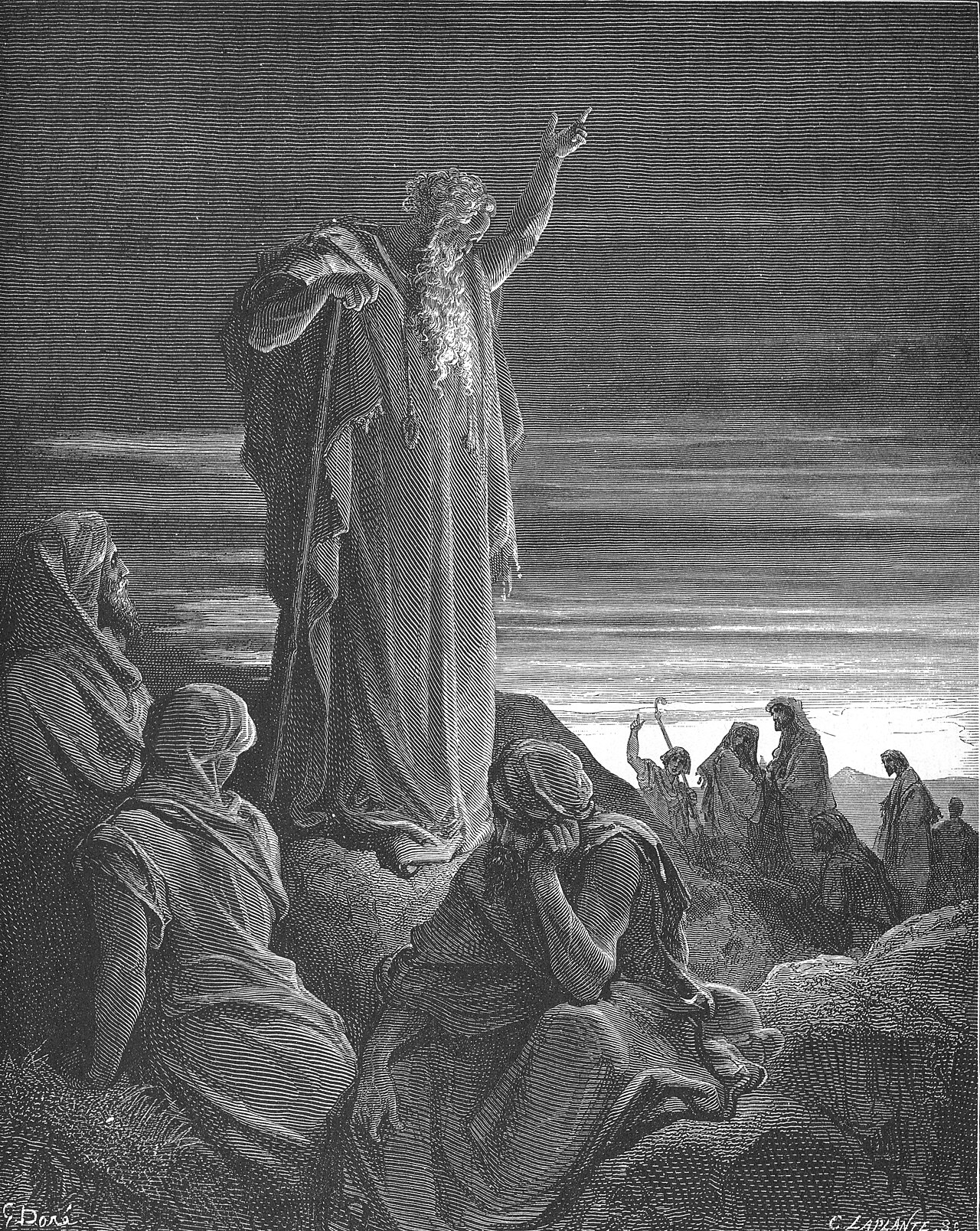
A new oracle instructs the prophet to appoint thee two ways, a piece of street theater drawing a literal signpost where the road forks, one way leading to Rabbath of the Ammonites and the other to Judah in Jerusalem the defenced. The act dramatizes the real military choice Nebuchadnezzar faced when he marched west, whether to strike the Ammonite capital or the walled city of Jerusalem first. Clarke reads the head of the way to the city as the crossroads itself, staged so exiles watching the prophet would see the decision made in miniature before Babylon's army made it in fact.
The record, by era
The Church Fathers1 voice
(Verse 18 and following) And the word of the Lord came to me, saying: And you, son of man, set before yourself two ways, and let the sword of the king of Babylon come. From one land they will both go out, and by hand he will take a decision: he will cast lots at the head of the city's road. You shall set a road, so that the sword may come to Rabbah of the sons of Ammon, and to Judah, and to Jerusalem, the fortified.
The Puritans and the Awakening1 voice
Appoint a way,....
The words behind it
12 Hebrew wordsEvery Hebrew word of this verse in the order it stands, with what it means and the door to its own study. The last column counts the times a word stands in the whole Bible: the rarer the word, the more the places it appears belong together.
| Hebrew | Sound | Meaning | Word study | In the Bible |
|---|---|---|---|---|
| דֶּ֣רֶךְ | derekh | a road | H1870 → | 707 times |
| תָּשִׂ֔ים | tasim | you will make | H7760 → | 584 times |
| לָב֣וֹא | lavo' | to come | H935 → | 2568 times |
| חֶ֔רֶב | cherev | a sword | H2719 → | 413 times |
| אֵ֖ת | ʾet | <obj.> | H853 → | 10935 times |
| רַבַּ֣ת | rabat | Rabbah of | H7237 → | |
| בְּנֵֽי־ | benei- | [the] people of | H1121 → | 4930 times |
| עַמּ֑וֹן | amon | Ammon | H5983 → | 106 times |
| וְאֶת־ | veet | and <obj.> | H853 → | 10935 times |
| יְהוּדָ֥ה | yehudah | Judah | H3063 → | 819 times |
| בִירוּשָׁלִַ֖ם | virushalim | in Jerusalem | H3389 → | 643 times |
| בְּצוּרָֽה׃ | betzurah | fortified | H1219 → |
דֶּ֣רֶךְa road
derekhH1870 →707 times
תָּשִׂ֔יםyou will make
tasimH7760 →584 times
לָב֣וֹאto come
lavo'H935 →2568 times
חֶ֔רֶבa sword
cherevH2719 →413 times
אֵ֖ת<obj.>
ʾetH853 →10935 times
רַבַּ֣תRabbah of
rabatH7237 →
בְּנֵֽי־[the] people of
benei-H1121 →4930 times
עַמּ֑וֹןAmmon
amonH5983 →106 times
וְאֶת־and <obj.>
veetH853 →10935 times
יְהוּדָ֥הJudah
yehudahH3063 →819 times
בִירוּשָׁלִַ֖םin Jerusalem
virushalimH3389 →643 times
בְּצוּרָֽה׃fortified
betzurahH1219 →
A shaded row is a word that stands 400 times or fewer in the Bible.
The walk
8 stopsEach card is a verse this one points to, and under it the verses that one points to in turn. Where several paths arrive at the same place, that place is listed first: the text keeps returning to it.
Through
Ezekiel 25:5I will make Rabbah a pasture for camels, and Ammon a resting place for sheep. Then you will know that I am the LORD.’
it leads to
- 2 Samuel 12:26
Meanwhile, Joab fought against Rabbah of the Ammonites and captured the royal fortress.
Reached by 3 separate paths from here.
- 2 Samuel 12:26
Through
Jeremiah 49:2Therefore, behold, the days are coming, declares the LORD, when I will sound the battle cry against Rabbah of the Ammonites. It will become a heap of ruins, and its villages will be burned.…
it leads to
- Deuteronomy 3:11
(For only Og king of Bashan had remained of the remnant of the Rephaim. His bed of iron, nine cubits long and four cubits wide, is still in Rabbah of the Ammonites.)
Reached by 2 separate paths from here.
- Jeremiah 4:19
My anguish, my anguish! I writhe in pain! Oh, the pain in my chest! My heart pounds within me; I cannot be silent. For I have heard the sound of the horn, the alarm…
- Ezekiel 25:4–6
therefore I will indeed give you as a possession to the people of the East. They will set up their camps and pitch their tents among you. They will eat your fruit and drink…
- Deuteronomy 3:11
Through
Amos 1:14So I will kindle a fire in the walls of Rabbah to consume its citadels amid war cries on the day of battle and a violent wind on the day of tempest.
it leads to
- Jeremiah 49:2
Therefore, behold, the days are coming, declares the LORD, when I will sound the battle cry against Rabbah of the Ammonites. It will become a heap of ruins, and its villages will be burned.…
Reached by 2 separate paths from here.
- Amos 2:2
So I will send fire against Moab to consume the citadels of Kerioth. Moab will die in tumult, amid war cries and the sound of the ram’s horn.
- Isaiah 30:30
And the LORD will cause His majestic voice to be heard and His mighty arm to be revealed, striking in angry wrath with a flame of consuming fire, and with cloudburst, storm, and hailstones.
- Jeremiah 49:2
Through
Deuteronomy 3:11(For only Og king of Bashan had remained of the remnant of the Rephaim. His bed of iron, nine cubits long and four cubits wide, is still in Rabbah of the Ammonites.)
it leads to
- Genesis 14:5
In the fourteenth year, Chedorlaomer and the kings allied with him went out and defeated the Rephaites in Ashteroth-karnaim, the Zuzites in Ham, the Emites in Shaveh-kiriathaim,
- Genesis 14:5
About Ezekiel
Who and where
2 names in this verse with a page on the site.
- PersonPatriarchsJudahJacob's fourth son who pledges himself for Benjamin; the tribe that carries the scepter to Shiloh (49:10) and the line to Christ (…
- PlaceJerusalemJerusalemThe city David took from the Jebusites and made his capital, where Solomon built the temple, where Christ was crucified and rose,…
This page draws on Adam Clarke, Commentary on the Bible; Carl Friedrich Keil, Biblical Commentary on the Prophecies of Ezekiel; Jamieson, Fausset & Brown, Commentary Critical and Explanatory on the Whole Bible; Jerome, Commentary on Ezekiel and John Gill, Exposition of the Old Testament (1748-1763).