
Exodus 18:20
in Exodus 18Teach them the statutes and laws, and show them the way to live and the work they must do.
BSB
The same verse in ASV and KJV ▾
ASV
and thou shalt teach them the statutes and the laws, and shalt show them the way wherein they must walk, and the work that they must do.
KJV
And thou shalt teach them ordinances and laws, and shalt shew them the way wherein they must walk, and the work that they must do.
⋯
This verse in Exodus 18
Commentary
6 notes on this verseThou shalt teach them ordinances - חקים chukkim, all such precepts as relate to the ceremonies of religion and political economy. And laws, התורת hattoroth, the instructions relative to the whole system of morality. And shalt show them the way - אה הדרך eth hadderech, That very Way, that only way, which God himself has revealed, and in which they should walk in order to please him, and get their souls everlastingly saved.
This site's exposition
Hearken now unto my voice, I will give thee counsel
on Exodus 18:19-20
Jethro keeps two things in the hands of Moses and hands the rest away. Moses is to stand for the people to God-ward and bring the causes unto God, and he is to teach them ordinances and laws and shew them the way wherein they must walk. What goes to other men is the volume of ordinary cases, and what stays with Moses is access to God and the teaching of what God has said.
This site's exposition
show them the way to live
Adam Clarke separates the two nouns, statutes for the precepts of worship and public order, and laws for instruction in right conduct. The way to live is the conduct of each day, and the work they must do is each man's duty before God. Deuteronomy 1:18 recalls Moses giving that teaching.
The record, by era
The Puritans and the Awakening1 voice
And thou shalt teach them ordinances and laws,.... Both with respect to things civil and religious, which he should receive from God: and shalt show them the way wherein they must walk; the path of faith and duty, the way of truth, holiness, and righteousness: and the work that they must do; both with respect to God, and one another, the various duties and exercises of religion, everything relating to their moral, religious, and civil conduct.
The Nineteenth Century2 voices
A commentator
Jamieson, Fausset & Brown1802–1910
Commentary Critical and Explanatory on the Whole Bible (1871)
proposed
Moses sat to judge the people, &c.--We are here presented with a specimen of his daily morning occupations; and among the multifarious duties his divine legation imposed, it must be considered only a small portion of his official employments.
A commentator
Albert Barnes1798–1870
Notes, Explanatory and Practical, on the Old and New Testaments (1832-1869)
proposed
Teach them - The Hebrew word is emphatic, and signifies “enlightenment.” The text gives four distinct points: (a) the “ordinances,” or specific enactments, (b) “the laws,” or general regulations, (c) “the way,” the general course of duty, (d) “the works,” each specific act.
The words behind it
16 Hebrew wordsEvery Hebrew word of this verse in the order it stands, with what it means and the door to its own study. The last column counts the times a word stands in the whole Bible: the rarer the word, the more the places it appears belong together.
| Hebrew | Sound | Meaning | Word study | In the Bible |
|---|---|---|---|---|
| וְהִזְהַרְתָּ֣ה | vehizhartah | and you will warn | H2094 → | |
| אֶתְהֶ֔ם | ʾethem | <obj.> them | H853 → | 10935 times |
| אֶת־ | ʾet- | <obj.> | H853 → | 10935 times |
| הַחֻקִּ֖ים | hachukim | the statutes | H2706 → | 127 times |
| וְאֶת־ | veet | and <obj.> | H853 → | 10935 times |
| הַתּוֹרֹ֑ת | hatorot | the laws | H8451 → | 219 times |
| וְהוֹדַעְתָּ֣ | vehoda'ta | and you will make known | H3045 → | 945 times |
| לָהֶ֗ם | lahem | to them | ||
| אֶת־ | ʾet- | <obj.> | H853 → | 10935 times |
| הַדֶּ֙רֶךְ֙ | haderekh | the way | H1870 → | 707 times |
| יֵ֣לְכוּ | yelekhu | [which] they will walk | H1980 → | 1546 times |
| בָ֔הּ | vah | in it | ||
| וְאֶת־ | veet | and <obj.> | H853 → | 10935 times |
| הַֽמַּעֲשֶׂ֖ה | hamaaseh | the work | H4639 → | 236 times |
| אֲשֶׁ֥ר | ʾasher | which | H834 → | 5497 times |
| יַעֲשֽׂוּן׃ | yaasun | they will do ! | H6213 → | 2628 times |
וְהִזְהַרְתָּ֣הand you will warn
vehizhartahH2094 →
אֶתְהֶ֔ם<obj.> them
ʾethemH853 →10935 times
אֶת־<obj.>
ʾet-H853 →10935 times
הַחֻקִּ֖יםthe statutes
hachukimH2706 →127 times
וְאֶת־and <obj.>
veetH853 →10935 times
הַתּוֹרֹ֑תthe laws
hatorotH8451 →219 times
וְהוֹדַעְתָּ֣and you will make known
vehoda'taH3045 →945 times
לָהֶ֗םto them
lahem
אֶת־<obj.>
ʾet-H853 →10935 times
הַדֶּ֙רֶךְ֙the way
haderekhH1870 →707 times
יֵ֣לְכוּ[which] they will walk
yelekhuH1980 →1546 times
בָ֔הּin it
vah
וְאֶת־and <obj.>
veetH853 →10935 times
הַֽמַּעֲשֶׂ֖הthe work
hamaasehH4639 →236 times
אֲשֶׁ֥רwhich
ʾasherH834 →5497 times
יַעֲשֽׂוּן׃they will do !
yaasunH6213 →2628 times
A shaded row is a word that stands 400 times or fewer in the Bible.
The walk
8 stopsEach card is a verse this one points to, and under it the verses that one points to in turn. Where several paths arrive at the same place, that place is listed first: the text keeps returning to it.
Through
Psalms 32:8I will instruct you and teach you the way you should go; I will give you counsel and watch over you.
it leads to
- Proverbs 3:5–6
Trust in the LORD with all your heart, and lean not on your own understanding;
Reached by 2 separate paths from here.
- Psalms 33:18
Surely the eyes of the LORD are on those who fear Him, on those whose hope is in His loving devotion
- Psalms 25:8–10
Good and upright is the LORD; therefore He shows sinners the way.
- Matthew 11:29
Take My yoke upon you and learn from Me; for I am gentle and humble in heart, and you will find rest for your souls.
- Proverbs 8:10–11
Receive my instruction instead of silver, and knowledge rather than pure gold.
- Proverbs 3:5–6
Through
Psalms 143:8Let me hear Your loving devotion in the morning, for I have put my trust in You. Teach me the way I should walk, for to You I lift up my soul.
it leads to
- Psalms 25:4–5
Show me Your ways, O LORD; teach me Your paths.
- Psalms 32:8
I will instruct you and teach you the way you should go; I will give you counsel and watch over you.
- Isaiah 48:17
Thus says the LORD your Redeemer, the Holy One of Israel: “I am the LORD your God, who teaches you for your benefit, who directs you in the way you should go.
- Psalms 25:4–5
About Exodus
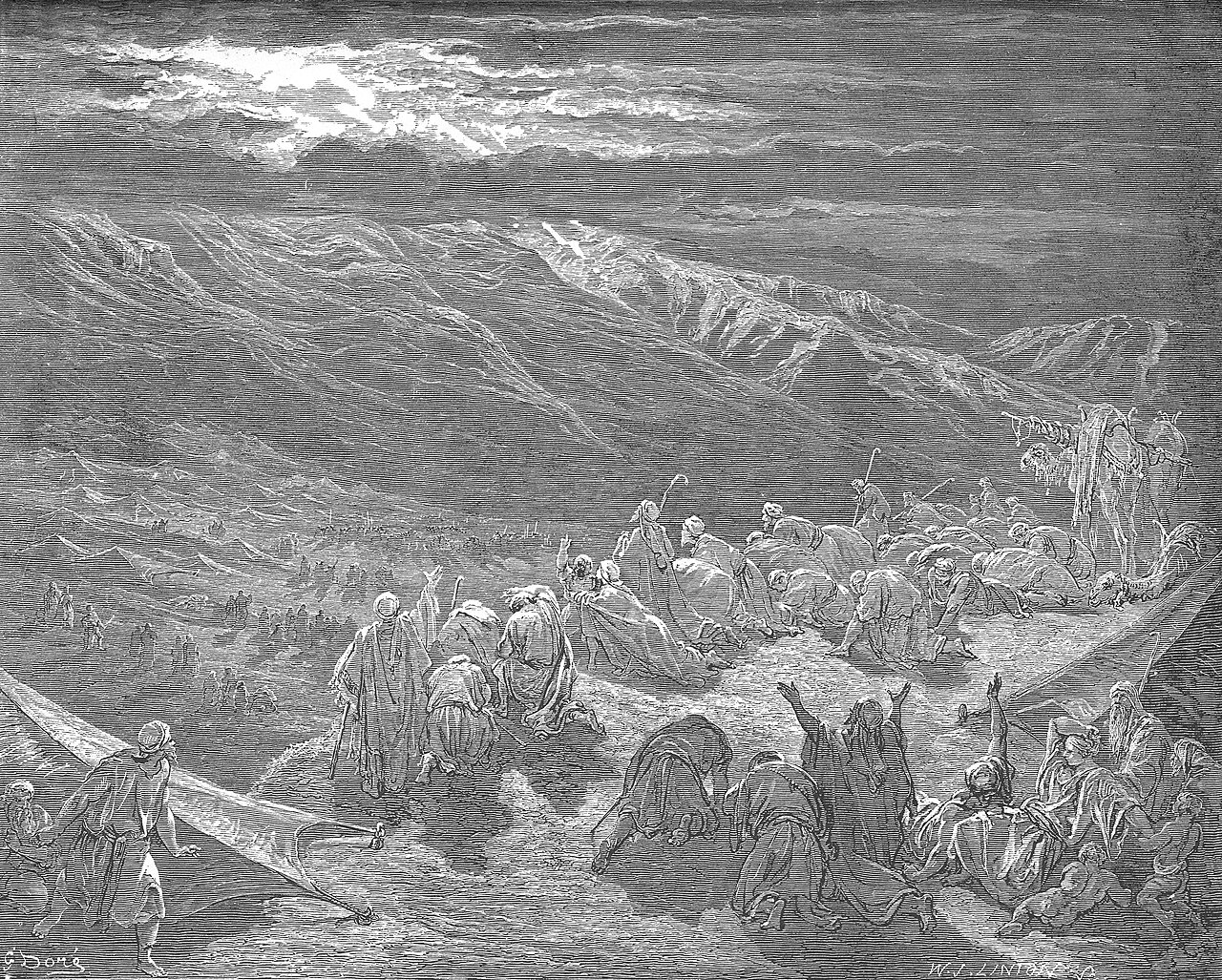
This page draws on Adam Clarke, Commentary on the Bible; Albert Barnes, Notes, Explanatory and Practical, on the Old and New Testaments (1832-1869); Jamieson, Fausset & Brown, Commentary Critical and Explanatory on the Whole Bible; John Gill, Exposition of the Old Testament (1748-1763) and Matthew Henry, Commentary on the Whole Bible.