
Daniel 7:24
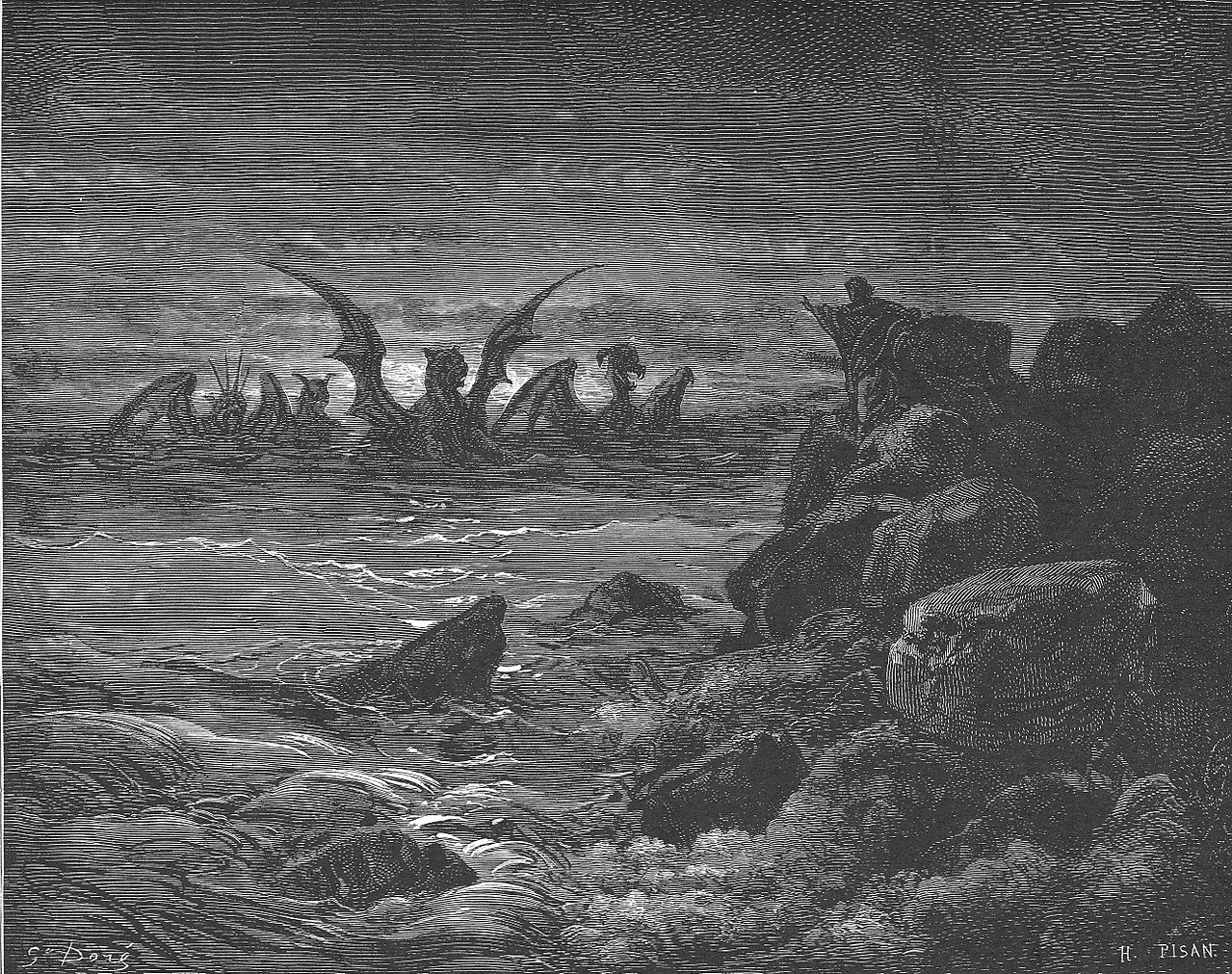
in Daniel 7And the ten horns are ten kings who will rise from this kingdom. After them another king, different from the earlier ones, will rise and subdue three kings.
BSB
The same verse in ASV and KJV ▾
ASV
And as for the ten horns, out of this kingdom shall ten kings arise: and another shall arise after them; and he shall be diverse from the former, and he shall put down three kings.
KJV
And the ten horns out of this kingdom are ten kings that shall arise: and another shall rise after them; and he shall be diverse from the first, and he shall subdue three kings.
⋯
This verse in Daniel 7
Commentary
11 notes on this verseAnd the ten horns out of this kingdom are ten kings that shall arise,..... Or ten kingdoms which sprung out of the Roman empire, or into which it was broken and divided upon the dissolution of it, about A.D. 476; which, according to Mr. Mede (k), were thus divided, A.D. 456, 1. Britons; 2. Saxons; 3. Franks; 4. Burgundians; 5 Visigoths; 6. Suevians and Alanes; 7. Vandals; 8. Almanes; 9. Ostrogoths; 10. Greeks. The list Bishop Lloyd (l) has given of them is,
This site's exposition
devour the whole earth
on Daniel 7:23-25
The fourth kingdom is named plainly as diverse from all kingdoms before it, devouring the whole earth, and its ten horns are ten kings with another rising after and among them who subdues three kings, speaks against the most High, wears out the saints, and thinks to change times and laws for a time and times and the dividing of time. The traditional and dispensational readings take this figure and its allotted period forward to a future fulfillment tied to the little horn's earlier appearance in verse 8, while other readings within the church's history read the period against Antiochus's measured persecution of Judea; the parking order governs here and no date or modern application is built from either reading. Wesley notes the phrase time and times and the dividing of time recurs at Rev 12:14 in almost identical form, a connection the notes state without resolving what either passage's period denotes.
The record, by era
The Church Fathers5 voices
And so when the prophet, wishing to persuade us according to all things and to examine the truth of what was seen by him, he inquired from one of the angels who stood near, that he himself also may be more precisely taught concerning the fourth beast, for he says, "I sought more precisely concerning it because he was fearful and terrible." [Daniel 7:19] And so the angel teaching him, but rather persuading us also through him to believe in what was rightly seen by him, he described to him all which was about to happen in the end, both the division of the fourth beast into the ten horns which arose from it, and the manifestation of the Antichrist in them and his war against the saints and his time, which is about to commence.
These things were once taught people through riddles, but we ourselves have learned these very things by experience. We see the fulfillment of the prophecy; we behold daily that tributes are exacted, poverty oppresses many people, and other such things happen.
But if so great a power is shown to have followed and to be still following the dispensation of His suffering, how great shall that be which shall follow His glorious advent! For He shall come on the clouds as the Son of man, so Daniel foretold, and His angels shall come with Him. These are the words: [quotes Daniel 7:9-28]
These doctrines are not the fruit of ingenuity but are derived from the sacred Scriptures read in the church, particularly as gathered out of the prophecy of Daniel, in today's lection, and according to the interpretation given by the archangel Gabriel, who spoke as follows, "the fourth beast shall be the fourth kingdom on earth, which shall surpass all kingdoms."
Now I am aware that your teachers, sirs, admit the whole of the words of this passage to refer to Christ; and I am likewise aware that they maintain He has not yet come; or if they say that He has come, they assert that it is not known who He is; but when He shall become manifest and glorious, then it shall be known who He is. And then, they say, the events mentioned in this passage shall happen, just as if there was no fruit as yet from the words of the prophecy.
4 more voices on this verse
The Church Fathers1 voice
A commentator
Hippolytus of RomeHippolytus Exegetical Fragments - Of the visions of Daniel and Nebuchadnezzar · Written before 235.
proposed
1. In speaking of a "lioness from the sea," he meant the rising of the kingdom of Babylon, and that this was the "golden head of the image." And in speaking of its "eagle wings," be meant that king Nebuchadnezzar was exalted and that his glory was lifted up against God. Then he says "its wings were plucked off," i.e., that his glory was destroyed; for he was driven out of his kingdom. And the words, "A man's heart was given it, and it was made stand upon the feet of a man," mean that he came to himself again, and recognised that he was but a man, and gave the glory to God. Then after the lioness he sees a second beast, "like a bear," which signified the Persians. For after the Babylonians the Persians obtained the power. And in saying that "it had three ribs in its mouth," he pointed to the three nations, Persians, Medes, and Babylonians, which were expressed in the image by the silver after the gold. Then comes the third beast, "a leopard," which means the Greeks; for after the Persians, Alexander of Macedon had the power, when Darius was overthrown, which was also indicated by the brass in the image. And in saying that the beast "had four wings of a fowl, and four heads," he showed most clearly how the kingdom of Alexander was parted into four divisions. For in speaking of four heads, he meant the four kings that arose out of it. For Alexander, when dying, divided his kingdom into four parts. Then he says, "The fourth beast (was) dreadful and terrible: it had iron teeth, and claws of brass." Who, then, are meant by this but the Romans, whose kingdom, the kingdom that still stands, is expressed by the iron? "for," says he, "its legs are of iron." 2. After this, then, what remains, beloved, but the toes of the feet of the image, in which "part shall be of iron and part of clay mixed together? […]
The Puritans and the Awakening2 voices
) that this fourth beast is a fourth kingdom, that shall devour the whole earth, or (as it may be read) the whole land. That the ten horns are ten kings, and the little horn is another king that shall subdue three kings, and shall be very abusive to God and his people, shall act, (1.) Very impiously towards God.
quarantine:debris (2026-07-29) — leading-punctuation+unbalanced-parens
Belshazzar's name here is, in the original, spelt differently from what it used to be; before it was Bel-she-azar--Bel is he that treasures up riches.
The Nineteenth Century1 voice
A commentator
Jamieson, Fausset & Brown1802–1910
Commentary Critical and Explanatory on the Whole Bible (1871)
He will not merely, as Popery, substitute himself for Christ in Christ's name, but "deny the Father and the Son" (1Jo 2:22). The persecution is to continue up to Christ's second coming (Da 7:21, 22); the horn of blasphemy cannot therefore be past; for now there is almost a general cessation of persecution.
The words behind it
17 Hebrew wordsEvery Hebrew word of this verse in the order it stands, with what it means and the door to its own study. The last column counts the times a word stands in the whole Bible: the rarer the word, the more the places it appears belong together.
| Hebrew | Sound | Meaning | Word study | In the Bible |
|---|---|---|---|---|
| וְקַרְנַיָּ֣א | vekarnaiya' | and horns the | H7162 → | 14 times |
| עֲשַׂ֔ר | ʾasar | ten | H6236 → | 6 times |
| מִנַּהּ֙ | minah | from it | H4481 → | 109 times |
| מַלְכוּתָ֔ה | malkhutah' | kingdom the | H4437 → | 57 times |
| עַשְׂרָ֥ה | ʾasrah | ten | H6236 → | 6 times |
| מַלְכִ֖ין | malkhin | kings | H4430 → | 180 times |
| יְקֻמ֑וּן | yekumun | they will arise | H6966 → | 35 times |
| וְאָחֳרָ֞ן | veochoran | and another | H321 → | 5 times |
| יְק֣וּם | yekum | he will arise | H6966 → | 35 times |
| אַחֲרֵיה֗וֹן | ʾachareihon | after them | H311 → | 3 times |
| וְה֤וּא | vehu' | and he | H1932 → | 22 times |
| יִשְׁנֵא֙ | yishne' | he will be different | H8133 → | 21 times |
| מִן־ | min- | from | H4481 → | 109 times |
| קַדְמָיֵ֔א | kadmaye' | former [kings] the | H6933 → | 3 times |
| וּתְלָתָ֥ה | utelatah | and three | H8532 → | 11 times |
| מַלְכִ֖ין | malkhin | kings | H4430 → | 180 times |
| יְהַשְׁפִּֽל׃ | yehashpil | he will bring low | H8214 → | 4 times |
וְקַרְנַיָּ֣אand horns the
vekarnaiya'H7162 →14 times
עֲשַׂ֔רten
ʾasarH6236 →6 times
מִנַּהּ֙from it
minahH4481 →109 times
מַלְכוּתָ֔הkingdom the
malkhutah'H4437 →57 times
עַשְׂרָ֥הten
ʾasrahH6236 →6 times
מַלְכִ֖יןkings
malkhinH4430 →180 times
יְקֻמ֑וּןthey will arise
yekumunH6966 →35 times
וְאָחֳרָ֞ןand another
veochoranH321 →5 times
יְק֣וּםhe will arise
yekumH6966 →35 times
אַחֲרֵיה֗וֹןafter them
ʾachareihonH311 →3 times
וְה֤וּאand he
vehu'H1932 →22 times
יִשְׁנֵא֙he will be different
yishne'H8133 →21 times
מִן־from
min-H4481 →109 times
קַדְמָיֵ֔אformer [kings] the
kadmaye'H6933 →3 times
וּתְלָתָ֥הand three
utelatahH8532 →11 times
מַלְכִ֖יןkings
malkhinH4430 →180 times
יְהַשְׁפִּֽל׃he will bring low
yehashpilH8214 →4 times
A shaded row is a word that stands 400 times or fewer in the Bible.
The walk
8 stopsEach card is a verse this one points to, and under it the verses that one points to in turn. Where several paths arrive at the same place, that place is listed first: the text keeps returning to it.
Through
Revelation 13:1Then I saw a beast with ten horns and seven heads rising out of the sea. There were ten royal crowns on its horns and blasphemous names on its heads.
it leads to
- Revelation 12:3
Then another sign appeared in heaven: a huge red dragon with seven heads, ten horns, and seven royal crowns on his heads.
- Revelation 17:3
And the angel carried me away in the Spirit into a wilderness, where I saw a woman sitting on a scarlet beast that was covered with blasphemous names and had seven heads and ten…
- Revelation 11:7
When the two witnesses have finished their testimony, the beast that comes up from the Abyss will wage war with them, and will overpower and kill them.
- Daniel 7:23–25
This is what he said: ‘The fourth beast is a fourth kingdom that will appear on the earth, different from all the other kingdoms, and it will devour the whole earth, trample it down,…
- Daniel 7:2–3
Daniel declared: “In my vision in the night I looked, and suddenly the four winds of heaven were churning up the great sea.
- Revelation 12:3
Through
Daniel 11:36Then the king will do as he pleases and will exalt and magnify himself above every god, and he will speak monstrous things against the God of gods. He will be successful until the…
it leads to
- Revelation 13:5–6
The beast was given a mouth to speak arrogant and blasphemous words, and authority to act for 42 months.
- 2 Thessalonians 2:4
He will oppose and exalt himself above every so-called god or object of worship. So he will seat himself in the temple of God, proclaiming himself to be God.
- Daniel 8:19
and said, “Behold, I will make known to you what will happen in the latter time of wrath, because it concerns the appointed time of the end.
- Revelation 13:5–6
Where this verse is studied
On this page
Studies21
On this verse
On this chapter
- The Son of Man in 1 Enoch
- Angelology
- Antichrist (the Word and the Figure)
- Apocalyptic Literature
- The Beast and the False Prophet
- The Major Prophets
- Revelation, the Canon's Closing Scroll
- Fire
- Jesus: Titles & Roles
- John on Patmos, Revelation 1
- Rome
- The Fourth Man in the Fire: Daniel 3
- The Ascension: Acts 1:1-11 · Luke 24:50-53
- The Throne
- The Throne Room
About Daniel
This page draws on 11 works. Open the list of works
This page draws on Carl Friedrich Keil, Biblical Commentary on the Book of Daniel; Cyril of Jerusalem, Catechetical Lecture 15:13; Hippolytus of Rome, Commentary on Daniel 4.14.1; Hippolytus of Rome, Hippolytus Exegetical Fragments - Of the visions of Daniel and Nebuchadnezzar; Jamieson, Fausset & Brown, Commentary Critical and Explanatory on the Whole Bible; John Gill, Exposition of the Old Testament (1748-1763); John Wesley, Explanatory Notes upon the Old Testament; Justin Martyr, Dialogue with Trypho, Chapter XXXI; Justin Martyr, Dialogue with Trypho, Chapter CX; Matthew Henry, Commentary on the Whole Bible and Theodoret of Cyrus, COMMENTARY ON DANIEL 7:23.