
1 Samuel 2:29
in 1 Samuel 2Why then do you kick at My sacrifice and offering that I have prescribed for My dwelling place? You have honored your sons more than Me by fattening yourselves with the best of all the offerings of My people Israel.’
BSB
The same verse in ASV and KJV ▾
ASV
Wherefore kick ye at my sacrifice and at mine offering, which I have commanded in my habitation, and honorest thy sons above me, to make yourselves fat with the chiefest of all the offerings of Israel my people?
KJV
Wherefore kick ye at my sacrifice and at mine offering, which I have commanded in my habitation; and honourest thy sons above me, to make yourselves fat with the chiefest of all the offerings of Israel my people?
⋯
This verse in 1 Samuel 2
Commentary
11 notes on this verseWherefore kick ye at my sacrifice, and at mine offering, which I have commanded in my habitation,.... To be offered in the tabernacle, where the Lord had his dwelling; which they might be said to kick and spurn at, despising them, as if there were not enough of them, nor the best of them given to them for their maintenance; a metaphor taken from cattle well fed and fat, which kick and spurn with their feet at even the owners and feeders of them.
This site's exposition
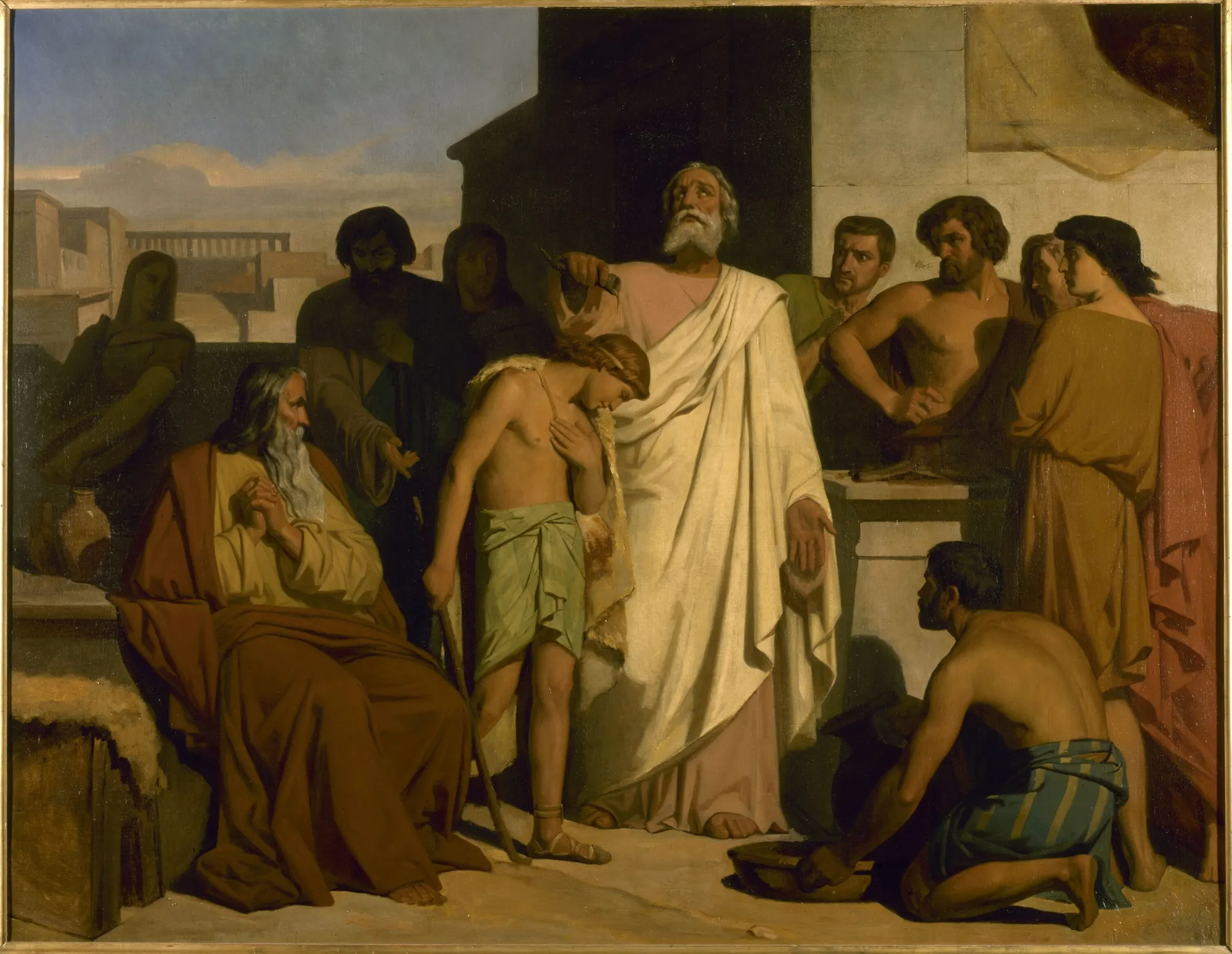
Then a man of God came to Eli
on 1 Samuel 2:27-30
An unnamed man of God reminds Eli that his father's house was chosen “to be My priest”. The charge follows, “You have honored your sons more than Me”, with the priests fattened on offerings meant for the altar. Verse 30 states the rule the book will test on king after king: “I will honor those who honor Me, but those who despise Me will be disdained”.
This site's exposition
Why then do you kick at My sacrifice
John Gill takes kick from well-fed cattle that turn on the owner who feeds them. The charge falls on Eli himself, and Matthew Henry fears that he ate from what his sons seized, as fattening yourselves suggests. Adam Clarke calls his leniency connivance.
The record, by era
The Medieval Church4 voices
A commentator
Gregory the DialogistThe Book of Pastoral Rule, Part 2, Chapter 6 · Written before 604.
proposed
And yet sometimes there is more grievous delinquency, if among perverse persons equality is kept up more than discipline. For Eli, because, overcome by false affection, he would not punish his delinquent sons, smote himself along with his sons before the strict judge with a cruel doom. For on this account it is said to him by the divine voice, "Thou hast honoured thy sons more than Me."
A commentator
Gregory the DialogistCommentary on 1 Kings, Book 2, Chapter 2 · Written before 604.
proposed
26. For "why" is not said except by a judge who urgently investigates. And he who is rebuked for having kicked away the victim of God and His gifts is judged to have done injury without the counsel of reason. It should be noted that he speaks in the plural number: "Why have you kicked away my victim," so that what is said may seem to pertain not only to Eli but also to his sons. For wild animals are accustomed to kick away things clinging to them. For what other victims did the faithful have than to persist in the praises of their Redeemer, to proclaim that Christ Jesus died for the salvation of the world, and that by rising again He restored the life of the human race? And what other offerings were theirs, except to ceaselessly offer thanksgivings to Almighty God for such great benefits bestowed upon them? These indeed the sons of Eli kicked away, because in their rejection of the new preaching, they did not follow the counsel of reason through the sacred Scriptures, but the impulse of savagery. For the Truth desired to call them back from irrational cruelty to the intention of rational counsel, saying: "Search the Scriptures, for you think that in them you have eternal life; and they bear witness of me" (John 5:39). Whence here also it is said: "Which I commanded to be offered in the temple." For in the law, the psalms, and the prophets, it had been written concerning the passion, the resurrection of the Lord, and the state of the universal Church. Therefore the leaders of the Synagogue kicked away with their heel the victim and the gifts of the Lord commanded to be offered in the temple of the Lord, because indeed they strove not to examine the preaching of the holy Church by the authority of Holy Scripture, but to reject and cast it away by the sole impulse of their savagery. […]
And you honored your sons above me, etc. Not content with the portion that I granted you, you also tried to take the firstfruits which were due to me; which can be understood both of the time and of the portion of the sacrifices; because …
A commentator
Gregory the DialogistCommentary on 1 Kings, Book 2, Chapter 3 · Written before 604.
proposed
Now a man of God is described as having come to Eli, who, being about to bring forth the severity of the divine sentence, carefully enumerated how many gifts He had bestowed upon him. And because he finally announces the punishment of the vengeance that he deserved, what does this give us to understand, except that the faults of pastors are judged more strictly? And not only do their sins increase the punishment of retribution, but also the gifts that were granted.
The Puritans and the Awakening1 voice
They had all shared in the gains of the sacrilege. It is to be feared that Eli himself, though he disliked and reproved the abuses they committed, yet did not forbear to eat of the roast meat they sacrilegiously got,
3 more voices on this verse
The Puritans and the Awakening1 voice
He chargeth Eli with his sons faults. honourest thy sons - Permitting them to dishonour and injure me, by taking my part to themselves; chusing rather to offend me by thy connivance at their sin, than to displease them by severe rebukes, and just punishments.
The Nineteenth Century2 voices
Wherefore kick ye at my sacrifice - They disdained to take the part allowed by law; and would take for themselves what part they pleased, and as much as they pleased, 1Sa 2:13-16: thus they kicked at the sacrifices. Honourest thy sons above me - Permitting them to deal, as above, with the offerings and sacrifices, and take their part before the fat, etc., was burnt unto the Lord: thus they were first served. At this Eli connived, and thus honored his sons above God.
A commentator
Albert Barnes1798–1870
Notes, Explanatory and Practical, on the Old and New Testaments (1832-1869)
proposed
Wherefore kick ye - See the marginal reference. The well-fed beast becomes unmanageable and refractory, and refuses the yoke, and bursts the bonds Jer 5:5. So the priests, instead of being grateful for the provision made for them, in their pampered pride became dissatisfied, wantonly broke the laws of God which regulated their share of the offerings, and gave themselves up to an unbridled indulgence of their passions and their covetousness.
The words behind it
17 Hebrew wordsEvery Hebrew word of this verse in the order it stands, with what it means and the door to its own study. The last column counts the times a word stands in the whole Bible: the rarer the word, the more the places it appears belong together.
| Hebrew | Sound | Meaning | Word study | In the Bible |
|---|---|---|---|---|
| לָ֣מָּה | lamah | <to> why? | H4100 → | 752 times |
| תִבְעֲט֗וּ | tivatu | do you kick | H1163 → | |
| בְּזִבְחִי֙ | bezivchi | at sacrifice my | H2077 → | 162 times |
| וּבְמִנְחָתִ֔י | uveminchati | and at offering my | H4503 → | 211 times |
| אֲשֶׁ֥ר | ʾasher | which | H834 → | 5497 times |
| צִוִּ֖יתִי | tziviti | I commanded | H6680 → | 494 times |
| מָע֑וֹן | maon | a dwelling place | H4583 → | |
| וַתְּכַבֵּ֤ד | vatekhabed | and you honor | H3513 → | 113 times |
| אֶת־ | ʾet- | <obj.> | H853 → | 10935 times |
| בָּנֶ֙יךָ֙ | baneikha | sons your | H1121 → | 4930 times |
| מִמֶּ֔נִּי | mimeni | more than me | H4480 → | 1188 times |
| לְהַבְרִֽיאֲכֶ֗ם | lehavriakhem | by fattening yourselves | H1254 → | |
| מֵרֵאשִׁ֛ית | mereshit | from [the] choicest of | H7225 → | |
| כָּל־ | kol- | every | H3605 → | 5413 times |
| מִנְחַ֥ת | minchat | <the> offering of | H4503 → | 211 times |
| יִשְׂרָאֵ֖ל | yisrael | Israel | H3478 → | 2507 times |
| לְעַמִּֽי׃ | leami | of people my | H5971 → | 1873 times |
לָ֣מָּה<to> why?
lamahH4100 →752 times
תִבְעֲט֗וּdo you kick
tivatuH1163 →
בְּזִבְחִי֙at sacrifice my
bezivchiH2077 →162 times
וּבְמִנְחָתִ֔יand at offering my
uveminchatiH4503 →211 times
אֲשֶׁ֥רwhich
ʾasherH834 →5497 times
צִוִּ֖יתִיI commanded
tzivitiH6680 →494 times
מָע֑וֹןa dwelling place
maonH4583 →
וַתְּכַבֵּ֤דand you honor
vatekhabedH3513 →113 times
אֶת־<obj.>
ʾet-H853 →10935 times
בָּנֶ֙יךָ֙sons your
baneikhaH1121 →4930 times
מִמֶּ֔נִּיmore than me
mimeniH4480 →1188 times
לְהַבְרִֽיאֲכֶ֗םby fattening yourselves
lehavriakhemH1254 →
מֵרֵאשִׁ֛יתfrom [the] choicest of
mereshitH7225 →
כָּל־every
kol-H3605 →5413 times
מִנְחַ֥ת<the> offering of
minchatH4503 →211 times
יִשְׂרָאֵ֖לIsrael
yisraelH3478 →2507 times
לְעַמִּֽי׃of people my
leamiH5971 →1873 times
A shaded row is a word that stands 400 times or fewer in the Bible.
The walk
8 stopsEach card is a verse this one points to, and under it the verses that one points to in turn. Where several paths arrive at the same place, that place is listed first: the text keeps returning to it.
Through
Matthew 10:37Anyone who loves his father or mother more than Me is not worthy of Me; anyone who loves his son or daughter more than Me is not worthy of Me;
it leads to
- Luke 14:26
“If anyone comes to Me and does not hate his father and mother and wife and children and brothers and sisters—yes, even his own life—he cannot be My disciple.
- Matthew 22:37
Jesus declared, “‘Love the Lord your God with all your heart and with all your soul and with all your mind.’
- Philippians 3:7–9
But whatever was gain to me I count as loss for the sake of Christ.
- Luke 14:26
Through
Ezekiel 34:2“Son of man, prophesy against the shepherds of Israel. Prophesy and tell them that this is what the Lord GOD says: ‘Woe to the shepherds of Israel, who only feed themselves! Should not the…
it leads to
- Jeremiah 23:1
“Woe to the shepherds who destroy and scatter the sheep of My pasture!” declares the LORD.
- Jeremiah 3:15
Then I will give you shepherds after My own heart, who will feed you with knowledge and understanding.”
- Isaiah 40:11
He tends His flock like a shepherd; He gathers the lambs in His arms and carries them close to His heart. He gently leads the nursing ewes.
- Ezekiel 34:8–10
‘As surely as I live, declares the Lord GOD, because My flock lacks a shepherd and has become prey and food for every wild beast, and because My shepherds did not search for My…
- Luke 20:46–47
“Beware of the scribes. They like to walk around in long robes, and they love the greetings in the marketplaces, the chief seats in the synagogues, and the places of honor at banquets.
- Jeremiah 23:1
Where this verse is studied
About 1 Samuel
This page draws on 11 works. Open the list of works
This page draws on Adam Clarke, Commentary on the Bible; Albert Barnes, Notes, Explanatory and Practical, on the Old and New Testaments (1832-1869); Bede, Commentary on Samuel; Gregory the Dialogist, The Book of Pastoral Rule, Part 2, Chapter 6; Gregory the Dialogist, Commentary on 1 Kings, Book 2, Chapter 2; Gregory the Dialogist, Commentary on 1 Kings, Book 2, Chapter 3; John Gill, Exposition of the Old Testament (1748-1763); John Gill, Exposition of the Old Testament; John Wesley, Explanatory Notes upon the Old Testament; Matthew Henry, Commentary on the Whole Bible and W. G. Blaikie, The First Book of Samuel (Expositor's Bible).