
1 Samuel 16:2
in 1 Samuel 16“How can I go?” Samuel asked. “Saul will hear of it and kill me!” The LORD answered, “Take a heifer with you and say, ‘I have come to sacrifice to the LORD.’
BSB
The same verse in ASV and KJV ▾
ASV
And Samuel said, How can I go? if Saul hear it, he will kill me. And Jehovah said, Take a heifer with thee, and say, I am come to sacrifice to Jehovah.
KJV
And Samuel said, How can I go? if Saul hear it, he will kill me. And the Lord said, Take an heifer with thee, and say, I am come to sacrifice to the Lord.
⋯
This verse in 1 Samuel 16
Commentary
9 notes on this verse5. What is shown by these words, except that the cunning and cruelty of tyrants must sometimes be eluded by pious deception? For by the Lord's command a calf is taken from the herd, a sacrifice is simulated, and the royal anointing is reached, because when tyrants desire to do harm, certain things which they may believe must be set before them, so that they find no opening to do harm. Thus tyrants must be eluded in such a way that the guilt of lying is avoided.
This site's exposition
Fill your horn with oil and go
on 1 Samuel 16:1-2
The LORD ends the mourning over Saul with a fresh command, "Fill your horn with oil and go," for a king is already selected among Jesse's sons. Samuel's fear that Saul will kill him is met with a plan set out step by step rather than a rebuke. Bethlehem is where Ruth's story closed on the name David, and the LORD sends His prophet to that town to find him.
This site's exposition
Take a heifer with you
Adam Clarke holds the errand strictly true: Samuel did offer the heifer in sacrifice to the LORD, and the feast gathered Jesse's sons. Gregory the Great called it a pious deception, the cruelty of a tyrant like Saul met with something he could believe. Such visits were Samuel's custom, say Jamieson, Fausset and Brown.
The record, by era
The Medieval Church1 voice
And Samuel said: How shall I go? etc. The prophets said to the Lord, and the apostles said: How can we preach the kingdom of the New Testament? For the zealous Jews of the law will hear and kill us. Which of the prophets did …
The Puritans and the Awakening2 voices
And Samuel said, how can I go?....
Let him give notice of a sacrifice, and invite Jesse (who, it is probable, was the principal man of the city) and his family to come to the feast upon the sacrifice; and, says God, I will show thee what thou shalt do. Those that go about God's work in God's way shall be directed step by step, wherever they are at a loss, to do it in the best manner.
The Nineteenth Century2 voices
Take a heifer with thee, and say, I am come to sacrifice - This was strictly true; Samuel did offer a sacrifice; and it does not appear that he could have done the work which God designed, unless he had offered this sacrifice, and called the elders of the people together, and thus collected Jesse’s sons.
A commentator
Jamieson, Fausset & Brown1802–1910
Commentary Critical and Explanatory on the Whole Bible (1871)
How can I go?--This is another instance of human infirmity in Samuel. Since God had sent him on this mission, He would protect him in the execution. I am come to sacrifice--It seems to have been customary with Samuel to do this in the different circuits to which he went, that he might encourage the worship of God.
1 more voice on this verse
The Nineteenth Century1 voice
A commentator
Albert Barnes1798–1870
Notes, Explanatory and Practical, on the Old and New Testaments (1832-1869)
proposed
It was the purpose of God that David should be anointed at this time as Saul’s successor, and as the ancestor and the type of His Christ. It was not the purpose of God that Samuel should stir up a civil war, by setting up David as Saul’s rival. Secrecy, therefore, was a necessary part of the transaction. But secrecy and concealment are not the same as duplicity and falsehood. Concealment of a good purpose, for a good purpose, is clearly justifiable. There is therefore nothing in the least inconsistent with truth in the occurrence here related. Compare Exo 7:16; Exo 8:1; Exo 9:13.
How the passage was read
What the Jewish commentators add
On the verses either side of this one
The Beis Lechemite. From Beis Lechem. The rule of every noun composed of two words, e.g., Beis Lechem, Beis Shemesh, Beis Eil, Kiryas Arba, if one wishes to add a ' ה ' he adds it between the two words, e.g., Kiryas Ha'arba, 1 Bereishis:27.
This section is reception history: how the passage was read and kept in the Jewish tradition. Where a reading parts from an essential of the Christian faith, the section says so at that point.
Texts and citation data: Sefaria; each excerpt follows its version’s licence. 6 further sources are cited on this chapter that carry no English text this site may quote or only restate the verse.
The words behind it
17 Hebrew wordsEvery Hebrew word of this verse in the order it stands, with what it means and the door to its own study. The last column counts the times a word stands in the whole Bible: the rarer the word, the more the places it appears belong together.
| Hebrew | Sound | Meaning | Word study | In the Bible |
|---|---|---|---|---|
| וַיֹּ֤אמֶר | vaiyomer | and he said | H559 → | 5305 times |
| שְׁמוּאֵל֙ | shemuel | Samuel | H8050 → | 141 times |
| אֵ֣יךְ | ʾeikh | how? | H349 → | |
| אֵלֵ֔ךְ | ʾelekh | will I go | H1980 → | 1546 times |
| וְשָׁמַ֥ע | veshama' | and he will hear | H8085 → | 1159 times |
| שָׁא֖וּל | shaul | Saul | H7586 → | 402 times |
| וַהֲרָגָ֑נִי ס | vaharagani | and he will kill me | H2026 → | 167 times |
| וַיֹּ֣אמֶר | vaiyomer | and he said | H559 → | 5305 times |
| יְהוָ֗ה | yahweh | Yahweh | H3068 → | 6520 times |
| עֶגְלַ֤ת | ʾeglat | a heifer of | H5697 → | |
| בָּקָר֙ | bakar | cattle | H1241 → | 183 times |
| תִּקַּ֣ח | tikach | you will take | H3947 → | 966 times |
| בְּיָדֶ֔ךָ | beyadekha | in hand your | H3027 → | 1618 times |
| וְאָ֣מַרְתָּ֔ | veamarta | and you will say | H559 → | 5305 times |
| לִזְבֹּ֥חַ | lizboach | to sacrifice | H2076 → | 134 times |
| לַֽיהוָ֖ה | layahweh | to Yahweh | H3068 → | 6520 times |
| בָּֽאתִי׃ | bati | I have come | H935 → | 2568 times |
וַיֹּ֤אמֶרand he said
vaiyomerH559 →5305 times
שְׁמוּאֵל֙Samuel
shemuelH8050 →141 times
אֵ֣יךְhow?
ʾeikhH349 →
אֵלֵ֔ךְwill I go
ʾelekhH1980 →1546 times
וְשָׁמַ֥עand he will hear
veshama'H8085 →1159 times
שָׁא֖וּלSaul
shaulH7586 →402 times
וַהֲרָגָ֑נִי סand he will kill me
vaharaganiH2026 →167 times
וַיֹּ֣אמֶרand he said
vaiyomerH559 →5305 times
יְהוָ֗הYahweh
yahwehH3068 →6520 times
עֶגְלַ֤תa heifer of
ʾeglatH5697 →
בָּקָר֙cattle
bakarH1241 →183 times
תִּקַּ֣חyou will take
tikachH3947 →966 times
בְּיָדֶ֔ךָin hand your
beyadekhaH3027 →1618 times
וְאָ֣מַרְתָּ֔and you will say
veamartaH559 →5305 times
לִזְבֹּ֥חַto sacrifice
lizboachH2076 →134 times
לַֽיהוָ֖הto Yahweh
layahwehH3068 →6520 times
בָּֽאתִי׃I have come
batiH935 →2568 times
A shaded row is a word that stands 400 times or fewer in the Bible.
The walk
8 stopsEach card is a verse this one points to, and under it the verses that one points to in turn. Where several paths arrive at the same place, that place is listed first: the text keeps returning to it.
Through
Matthew 10:16Behold, I am sending you out like sheep among wolves; therefore be as shrewd as snakes and as innocent as doves.
it leads to
- Philippians 2:15
so that you may be blameless and pure, children of God without fault in a crooked and perverse generation, in which you shine as lights in the world
- Luke 10:3
Go! I am sending you out like lambs among wolves.
- 1 Corinthians 14:20
Brothers, stop thinking like children. In regard to evil be infants, but in your thinking be mature.
- Colossians 4:5
Act wisely toward outsiders, redeeming the time.
- Ephesians 5:15–17
Pay careful attention, then, to how you walk, not as unwise but as wise,
- Philippians 2:15
Through
1 Samuel 9:12“Yes, he is ahead of you,” they answered. “Hurry now, for today he has come to the city because the people have a sacrifice on the high place.
it leads to
- Genesis 31:54
Then Jacob offered a sacrifice on the mountain and invited his relatives to eat a meal. And after they had eaten, they spent the night on the mountain.
- 1 Samuel 10:5
After that you will come to Gibeah of God, where the Philistines have an outpost. As you approach the city, you will meet a group of prophets coming down from the high place, preceded…
- 1 Kings 3:2–4
The people, however, were still sacrificing on the high places because a house for the Name of the LORD had not yet been built.
- Genesis 31:54
Where this verse is studied
On this page
About 1 Samuel
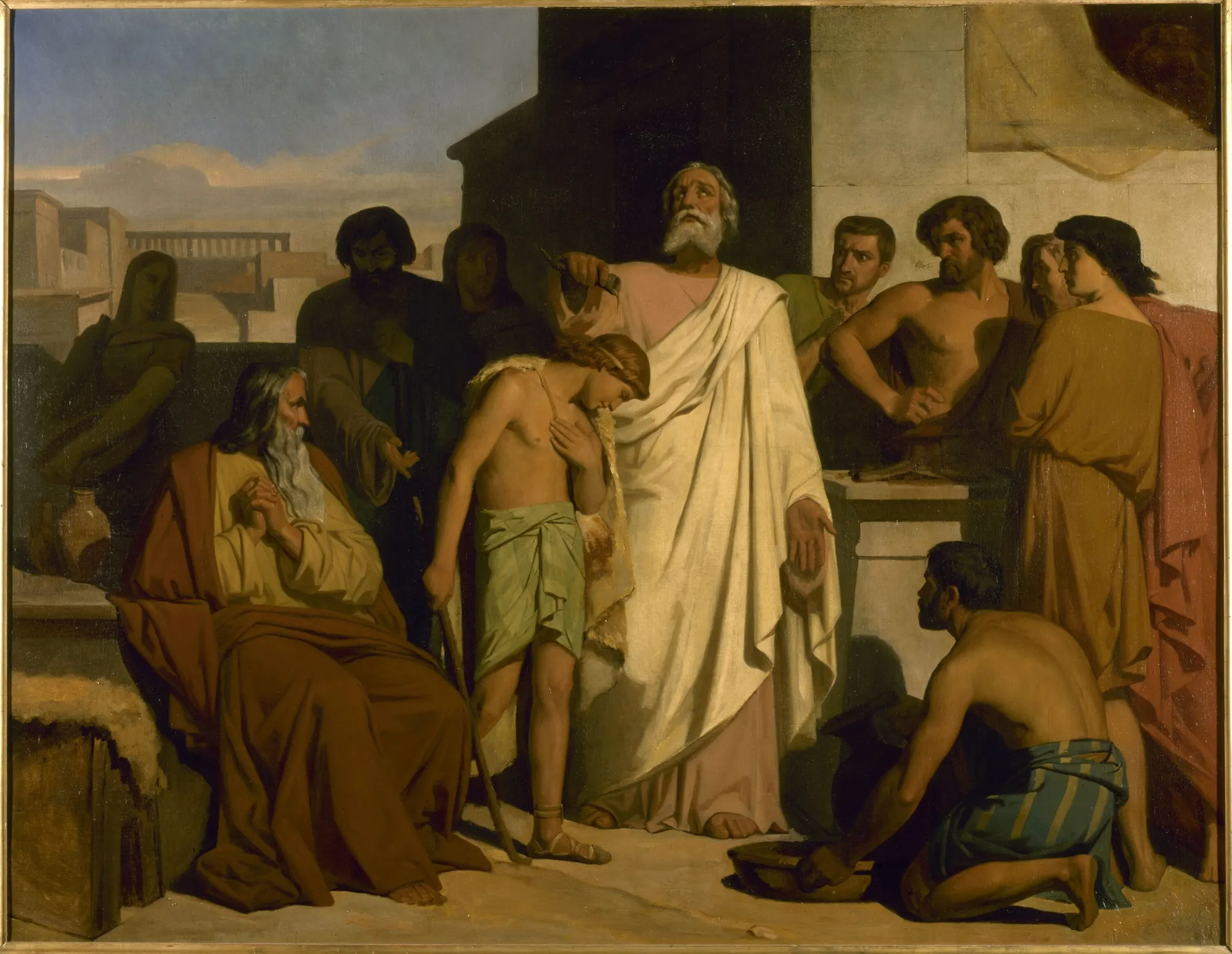
Who and where
2 names in this verse with a page on the site.
- PersonJudges to monarchySamuelAsked of God by Hannah and lent to the LORD at Shiloh; the last judge and first of the prophets after Moses, who anointed both Sau…
- PersonUnited monarchySaulIsrael's first king, head and shoulders above the people; began in humility, ended in rejection — sparing what God devoted, consul…
This page draws on Adam Clarke, Commentary on the Bible; Albert Barnes, Notes, Explanatory and Practical, on the Old and New Testaments (1832-1869); Bede, Commentary on Samuel; Gregory the Dialogist, Commentary on 1 Kings, Book 6, Chapter 3; Jamieson Fausset and Brown, Commentary Critical and Explanatory on the Whole Bible; Jamieson, Fausset & Brown, Commentary Critical and Explanatory on the Whole Bible; John Gill, Exposition of the Old Testament (1748-1763) and Matthew Henry, Commentary on the Whole Bible.