
1 Samuel 16:12
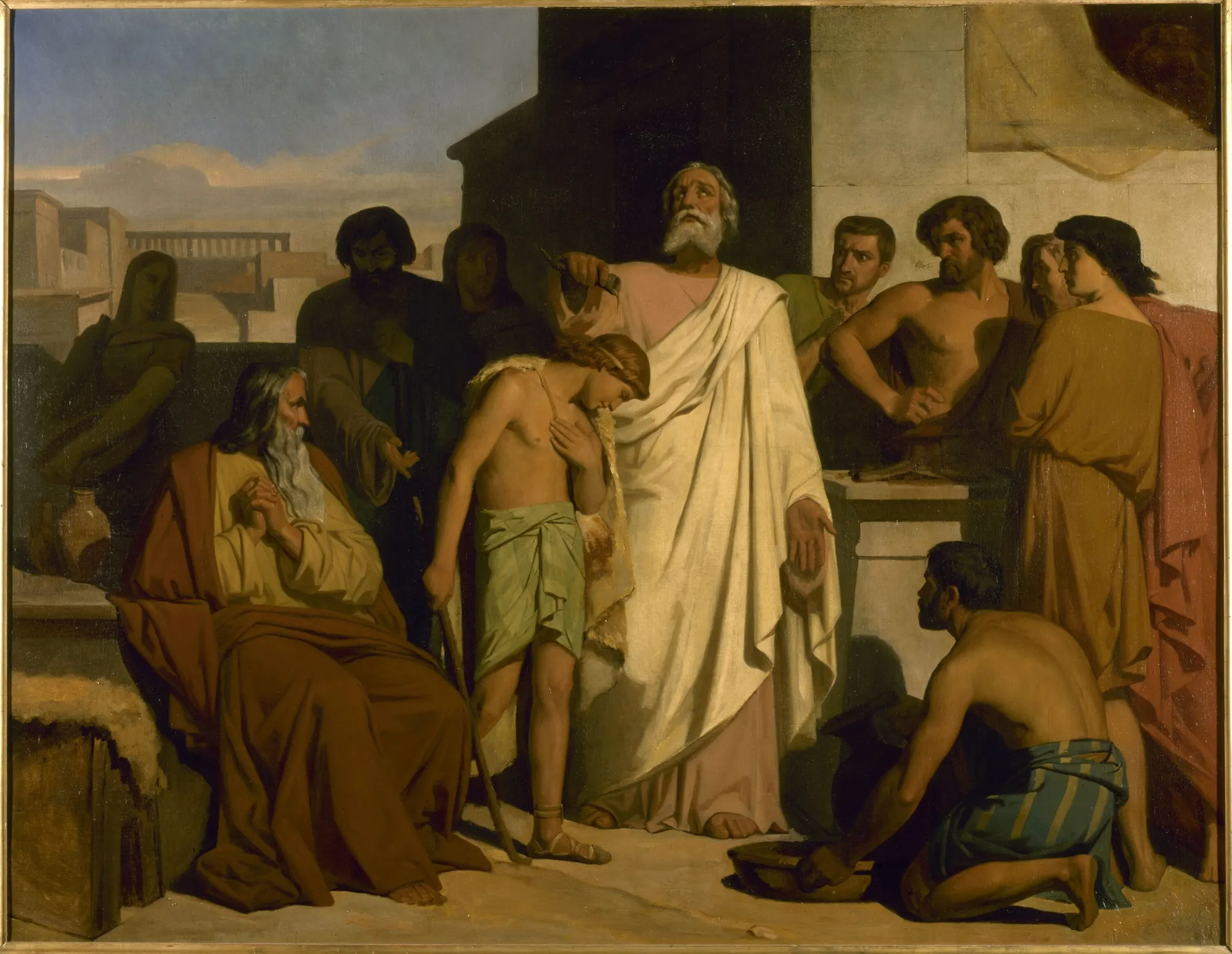
in 1 Samuel 16So Jesse sent for his youngest son and brought him in. He was ruddy, with beautiful eyes and a handsome appearance. And the LORD said, “Rise and anoint him, for he is the one.”
BSB
The same verse in ASV and KJV ▾
ASV
And he sent, and brought him in. Now he was ruddy, and withal of a beautiful countenance, and goodly to look upon. And Jehovah said, Arise, anoint him; for this is he.
KJV
And he sent, and brought him in. Now he was ruddy, and withal of a beautiful countenance, and goodly to look to. And the Lord said, Arise, anoint him: for this is he.
⋯
This verse in 1 Samuel 16
Commentary
10 notes on this verseHe was ruddy - I believe the word here means red-haired, he had golden locks. Hair of this kind is ever associated with a delicate skin and florid complexion.
This site's exposition
Are these all the sons you have
on 1 Samuel 16:11-12
Samuel asks if these are all the sons, and Jesse admits, "There is still the youngest," out tending the sheep and not brought to the sacrifice. David is "ruddy, with beautiful eyes and a handsome appearance," yet the LORD’s word decides the matter with "Rise and anoint him, for he is the one" as its command. The overlooked youngest is named within one verse of being fetched.
This site's exposition
He was ruddy, with beautiful eyes
Adam Clarke takes ruddy as red hair and a fair skin. The same looks return at 17:42, where Goliath despises David as a boy, ruddy and handsome. The LORD chose him by the heart of verse 7, and the giant judged him by his face.
The record, by era
The Medieval Church2 voices
A commentator
Gregory the DialogistCommentary on 1 Kings, Book 6, Chapter 3 · Written before 604.
proposed
29. Of whose description it is also said: "He was ruddy, and beautiful in appearance, and fair of face." Ruddy indeed, because he was wounded by the lance; ruddy, because he was reddened by his Passion. Whence also it is said to him through the prophet: "Why is your garment red?" (Isa. 63:2). He was indeed ruddy, who colored the brightness of such great innocence with the redness of his precious blood. He was also beautiful in appearance, because by rising again he put on the beauty of immortality, and looked upon us mortals with great love. For as if promising the beauty of his appearance to his disciples, he says: "I will see you again, and your heart will rejoice" (John 16:22). Hence also promising, he says: "I go to prepare a place for you, and I will come, and will take you to myself, that where I am, you also may be." What is the beauty of the face, but the glory of his majesty? For his face is perfect knowledge. Paul also, recalling this, says: "We see now through a mirror in an enigma, but then face to face. Now I know in part, but then I shall know, just as I also have been known" (1 Cor. 13:12). What then is the beauty of the face, but the splendor of eternal divinity? This beauty is now believed, not seen; then it will not be believed, but seen, because the apostle says: "When he shall appear, we shall be like him, because we shall see him as he is" (1 John 3:2). Whence also to Moses, seeking that same beauty of the face, he replied: "You shall see my back" (Exod. 33:23). Whatever we can now contemplate of his divinity is not the beauty itself, but a veil over the beauty. We behold the back, so that we may follow; but when by following we arrive at him, we behold the front, that is, the beauty of his face. He was therefore ruddy in this world, beautiful in paradise, and eternally fair of face in heaven. […]
A commentator
Gregory the DialogistCommentary on 1 Kings, Book 6, Chapter 3 · Written before 604.
proposed
There follows: (Verse 12.) "So he sent and brought him in." The future king is brought in when the humble are brought forth from the hiding places of their concealment. They are hidden indeed, but in pastures; because, even if they conceal themselves among the lowly and weak things of the flesh before men, great is the breadth of heavenly contemplation in which they dwell. But let us see what kind of man the one now set over others appears to be. For it follows and says: (Verse 12.)
The Puritans and the Awakening2 voices
), that is, he had a clear complexion, a good eye, and a lovely face; the features were extraordinary, and there was something in his looks that was very charming.
quarantine:debris (2026-07-29) — leading-punctuation+unbalanced-parens
And he sent and brought him in,....
The Nineteenth Century1 voice
A commentator
Jamieson, Fausset & Brown1802–1910
Commentary Critical and Explanatory on the Whole Bible (1871)
proposed
he was ruddy, &c.--JOSEPHUS says that David was ten, while most modern commentators are of the opinion that he must have been fifteen years of age.
quarantine:debris (2026-07-29) — starts-lowercase
2 more voices on this verse
The Nineteenth Century2 voices
SAMUEL was sent to Bethlehem to discover the object of God's election. This would have been a very difficult task if the God who sent him had not accompanied him and spoken with the sure voice of Inspiration within him so soon as the chosen object stood before him. Brethren, it is neither your task nor mine to guess who are God's elect apart from marks and evidences. What was done in the councils of eternity before the world was made is hidden in the mind of God and we must not curiously intrude where the door is closed by the hand of Wisdom. Yet in the preaching of the Word there is a discovery made of God's secret election. We preach the Gospel to every creature under Heaven. We deliver God's threats and promises to every sinner and we cry, "Look unto Jesus and be you saved, all the ends of the earth." That Gospel is, of itself, through God the Holy Spirit, the discerner of the chosen ones of God when they feel its quickening power and are raised from among the spiritually dead. The Gospel is a fan which, while it drives away the chaff, leaves the wheat upon the floor. The Gospel is like a refiner's fire and like the fuller's soap removing all that is extraneous and worthless, revealing the precious and the pure. We ministers have no other way by which to discern the saints of God and to separate the precious from the vile but by faithfully preaching the Truth of God as it is in Jesus and observing its effects. As for ourselves, we may discover our own calling and election and make them sure. Paul said of the Thessalonians that he knew their election of God. We may discover the election of other men to a very high degree of probability by their conduct and conversation, and be certified of our own election, even to infallibility, by the witness of the Spirit within that we are born of God. If our heart is renewed by the Spirit.
SAMUEL was sent to Bethlehem to discover the object of God's election. This would have been a very difficult task if the God who sent him had not accompanied him and spoken with the sure voice of Inspiration within him so soon as the chosen object stood before him. Brethren, it is neither your task nor mine to guess who are God's elect apart from marks and evidences.
How the passage was read
What the Jewish commentators add
On the verses either side of this one
And a spirit of Adonoy passed over. A spirit of strength. 7 Targum renders ‘a spirit of prophecy.’
This section is reception history: how the passage was read and kept in the Jewish tradition. Where a reading parts from an essential of the Christian faith, the section says so at that point.
Texts and citation data: Sefaria; each excerpt follows its version’s licence. 6 further sources are cited on this chapter that carry no English text this site may quote or only restate the verse.
The words behind it
16 Hebrew wordsEvery Hebrew word of this verse in the order it stands, with what it means and the door to its own study. The last column counts the times a word stands in the whole Bible: the rarer the word, the more the places it appears belong together.
| Hebrew | Sound | Meaning | Word study | In the Bible |
|---|---|---|---|---|
| וַיִּשְׁלַ֤ח | vaiyishlach | and he sent | H7971 → | 845 times |
| וַיְבִיאֵ֙הוּ֙ | vayviehu | and he brought him | H935 → | 2568 times |
| וְה֣וּא | vehu' | and he | H1931 → | 1879 times |
| אַדְמוֹנִ֔י | ʾadmoni | [was] red | H132 → | |
| עִם־ | ʾim- | with | H5973 → | 1050 times |
| יְפֵ֥ה | yepeh | beautiful of | H3303 → | 42 times |
| עֵינַ֖יִם | ʾeinayim | eyes | H5869 → | 887 times |
| וְט֣וֹב | vetov | and good of | H2896 → | 538 times |
| רֹ֑אִי פ | roi | appearance | H7210 → | |
| וַיֹּ֧אמֶר | vaiyomer | and he said | H559 → | 5305 times |
| יְהוָ֛ה | yahweh | Yahweh | H3068 → | 6520 times |
| ק֥וּם | kum | arise | H6965 → | 628 times |
| מְשָׁחֵ֖הוּ | meshachehu | anoint him | H4886 → | 70 times |
| כִּֽי־ | ki- | for | H3588 → | 4482 times |
| זֶ֥ה | zeh | this | H2088 → | 1180 times |
| הֽוּא׃ | hu' | [is] he | H1931 → | 1879 times |
וַיִּשְׁלַ֤חand he sent
vaiyishlachH7971 →845 times
וַיְבִיאֵ֙הוּ֙and he brought him
vayviehuH935 →2568 times
וְה֣וּאand he
vehu'H1931 →1879 times
אַדְמוֹנִ֔י[was] red
ʾadmoniH132 →
עִם־with
ʾim-H5973 →1050 times
יְפֵ֥הbeautiful of
yepehH3303 →42 times
עֵינַ֖יִםeyes
ʾeinayimH5869 →887 times
וְט֣וֹבand good of
vetovH2896 →538 times
רֹ֑אִי פappearance
roiH7210 →
וַיֹּ֧אמֶרand he said
vaiyomerH559 →5305 times
יְהוָ֛הYahweh
yahwehH3068 →6520 times
ק֥וּםarise
kumH6965 →628 times
מְשָׁחֵ֖הוּanoint him
meshachehuH4886 →70 times
כִּֽי־for
ki-H3588 →4482 times
זֶ֥הthis
zehH2088 →1180 times
הֽוּא׃[is] he
hu'H1931 →1879 times
A shaded row is a word that stands 400 times or fewer in the Bible.
The walk
8 stopsEach card is a verse this one points to, and under it the verses that one points to in turn. Where several paths arrive at the same place, that place is listed first: the text keeps returning to it.
Through
Acts 4:27In fact, this is the very city where Herod and Pontius Pilate conspired with the Gentiles and the people of Israel against Your holy servant Jesus, whom You anointed.
it leads to
- Matthew 27:2
They bound Him, led Him away, and handed Him over to Pilate the governor.
- Acts 4:30
as You stretch out Your hand to heal and perform signs and wonders through the name of Your holy servant Jesus.”
- Matthew 27:2
Through
Lamentations 4:7Her dignitaries were brighter than snow, whiter than milk; their bodies were more ruddy than rubies, their appearance like sapphires.
it leads to
- Psalms 51:7
Purify me with hyssop, and I will be clean; wash me, and I will be whiter than snow.
- Psalms 144:12
Then our sons will be like plants nurtured in their youth, our daughters like corner pillars carved to adorn a palace.
- Song of Solomon 5:10
My beloved is dazzling and ruddy, outstanding among ten thousand.
- Psalms 51:7
Through
Genesis 39:6So Potiphar left all that he owned in Joseph’s care; he did not concern himself with anything except the food he ate. Now Joseph was well-built and handsome,
it leads to
- Proverbs 31:11
The heart of her husband trusts in her, and he lacks nothing of value.
- Genesis 29:17
Leah had weak eyes, but Rachel was shapely and beautiful.
- Luke 19:17
His master replied, ‘Well done, good servant! Because you have been faithful in a very small matter, you shall have authority over ten cities.’
- Proverbs 31:11
Where this verse is studied
On this page
About 1 Samuel
This page draws on Adam Clarke, Commentary on the Bible; Charles Spurgeon, The Metropolitan Tabernacle Pulpit, Sermon No. 638: “Who Are The Elect?” (lightly modernized text, CCEL edition); Gregory the Dialogist, Commentary on 1 Kings, Book 6, Chapter 3; Jamieson Fausset and Brown, Commentary Critical and Explanatory on the Whole Bible; Jamieson, Fausset & Brown, Commentary Critical and Explanatory on the Whole Bible; John Gill, Exposition of the Old Testament (1748-1763) and Matthew Henry, Commentary on the Whole Bible.