
1 Samuel 13:15
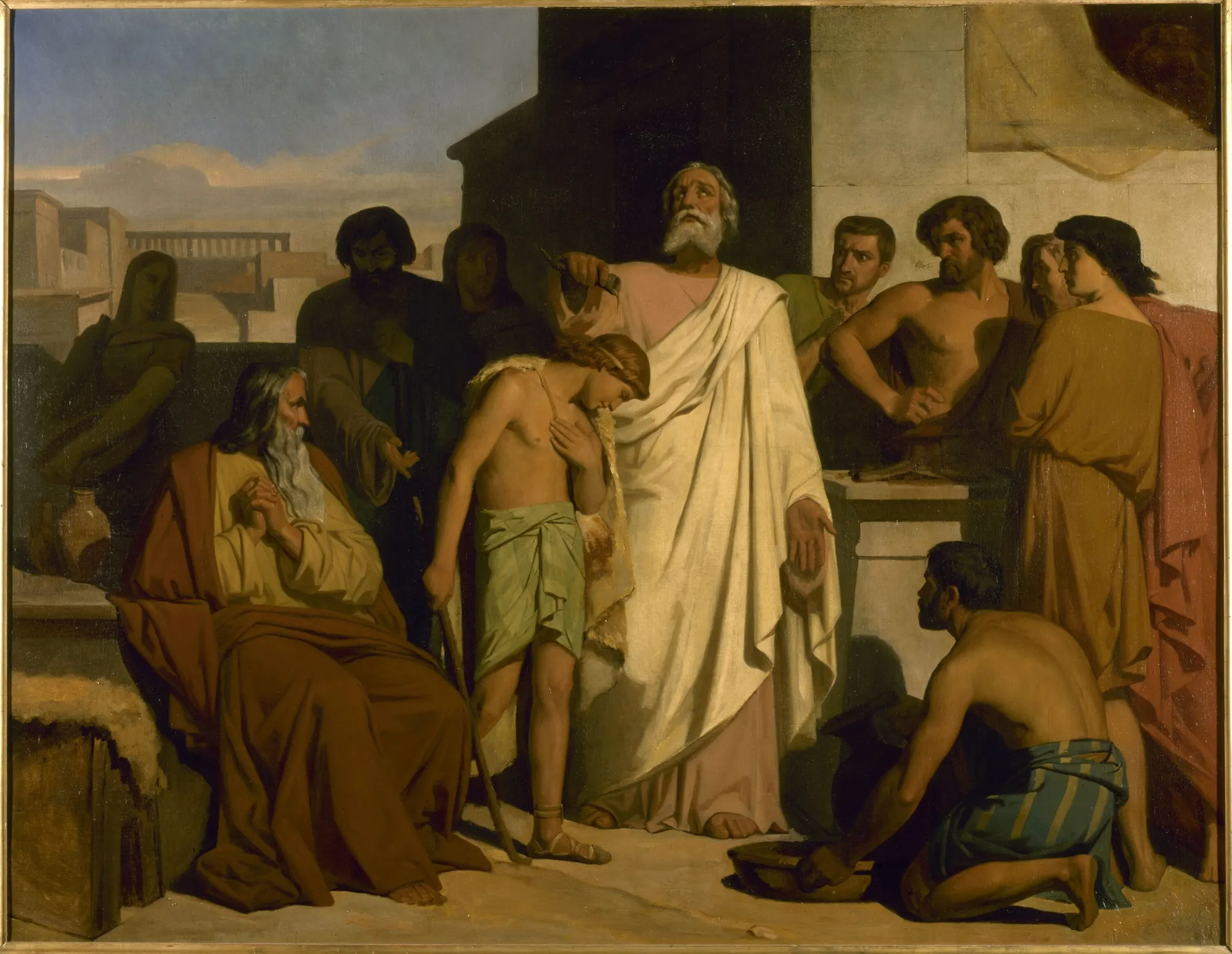
in 1 Samuel 13Then Samuel set out from Gilgal and went up to Gibeah in Benjamin. And Saul numbered the troops who were with him, about six hundred men.
BSB
The same verse in ASV and KJV ▾
ASV
And Samuel arose, and gat him up from Gilgal unto Gibeah of Benjamin. And Saul numbered the people that were present with him, about six hundred men.
KJV
And Samuel arose, and gat him up from Gilgal unto Gibeah of Benjamin. And Saul numbered the people that were present with him, about six hundred men.
⋯
This verse in 1 Samuel 13
Commentary
8 notes on this verseA commentator
Albert Barnes1798–1870
Notes, Explanatory and Practical, on the Old and New Testaments (1832-1869)
Samuel arose - Saul could not return to his own station at Michmash, seeing it was occupied by the Philistines; so, perhaps by Samuel’s advice (since, according to the text, he preceded him there), he effected a junction with Jonathan at Gibeah. Some would read “Saul” instead of “Samuel.”
This site's exposition
about six hundred men
on 1 Samuel 13:15-16
Saul counts about six hundred men, a remnant of the three thousand of verse 2 and a fraction of the 300,000 mustered at 11:8. The numbers carry the argument without comment: a king who summoned a nation in chapter 11 now holds a garrison, and the cause named is disobedience, not the enemy’s size. Saul’s camp stands in Benjamin while the Philistines hold Michmash across the pass.
The record, by era
The Medieval Church2 voices
But Samuel rose up and went up from Gilgal, etc. The prophet demonstrates the same change of the kingdom which he had predicted by word also by changing the place. For even the Lord, who said of the unbelievers: "Arise, let us go from here" …
A commentator
Gregory the DialogistCommentary on 1 Kings, Book 5, Chapter 3 · Written before 604.
proposed
23. As if from a height to level ground, the teacher of holy Church comes when he rebukes the faults of sinners, and bends the loftiness of his station when he humbles himself through the affection of charity to examine the crimes of the wicked. Rightly therefore it is said of him who had reproved the sinner: 'He arose, and went up.' For the chosen preacher rises when he raises himself by intention to the height of his spiritual way of life; and he ascends when he arrives at the lofty eminence of that same life through habitual practice.
The Puritans and the Awakening3 voices
), and it does not appear that he either prayed with Saul or directed him. Yet in going up to Gibeah of Benjamin, which was Saul's city, he intimated that he had not quite abandoned him, but waited to do him a kindness another time.
quarantine:debris (2026-07-29) — leading-punctuation+unbalanced-parens
Thus were they for their sin diminished and brought low. The Philistines ravage the country, and put all the adjacent parts under contribution. The body of their army, or standing camp (as it is called in the margin,
quarantine:debris (2026-07-29) — unbalanced-parens
And Samuel arose,....
1 more voice on this verse
The Nineteenth Century1 voice
And Samuel arose - Though David, in the Divine purpose, is appointed to be captain over the people, yet Saul is not to be removed from the government during his life; Samuel therefore accompanies him to Gibeah, to give him the requisite help in this conjuncture. About six hundred men - The whole of the Israelitish army at this time, and not one sword or spear among them!
How the passage was read
What the Jewish commentators add
On the verses either side of this one
But now, your kingship shall not endure. Because Moshe said so in the Torah, "[and] he does not stray from the commandment right or left, so that days of his reign are lengthy…." 10 Devarim:20. Hence, if he does stray, the days [of his reign] will not be lengthy.
This section is reception history: how the passage was read and kept in the Jewish tradition. Where a reading parts from an essential of the Christian faith, the section says so at that point.
Texts and citation data: Sefaria; each excerpt follows its version’s licence. 4 further sources are cited on this chapter that carry no English text this site may quote or only restate the verse.
The words behind it
29 Hebrew wordsEvery Hebrew word of this verse in the order it stands, with what it means and the door to its own study. The last column counts the times a word stands in the whole Bible: the rarer the word, the more the places it appears belong together.
| Hebrew | Sound | Meaning | Word study | In the Bible |
|---|---|---|---|---|
| וַיָּ֣קָם | vaiyakom | and he arose | H6965 → | 628 times |
| שְׁמוּאֵ֗ל | shemuel | Samuel | H8050 → | 141 times |
| וַיַּ֛עַל | vaiyaal | and he went up | H5927 → | 890 times |
| מִן־ | min- | from | H4480 → | 1188 times |
| הַגִּלְגָּ֖ל | hagilgal | <the> Gilgal | H1537 → | 41 times |
| גִּבְעַ֣ת | givat | Gibeah of | H1390 → | 45 times |
| בִּנְיָמִ֑ן | binyamin | Benjamin | H1144 → | 166 times |
| וַיִּפְקֹ֣ד | vaiyifkod | and he mustered | H6485 → | 303 times |
| שָׁא֗וּל | shaul | Saul | H7586 → | 402 times |
| אֶת־ | ʾet- | <obj.> | H853 → | 10935 times |
| הָעָם֙ | haam | the people | H5971 → | 1873 times |
| הַנִּמְצְאִ֣ים | hanimtzeim | who were found | H4672 → | 455 times |
| עִמּ֔וֹ | imo | with him | H5973 → | 1050 times |
| כְּשֵׁ֥שׁ | keshesh | about six | H8337 → | 216 times |
| מֵא֖וֹת | meot | hundred<s> | H3967 → | 581 times |
| אִֽישׁ׃ | ʾish | man | H376 → | 1663 times |
| וַיֵּלֶךְ | vaiyelekh | and he went | H1980 → | 1546 times |
| לְדַרְכּוֹ | ledarko | on way his | H1870 → | 707 times |
| וְיֶתֶר | veyeter | and the rest of | H3499 → | |
| הָעָם | haam | the people | H5971 → | 1873 times |
| עָלָה | ʾalah | it went up | H5927 → | 890 times |
| אַחֲרֵי | ʾacharei | after | H310 → | 715 times |
| שָׁאוּל | shaul | Saul | H7586 → | 402 times |
| לִקְרַאת | likrat | to meet | H7122 → | 139 times |
| עַם־ | ʾam- | [the] people | H5971 → | 1873 times |
| הַמִּלְחָמָה | hamilchamah | [of] the battle | H4421 → | 320 times |
| וַיָּבֹאוּ | vaiyavou | and they went | H935 → | 2568 times |
| מִן־ | min- | from | H4480 → | 1188 times |
| הַגִּלְגָּל | hagilgal | <the> Gilgal | H1537 → | 41 times |
וַיָּ֣קָםand he arose
vaiyakomH6965 →628 times
שְׁמוּאֵ֗לSamuel
shemuelH8050 →141 times
וַיַּ֛עַלand he went up
vaiyaalH5927 →890 times
מִן־from
min-H4480 →1188 times
הַגִּלְגָּ֖ל<the> Gilgal
hagilgalH1537 →41 times
גִּבְעַ֣תGibeah of
givatH1390 →45 times
בִּנְיָמִ֑ןBenjamin
binyaminH1144 →166 times
וַיִּפְקֹ֣דand he mustered
vaiyifkodH6485 →303 times
שָׁא֗וּלSaul
shaulH7586 →402 times
אֶת־<obj.>
ʾet-H853 →10935 times
הָעָם֙the people
haamH5971 →1873 times
הַנִּמְצְאִ֣יםwho were found
hanimtzeimH4672 →455 times
עִמּ֔וֹwith him
imoH5973 →1050 times
כְּשֵׁ֥שׁabout six
kesheshH8337 →216 times
מֵא֖וֹתhundred<s>
meotH3967 →581 times
אִֽישׁ׃man
ʾishH376 →1663 times
וַיֵּלֶךְand he went
vaiyelekhH1980 →1546 times
לְדַרְכּוֹon way his
ledarkoH1870 →707 times
וְיֶתֶרand the rest of
veyeterH3499 →
הָעָםthe people
haamH5971 →1873 times
עָלָהit went up
ʾalahH5927 →890 times
אַחֲרֵיafter
ʾachareiH310 →715 times
שָׁאוּלSaul
shaulH7586 →402 times
לִקְרַאתto meet
likratH7122 →139 times
עַם־[the] people
ʾam-H5971 →1873 times
הַמִּלְחָמָה[of] the battle
hamilchamahH4421 →320 times
וַיָּבֹאוּand they went
vaiyavouH935 →2568 times
מִן־from
min-H4480 →1188 times
הַגִּלְגָּל<the> Gilgal
hagilgalH1537 →41 times
A shaded row is a word that stands 400 times or fewer in the Bible.
The walk
6 stopsEach card is a verse this one points to, and under it the verses that one points to in turn. Where several paths arrive at the same place, that place is listed first: the text keeps returning to it.
Through
1 Samuel 14:2Meanwhile, Saul was staying under the pomegranate tree in Migron on the outskirts of Gibeah. And the troops who were with him numbered about six hundred men,
it leads to
- Isaiah 10:28–29
Assyria has entered Aiath and passed through Migron, storing their supplies at Michmash.
Reached by 2 separate paths from here.
- 1 Samuel 13:15–16
Then Samuel set out from Gilgal and went up to Gibeah in Benjamin. And Saul numbered the troops who were with him, about six hundred men.
- Isaiah 10:28–29
Through
1 Samuel 13:2He chose for himself three thousand men of Israel: Two thousand were with Saul at Michmash and in the hill country of Bethel, and a thousand were with Jonathan in Gibeah of Benjamin. And…
it leads to
- 1 Samuel 10:26
Saul also went to his home in Gibeah, and the men of valor whose hearts God had touched went with him.
- 1 Samuel 13:5
Now the Philistines assembled to fight against Israel with three thousand chariots, six thousand horsemen, and troops as numerous as the sand on the seashore. They went up and camped at Michmash, east of…
- 1 Samuel 14:31
That day, after the Israelites had struck down the Philistines from Michmash to Aijalon, the people were very faint.
- 1 Samuel 13:23
And a garrison of the Philistines had gone out to the pass at Michmash.
- 1 Samuel 10:26
Where this verse is studied
On this page
Studies1
About 1 Samuel
Who and where
4 names in this verse with a page on the site.
- PersonJudges to monarchySamuelAsked of God by Hannah and lent to the LORD at Shiloh; the last judge and first of the prophets after Moses, who anointed both Sau…
- PersonUnited monarchySaulIsrael's first king, head and shoulders above the people; began in humility, ended in rejection — sparing what God devoted, consul…
- PlaceJordan valley near JerichoGilgalIsrael's first Canaan camp where the stones were set and the reproach rolled away (Josh 4-5); later a corrupted shrine the prophet…
- PlaceBenjaminGibeahSaul's hometown and capital in Benjamin, the same Gibeah whose outrage in Judges 19 nearly erased the tribe.
This page draws on Adam Clarke, Commentary on the Bible; Albert Barnes, Notes, Explanatory and Practical, on the Old and New Testaments (1832-1869); Bede, Commentary on Samuel; Gregory the Dialogist, Commentary on 1 Kings, Book 5, Chapter 3; John Gill, Exposition of the Old Testament; John Gill, Exposition of the Old Testament (1748-1763); Keil and Delitzsch, Biblical Commentary on the Books of Samuel and Matthew Henry, Commentary on the Whole Bible.