
1 Kings 20:28
in 1 Kings 20Then the man of God approached the king of Israel and said, “This is what the LORD says: ‘Because the Arameans think the LORD is a god of the hills and not of the valleys, I will deliver all this great army into your hand. Then you will know that I am the LORD.’”
BSB
The same verse in ASV and KJV ▾
ASV
And a man of God came near and spake unto the king of Israel, and said, Thus saith Jehovah, Because the Syrians have said, Jehovah is a god of the hills, but he is not a god of the valleys; therefore will I deliver all this great multitude into thy hand, and ye shall know that I am Jehovah.
KJV
And there came a man of God, and spake unto the king of Israel, and said, Thus saith the Lord, Because the Syrians have said, The Lord is God of the hills, but he is not God of the valleys, therefore will I deliver all this great multitude into thine hand, and ye shall know that I am the Lord.
⋯
This verse in 1 Kings 20
Commentary
10 notes on this verseThus the saints go up to the Lord, the wicked go down to sin; the saints are on the mountains, the guilty in the valleys. "For he is the God of the mountains and not the God of the valleys." Those who dwelt in the houses of the plain where God does not dwell could not have the house of God within them, for this is the house that God sought from them so that they might build up themselves and rear within themselves the temple of God from living stones of faith.
This site's exposition
the man of God approached the king of Israel
on 1 Kings 20:28-29
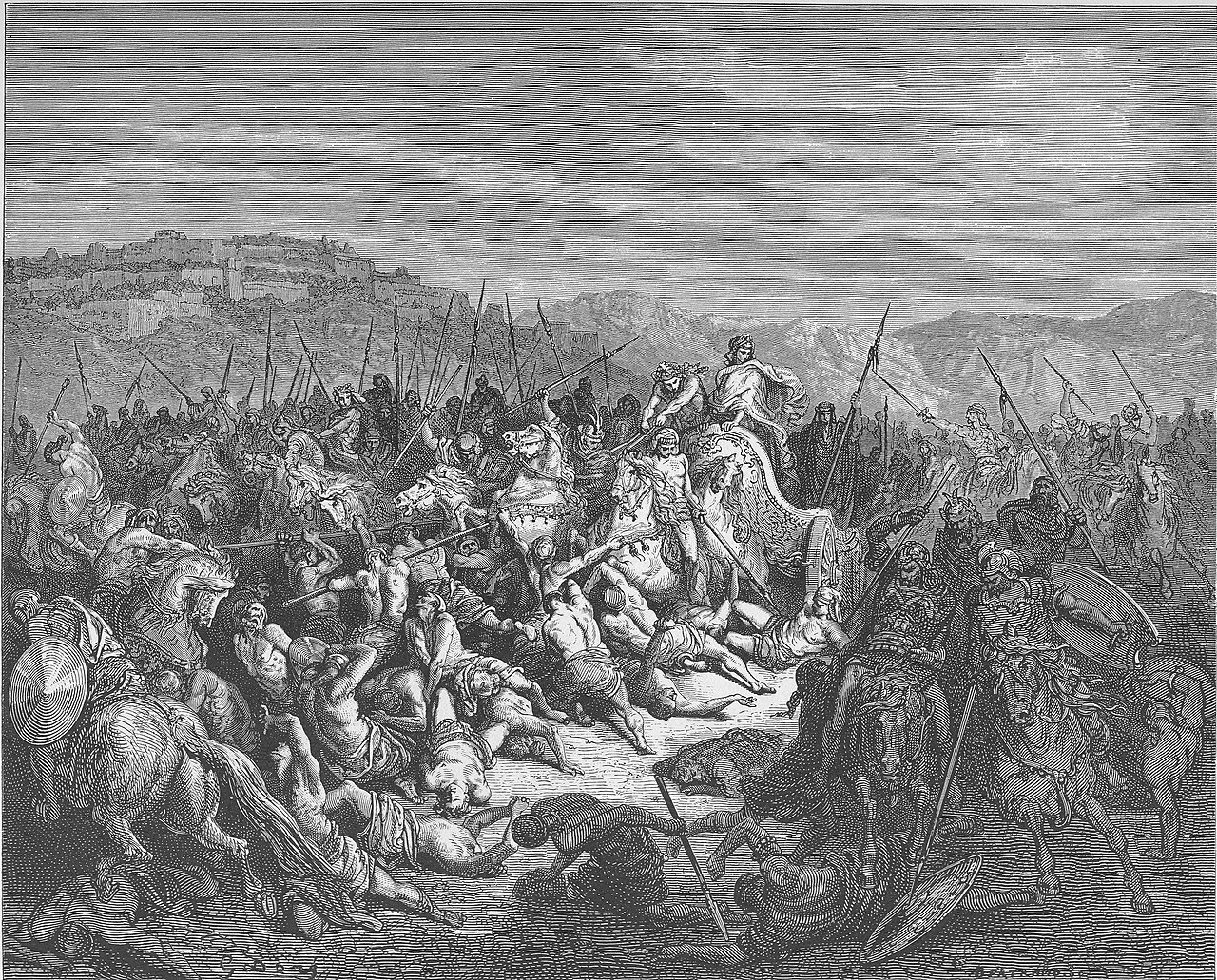
The man of God ties the victory to the ground itself. Because the Arameans think “the LORD is a god of the hills and not of the valleys”, He will deliver the whole army to Israel. On the seventh day Israel strikes down a hundred thousand foot soldiers.
The record, by era
The Church Fathers2 voices
Did not the Lord wish Ben-hadad, king of Syria, whom besides countless thousands of his own people, thirty-two kings and armies of the same number of kings served, to be conquered by a few foot soldiers of the princes in order that he who was …
Here the Scripture relates the two battles of the king of Israel against the Arameans, at which we have already hinted, and the twin slaughters of the Arameans, of which the second caused the death of 127,000 men, as God took his revenge on the …
The Puritans and the Awakening2 voices
God would not do it because Ahab had praised God or prayed to him (we do not read that he did either), but because the Syrians had blasphemed God, and had said, He is the God of the hills and not of the valleys; therefore God will do it in his own vindication, and to preserve the honour of his own name.
And there came a man of God,....
The Nineteenth Century1 voice
THE Syrians had been defeated by the Israelites whom they despised. This victory had been achieved by so small a number of men over so vast a host that the Syrians were driven to the conclusion that there was something supernatural about it and they ascribed their defeat to the God of Israel. They were right in doing so. Brothers and Sisters, let not these heathen shame us!
3 more voices on this verse
The Nineteenth Century3 voices
THE Syrians had been defeated by the Israelites whom they despised. This victory had been achieved by so small a number of men over so vast a host that the Syrians were driven to the conclusion that there was something supernatural about it and they ascribed their defeat to the God of Israel. They were right in doing so. Brothers and Sisters, let not these heathen shame us! They knew to whom the crown of the victory belonged and, little as they understood Jehovah, yet they recognized that His right hand and His holy arm had gotten for His people the victory. Now, if the Lord has prospered you, if in your souls peace and joy are reigning, or if you have enjoyed success in Christian service, take heed that you do not lift up your horn on high and take honor to yourselves! Render all the glory to God, to whom it is most justly due. Let that Psalm, "Not unto us, not unto us, but unto Your name give glory," be always on your heart and often on your tongue. The tendency of the human heart towards pride is very strong and Satan, the great usurper, is always eager to stir us up to rob God of His Glory. Yet nothing is more fatal to peace, nothing more sure to provoke God, nothing more certain to bring upon us times of disaster and distress! "The Lord your God is a jealous God," and He is jealous of this thing, among others—He will not give His Glory to another! He will not allow those whom He uses for His purposes to ascribe their victories unto themselves! The Lord, alone, must be exalted. Whatever has been done by us, the great Worker who used us must have the praise. We have been nothing more than the axe in the hand of God if we have felled the cedar! We have been nothing more than the net if we have brought the fish to shore. Unto Him, therefore, be praise forever! So far let us learn from the heathen Syrians.
Because the Syrians have said - God resents their blasphemy, and is determined to punish it. They shall now be discomfited in such a way as to show that God’s power is every where, and that the multitude of a host is nothing against him.
A commentator
Albert Barnes1798–1870
Notes, Explanatory and Practical, on the Old and New Testaments (1832-1869)
proposed
A man of God - Evidently not the prophet who had spoken to Ahab the year before 1Ki 20:13, 1Ki 20:22. He probably dwelt in the neighborhood of Samaria. Now that Ahab and his army had marched out into the Trans-Jordanic territory, another prophet, a native probably of that region, announced God’s will to them.
The words behind it
33 Hebrew wordsEvery Hebrew word of this verse in the order it stands, with what it means and the door to its own study. The last column counts the times a word stands in the whole Bible: the rarer the word, the more the places it appears belong together.
| Hebrew | Sound | Meaning | Word study | In the Bible |
|---|---|---|---|---|
| וַיִּגַּ֞שׁ | vaiyigash | and he drew near | H5066 → | 125 times |
| אִ֣ישׁ | ʾish | [the] man of | H376 → | 1663 times |
| הָאֱלֹהִ֗ים | haelohim | <the> God | H430 → | 2601 times |
| וַיֹּאמֶר֮ | vaiyomer | and he said | H559 → | 5305 times |
| אֶל־ | ʾel- | to | H413 → | 5510 times |
| מֶ֣לֶךְ | melekh | [the] king of | H4428 → | 2525 times |
| יִשְׂרָאֵל֒ | yisrael | Israel | H3478 → | 2507 times |
| וַיֹּ֜אמֶר | vaiyomer | and he said | H559 → | 5305 times |
| כֹּֽה־ | koh- | thus | H3541 → | 577 times |
| אָמַ֣ר | ʾamar | he says | H559 → | 5305 times |
| יְהוָ֗ה | yahweh | Yahweh | H3068 → | 6520 times |
| יַ֠עַן | yaan | because | H3282 → | 99 times |
| אֲשֶׁ֨ר | ʾasher | that | H834 → | 5497 times |
| אָמְר֤וּ | ʾameru | they have said | H559 → | 5305 times |
| אֲרָם֙ | ʾaram | Aram | H758 → | 143 times |
| אֱלֹהֵ֤י | ʾelohei | [is] a god of | H430 → | 2601 times |
| הָרִים֙ | harim | mountains | H2022 → | 546 times |
| יְהוָ֔ה | yahweh | Yahweh | H3068 → | 6520 times |
| וְלֹֽא־ | velo'- | and not | H3808 → | 5168 times |
| אֱלֹהֵ֥י | ʾelohei | [is] a god of | H430 → | 2601 times |
| עֲמָקִ֖ים | ʾamakim | valleys | H6010 → | |
| ה֑וּא | hu' | he | H1931 → | 1879 times |
| וְ֠נָתַתִּי | venatati | and I will give | H5414 → | 2011 times |
| אֶת־ | ʾet- | <obj.> | H853 → | 10935 times |
| כָּל־ | kol- | all | H3605 → | 5413 times |
| הֶהָמ֨וֹן | hehamon | the multitude | H1995 → | 83 times |
| הַגָּ֤דוֹל | hagadol | <the> great | H1419 → | 526 times |
| הַזֶּה֙ | hazeh | <the> this | H2088 → | 1180 times |
| בְּיָדֶ֔ךָ | beyadekha | in hand your | H3027 → | 1618 times |
| וִֽידַעְתֶּ֖ם | vida'tem | and you will know | H3045 → | 945 times |
| כִּֽי־ | ki- | that | H3588 → | 4482 times |
| אֲנִ֥י | ʾani | I | H589 → | 874 times |
| יְהוָֽה׃ | yahweh | [am] Yahweh | H3068 → | 6520 times |
וַיִּגַּ֞שׁand he drew near
vaiyigashH5066 →125 times
אִ֣ישׁ[the] man of
ʾishH376 →1663 times
הָאֱלֹהִ֗ים<the> God
haelohimH430 →2601 times
וַיֹּאמֶר֮and he said
vaiyomerH559 →5305 times
אֶל־to
ʾel-H413 →5510 times
מֶ֣לֶךְ[the] king of
melekhH4428 →2525 times
יִשְׂרָאֵל֒Israel
yisraelH3478 →2507 times
וַיֹּ֜אמֶרand he said
vaiyomerH559 →5305 times
כֹּֽה־thus
koh-H3541 →577 times
אָמַ֣רhe says
ʾamarH559 →5305 times
יְהוָ֗הYahweh
yahwehH3068 →6520 times
יַ֠עַןbecause
yaanH3282 →99 times
אֲשֶׁ֨רthat
ʾasherH834 →5497 times
אָמְר֤וּthey have said
ʾameruH559 →5305 times
אֲרָם֙Aram
ʾaramH758 →143 times
אֱלֹהֵ֤י[is] a god of
ʾeloheiH430 →2601 times
הָרִים֙mountains
harimH2022 →546 times
יְהוָ֔הYahweh
yahwehH3068 →6520 times
וְלֹֽא־and not
velo'-H3808 →5168 times
אֱלֹהֵ֥י[is] a god of
ʾeloheiH430 →2601 times
עֲמָקִ֖יםvalleys
ʾamakimH6010 →
ה֑וּאhe
hu'H1931 →1879 times
וְ֠נָתַתִּיand I will give
venatatiH5414 →2011 times
אֶת־<obj.>
ʾet-H853 →10935 times
כָּל־all
kol-H3605 →5413 times
הֶהָמ֨וֹןthe multitude
hehamonH1995 →83 times
הַגָּ֤דוֹל<the> great
hagadolH1419 →526 times
הַזֶּה֙<the> this
hazehH2088 →1180 times
בְּיָדֶ֔ךָin hand your
beyadekhaH3027 →1618 times
וִֽידַעְתֶּ֖םand you will know
vida'temH3045 →945 times
כִּֽי־that
ki-H3588 →4482 times
אֲנִ֥יI
ʾaniH589 →874 times
יְהוָֽה׃[am] Yahweh
yahwehH3068 →6520 times
A shaded row is a word that stands 400 times or fewer in the Bible.
The walk
8 stopsEach card is a verse this one points to, and under it the verses that one points to in turn. Where several paths arrive at the same place, that place is listed first: the text keeps returning to it.
Through
1 Kings 17:18“O man of God,” said the woman to Elijah, “what have you done to me? Have you come to remind me of my iniquity and cause the death of my son?”
it leads to
- Luke 5:8
When Simon Peter saw this, he fell at Jesus’ knees. “Go away from me, Lord,” he said, “for I am a sinful man.”
- 2 Kings 3:13
Elisha, however, said to the king of Israel, “What have we to do with each other? Go to the prophets of your father and of your mother!” “No,” replied the king of Israel, “for…
- John 2:4
“Woman, why does this concern us?” Jesus replied. “My hour has not yet come.”
- Luke 5:8
Through
Psalms 79:10Why should the nations ask, “Where is their God?” Before our eyes, make known among the nations Your vengeance for the bloodshed of Your servants.
it leads to
- Psalms 42:10
Like the crushing of my bones, my enemies taunt me, while they say to me all day long, “Where is your God?”
- Psalms 42:10
Through
1 Kings 20:13Meanwhile a prophet approached Ahab king of Israel and declared, “This is what the LORD says: ‘Do you see this entire great army? Behold, I will deliver it into your hand this very day,…
it leads to
- Ezekiel 20:22
But I withheld My hand and acted for the sake of My name, so that it would not be profaned in the eyes of the nations in whose sight I had brought them out.
- Ezekiel 20:22
Through
Ezekiel 12:16But I will spare a few of them from sword and famine and plague, so that in the nations to which they go, they can recount all their abominations. Then they will know that…
it leads to
- Ezekiel 6:8–10
Yet I will leave a remnant, for some of you will escape the sword when you are scattered among the nations and throughout the lands.
- Ezekiel 14:22–23
Yet, behold, some survivors will be left in it—sons and daughters who will be brought out. They will come out to you, and when you see their conduct and actions, you will be comforted…
- Jeremiah 22:8–9
And many nations will pass by this city and ask one another, ‘Why has the LORD done such a thing to this great city?’
- Ezekiel 6:8–10
About 1 Kings
This page draws on Adam Clarke, Commentary on the Bible; Albert Barnes, Notes, Explanatory and Practical, on the Old and New Testaments (1832-1869); Ambrose of Milan, LETTER 80; Charles Spurgeon, The Metropolitan Tabernacle Pulpit, Sermon No. 1311: “God of the Hills and God of the Valleys” (lightly modernized text, CCEL edition); Ephrem the Syrian, ON THE FIRST BOOK OF KINGS 20:1; John Gill, Exposition of the Old Testament (1748-1763); Matthew Henry, Commentary on the Whole Bible and Salvian the Presbyter, THE GOVERNANCE OF GOD 7.8.