
1 Chronicles 4:22
in 1 Chronicles 4Er the father of Lecah, Laadah the father of Mareshah and the clans of the linen workers at Beth-ashbea, Jokim, the men of Cozeba, and Joash and Saraph, who ruled in Moab and Jashubi-lehem. (These names are from ancient records.)
BSB
The same verse in ASV and KJV ▾
ASV
and Jokim, and the men of Cozeba, and Joash, and Saraph, who had dominion in Moab, and Jashubi-lehem. And the records are ancient.
KJV
And Jokim, and the men of Chozeba, and Joash, and Saraph, who had the dominion in Moab, and Jashubi–lehem. And these are ancient things.
⋯
This verse in 1 Chronicles 4
Commentary
6 notes on this verseAnd Joash, and Saraph - “And the prophets and scribes which sprang from the seed of Joshua, and the Gibeonites, whose office it was to serve in the house of the sanctuary, because they had lied to the princes of Israel; also Joash, who is the same as Mahlon; and Saraph, who is the same as Chilion, who took wives of the daughters of Moab and Boaz, the chief of the wise men of the college of Bethlehem, and of those who existed in former days.” - T.
This site's exposition
the son of Judah were, Er the father
on 1 Chronicles 4:21-23
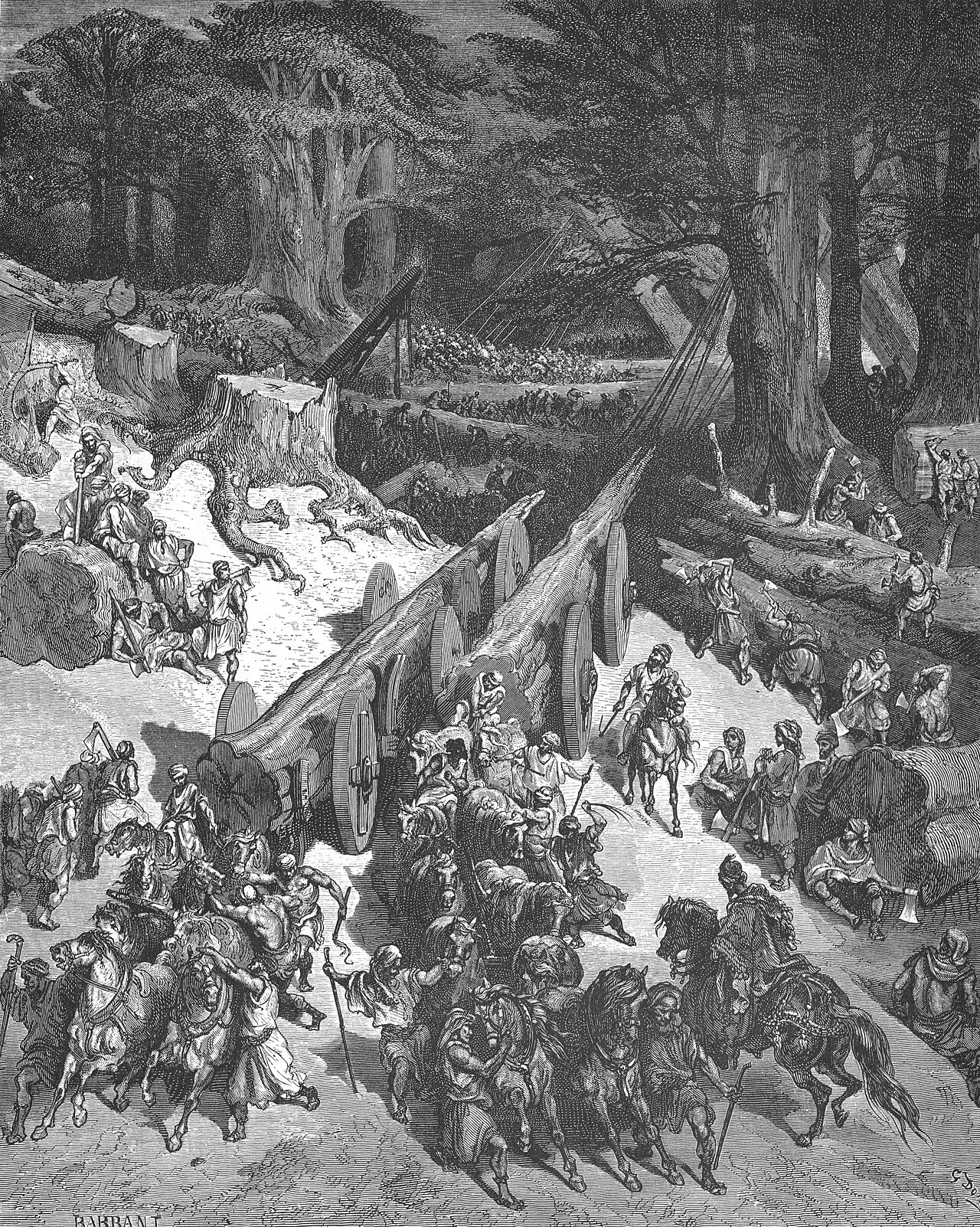
Shelah's line is remembered by trade as much as by name, the house of Ashbea that wrought fine linen, likely a craft carried out of Egypt, and men who once held dominion in Moab, called ancient things by the time the Chronicler writes. Verse twenty-three names potters and gardeners who dwelt with the king for his work, ordinary trades set down for permanent record beside the roster of a tribe's princes. Spurgeon took the phrase as a sermon text in its own right, on the honor of any labor done for the true King.
The record, by era
The Puritans and the Awakening3 voices
Had dominion - Which they ruled in the name and for the use of the kings of Judah, to whom Moab was subject from David's time. Ancient things - The sense is those blessed times are long since past.
And Jokim,....
(1.) It was found among the ancient things that they had the dominion in Moab. Probably in David's time, when that country was conquered, they transplanted themselves thither, and were put in places of power there, which they held for several generations; but this was a great while ago, time out of mind.
The Nineteenth Century1 voice
A commentator
Albert Barnes1798–1870
Notes, Explanatory and Practical, on the Old and New Testaments (1832-1869)
proposed
Who had the dominion in Moab - Moab was conquered by David 2Sa 8:2, and again by Omri, after which it remained subject until the death of Ahab 2Ki 3:5. But a more ancient rule, in times of which we have no further record, is probably intended.
The words behind it
12 Hebrew wordsEvery Hebrew word of this verse in the order it stands, with what it means and the door to its own study. The last column counts the times a word stands in the whole Bible: the rarer the word, the more the places it appears belong together.
| Hebrew | Sound | Meaning | Word study | In the Bible |
|---|---|---|---|---|
| וְיוֹקִ֞ים | veyokim | and Jokim | H3137 → | |
| וְאַנְשֵׁ֣י | veanshei | and [the] men of | H582 → | 566 times |
| כֹזֵבָ֗א | khozeva' | Kozeba | H3578 → | |
| וְיוֹאָ֧שׁ | veyoash | and Joash | H3101 → | 47 times |
| וְשָׂרָ֛ף | vesaraf | and Saraph | H8315 → | |
| אֲשֶׁר־ | ʾasher- | who | H834 → | 5497 times |
| בָּעֲל֥וּ | baalu | they ruled | H1166 → | |
| לְמוֹאָ֖ב | lemoav | to Moab | H4124 → | 181 times |
| וְיָשֻׁ֣בִי | veyashuvi | and Jashubi | H3433 → | |
| לָ֑חֶם | lachem | Lehem | H3433 → | |
| וְהַדְּבָרִ֖ים | vehadevarim | and the words | H1697 → | 1440 times |
| עַתִּיקִֽים׃ | ʾatikim | [are] ancient | H6267 → |
וְיוֹקִ֞יםand Jokim
veyokimH3137 →
וְאַנְשֵׁ֣יand [the] men of
veansheiH582 →566 times
כֹזֵבָ֗אKozeba
khozeva'H3578 →
וְיוֹאָ֧שׁand Joash
veyoashH3101 →47 times
וְשָׂרָ֛ףand Saraph
vesarafH8315 →
אֲשֶׁר־who
ʾasher-H834 →5497 times
בָּעֲל֥וּthey ruled
baaluH1166 →
לְמוֹאָ֖בto Moab
lemoavH4124 →181 times
וְיָשֻׁ֣בִיand Jashubi
veyashuviH3433 →
לָ֑חֶםLehem
lachemH3433 →
וְהַדְּבָרִ֖יםand the words
vehadevarimH1697 →1440 times
עַתִּיקִֽים׃[are] ancient
ʾatikimH6267 →
A shaded row is a word that stands 400 times or fewer in the Bible.
About 1 Chronicles
Who and where
1 name in this verse with a page on the site.
This page draws on Adam Clarke, Commentary on the Bible; Albert Barnes, Notes, Explanatory and Practical, on the Old and New Testaments (1832-1869); Charles Spurgeon, The Metropolitan Tabernacle Pulpit, Sermon No. 1400, With the King for His Work!; John Gill, Exposition of the Old Testament (1748-1763); John Wesley, Explanatory Notes upon the Old Testament and Matthew Henry, Commentary on the Whole Bible.