
Nahumchapter 3
19 verses · Nahum · 663 to 612 BC · The Twelve
Are you better than Thebes, stationed by the Nile with water around her, whose rampart was the sea, whose wall was the water?
Introduction
Nahum, The Twelve, Nahum Overview.
The last chapter of Nahum gives the charge against Nineveh and closes the case. Its first hearers remembered how Assyria had sacked Thebes, the great city of Egypt, within their own lifetime. The prophet uses that memory as evidence. The chapter moves between a funeral cry, a courtroom sentence and a string of taunts. Listen for the comparison one city is asked to make with another, and for the pictures drawn from farm and field. The book ends on a question put to a king, and every nation Assyria had wronged knew the answer.
Context
- Who
- Anyone in the region who thought Assyria was a special case
- What
- A woe oracle that names Nineveh's crimes, compares its coming fall to the fall of Thebes and closes the book on its incurable wound.
- Where
- Nineveh on the Tigris, set beside Thebes on the Nile in Egypt, the city Assyria itself had sacked.
- When
- Spoken after the sack of Thebes in 663 BC and before the fall of Nineveh in 612 BC.
- Why
- To show that the empire would be judged by the measure it had used on others, and that the nations it wronged would welcome its end.
Historical context
The chapter's argument turns on one comparison. "Art thou better than populous No?", No-Amon is Thebes, the great religious capital of Egypt on the Nile, protected by the river and allied with powerful neighbors. Ashurbanipal's army sacked it in 663 BC and carried off staggering plunder; the Assyrians recorded it themselves. Nahum's point is simple: you did that to a city stronger than you, in living memory. Look at yourself.
Show the rest of the historical context, 4 more paragraphs
The commercial jab is sharp too. Nineveh's merchants are compared to locusts that strip a field and then fly away. A capital that lived on trade and tribute would find its traders gone the moment it stopped paying.
The defenses are mocked with a specific detail: the strongholds are like fig trees with ripe fruit, shake them and the fruit falls into the eater's mouth. And "fire shall devour thy bars", the great gates of a Mesopotamian city were timber, barred and reinforced, and burning them was the standard way in.
The last line of the book is a question with no answer offered: "upon whom hath not thy wickedness passed continually?" Everyone clapped, is the implication.
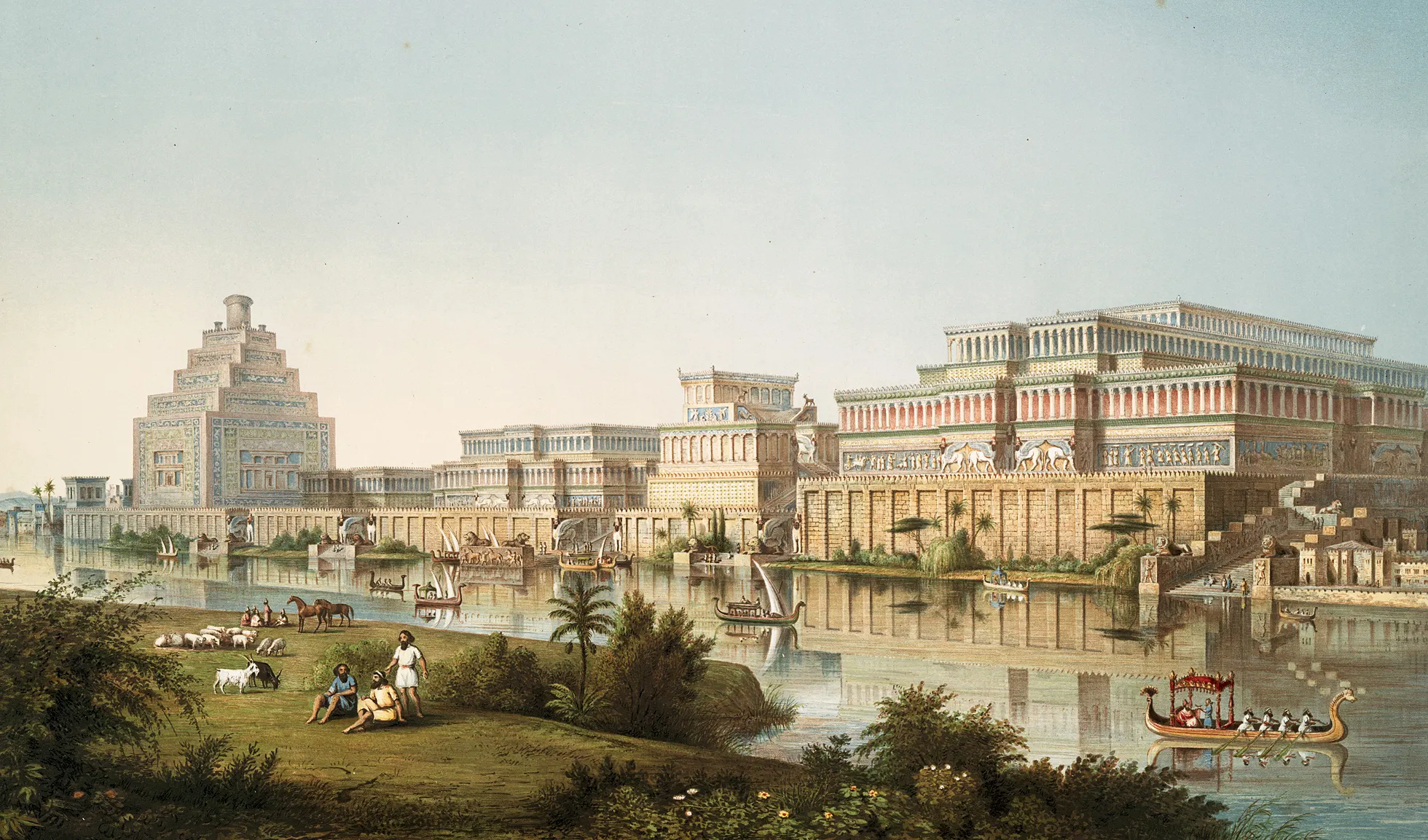
One quiet postscript. Nineveh fell so completely that its location was forgotten and later travelers doubted the site, until excavations in the 1840s uncovered the palaces and the library under the mounds across the river from Mosul. "There is no healing of thy bruise" turned out to be exact.
Significance
To Judeans this said that empires are judged by the same standard they applied to everyone else. Assyria had taught the region what conquest costs; the bill came back with its own name on it.
Show the rest of the significance, 1 more paragraph
It was also, for a small nation, permission to stop being afraid. The thing Judah had feared its entire national life was going to be a mound of dirt with nobody left to mourn it.
This chapter in Jewish lifeWhat this chapter is in Jewish life and reading.
What is done
No part of this chapter is read in the synagogue year. Probed for this lane, the site's own table in src/lib/hebraic/readings.ts printed parashot total 0 and haftarah uses total 0 for Nahum, with no festival reading. A congregation does not hear this chapter on a Sabbath or a feast.
The one custom the chapter names is the drawing of water against a siege. Rashi explains it as the practice of a walled city. "When a city is about to be besieged, the people of the city gather much water into its midst in barrels" (Rashi on Nahum 3:14:1). They did so to drink through the days of the siege when the city had no cisterns.
The chapter is met in the study of the Torah portions as well. Under the fourth verse the corpus carries Bereshit Rabbati, Parashat Miketz 35 and Vayikra Rabbah 23:7. Under the eighth it carries Bereshit Rabbah 1:1 and Midrash Tanchuma Buber, Vayigash 6:1.
How it is read
Rashi is the one commentator on this chapter whose English the corpus carries, quoted here from The Judaica Press complete Tanach with Rashi, translated by A. J. Rosenberg, which Sefaria reports as CC-BY. He opens on the word for robbery, "that one breaks it away from the hand of its owner" (Rashi on Nahum 3:1:1). The noise of the city is the striking of horses and the wheels of chariots, heard there always (Rashi on Nahum 3:2:1 and 3:2:2).
The harlot of the fourth verse he reads as the city's statecraft. It is "the extensive flattery of the city" (Rashi on Nahum 3:4:1). Nineveh knew how to draw the kings of the earth to join it, and in the end it made them subject to it. He explains the shame that follows from the figure. "Scripture speaks according to the topic, for he [Nahum] compared her [Nineveh] to a harlot" (Rashi on Nahum 3:6:1).
At No-amon he names the city. "That is, Alexandria of Egypt" (Rashi on Nahum 3:8:1). He reads Amon as a word for a tutor, since the great No trained the kings of Egypt and anointed them. Of its fall he writes, "Nevertheless, their greatness did not stand up before Nebuchadnezzar" (Rashi on Nahum 3:10:1). Nineveh, he says, will drink the same cup of weakness and disappear, and he cites Isaiah 51:17 for the cup (Rashi on Nahum 3:11:1).
The fortresses he reads through the fig tree. They fall as early figs fall when the tree is shaken, "into the mouth of the eaters" (Rashi on Nahum 3:12:1). The merchants he likens to the locust that spreads its wings and flies (Rashi on Nahum 3:16:1). On the princes of the seventeenth verse he gives a note on the Hebrew letter mem (Rashi on Nahum 3:17:1). He sets Numbers 18:3, 1 Samuel 22:14 and Deuteronomy 33:25 against Genesis 49:26 and Amos 2:11. The book closes on the city's end. "No one is troubled over your destruction, for everyone rejoices" (Rashi on Nahum 3:19:1).
Two further notes on this chapter are in the corpus without an English text. Ibn Ezra on Nahum 3:4:1 and 3:13:1 are marked linked because Sefaria holds no English version of the ref, and they stand cited and unquoted.
What the rabbis say
The corpus carries fourteen rabbinic locators on this chapter and the text of none, so each is cited here rather than quoted. On the third verse it holds a passage of Otzar Midrashim on the Prayer of Rabbi Shimon Bar Yochai, at 6. On the fourth, the harlot, it holds Yalkut Shimoni on Torah 585:5 beside the two locators named above. Pesikta Rabbati 30:1 stands under the seventh to ninth verses together.
On the eighth verse, No-amon, it holds Pesikta DeRav Kahana 16:7 and Pesikta Rabbati 33:1 beside the two locators named above. Midrash Tehillim 121:1 stands under the ninth and tenth verses together. On the seventeenth it holds Midrash Lekach Tov on Lamentations 4:7:1 and Otzar Midrashim, Baraita of Samuel HaKatan 1:10. On the nineteenth, the last verse of the book, it holds Jerusalem Talmud Berakhot 4:1:33 and Jerusalem Talmud Taanit 4:1:16. What each of them teaches is a saying of the rabbis, and it is reported as theirs wherever this site quotes one. The quotations wait on a fetch that carries the text.
Sources: Rashi, Rashi on Nahum 3:1:1 to 3:19:1, The Judaica Press complete Tanach with Rashi, translated by A. J. Rosenberg, reported CC-BY; Ibn Ezra, Ibn Ezra on Nahum 3:4:1 and 3:13:1, cited by ref because the corpus carries no English text; The Sefaria corpus, scripts/data/sources/sefaria/nahum/3.json, the 14 Talmud and Midrash locators of this chapter; The site's own files, src/lib/hebraic/readings.ts, probed for this book and printing parashot total 0, haftarah uses total 0 and festivalReadingForBook null.
The heads below are this chapter's scenes. The numbered points under each are its verses.
Woe to the bloody city, full of lies and plunder
Woe to the city of blood: The chapter opens on the charge the book has been building toward, "Woe to the city of blood". The city is "full of lies, full of plunder, never without prey". The woe form the prophets used against Israel and Judah is turned on the empire that had crushed them.
Nahum 3:1
“Woe to the bloody city - Literally, “city of bloods” , i. e., of manifold bloodshedding, built and founded in blood Hab 2:12; Jer 22:13, as the prosperity of the world ever is.”
2 more voices on this verseWhat preachers and commentators have said about this verse, in their own words.
Nahum 3:1
“Though hv, eu, sometimes means Woe; yet it is put here as though the Prophet would have constrained Nineveh to undergo its punishment, O sanguinary city, then, the whole of it is full of kchs cachesh: the word signifies leanness and the Prophet no doubt joins here together two words, which seem to differ widely, and yet they signify the same thing.”
John Calvin · Commentaries (1554)reformed
Nahum 3:1
“It is a city of blood, in which a great deal of innocent blood is shed by unrighteous war, or under colour and pretence of public justice, or by suffering barbarous murders to go unpunished; for this the righteous God will make inquisition.”
Matthew Henry · Commentary on the Whole Bible (1707-1721)puritan
Nahum 3:2-3
The crack of the whip: The assault is heard before it is seen: "The crack of the whip, the rumble of the wheel, galloping horse and bounding chariot". Then come sword and spear, "heaps of slain, mounds of corpses," so many that "they stumble over their dead". The short clauses are the Hebrew's own device.
Nahum 3:2
“The noise (literally, “voice”) of the whip - There is cry against cry; the voice of the enemy, brought upon them through the voice of the oppressed. Blood hath a voice which crieth Gen 4:10 to heaven; its echo or counterpart, as it were, is the cry of the destroyer. All is urged on with terrific speed. The chariot-wheels quiver in the rapid onset; the chariots bound, like living things; the earth echoes with the whirling swiftness of the speed of the cavalry.”
heaps of slain: The battle comes in short bursts of two or three words. The charging horseman here is set apart from the chariot horses of verse 2. Matthew Henry sets the heaps of dead beside the army of Sennacherib that lay dead in one morning outside Jerusalem.
Nahum 3:3
“The horseman lifteth up - Rather, “leading up : the flash of the sword, and the lightning of the spear.” Thus, there are, in all, seven inroads, seven signs, before the complete destruction of Nineveh or the world; as, in the Revelations, all the forerunners of the Judgment of the Great Day are summed up under the voice of seven trumpets and seven vials.”
1 more voice on this verse
Nahum 3:3
“The destruction of Sennacherib's army, which, in the morning, were all dead corpses, is perhaps looked upon here as a figure of the like destruction that should afterwards be in Nineveh; for those that will not take warning by judgments at a distance shall have them come nearer.”
Matthew Henry · Commentary on the Whole Bible (1707-1721)puritan
the many harlotries of the harlot: Verse 4 names "the many harlotries of the harlot, the seductive mistress of sorcery". The prophets use harlotry for a power that draws nations into ruinous alliance, and by it she "betrays nations". The harlotry and the witchcraft are two names for one thing, control gained by deception.
Nahum 3:4
“Because of the multitude of the whoredoms - Above, the Ninevites were represented under the emblem of a lion tearing all to pieces; here they are represented under the emblem of a beautiful harlot or public prostitute, enticing all men to her, inducing the nations to become idolatrous, and, by thus perverting them, rendering them also objects of the Divine wrath. Mistress of witchcrafts, that selleth nations through her whoredoms - Using every means to excite to idolatry; and being, by menace or wiles, successful in all.”
Adam Clarke · Commentary on the Bible (1810-1826)evangelical
2 more voices on this verse
Nahum 3:4
“These were her whoredoms, like those of Tyre, Isa. xxiii. These were her witchcrafts, with which she unaccountably gained dominion. And for this that God has a quarrel with her who, having made of one blood all nations of men, never designed one to be a nation of tyrants and another of slaves, and who claims it as his own prerogative to be universal Monarch.”
Matthew Henry · Commentary on the Whole Bible (1707-1721)puritan
Nahum 3:4
“Because of the multitude of the whoredoms--This assigns the reason for Nineveh's destruction. of the well-favoured harlot--As Assyria was not a worshipper of the true God, "whoredoms" cannot mean, as in the case of Israel, apostasy to the worship of false gods; but, her harlot-like artifices whereby she allured neighboring states so as to subject them to herself.”
Jamieson, Fausset & Brown · Commentary Critical and Explanatory on the Whole Bible (1871)reformed
Nahum 3:5-7
The sentence of 2:13 returns, "Behold, I am against you," and the LORD of Hosts brings back on Nineveh the shame she spread on others. To "show your nakedness to the nations" is the ancient penalty for the harlotry. The LORD asks where He can find "comforters for you".
Nahum 3:5
“Behold I am against thee, saith the Lord of Hosts - Jerome: “I will not send an Angel, nor give thy destruction to others; I Myself will come to destroy thee.” Cyril: “She has not to do with man, or war with man: He who is angered with her is the Lord of hosts.”
1 more voice on this verse
Nahum 3:5
“I will treat thee not as a matron, but as a harlot whose shame is exposed; her gaudy finery being lifted up off her (Isa 47:2, 3). So Nineveh shall be stripped of all her glory and defenses on which she prides herself.”
Jamieson, Fausset & Brown · Commentary Critical and Explanatory on the Whole Bible (1871)reformed
pelt you with filth: The punishment is the public shaming given to a disgraced woman in the ancient world. Adam Clarke compares it to the pillory, where the crowd threw dirt at the one set up to be stared at. The city that shamed nations becomes the spectacle.
Nahum 3:6
“And I will cast abominable filth upon thee,.... As dirt and dung, or any or everything that is abominable and filthy; and which is thrown at harlots publicly disgraced, and as used to be at persons when carted.”
1 more voice on this verse
Nahum 3:6
“I will cast abominable filth upon thee - I will set thee as a gazing-stock. This was a punishment precisely like our pillory. They put such women in the pillory as a gazing-stock; and then, children and others threw mud, dirt, and filth of all kinds at them.”
Adam Clarke · Commentary on the Bible (1810-1826)evangelical
Those who see the ruined city turn away in fear of sharing her fate. Albert Barnes sets the scene beside the merchants who stand far off from Babylon in Revelation 18. No comforter can be found.
Nahum 3:7
“All they that look upon thee shall flee from thee - through terror, lest they should share her plagues, as Israel did, when the earth swallowed up Korah, Dathan and Abiram; and they who “had been made rich by Babylon, stand ajar off, for the fear of her torment. All they who look on thee” Rev 18:15. She was set as a thing to be “gazed at.” He tells the effect on the gazers. “Each one who so gazed” at her should flee; one by one, they should gaze, be scared, flee (compare Psa 31:11; Psa 64:8).”
Are you better than No-amon? Your forts are ripe figs
Nahum 3:8-10
Are you better than Thebes: Thebes on the Nile is the chapter's historical anchor, since Assyria under Ashurbanipal had sacked it within the memory of Nahum's hearers. "Cush and Egypt were her boundless strength," yet "she went into captivity". If Thebes fell with such defenses, her fall is the precedent for Nineveh's.
Nahum 3:8
“Art thou better than populous No - No-Ammon, or Diospolis, in the Delta, on one branch of the Nile. This is supposed to be the city mentioned by Nahum; and which had been lately destroyed, probably by the Chaldeans. The waters round about it - Being situated in the Delta, it had the fork of two branches of the Nile to defend it by land; and its barrier or wall was the sea, the Mediterranean, into which these branches emptied themselves: so that this city, and the place it stood on, were wholly surrounded by the waters.”
Adam Clarke · Commentary on the Bible (1810-1826)evangelical
3 more voices on this verse
Nahum 3:8
“She was fortified both by nature and art, was situate among the rivers. Nile, in several branches, not only watered her fields, but guarded her wall. Her rampart was the sea, the lake of Mareotis, an Egyptian sea, like the sea of Tiberias.”
Matthew Henry · Commentary on the Whole Bible (1707-1721)puritan
Nahum 3:8
“Art thou better than populous No,.... Or No Amon, a city in Egypt so called, not because the kings of Egypt were nursed and brought up there, as Jarchi and Abarbinel; see Pro 8:30 but from Ham the son of Noah, whose land Egypt was; or from Jupiter Ammon, worshipped there. No Amon signifies the mansion or palace of Ham, or Hamon; the Egyptians, as Herodotus says (h), call Jupiter by the name of Ammon.”
Nahum 3:8
“No - It is supposed this was what we now called Alexandria. Art thou greater, stronger, and wiser? Yet all her power was broken, her riches spoiled, and her glory buried in ruins.”
John Wesley · Explanatory Notes upon the Old Testament (1765)evangelical
Put and Libya: Thebes had strong friends. Cush and Egypt gave her strength, and John Wesley places Put west of Alexandria and the Libyans, the Lubim of the Hebrew, near Cyrene. The verse lists the peoples who fought in her help.
Nahum 3:9
“Ethiopia and Egypt were her strength - Literally, “Egypt was strength , and Ethiopia, and boundless.” He sets forth first the imperial might of No; then her strength from foreign, subdued power. The capital is a sort of impersonation of the might of the state; No, of Egypt, as Nineveh, of Assyria. When the head was cut off or the heart ceased to beat, all was lost. The might of Egypt and Ethiopia was the might of No, concentrated in her. They were strength, and that strength unmeasured by any human standard.”
2 more voices on this verse
Nahum 3:9
“It was infinite - There was no end to their confidence and warlike provisions. Put - Or the Moors, who lie westward of Alexandria. Lubim - The people that inhabited that which is now called Cyrene.”
John Wesley · Explanatory Notes upon the Old Testament (1765)evangelical
Nahum 3:9
“As, however, the Lubim are always connected with the Egyptians and Ethiopians, they are perhaps distinct from the Libyans. The Lubim were probably at first wandering tribes, who afterwards were settled under Carthage in the region of Cyrene, under the name Libyans. thy--No's. helpers--literally, "in thy help," that is, among thy auxiliaries.”
Jamieson, Fausset & Brown · Commentary Critical and Explanatory on the Whole Bible (1871)reformed
she became an exile: The fall of Thebes was fresh in memory, since Assyria had sacked it within the lifetime of Nahum's hearers. John Gill argues that the prophet points to a finished event, because only a past fall could serve as a warning to Nineveh. The lots are the victors dividing noble prisoners.
Nahum 3:10
“They cast lots for her honorable men - This refers still to the city called populous No. And the custom of casting lots among the commanders, for the prisoners which they had taken, is here referred to. Great men were bound in chains - These were reserved to grace the triumph of the victor.”
Adam Clarke · Commentary on the Bible (1810-1826)evangelical
2 more voices on this verse
Nahum 3:10
“Yet was she carried away, she went into captivity,.... Not by Nebuchadnezzar; though this city was afterwards taken, and its inhabitants carried captive, by that monarch, as was foretold, Jer 46:25 but the prophet here does not predict an event to be accomplished, and instance in that, and argue from it, which could have no effect on Nineveh and its inhabitants, or be an example or terror to them; but refers to what had been done, a recent fact, and which they were well acquainted with.”
Nahum 3:10
“This refers to some destruction of that city which was then well-known, and probably fresh in memory, though not recorded in history; for the destruction of it by Nebuchadnezzar (if we should understand this prophetically) could not be made an example to Nineveh; for the reducing of Nineveh was one of the first of his victories and that of Egypt one of the last.”
Matthew Henry · Commentary on the Whole Bible (1707-1721)puritan
Nahum 3:11-13
You too will become drunk: The comparison lands on Nineveh, "You too will become drunk," the fate of Thebes named as her own. Her fortresses are fig trees with "the first ripe figs," falling "into the mouth of the eater". Her gates stand "wide open to your enemies" with fire consuming their bars.
Nahum 3:11
“Thou also - As thou hast done, so shall it be done unto thee.”
first ripe figs: The first figs of the season fall at a touch. The eater need not even stoop to pick them up. The picture is the fortresses of Nineveh abandoned at the first shock of the assault, as Adam Clarke reads it.
Nahum 3:12
“Thy strong holds - The effects of the consternation into which the Ninevites were cast by the assault on their city are here pointed out by a very expressive metaphor; the first-ripe figs, when at full maturity, fell from the tree with the least shake; and so, at the first shake or consternation, all the fortresses of Nineveh were abandoned; and the king, in despair, burnt himself and household in his own palace.”
Adam Clarke · Commentary on the Bible (1810-1826)evangelical
1 more voice on this verse
Nahum 3:12
“Note, Strongholds, even the strongest, are no fence against the judgments of God, when they come with commission. The rich man's wealth is his strong city, and a high wall, but only in his own conceit, Prov. xviii.”
Matthew Henry · Commentary on the Whole Bible (1707-1721)puritan
The taunt names soldiers who have lost their courage. Albert Barnes sets it against the fierce warriors Assyria carved on its own monuments, and Jeremiah uses the same words of Babylon. The open gates may be the guarded passes in the hills northeast of Nineveh.
Draw water for the siege: all who hear clap their hands
Nahum 3:14-15
Draw your water for the siege: The city is ordered in mockery to "Draw your water for the siege," and to "tread the mortar," preparing for a siege it cannot survive. Each order meets its failure, for "There the fire will devour you". "Make yourself many like the young locust" names numbers that look like strength.
Nahum 3:14
“Draw thee waters for the siege - The Tigris ran near to Nineveh, and here they are exhorted to lay in plenty of fresh water, lest the siege should last long, and lest the enemy should cut off this supply. Go into clay, and tread the mortar - This refers to the manner of forming bricks anciently in those countries; they digged up the clay, kneaded it properly by treading, mixed it with straw or coarse grass, moulded the bricks, and dried them in the sun.”
Adam Clarke · Commentary on the Bible (1810-1826)evangelical
like a young locust: The fire and sword find the city in the very forts it has just built. John Wesley reads the call to multiply like locusts as a challenge that changes nothing, since no number will save her. The locust swarms of Joel 2 give the picture.
Nahum 3:16-17
You have multiplied your merchants: Her merchants are "more than the stars," and like the young locust that "strips the land and flies away," it leaves nothing behind. Her guards and scribes are locusts that "settle on the walls on a cold day" and are gone when the sun rises.
Nahum 3:16
“Thou hast multiplied thy merchants - Like Tyre, this city was a famous resort for merchants; but the multitudes which were there previously to the siege, like the locusts, took the alarm, and fled away.”
Adam Clarke · Commentary on the Bible (1810-1826)evangelical
1 more voice on this verse
Nahum 3:16
“Note, It is rare to find even those that have shared with us in our joys willing to share with us in our griefs too. The canker-worms will continue upon the field while there is any thing to be had, but they are gone when all is gone.”
Matthew Henry · Commentary on the Whole Bible (1707-1721)puritan
Your guards are like the swarming locust: The word the Berean text renders scribes is a title of office, and Jamieson, Fausset and Brown hear in its ending sar, a prince. Locusts shelter in hedges on a cold day. When the sun warms them they rise and are gone.
Nahum 3:17
“Thy crowned men are as the locusts,.... Tributary kings, and hired officers, as some think, who might be distinguished by what they wore on their heads; or their own princes and nobles, who wore coronets or diadems; unless their religious persons are meant, their Nazarites and devotees, their priests; these were like locusts for their number, fear, and flight in time of danger, and for their spoil of the poor; and some locusts have been seen with little crowns on their heads, as those in Rev 9:7 "which had on their heads as it were crowns like gold".”
1 more voice on this verse
Nahum 3:17
“The last syllable, sar means a "prince," and is found in Belshaz-zar, Nabopolas-sar, Nebuchadnez-zar. as the great grasshoppers--literally, "as the locust of locusts," that is, the largest locust.”
Jamieson, Fausset & Brown · Commentary Critical and Explanatory on the Whole Bible (1871)reformed
Nahum 3:18-19
O king of Assyria: The book ends by addressing the king of Assyria, "your shepherds slumber; your officers sleep". "There is no healing for your injury" answers the question of verse 7, since no comforter can be found. All who hear "applaud your downfall," for all had known "your constant cruelty".
Nahum 3:18
“Rather, "lie in death's sleep, having been slain" [JEROME] (Ex 15:16; Ps 76:6). shall dwell in the dust-- (Ps 7:5; 94:17). thy people is scattered--the necessary consequence of their leaders being laid low (1Ki 22:17).”
Jamieson, Fausset & Brown · Commentary Critical and Explanatory on the Whole Bible (1871)reformed
1 more voice on this verse
Nahum 3:18
“Thy shepherds slumber - That is, the rulers and tributary princes, who, as Herodotus informs us, deserted Nineveh in the day of her distress, and came not forward to her succor.”
Adam Clarke · Commentary on the Bible (1810-1826)evangelical
no healing for your injury: The last verse gives the verdict on the wound itself. John Gill reads it as a blow the empire never rose from, since Nineveh ceased to be and Assyria did not return. The final question shows how long God had been patient with her.
Nahum 3:19
“There is no healing of thy bruise,.... Made by the fatal blow given to the empire by the taking of Nineveh; the ruin of it was irreparable and irrecoverable; the city of Nineveh was no more, and the Assyrian empire sunk, and never rose again: or, "there is no contraction of thy bruise" (r); as when a wound is healed, or near it, the skin round about is wrinkled and contracted.”
1 more voice on this verse
Nahum 3:19
“The sole descendants of the ancient Assyrians and Babylonians in the whole country are the Nestorian Christians, who speak a Chaldean language [LAYARD]. upon whom hath not thy wickedness passed continually?--implying God's long forbearance, and the consequent enormity of Assyria's guilt, rendering her case one that admitted no hope of restoration.”
Jamieson, Fausset & Brown · Commentary Critical and Explanatory on the Whole Bible (1871)reformed
Keep studying
Studies6
Sources for this chapter
The summary
Jamieson, Fausset & Brown, Commentary Critical and Explanatory; John Calvin, Commentaries; John Wesley, Notes on the Old Testament and Matthew Henry, Complete Commentary.
The exposition
Adam Clarke, Commentary on the Bible; Albert Barnes, Notes on the Old Testament; Carl Friedrich Keil, The Twelve Minor Prophets; Edward Bouverie Pusey, The Minor Prophets: A Commentary; Jamieson, Fausset & Brown, Commentary Critical and Explanatory on the Whole Bible; John Calvin, Commentaries on the Twelve Minor Prophets; John Gill, Exposition of the Old Testament; John Wesley, Explanatory Notes upon the Old Testament and Matthew Henry, Commentary on the Whole Bible.