
Matthewchapter 6
34 verses · Matthew, by tradition · AD 50 to 65 · The Gospels
And forgive us our debts, as we also have forgiven our debtors.
Introduction
Matthew, by tradition, The Gospels, Matthew Overview.
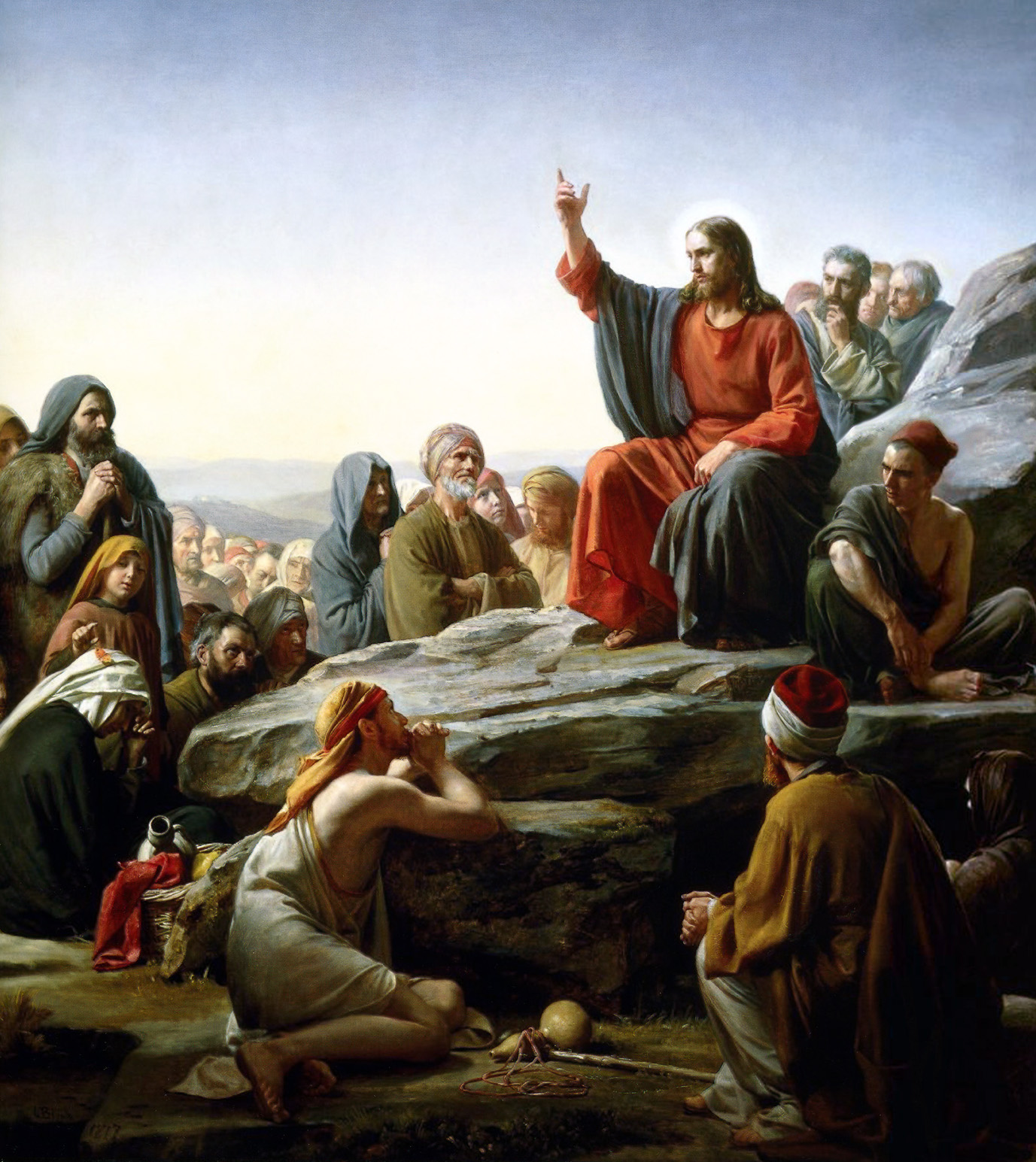
This chapter continues the Sermon on the Mount and moves from how disciples treat others to how they practise their faith. Jesus speaks to people who knew the religious duties of their day and knew the men who performed them in public. His subject is motive, and He asks who the real audience of a religious act is. Listen for the repeated contrast between being seen by people and being seen by the Father. Then listen as the teaching turns from money to worry, and notice that both are answered by the same trust in the Father's care.
Context
- Who
- Jewish hearers for whom giving, prayer, and fasting were the three pillars of piety
- What
- Teaching on giving, prayer and fasting, the Lord's Prayer, treasure in heaven, the eye as the lamp of the body, serving two masters, and freedom from worry.
- Where
- The same mountainside in Galilee as the rest of the Sermon on the Mount.
- When
- About AD 28, early in the ministry of Jesus in Galilee.
- Why
- To teach that religious practice is done for God alone, and that a heart set on God's kingdom can trust Him for daily needs.
Historical context
Giving to the poor was organised, not casual. The temple treasury held trumpet-shaped collection chests, and synagogues ran a weekly fund and a daily food distribution. A man who wanted his gift noticed had plenty of public places to make it.
Show the rest of the historical context, 3 more paragraphs
Prayer had fixed hours, and pious Jews prayed standing, often in the synagogue or wherever the hour found them, including a street corner. Fasting on the appointed days was marked by unwashed faces and ashes, so a man who wanted credit for it simply had to skip the wash.
The sayings about treasure describe how wealth was actually held. Much of a family's savings sat in fine clothing, which moths ate; the rest in metal, which corroded. Village houses had walls of mud brick, so a thief did not pick a lock, he dug through the wall, which is exactly what the word means.
The last picture is a Galilean field in spring: wild flowers everywhere for a few weeks, then dried and pulled up as fuel for the clay bread oven. That is the point of the comparison, God dresses in glory something that will be burned by Friday.
Significance
The chapter reframes religion as an audience problem. Every act named here was praised in that society; Jesus says the applause is the payment, collected in full, and nothing further is owing.
Show the rest of the significance, 1 more paragraph
For readers who had lost standing in their community for following Jesus, the promise of a Father who sees in secret was not a nice sentiment. It was the only reward left to them, and Jesus says it is the real one.
The heads below are this chapter's scenes. The numbered points under each are its verses.
Giving Where Only the Father Sees
to be seen by them: Verse 1 states the principle: alms, prayer and fasting done "to be seen by them" forfeit "reward from your Father in heaven." Deeds seen by others are commanded at 5:16, so the fault is the motive of display, the same deed judged by why it is done.
Matthew 6:1
“Take heed that ye do not your alms before men,.... Some copies read, "take heed that ye do not your righteousness", &c. which is a very good reading: but then, by "righteousness", is not meant righteousness, as comprehending all other righteous acts, as particularly alms, prayer, and fasting, hereafter mentioned; but alms only; nothing being more common with the Jews than to call alms צדקה, "righteousness": and whatever word Matthew made use of, there is no doubt to be made of it, but this was the word Christ used.”
3 more voices on this verseWhat preachers and commentators have said about this verse, in their own words.
Matthew 6:1
“Take heed that ye do not your alms - The word “alms” here denotes liberality to the poor and needy. In the margin, as in the best editions of the Greek it is “righteousness;” either referring to almsgiving as eminently a righteous act, or more probably including all that is specified in this and the following verses - almsgiving, prayer, fasting, Mat. 6:2-18. Our Saviour here does not positively command his disciples to aid the poor, but supposes that they would do it of course, and gives them directions how to do it.”
Matthew 6:1
“To "do" this righteousness, was an old and well-understood expression. Thus, "Blessed is he that doeth righteousness at all times" (Ps 106:3).”
Jamieson, Fausset & Brown · Commentary Critical and Explanatory on the Whole Bible (1871)reformed
Matthew 6:1
“In the foregoing chapter our Lord particularly described the nature of inward holiness. In this he describes that purity of intention without which none of our outward actions are holy.”
John Wesley · Explanatory Notes upon the New Testament (1755)evangelical
Matthew 6:2-4
sound a trumpet before you: No trumpet sounded at the offering box, so "do not sound a trumpet before you" pictures self-advertisement. Not letting "your left hand know what your right hand is doing" is hyperbole. The words "your Father, who sees what is done in secret, will reward you" recur for prayer and fasting.
Matthew 6:2
“Hence our expression to "trumpet." as the hypocrites do--This word--of such frequent occurrence in Scripture, signifying primarily "one who acts a part"--denotes one who either pretends to be what he is not (as here), or dissembles what he really is (as in Lu 12:1, 2). in the synagogues and in the streets--the places of religious and secular resort. that they may have glory of men.”
Jamieson, Fausset & Brown · Commentary Critical and Explanatory on the Whole Bible (1871)reformed
3 more voices on this verse
Matthew 6:2
“Is it to please the brethren, or God Himself? If God Himself, He is as capable of beholding whatever is done in secret, as He is just to remunerate what is done for His sole honour. In fine, He enjoins us not to trumpet forth any one of those things which will merit reward in His sight, nor get compensation for them from men.”
Tertullian · written before 220 · On the Veiling of Virginspatristic
Matthew 6:2
“Now, when our service is rendered to the eyes of men, we do not submit our life to the judgment and approbation of God. Justly, therefore, does Christ say, that those persons, who exhibit themselves in this manner, have their reward: for they whose eyes are held by such vanity cannot look upon God. For the same reason, all who are desirous of vain-glory are called hypocrites.”
John Calvin · Commentaries (1554)reformed
Matthew 6:2
“Therefore when thou doest thine alms - In the first verse the exhortation is general: Take Ye heed. In this verse the address is pointed - and Thou - man - woman - who readest - hearest. Do not sound a trumpet - It is very likely that this was literally practised among the Pharisees, who seemed to live on the public esteem, and were excessively self-righteous and vain.”
Adam Clarke · Commentary on the Bible (1810-1826)evangelical
do not let your left hand know what your right hand is doing: John Gill offers a second reading, in which the left hand stands for the friend seated at one's left, who should not be told. Adam Clarke adds that relatives who would hinder a gift may need to be kept from knowing it. Matthew Henry counts self-complacency a branch of pride.
Matthew 6:3
“But when thou dost alms,.... Do it so privately, and with so much secrecy, that, if it was possible, thou mightest not know it thyself, much less make it known to others: let not thy left hand know what thy right hand doth; acquaint not thy nearest and dearest friend with it; let not one that sits at thy left hand know what thou art doing with thy right hand; it is a proverbial and hyperbolical phrase, expressing the secrecy of the action.”
2 more voices on this verse
Matthew 6:3
“Let not thy left hand know ... - This is a proverbial expression, signifying that the action should be done as secretly as possible. The Hebrews often attribute actions to members which properly belong to persons. The encouragement for performing our acts of charity in secret is that it will be pleasing to God; that he will see the act, however secret it may be, and will openly reward it. If the reward is not granted in this life, it will be in the life to come.”
Matthew 6:3
“Self-conceit and self-complacency, and an adoring of our own shadow, are branches of pride, as dangerous as vain-glory and ostentation before men. We find those had their good works remembered to their honour, who had themselves forgotten them: When saw we thee an hungered, or athirst? What is the promise to those who are thus sincere and humble in their alms-giving.”
Matthew Henry · Commentary on the Whole Bible (1707-1721)puritan
so that your giving may be in secret: John Gill hears an allusion to the chamber of secrets in the sanctuary, where devout givers left money in secret to support the poor children. Augustine places the secret in the giver's conscience, which no human eye can see. God alone sees it, and the reward comes from him.
Matthew 6:4
“Which seeth in secret - We should ever remember that the eye of the Lord is upon us, and that he sees not only the act, but also every motive that led to it. Shall reward thee openly - Will give thee the fullest proofs of his acceptance of thy work of faith, and labor of love, by increasing that substance which, for his sake, thou sharest with the poor; and will manifest his approbation in thy own heart, by the witness of his Spirit.”
Adam Clarke · Commentary on the Bible (1810-1826)evangelical
2 more voices on this verse
Matthew 6:4
“That thine alms may be in secret,.... May be done in secret, and be kept a secret. The allusion seems to be to the secret chamber, where money was brought privately for the relief of the poor. "There were two chambers in the sanctuary, the one was לשכת חשאים, "the chamber of secrets", and the other the chamber of vessels: the chamber of secrets was that into which pious persons put בחשאי, "in secret", and the poor children of good men were maintained out of it privately (q).'' The Jews say many things in favour of doing alms privately.”
Matthew 6:4
“For it is impossible that God should leave in obscurity any good work of man; but He makes it manifest in this world, and glorifies it in the next world, because it is the glory of God; as likewise the Devil manifests evil, in which is shown the strength of his great wickedness. But God properly makes public every good deed only in that world the goods of which are not common to the righteous and the wicked; therefore to whomsoever God shall there show favour, it will be manifest that it was as reward of his righteousness.”
Pseudo-Chrysostom · written before 500 · Catena Aurea by Aquinaspatristic
How to Pray, and the Prayer He Gave
Matthew 6:5-6
on the street corners: Standing to pray in synagogues and "on the street corners" was ordinary Jewish practice. The fault Jesus names is praying there "to be seen by men." The "inner room," tameion, was a storeroom, the most private room a house had, and shutting the door leaves no witness but God.
Matthew 6:5
“And when thou prayest, thou shalt not be as the hypocrites,.... As the Scribes and Pharisees; whose posture in prayer, the places they chose to pray in, and the view they had therein, are particularly taken notice of: for they love to pray standing in the synagogues, and in the corners of the streets, that they may be seen of men. It was their usual custom to pray "standing"; nay, it is established by their canons.”
3 more voices on this verse
Matthew 6:5
“And when thou prayest ... - Hypocrites manifested the same spirit about prayer as almsgiving; it was done in public places. The word “synagogues,” here, clearly means, not the place of worship of that name, but places where many were accustomed to assemble - near the markets or courts, where they could be seen of many. Our Lord evidently could not mean to condemn prayers in the synagogues. It might be said that he condemned ostentatious prayer there, while they neglected secret prayer; but this does not appear to be his design.”
Matthew 6:5
“Do the ears of God wait for sound? How, then, could Jonah's prayer find way out unto heaven from the depth of the whale's belly, through the entrails of so huge a beast; from the very abysses, through so huge a mass of sea? What superior advantage will they who pray too loudly gain, except that they annoy their neighbours? Nay, by making their petitions audible, what less error do they commit than if they were to pray in public?”
Tertullian · written before 220 · On Prayerpatristic
Matthew 6:5
“Verily I say unto you, They have, &c.--The standing posture in prayer was the ancient practice, alike in the Jewish and in the early Christian Church.”
Jamieson, Fausset & Brown · Commentary Critical and Explanatory on the Whole Bible (1871)reformed
go into your inner room: Augustine reads the inner room as the heart, and the door as the senses; the world crowds into prayer through the senses. Jamieson, Fausset and Brown note that prayer may be offered in open places, provided display does not prompt it. For the verse teaches the retiring character of prayer.
Matthew 6:6
“But thou, when thou prayest, enter into thy closet,.... Or "chamber", a secret place, fit for private retirement, meditation, and prayer. And when thou hast shut thy door; see some such like phrases in Isa 26:20 where they are used to express security, here secrecy.”
2 more voices on this verse
Matthew 6:6
“But thou, when thou prayest - This is a very impressive and emphatic address. But Thou! whosoever thou art, Jew, Pharisee, Christian - enter into thy closet. Prayer is the most secret intercourse of the soul with God, and as it were the conversation of one heart with another. The world is too profane and treacherous to be of the secret. We must shut the door against it: endeavor to forget it, with all the affairs which busy and amuse it.”
Adam Clarke · Commentary on the Bible (1810-1826)evangelical
Matthew 6:6
“It may be offered in any circumstances, however open, if not prompted by the spirit of ostentation, but dictated by the great ends of prayer itself. It is the retiring character of true prayer which is here taught. Supplementary Directions and Model Prayer (Mt 6:7-15).”
Jamieson, Fausset & Brown · Commentary Critical and Explanatory on the Whole Bible (1871)reformed
do not babble on like pagans: To "babble on," battalogeo, is a rare word for heaping up empty phrases, like the prophets of Baal at Carmel in 1 Kings 18:26. Jesus himself prays the same words three times at Gethsemane in 26:44, so repetition is faulted only where it stands in for faith.
Matthew 6:7
“Use not vain repetitions - The original word here is supposed to be derived from the name of a Greek poet, who made long and weary verses, declaring by many forms and endless repetitions the same sentiment. Hence, it means to repeat a thing often; to say the same thing in different words, or to repeat the same words, as though God did not hear at first.”
2 more voices on this verse
Matthew 6:7
“On this there starts up a heresy of certain Philosophers who taught the mistaken dogma, that If God knows for what we shall pray, and, before we ask, knows what we need, our prayer is needlessly made to one who has such knowledge. (Epicureans.) To such we shortly reply, That in our prayers we do not instruct, but entreat; it is one thing to inform the ignorant, another to beg of the understanding: the first were to teach; the latter is to perform a service of duty.”
Jerome · written before 420 · Catena Aurea by Aquinaspatristic
Matthew 6:7
“With the Jews, says LIGHTFOOT, it was a maxim, that "Every one who multiplies prayer is heard." In the Church of Rome, not only is it carried to a shameless extent, but, as THOLUCK justly observes, the very prayer which our Lord gave as an antidote to vain repetitions is the most abused to this superstitious end; the number of times it is repeated counting for so much more merit.”
Jamieson, Fausset & Brown · Commentary Critical and Explanatory on the Whole Bible (1871)reformed
before you ask Him: That the Father knows the need before it is asked does not make asking pointless, since the model prayer follows immediately after this verse. The commentators read prayer's purpose here less as informing God than as aligning the one who prays with what the Father already intends to give.
Matthew 6:8
“Be not ye therefore like unto them,..... Do not be imitators of them, and follow their ways, who have only the dim light of nature to guide them; it would be shameful in you to do as they do, when you have a divine revelation for your direction; and especially, because your Father knoweth what things ye have need of before ye ask him; and therefore have no need to make use of many words, or much speaking, or long prayers.”
2 more voices on this verse
Matthew 6:8
“Your Father knoweth what things ye have need of - Prayer is not designed to inform God, but to give man a sight of his misery; to humble his heart, to excite his desire, to inflame his faith, to animate his hope, to raise his soul from earth to heaven, and to put him in mind that There is his Father, his country, and inheritance. In the preceding verses we may see three faults, which our Lord commands us to avoid in prayer: - 1st. Hypocrisy. Be not as the hypocrites. Mat 6:5. 2ndly. Dissipation. Enter into thy closet.”
Adam Clarke · Commentary on the Bible (1810-1826)evangelical
Matthew 6:8
“Yet He will have His children pray to Him, and links all His promised supplies to their petitions for them; thus encouraging us to draw near and keep near to Him, to talk and walk with Him, to open our every case to Him, and assure ourselves that thus asking we shall receive--thus seeking we shall find--thus knocking it shall be opened to us.”
Jamieson, Fausset & Brown · Commentary Critical and Explanatory on the Whole Bible (1871)reformed
hallowed be Your name: "Our Father in heaven" opens the prayer with the address Jesus uses of God, nearness held together with God's height. The first petition, "hallowed be Your name," asks that God's name be treated as holy. The order teaches the shape of prayer, God's glory sought before personal need.
Matthew 6:9
“As our Father in heaven: so in heaven as to be every where else, for the heaven cannot contain him; yet so in heaven as there to manifest his glory, for it is his throne ( Ps. ciii. 19 ), and it is to believers a throne of grace: thitherward we must direct our prayers, for Christ the Mediator is now in heaven, Heb. viii.”
Matthew Henry · Commentary on the Whole Bible (1707-1721)puritan
2 more voices on this verse
Matthew 6:9
“Did it consist only of hints or directions for prayer, it could only be used as a directory; but seeing it is an actual prayer--designed, indeed, to show how much real prayer could be compressed into the fewest words, but still, as a prayer, only the more incomparable for that--it is strange that there should be a doubt whether we ought to pray that very prayer.”
Jamieson, Fausset & Brown · Commentary Critical and Explanatory on the Whole Bible (1871)reformed
Matthew 6:9
“I THINK there is room for very great doubt, whether our Saviour intended the prayer, of which our text forms a part, to be used in the manner in which it is commonly employed among professing Christians. It is the custom of many persons to repeat it as their morning prayer, and they think that when they have repeated these sacred words they have done enough. I believe that this prayer was never intended for universal use.”
Your will be done: "Your kingdom come" asks that the reign present in the King arrive in full view. "Your will be done, on earth as it is in heaven" sets heaven's unbroken obedience as the pattern prayed for on earth. The two petitions name one reality from its public and its personal sides.
Matthew 6:10
“‘Thy will be done in earth, as it is in heaven.’Matthew 6:10. OUR Father’s will shall certainly be done, for the Lord ‘doeth according to his will in the army of heaven, and among the inhabitants of the earth.’ Let us adoringly consent that it shall be so, desiring no alteration therein. That ‘will’ may cost us dear; yet let it never cross our wills: let our minds be wholly subjugated to the mind of God.”
3 more voices on this verse
Matthew 6:10
“This petition has plainly a reference to the doctrine which Christ preached at this time, which John Baptist had preached before, and which he afterwards sent his apostles out to preach-- the kingdom of heaven is at hand. The kingdom of your Father who is in heaven, the kingdom of the Messiah, this is at hand, pray that it may come.”
Matthew Henry · Commentary on the Whole Bible (1707-1721)puritan
Matthew 6:10
“Either it is a general prayer for the kingdom of the whole world that the reign of the Devil may cease; or for the kingdom in each of us that God may reign there, and that sin may not reign in our mortal body. But be it noted, that it comes of high confidence, and of an unblemished conscience only, to pray for the kingdom of God, and not to fear the judgment. Let them be put to shame by this text who falsely affirm that there are daily falls (ruinas) in Heavenb.”
Jerome · written before 420 · Catena Aurea by Aquinaspatristic
Matthew 6:10
“Thy kingdom come--The kingdom of God is that moral and spiritual kingdom which the God of grace is setting up in this fallen world, whose subjects consist of as many as have been brought into hearty subjection to His gracious scepter, and of which His Son Jesus is the glorious Head.”
Jamieson, Fausset & Brown · Commentary Critical and Explanatory on the Whole Bible (1871)reformed
our daily bread: The word "daily" renders epiousios, so rare outside this prayer and Luke's that Origen thought the evangelists coined it. It may mean bread for the coming day or for this day. Each reading asks for provision, echoing the manna that could not be kept past its day in Exodus 16:19-20.
Matthew 6:11
“Give us this day our daily bread - The word επιουσιαν has greatly perplexed critics and commentators. I find upwards of thirty different explanations of it. It is found in no Greek writer before the evangelists, and Origen says expressly, that it was formed by them, αλλ’ εοικε πεπλασθαι υπο των ευαγγελιστων.”
Adam Clarke · Commentary on the Bible (1810-1826)evangelical
2 more voices on this verse
Matthew 6:11
“The Greek word here which we render 'supersubstantialis,' is ἐπιούσιος. The LXX often make use of the word περιούσιος, by which we find, on reference to the Hebrew, they always render the word sogolac. Symmachus translates it ἐξαίρετος, that is, 'chief,' or 'excellent,' though in one place he has interpreted 'peculiar.' When then we pray God to give us our 'peculiar' or 'chief' bread, we mean Him who says in the Gospel, I am the living bread which came down from heaven. (John 6:51.)”
Jerome · written before 420 · Catena Aurea by Aquinaspatristic
Matthew 6:11
“But as this is quite unnatural, so it deprives the Christian of one of the sweetest of his privileges--to cast his bodily wants in this short prayer, by one simple petition, upon his heavenly Father.”
Jamieson, Fausset & Brown · Commentary Critical and Explanatory on the Whole Bible (1871)reformed
forgive us our debts: The word "debts" stands for sins, and the Aramaic word Jesus likely used, chowba, carries both senses. The clause "as we also have forgiven our debtors" sets a condition, as the parable of the unforgiving servant shows in 18:23-35. Verses 14 and 15 state the same principle without a figure.
Matthew 6:12
“And forgive us our debts - Sin is represented here under the notion of a debt, and as our sins are many, they are called here debts. God made man that he might live to his glory, and gave him a law to walk by; and if, when he does any thing that tends not to glorify God, he contracts a debt with Divine Justice, how much more is he debtor when he breaks the law by actual transgression!”
Adam Clarke · Commentary on the Bible (1810-1826)evangelical
3 more voices on this verse
Matthew 6:12
“And forgive us our debts,.... Nothing is more frequent in the Jewish writings than to call sins חובי, "debts"; and the phrase, of forgiving, is used both of God and men.”
Matthew 6:12
“In suing out the pardon of our sins, the great plea we have to rely upon is the satisfaction that was made to the justice of God for the sin of man, by the dying of the Lord Jesus our Surety, or rather Bail to the action, that undertook our discharge. (2.) An argument to enforce this petition; as we forgive our debtors. This is not a plea of merit, but a plea of grace.”
Matthew Henry · Commentary on the Whole Bible (1707-1721)puritan
Matthew 6:12
“But by embodying it in this brief model of acceptable prayer, and as the first of three petitions more or less bearing upon sin, our Lord teaches us, in the most emphatic manner conceivable, to regard this view of sin as the primary and fundamental one.”
Jamieson, Fausset & Brown · Commentary Critical and Explanatory on the Whole Bible (1871)reformed
Note on the text · Matthew 6:13
The ending everyone says out loud is missing from the earliest manuscripts of Matthew, but it is not a modern flourish either: the church was already praying a doxology at the end of the Lord's Prayer by around AD 100.
The witnesses, and what each reads here
- The earliest Greek manuscripts, including Codex Sinaiticus, Codex Vaticanus, and Codex Bezae · 4th, 5th centuriesThe prayer ends at "deliver us from evil."
- The Latin Vulgate tradition · 4th century onwardNo doxology, the standard Bible of the Western church ended the prayer without it.
- The Didache · about AD 100 (surviving in later copies)Gives the Lord's Prayer with a closing doxology in a shorter form, without the full three-fold "kingdom, power, and glory."
- The Byzantine majority of Greek manuscripts · 9th, 15th centuries"For thine is the kingdom, and the power, and the glory, for ever. Amen." This is the reading behind the KJV.
- Early expositions of the Lord's Prayer by Tertullian, Origen, and Cyprian · 3rd centuryWalk through the prayer petition by petition and say nothing about a closing doxology, striking silence from writers whose whole purpose was to explain the prayer line by line.
lead us not into temptation: The petition "lead us not into temptation" asks to be spared testing beyond strength, while "the evil one" names the tempter himself. The doxology of the King James text is missing from the oldest Greek manuscripts. Its absence is a textual question, since the truth it states stands throughout Scripture.
Matthew 6:13
“And lead us not into temptation,.... Such a petition as this is often to be observed in the prayers of the Jews (a), אל תביאני, "do not lead me" neither into sin, nor into transgression and iniquity, ולא לידי נסיון, "nor into temptation", or "into the hands of temptation";'' that is, into the power of it, so as to be overcome by it, and sink under it; in which sense the phrase is to be understood here.”
4 more voices on this verse
Matthew 6:13
“And lead us not into temptation - That is, bring us not in to sore trial. Πειρασμον, which may be here rendered sore trial, comes from πειρω, to pierce through, as with a spear, or spit, used so by some of the best Greek writers. Several of the primitive fathers understood it something in this way; and have therefore added quam ferre non possimus, “which we cannot bear.” The word not only implies violent assaults from Satan, but also sorely afflictive circumstances, none of which we have, as yet, grace or fortitude sufficient to bear.”
Adam Clarke · Commentary on the Bible (1810-1826)evangelical
Matthew 6:13
“Amen, which appears here at the close, is the seal of the Lord's Prayer. Aquila rendered 'faithfully'—we may perhaps 'truly.'”
Jerome · written before 420 · Catena Aurea by Aquinaspatristic
Matthew 6:13
“LOOKING over a book of addresses to young people the other day, I met with the outline of a discourse which struck me as being a perfect gem. I will give it to you. The text is the Lord's prayer and the exposition is divided into most instructive heads. "Our Father which are in Heaven"—a child away from home. "Hallowed be Your name"—a worshipper. "Your kingdom come"—a subject. "Your will be done in earth, as it is in Heaven"—a servant. "Give us this day our daily bread"—a beggar. "And forgive us our debts as we forgive our debtors"—a sinner.”
Matthew 6:13
“For what can we desire which this does not carry with it? For thine is the kingdom, and the power, and the glory, for ever. Amen--If any reliance is to be placed on external evidence, this doxology, we think, can hardly be considered part of the original text.”
Jamieson, Fausset & Brown · Commentary Critical and Explanatory on the Whole Bible (1871)reformed
Matthew 6:14-15
forgive men their trespasses: Jesus closes the prayer by taking its one conditional clause: "if you forgive men their trespasses, your heavenly Father will also forgive you." Forgiveness is never earned by forgiving. An unforgiving heart shows that the forgiveness it claims has not yet reached it, the logic Paul assumes in Ephesians 4:32.
Matthew 6:14
“If ye forgive men - He who shows mercy to men receives mercy from God. For a king to forgive his subjects a hundred millions of treasons against his person and authority, on this one condition, that they wilt henceforth live peaceably with him and with each other, is what we shall never see; and yet this is but the shadow of that which Christ promises on his Father’s part to all true penitents. A man can have little regard for his salvation, who refuses to have it on such advantageous terms. See Quesnel.”
Adam Clarke · Commentary on the Bible (1810-1826)evangelical
if you do not forgive men their trespasses: Adam Clarke contrasts the word for trespasses here, a falling aside, with the debts of verse 12. In his reading the wrongs others do are stumbles, while a person's wrongs toward God are debts that can never be discharged. John Gill doubts that an unforgiving person knows pardoning grace.
Matthew 6:15
“But if ye forgive not - He who does not awake at the sound of so loud a voice, is not asleep but dead. A vindictive man excludes himself from all hope of eternal life, and himself seals his own damnation. Trespasses - Παραπτωματα, from παρα and πιπτω, to fall off. What a remarkable difference there is between this word and οφειληματα, debts, in Mat 6:12! Men’s sins against us are only their stumblings, or fallings off from the duties they owe us; but our’s are debts to God’s justice, which we can never discharge.”
Adam Clarke · Commentary on the Bible (1810-1826)evangelical
1 more voice on this verse
Matthew 6:15
“But if ye forgive not, &c.--See on Mt 6:12. Having concluded His supplementary directions on the subject of prayer with this Divine Pattern, our Lord now returns to the subject of Unostentatiousness in our deeds of righteousness, in order to give one more illustration of it, in the matter of fasting.”
Jamieson, Fausset & Brown · Commentary Critical and Explanatory on the Whole Bible (1871)reformed
Fasting Without a Sad Face
Matthew 6:16-18
disfigure their faces: Fasting is assumed here, and the fault is again display. The hypocrites "disfigure their faces," likely with ash or unwashed neglect, so no one watching could miss the fast. The command to "anoint your head and wash your face" asks for the grooming of any other day.
Matthew 6:16
“And are the exhausting fasts of the Church of Rome, and of Romanizing Protestants, free from this taint? Verily I say unto you, They have their reward.”
Jamieson, Fausset & Brown · Commentary Critical and Explanatory on the Whole Bible (1871)reformed
2 more voices on this verse
Matthew 6:16
“When ye fast - A fast is termed by the Greeks νηϚις, from νη not, and εσθειν to eat; hence fast means, a total abstinence from food for a certain time. Abstaining from flesh, and living on fish, vegetables, etc., is no fast, or may be rather considered a burlesque on fasting. Many pretend to take the true definition of a fast from Isa 58:3, and say that it means a fast from sin.”
Adam Clarke · Commentary on the Bible (1810-1826)evangelical
Matthew 6:16
“There are three subjects brought before us in this part of our Lord’s sermon on the mount. These three are fasting, worldliness, and singleness of purpose in religion. Fasting, or occasional abstinence from food in order to bring the body into subjection to the spirit, is a practice frequently mentioned in the Bible, and generally in connection with prayer. David fasted when his child was sick; Daniel fasted when he sought special light from God; Paul and Barnabas fasted when they appointed elders; Esther fasted before going in to Ahasuerus.”
J.C. Ryle · Expository Thoughts on the Gospels: Matthew (1856)Reformed Evangelical
anoint your head and wash your face: Adam Clarke notes that Jewish rule forbade washing and anointing on days of fasting, and hypocrites used the rule to look as though they fasted. Jerome adds that in Palestine the head was anointed on festival days. In his reading the fasting disciple looks festive.
Matthew 6:17
“But thou, when thou fastest, anoint thine head, and wash thy face--as the Jews did, except when mourning (Da 10:3); so that the meaning is, "Appear as usual"--appear so as to attract no notice.”
Jamieson, Fausset & Brown · Commentary Critical and Explanatory on the Whole Bible (1871)reformed
2 more voices on this verse
Matthew 6:17
“But thou, when thou fastest,.... Christ allows of fasting, but what is of a quite different kind from that of the Jews; which lay not in an outward abstinence from food, and other conveniences of life, and refreshments of nature; but in an abstinence from sin, in acknowledgment and confession of it; and in the exercise of faith and hope in God, as a God pardoning iniquity, transgression and sin; wherefore cheerfulness, and a free use of the creatures, without an abuse of them, best became such persons.”
Matthew 6:17
“But thou when thou fastest, anoint ... - That is, appear as you do daily. Do not assume any new appearance, or change your visage or dress. The Jews and all neighboring nations were much in the habit of washing and anointing their bodies. This washing was performed at every meal; and where it could be effected, the head, or other parts of the body, was daily anointed with sweet or olive oil.”
your fasting will not be obvious to men: Some later copies end the verse with the word openly, which Jamieson, Fausset and Brown take as borrowed from earlier verses. Adam Clarke lists many manuscripts without it, and the Berean text leaves it out. Augustine warns that vanity can live in sackcloth as well as in splendour.
Matthew 6:18
“Thy father which seeth in secret - Let us not be afraid that our hearts can be concealed from God; but let us fear lest he perceive them to be more desirous of the praise of men than they are of that glory which comes from Him. Openly - Εν τω φανερω. These words are omitted by nine MSS. in uncial letters; and by more than one hundred others, by most of the versions, and by several of the primitive fathers.”
Adam Clarke · Commentary on the Bible (1810-1826)evangelical
Treasure in Heaven and a Single Master
Matthew 6:19-21
treasures on earth: face three threats, "moth and rust" and thieves, which cover the era's main forms of wealth: fine cloth, metal and stored goods. "For where your treasure is, there your heart will be also" states why the command is given: a disciple's affections follow his investment.
Matthew 6:19
“In Jas 5:2 there is an evident reference to our Lord's words here. and rust--any "eating into" or "consuming"; here, probably, "wear and tear." doth corrupt--cause to disappear. By this reference to moth and rust our Lord would teach how perishable are such earthly treasures. and where thieves break through and steal--Treasures these, how precarious!”
Jamieson, Fausset & Brown · Commentary Critical and Explanatory on the Whole Bible (1871)reformed
2 more voices on this verse
Matthew 6:19
“This must be understood not of money only, but of all our possessions. The god of a glutton is his belly; of a lover his lust; and so every man serves that to which he is in bondage; and has his heart there where his treasure is.”
Jerome · written before 420 · Catena Aurea by Aquinaspatristic
Matthew 6:19
“Lay not up for yourselves treasures upon earth - Treasures, or wealth, among the ancients, consisted in clothes or changes of raiment, as well as in gold, silver, gems, wine, lands, and oil. It meant an abundance of “anything” that was held to be conducive to the ornament or comfort of life. As the Orientals delighted much in display, in splendid equipage, and costly garments, their treasures, in fact, consisted much in beautiful and richly-ornamented articles of apparel.”
store up for yourselves treasures in heaven: John Gill prefers a reading in which earthly goods are placed in God's hands through generous gifts to the poor. Adam Clarke quotes Quesnel, who calls charity a kind of bill of exchange that sends perishing goods to heaven. Chrysostom says alms are never lost and even grow.
Matthew 6:20
“Lay up - treasures in heaven - “The only way to render perishing goods eternal, to secure stately furniture from moths, and the richest metals from canker, and precious stones from thieves, is to transmit them to heaven by acts of charity. This is a kind of bill of exchange which cannot fail of acceptance, but through our own fault.” Quesnel.”
Adam Clarke · Commentary on the Bible (1810-1826)evangelical
1 more voice on this verse
Matthew 6:20
“But the praise of Heaven is eternal, and cannot be carried off by invading thief, nor consumed by the moth and rust of envy.”
Hilary of Poitiers · written before 367 · Catena Aurea by Aquinaspatristic
where your treasure is: Jerome applies the saying to every passion that masters a person, and money is only one of them. The glutton's god, he says, is his stomach. Chrysostom warns that a heart fixed on wealth becomes a slave, nailed to things below and unable to think of anything high.
Matthew 6:21
“Where your treasure is - If God be the treasure of our souls, our hearts, i.e. our affections and desires will be placed on things above. An earthly minded man proves that his treasure is below; a heavenly minded man shows that his treasure is above.”
Adam Clarke · Commentary on the Bible (1810-1826)evangelical
1 more voice on this verse
Matthew 6:21
“For where your treasure is--that which ye value most. there will your heart be also--"Thy treasure--thy heart" is probably the true reading here: "your," in Lu 12:34, from which it seems to have come in here. Obvious though this maxim be, by what multitudes who profess to bow to the teaching of Christ is it practically disregarded!”
Jamieson, Fausset & Brown · Commentary Critical and Explanatory on the Whole Bible (1871)reformed
Matthew 6:22-23
the lamp of the body: A good eye and an evil eye were a Jewish idiom for generosity and stinginess, and Jesus uses the idiom at 20:15. The image continues the treasure teaching: undivided devotion fills the whole life with light. If the light within has gone dark, "how great is that darkness!"
Matthew 6:22
“The eye is the lamp of the body - And what the eye is to the body, the intention is to the soul. We may observe with what exact propriety our Lord places purity of intention between worldly desires and worldly cares, either of which directly tend to destroy. If thine eye be single - Singly fixed on God and heaven, thy whole soul will be full of holiness and happiness.”
John Wesley · Explanatory Notes upon the New Testament (1755)evangelical
3 more voices on this verse
Matthew 6:22
“This is an illustration drawn from the senses. As the whole body is in darkness, where the eye is not single, so if the soul has lost her original brightness, every sense, or that whole part of the soul to which sensation belongs, will abide in darkness. Wherefore He says, If then the light which is in thee be darkness, how great is that darkness! that is, if the senses which are the soul's light be darkened by vice, in how great darkness do you suppose the darkness itself will be wrapped?”
Jerome · written before 420 · Catena Aurea by Aquinaspatristic
Matthew 6:22
“The light of the body is the eye - That is, the eye is to the body what the sun is to the universe in the day time, or a lamp or candle to a house at night.”
Adam Clarke · Commentary on the Bible (1810-1826)evangelical
Matthew 6:22
“The light--rather, "the lamp." of the body is the eye: if therefore thine eye be single--simple, clear. As applied to the outward eye, this means general soundness; particularly, not looking two ways. Here, as also in classical Greek, it is used figuratively to denote the simplicity of the mind's eye, singleness of purpose, looking right at its object, as opposed to having two ends in view.”
Jamieson, Fausset & Brown · Commentary Critical and Explanatory on the Whole Bible (1871)reformed
how great is that darkness!: Augustine takes the light within as a person's intention, which is plain to himself when the outcome is uncertain. Jamieson, Fausset and Brown compare a diseased eye that cannot look straight at its object to a heart divided between heaven and earth. Such a heart, they say, is all dark.
Matthew 6:23
“But if thine eye be evil--distempered, or, as we should say, If we have got a bad eye. thy whole body shall be full of darkness--darkened. As a vitiated eye, or an eye that looks not straight and full at its object, sees nothing as it is, so a mind and heart divided between heaven and earth is all dark.”
Jamieson, Fausset & Brown · Commentary Critical and Explanatory on the Whole Bible (1871)reformed
No one can serve two masters: Mammon, rendered "money", is Aramaic for wealth or property, personified as a rival master. "No one can serve two masters" states a fact about undivided allegiance. The verse turns the chapter from religious show to anxiety over goods, both putting a visible security in place of trust in the Father.
Matthew 6:24
“No man can serve two masters - The master of our heart may be fitly termed the love that reigns in it. We serve that only which we love supremely. A man cannot be in perfect indifference betwixt two objects which are incompatible: he is inclined to despise and hate whatever he does not love supremely, when the necessity of a choice presents itself.”
Adam Clarke · Commentary on the Bible (1810-1826)evangelical
2 more voices on this verse
Matthew 6:24
“Mammon—riches are so termed in Syriac. Let the covetous man who is called by the Christian name, hear this, that he cannot serve both Christ and riches. Yet He said not, he who has riches, but, he who is the servant of riches. For he who is the slave of money, guards his money as a slave; but he who has thrown off the yoke of his slavery, dispenses them as a master.”
Jerome · written before 420 · Catena Aurea by Aquinaspatristic
Matthew 6:24
“The service of this god and the true God together is here, with a kind of indignant curtness, pronounced impossible. But since the teaching of the preceding verses might seem to endanger our falling short of what is requisite for the present life, and so being left destitute, our Lord now comes to speak to that point.”
Jamieson, Fausset & Brown · Commentary Critical and Explanatory on the Whole Bible (1871)reformed
Do Not Be Anxious: Look at the Birds
Matthew 6:25-27
do not worry about your life: The words "do not worry" render merimnao, anxious care. The argument runs from greater to lesser: the God who gave life and body can be trusted for food and clothing. No one "by worrying can add a single hour to his life," so anxiety is useless as well as wrong.
Matthew 6:25
“Therefore I say unto you, Take no thought ... - The general design of this paragraph, which closes the chapter, is to warn his disciples against avarice, and, at the same time, against anxiety about the supply of their needs. This he does by four arguments or considerations, expressing by unequalled beauty and force the duty of depending for the things which we need on the providence of God.”
2 more voices on this verse
Matthew 6:25
“These verses are a striking example of the combined wisdom and compassion of our Lord Jesus Christ’s teaching. He knows the heart of a man: he knows that we are always ready to turn off warnings against worldliness by the argument that we cannot help being anxious about the things of this life. “Have we not our families to provide for? Must not our bodily wants be supplied? How can we possibly get through life if we think first of our souls?” The Lord Jesus foresaw such thoughts and furnished an answer.”
J.C. Ryle · Expository Thoughts on the Gospels: Matthew (1856)Reformed Evangelical
Matthew 6:25
“When "careful (or 'full of care') about nothing," but committing all in prayer and supplication with thanksgiving unto God, the apostle assures us that "the peace of God, which passeth all understanding, shall keep our hearts and minds in Christ Jesus" (Php 4:6, 7); that is, shall guard both our feelings and our thoughts from undue agitation, and keep them in a holy calm.”
Jamieson, Fausset & Brown · Commentary Critical and Explanatory on the Whole Bible (1871)reformed
Look at the birds of the air: John Gill notes that these are wild birds, fed by no human care, and that Luke 12:24 names the ravens. Augustine reads the birds plainly, with no allegory. Jamieson, Fausset and Brown assume the disciples use every means for the needs of the body, looking to God at every step.
Matthew 6:26
“Behold the fowls of the air,.... Not such as are brought up in houses, but which fly abroad in the air, wild; and are not supported by their own, or any human care, but by the care of God: Luk 12:24 particularly mentions the "ravens", referring probably to Psa 147:9, and because they are very voracious creatures: and there it is said, "consider the ravens"; look attentively upon them, and with observation, for they sow not, neither do they reap, nor gather into barns.”
3 more voices on this verse
Matthew 6:26
“Are ye not much better than they?--nobler in yourselves and dearer to God. The argument here is from the greater to the less; but how rich in detail! The brute creation--void of reason--are incapable of sowing, reaping, and storing: yet your heavenly Father suffers them not helplessly to perish, but sustains them without any of those processes.”
Jamieson, Fausset & Brown · Commentary Critical and Explanatory on the Whole Bible (1871)reformed
Matthew 6:26
“There be some who, seeking to go beyond the limits of their fathers, and to soar into the air, sink into the deep and are drowned. These will have the birds of the air to mean the Angels, and the other powers in the ministry of God, who without any care of their own are fed by God's providence. But if this be indeed as they would have it, how follows it, said to men, Are not ye of more worth than they?”
Jerome · written before 420 · Catena Aurea by Aquinaspatristic
Matthew 6:26
“Behold the fowls of the air - The second reason why we should not be anxiously concerned about the future, is the example of the smaller animals, which the providence of God feeds without their own labor; though he be not their father. We never knew an earthly father take care of his fowls, and neglect his children; and shall we fear this from our heavenly Father? God forbid!”
Adam Clarke · Commentary on the Bible (1810-1826)evangelical
add a single hour to his life?: The Greek word can mean height or length of life, and John Gill points to John 9:21, where it means age. The Berean text follows that sense. Adam Clarke warns that the passage from distrust to apostasy is short and easy, and that dissatisfaction with Providence becomes murmuring against it.
Matthew 6:27
“Which of you, by taking thought - The third argument is taken from their extreme weakness and helplessness. With all your care you cannot increase your stature a single cubit. God has ordered your height. Beyond his appointment your powers are of no avail, and you can do nothing. So of raiment. He, by His providence, orders and arranges the circumstances of your life. “Beyond” that appointment of His providence, beyond his care for you, your efforts avail nothing.”
Matthew 6:28-30
the lilies of the field: Jesus points to "the lilies of the field," likely Galilee's wild anemones. He says "not even Solomon in all his glory was adorned like one of these," for all the wealth of 1 Kings 10. "O you of little faith" is a rebuke that returns at 8:26, 14:31 and 16:8.
Matthew 6:28
“And why take ye thought for raiment,.... Having exposed the folly of an anxious and immoderate care and thought, for food to support and prolong life, our Lord proceeds to show the vanity of an over concern for raiment: consider the lilies of the field or "the flowers of the field", as the Arabic version reads it, the lilies being put for all sorts of flowers. The Persic version mentions both rose and lily; the one being beautifully clothed in red, the other in white.”
1 more voice on this verse
Matthew 6:28
“And why take ye thought for raiment? - Or, why are ye anxiously careful about raiment? The fourth reason against such inquietudes is the example of inanimate creatures: The herbs and flowers of the field have their being, nourishment, exquisite flavors, and beautiful hues from God himself. They are not only without anxious care, but also without care or thought of every kind.”
Adam Clarke · Commentary on the Bible (1810-1826)evangelical
not even Solomon in all his glory: Adam Clarke reports a view that the lily was chosen for its whiteness, the usual colour of the robes of eastern kings. Chrysostom stresses that the comparison covers the whole reign. On no single day, in his reading, was Solomon dressed as finely as one wild flower.
Matthew 6:29
“Solomon in all his glory - Some suppose that as the robes of state worn by the eastern kings were usually white, as were those of the nobles among the Jews, that therefore the lily was chosen for the comparison.”
Adam Clarke · Commentary on the Bible (1810-1826)evangelical
1 more voice on this verse
Matthew 6:29
“Or the meaning may be, that Solomon though he toiled not for his own raiment, yet he gave command for the making of it. But where command is, there is often found both offence of them that minister, and wrath of him that commands. When then any are without these things, then they are arrayed as are the lilies.”
Pseudo-Chrysostom · written before 500 · Catena Aurea by Aquinaspatristic
tomorrow is thrown into the furnace: Chrysostom notices that the lilies are called grass, a humbler name, and that they are destined for the oven. Jamieson, Fausset and Brown explain that wild flowers were cut with the grass, withered by the heat and burned as fuel. Jerome takes tomorrow as a word for the future generally.
Matthew 6:30
“Wherefore, if God so clothe the grass--the "herbage." of the field, which to-day is, and to-morrow is cast into the oven--wild flowers cut with the grass, withering by the heat, and used for fuel. (See Jas 1:11). shall He not much more clothe you, O ye of little faith?--The argument here is something fresh.”
Jamieson, Fausset & Brown · Commentary Critical and Explanatory on the Whole Bible (1871)reformed
2 more voices on this verse
Matthew 6:30
“Wherefore if God so clothe the grass of the field..... These words are a conclusion from the former, and contain an argument from the lesser to the greater; that if God, for this is solely his work, so clothes the lilies, the flowers of the field, and whatever grows up out of the earth, in such a beautiful and splendid manner, as even to outdo Solomon, in his richest apparel; there's no doubt to be made of it, or at least ought not, but that he will much more provide clothing for men.”
Matthew 6:30
“If God so clothe the grass of the field - Christ confounds both the luxury of the rich in their superfluities, and the distrust of the poor as to the necessaries of life. Let man, who is made for God and eternity, learn from a flower of the field how low the care of Providence stoops. All our inquietudes and distrusts proceed from lack of faith: that supplies all wants. The poor are not really such, but because they are destitute of faith.”
Adam Clarke · Commentary on the Bible (1810-1826)evangelical
Matthew 6:31-32
The three questions of food, drink and clothing are what "the Gentiles strive after," people who know no Father who counts their needs. Disciples have the same needs and a Father who "knows that you need them," the assurance already given at verse 8.
Matthew 6:31
Therefore take no thought,.... That is, for the morrow, as it is explained, Luk 6:34 for it is lawful to take proper care and thought for present food, drink, and raiment; but not to be anxiously concerned for futurity; saying, what shall we eat? or what shall we drink? or wherewithal shall we be clothed? These are a repetition of the several things instanced in, and are the very language and expressions of men of little faith; as in the above citation, מה אוכל למחר, "what shall I eat tomorrow?"
1 more voice on this verse
Matthew 6:31
“What shall we eat? or, What shall we drink? etc. - These three inquiries engross the whole attention of those who are living without God in the world. The belly and back of a worldling are his compound god; and these he worships in the lust of the flesh, in the lust of the eye, and in the pride of life.”
Adam Clarke · Commentary on the Bible (1810-1826)evangelical
your heavenly Father knows: Chrysostom observes that the verse says your Father knows where it could have said God knows, and the name gives greater hope. Jamieson, Fausset and Brown add that such needs are real. Augustine says God knew before all time what his people would ask and when they would ask it.
Matthew 6:32
“Food and raiment are pronounced needful to God's children; and He who could say, "No man knoweth the Father but the Son, and he to whomsoever the Son will reveal Him" (Mt 11:27), says with an authority which none but Himself could claim, "Your heavenly Father knoweth that ye have need of all these things." Will not that suffice you, O ye needy ones of the household of faith?”
Jamieson, Fausset & Brown · Commentary Critical and Explanatory on the Whole Bible (1871)reformed
3 more voices on this verse
Matthew 6:32
“For after all these things do the Gentiles seek,.... Or "the nations of the world", as in Luk 12:30. The Syriac reads it so here: the phrase, אומות העולם "the nations of the world", is used of the Gentiles, in distinction from the Israelites, thousands of times in the Jewish writings; it would be endless to give instances.”
Matthew 6:32
But, because that word is admissible in a carnal sense too, it cannot be so used without the religious remembrance withal of spiritual Discipline; for (the Lord) commands that bread be prayed for, which is the only food necessary for believers; for "all other things the nations seek after."
Tertullian · written before 220 · On Prayerpatristic
Matthew 6:32
“For after all these things do the Gentiles seek - The fifth reason against solicitude about the future is - that to concern ourselves about these wants with anxiety, as if there was no such thing as a providence in the world; with great affection towards earthly enjoyments, as if we expected no other; and without praying to God or consulting his will, as if we could do any thing without him: this is to imitate the worst kind of heathens, who live without hope, and without God in the world.”
Adam Clarke · Commentary on the Bible (1810-1826)evangelical
seek first the kingdom of God: This is the fourth beat of the righteousness thread: "seek first the kingdom of God and His righteousness," and the lesser things follow. The verse orders priorities and gives no guarantee against want, since Paul knew hunger in Philippians 4:12 while seeking the kingdom first.
Matthew 6:33
“But how gracefully has the Divine Wisdom arranged the order of the prayer; so that after things heavenly-that is, after the "Name" of God, the "Will" of God, and the "Kingdom" of God-it should give earthly necessities also room for a petition! For the Lord had withal issued His edict, "Seek ye first the kingdom, and then even these shall be added: " albeit we may rather understand, "Give us this day our daily bread," spiritually.”
Tertullian · written before 220 · On Prayerpatristic
4 more voices on this verse
Matthew 6:33
“But seek ye first the kingdom of God - See on Mat 3:7 (note). His righteousness - That holiness of heart and purity of life which God requires of those who profess to be subjects of that spiritual kingdom mentioned above. See on Mat 5:20 (note). The seventh reason against these worldly cares and fears is - because the business of our salvation ought to engross us entirely: hither all our desires, cares, and inquiries ought to tend. Grace is the way to glory - holiness the way to happiness.”
Adam Clarke · Commentary on the Bible (1810-1826)evangelical
Matthew 6:33
“But seek first the kingdom of God,.... Meaning either the Gospel, and the ministration of it; in which sense this phrase is often used, see Mat 21:43 and which is diligently to be sought after, and into; to be constantly attended on, and to be preferred to our necessary food, to raiment, or riches, or any enjoyment of life: or else the kingdom of glory, which is prepared by God, and is his gift; for which he makes his people meet here, and will introduce them into it hereafter.”
Matthew 6:33
“THERE is just as much need of this exhortation today as there was when our Savior first uttered it. These are times in which fretful care is very apt to enter into the hearts of Believers and if our Lord were here in Person, now, He would admonish us to be rid of such care, for fretful care is not becoming in a child of God. It is so opposed to faith and to the life of God in the soul, that it ought to be struggled with and driven out.”
Charles Spurgeon · written before 1892 · The Metropolitan Tabernacle Pulpit, Sermon No. 2515: “Something Worth Seeking” (lightly modernized text, CCEL edition)Particular Baptist
Matthew 6:33
“This is the great summing up. Strictly speaking, it has to do only with the subject of the present section--the right state of the heart with reference to heavenly and earthly things; but being couched in the form of a brief general directory, it is so comprehensive in its grasp as to embrace the whole subject of this discourse.”
Jamieson, Fausset & Brown · Commentary Critical and Explanatory on the Whole Bible (1871)reformed
do not worry about tomorrow: The closing command, "do not worry about tomorrow," returns to the anxious care of verse 25, now aimed at tomorrow's unknown troubles. "Today has enough trouble of its own" names present trouble plainly and meets it with the daily bread prayed for at verse 11.
Matthew 6:34
“Take therefore no thought for the morrow,.... Reference is had to Pro 27:1. "Boast not of thyself tomorrow": a man cannot promise or assure himself, that he shall have a morrow, and therefore it is great weakness and folly to be anxiously thoughtful about it.”
3 more voices on this verse
Matthew 6:34
“Take therefore no thought - That is, Be not therefore anxiously careful. The eighth and last reason, against this preposterous conduct, is - that carking care is not only useless in itself, but renders us miserable beforehand. The future falls under the cognizance of God alone: we encroach, therefore, upon his rights, when we would fain foresee all that may happen to us, and secure ourselves from it by our cares.”
Adam Clarke · Commentary on the Bible (1810-1826)evangelical
Matthew 6:34
“The morrow shall take thought for itself - That is, be careful for the morrow when it comes. The evil thereof - Speaking after the manner of men. But all trouble is, upon the whole, a real good.”
John Wesley · Explanatory Notes upon the New Testament (1755)evangelical
Matthew 6:34
“Sufficient unto the day is the evil thereof--An admirable practical maxim, and better rendered in our version than in almost any other, not excepting the preceding English ones. Every day brings its own cares; and to anticipate is only to double them.”
Jamieson, Fausset & Brown · Commentary Critical and Explanatory on the Whole Bible (1871)reformed
How this psalm is built
The form: Three acts of devotion taught on one pattern, with the Lord's Prayer set inside the second, as Clarke classes it.
The patterns in this chapter
How this chapter is built
2 more paragraphs on the patterns
Verse 1 states the principle, and verses 2 to 18 apply it to giving, prayer and fasting in turn. Each part follows the same order: a warning against doing it as the hypocrites do, the statement that they have their full reward, a command to do it in secret, and the promise that the Father who sees in secret will reward. The teaching on prayer is widened by the Lord's Prayer at verses 9 to 13. Adam Clarke discusses the word for righteousness at verse 1 and the word for alms in the verses that follow. On prayer he names three faults the Lord commands us to avoid in prayer, and the first two he names are hypocrisy and dissipation.
Sources: Adam Clarke, Commentary on the Bible, 1832, on Matthew 6:1 and 6:8.
This site records the readings below for this chapter. Spelling and word-order differences that change no meaning are passed over.
- "For thine is the kingdom, and the power, and the glory" Matthew 6:13, at the verse ↑
Keep studying
Studies30
Words12
Trails1
Subjects2
Sources for this chapter
The summary
Jamieson, Fausset & Brown, Commentary Critical and Explanatory; John Calvin, Commentaries; John Wesley, Explanatory Notes Upon the New Testament and Matthew Henry, Complete Commentary.
The form and classifications
Adam Clarke, Commentary on the Bible, 1832, on Matthew 6:1 and 6:8.
The exposition
Adam Clarke, Commentary on the Bible; Albert Barnes, Notes, Explanatory and Practical, on the Gospels; Augustine of Hippo; Charles Spurgeon, The Gospel of the Kingdom; Jamieson, Fausset & Brown, Commentary Critical and Explanatory on the Whole Bible; Jerome; John Calvin, Commentary on a Harmony of the Evangelists; John Chrysostom, Homilies on the Gospel of Matthew; John Gill, Exposition of the New Testament; John Lightfoot, Horae Hebraicae et Talmudicae on Matthew; John Wesley, Explanatory Notes upon the New Testament and Matthew Henry, Commentary on the Whole Bible.