
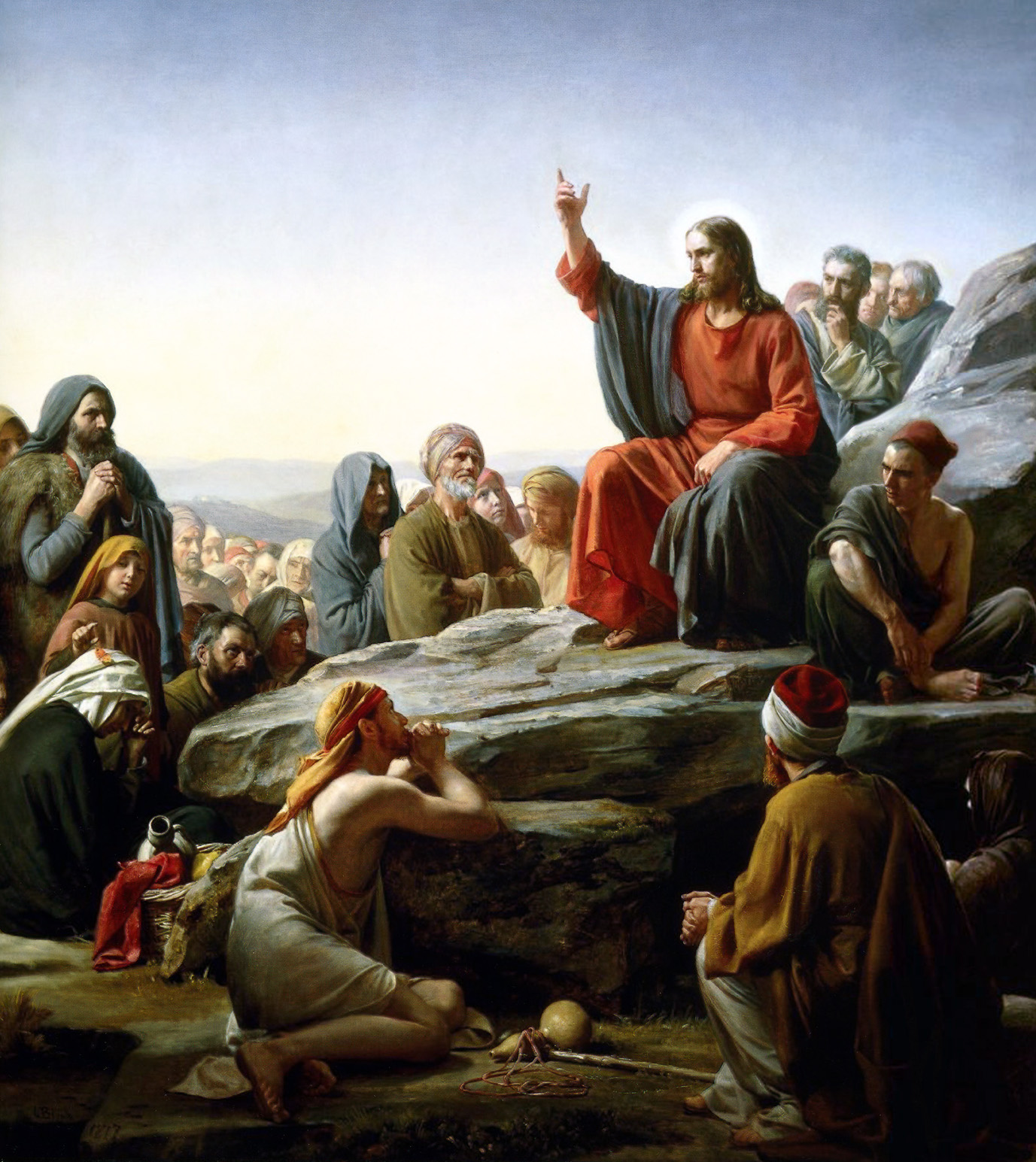
Matthewchapter 23
39 verses · Matthew, by tradition · AD 50 to 65 · The Gospels
Woe to you, scribes and Pharisees, you hypocrites! You pay tithes of mint, dill, and cumin. But you have disregarded the weightier matters of the law: justice, mercy, and faithfulness. You should have practiced the latter, without neglecting the former.
Introduction
Matthew, by tradition, The Gospels, Matthew Overview.
Matthew wrote for Jewish believers who had been shut out of their synagogues by the very teachers this chapter addresses. It is the sharpest speech in the Gospel, and it is spoken inside the family, by a Jewish teacher to the crowds about the leaders of their own people. It follows the pattern of the prophets of Israel, who announced woes on the rulers who misled the nation. The first part speaks to the crowds and the disciples, and the rest speaks to the teachers themselves. Listen for the pictures drawn from daily religious life in Jerusalem. The chapter closes in grief over the city.
Context
- Who
- Jewish readers whose accusers were exactly these teachers
- What
- A speech of woes against the scribes and Pharisees for teaching the Law without doing it, closing with a lament over Jerusalem.
- Where
- The temple courts in Jerusalem, spoken to the crowds and the disciples about the men who taught them.
- When
- The last week before the crucifixion, at Passover, in AD 30 or AD 33.
- Why
- To warn the crowds and the disciples against religion that is done to be seen, and to show the grief of God over a city that refused Him.
Historical context
Moses' seat was a real piece of furniture. Carved stone chairs have been found in the ruins of ancient synagogues, including at Chorazin, set at the front where the teacher sat to expound the Law. Jesus tells the crowds to do what these men say from that seat, the criticism that follows is about practice, not about the Scripture they read.
Show the rest of the historical context, 3 more paragraphs
Phylacteries are small leather boxes containing passages of Scripture, bound to the forehead and the arm for prayer. Examples were found among the Dead Sea Scrolls, and they were normally small. Making them broad made the devotion visible from across a courtyard. The tassels on the corners of the outer garment worked the same way, commanded by the Law, and easily lengthened for effect.
The tithing complaint is precise. The Law required a tenth of the produce of the field; whether tiny kitchen herbs like mint and dill and cumin also had to be tithed was a fine point that the strictest teachers answered yes. They measured out seeds and let justice and mercy go.
The whitewashed tomb image comes from a real practice. Graves near roads were marked with lime wash before Passover so that pilgrims would not step on one unawares, contact with a grave made a person unclean for seven days and would have barred them from the feast. The paint was there to warn people off what was inside.
Significance
This is the sharpest language in the Gospel, and it is spoken inside the family, a Jewish teacher indicting Jewish teachers, in the tradition of Amos and Isaiah before him. It is not a verdict on a people; it is a prophet's charge against leaders.
Show the rest of the significance, 1 more paragraph
For readers barred from synagogues by such men, the specific accusation would have burned: they shut the kingdom in people's faces, going in themselves and blocking those who are trying. And the chapter ends not in triumph but in grief, a lament over the city, longing to gather her children like a hen gathers chicks.
The heads below are this chapter's scenes. The numbered points under each are its verses.
Do Not Do as They Do
Matthew 23:1-3
Jesus spoke to the crowds: "Moses’ seat" names a stone seat in synagogues including Chorazin, from which the reader of the law taught. Jesus tells the crowds to "practice and observe everything they tell you," upholding Moses' law. He draws the line between the seat's authority and the conduct of those who sit in it.
Matthew 23:1
“The disciples of Christ are better than the common herd; and you may find in the Church such as with more ardent affection come to the word of God; these are Christ's disciples, the rest are only His people. And sometimes He speaks to His disciples alone, sometimes to the multitudes and His disciples together, as here.”
Origen of Alexandria · written before 253 · Catena Aurea by Aquinaspatristic
Adam Clarke notes that Jewish teachers stood to read the Law and sat to explain it, as Jesus did at Luke 4:20. Matthew Henry places the scribes in Moses' seat as judge and teacher, the office of Exodus 18. Clarke says they once sat by appointment, now by permission.
Matthew 23:2
“The scribes and the Pharisees sit in Moses’ seat - Εκαθισαν. - They sat there formerly by Divine appointment: they sit there now by Divine permission. What our Lord says here refers to their expounding the Scriptures, for it was the custom of the Jewish doctors to sit while they expounded the law and prophets, (Mat 5:1; Luk 4:20-22), and to stand up when they read them. By the seat of Moses, we are to understand authority to teach the law. Moses was the great teacher of the Jewish people; and the scribes, etc., are here represented as his successors.”
Adam Clarke · Commentary on the Bible (1810-1826)evangelical
1 more voice on this verse
Matthew 23:2
“They were not the itinerant judges that rode the circuit, but the standing bench, that determined on appeals, special verdicts, or writs of error by the law; they sat in Moses's seat, not as he was Mediator between God and Israel, but only as he was chief justice, Exod. xviii.”
Matthew Henry · Commentary on the Whole Bible (1707-1721)puritan
practice and observe everything: Albert Barnes limits the command to observe everything to what the scribes teach in keeping with the Law. At 15:1 to 6 Jesus charged these teachers with voiding that law by tradition. Jamieson, Fausset and Brown observe that Matthew alone records the charge to practice what the Pharisees teach.
Matthew 23:3
“All, therefore, whatsoever ... - That is, all that they teach that is consistent with the Law of Moses - all the commands of Moses which they read to you and properly explain. The word “all” could not be taken without such a restriction, for Christ himself accuses them of teaching many things contrary to that law, and of making it void by their traditions, Mat 15:1-6. They say, and do not - The interpretation which they give to the law is in the main correct, but their lives do not correspond with their teaching.”
1 more voice on this verse
Matthew 23:3
“It is remarked by WEBSTER and WILKINSON that the warning to beware of the scribes is given by Mark and Luke (Mr 12:38; Lu 20:46) without any qualification: the charge to respect and obey them being reported by Matthew alone, indicating for whom this Gospel was especially written, and the writer's desire to conciliate the Jews.”
Jamieson, Fausset & Brown · Commentary Critical and Explanatory on the Whole Bible (1871)reformed
heavy, burdensome loads: They "tie up heavy, burdensome loads and lay them on men’s shoulders," a picture of the fence laws the schools built around the Torah's commands. That hedge had become a weight the teachers themselves "are not willing to lift a finger to move," and they found ways around it.
Matthew 23:4
“For they bind heavy burdens,.... Meaning not the rites and ceremonies of the law of Moses, circumcision, and other rituals, which obliged to the keeping of the whole law, which was a yoke men were not able to bear; but the traditions of the elders, which the Scribes and Pharisees were very tenacious of, and very severely enjoined the observance of, and are called their "heavy" things (o). "It is a tradition of R.”
1 more voice on this verse
Matthew 23:4
“They allowed no chancery to relieve the extremity of their common law. How contrary to this was the practice of Christ's apostles, who would allow to others that use of Christian liberty which, for the peace and edification of the church, they would deny themselves in!”
Matthew Henry · Commentary on the Whole Bible (1707-1721)puritan
Matthew 23:5-7
They broaden their phylacteries: Phylacteries are tefillin, small leather boxes holding Exodus 13:1-10, 13:11-16, Deuteronomy 6:4-9 and 11:13-21, bound to arm and forehead as Deuteronomy 6:8 commands. Jesus faults the broadened boxes and lengthened tassels, since "All their deeds are done for men to see". The title "Rabbi" completes the picture.
Matthew 23:5
“But all their works they do for to be seen of men--Whatever good they do, or zeal they show, has but one motive--human applause. they make broad their phylacteries--strips of parchment with Scripture-texts on them, worn on the forehead, arm, and side, in time of prayer. and enlarge the borders of their garments--fringes of their upper garments (Nu 15:37-40).”
Jamieson, Fausset & Brown · Commentary Critical and Explanatory on the Whole Bible (1871)reformed
2 more voices on this verse
Matthew 23:5
“For the Lord, when He had given the commandments of the Law through Moses, added at the end, And thou shalt bind them for a sign upon thine hand, and they shall be ever before thine eyes; (Deut. 6:8.) the meaning of which is, Let my precepts be in thine hand so as to be fulfilled in thy works; let them be before thine eyes so as that thou shalt meditate upon them day and night.”
Jerome · written before 420 · Catena Aurea by Aquinaspatristic
Matthew 23:5
“Their phylacteries - The word “phylactery” comes from a word signifying to keep, preserve, or guard. The name was given because phylacteries were worn as amulets or charms, and were supposed to defend or preserve those who wore them from evil. They were small slips of parchment or vellum, on which were written certain portions of the Old Testament.”
the places of honor at banquets: Albert Barnes explains guests at banquets reclined on couches around three tables set in a square, and the places of honor were fixed by rank. John Gill points to Samuel giving Saul the chief place among the guests at 1 Samuel 9:22. The scribes and Pharisees love such seats.
Matthew 23:6
“And love the uppermost rooms at feasts,.... Or the first and chief places to sit, or lie down on, at ordinary meals, and especially at large entertainments, where the great ones sat, as in 1Sa 9:22 where Jarchi on the place observes, that by the manner of their sitting, it was known who was the greatest; and this the Scribes and Pharisees affected.”
1 more voice on this verse
Matthew 23:6
“The uppermost rooms at feasts - The word “rooms,” here, by no means expresses the meaning of the original. It would be correctly rendered the uppermost “places or couches” at feasts. To understand this, it is necessary to remark that the custom among the Jews was not to eat sitting, as we do, but reclining on couches. The table was made by “three” tables, raised like ours and placed so as to form a square, with a clear space in the midst, and one end quite open. Around these tables were placed cushions capable of containing three or more persons.”
the greetings in the marketplaces: Rabbi comes from a word meaning great, and Albert Barnes calls it a title for eminent teachers of the law. Barnes adds that the markets drew the largest crowds. Thomas Aquinas describes the honors sought there, with hoods removed and knees bent before the teacher.
Matthew 23:7
“Greetings in the markets - Markets were places where multitudes of people were assembled together. They were pleased with special attention in public places, and desired that all should show them particular respect. Greetings - Salutations. See the notes at Luk 10:4. To be called Rabbi, Rabbi - This word literally signifies great. It was a title given to eminent teachers of the law among the Jews; a title of honor and dignity, denoting authority and ability to teach. They were gratified with such titles, and wished it given to themselves as denoting superiority.”
1 more voice on this verse
Matthew 23:7
“And greetings in the markets, and to be called of men, Rabbi, Rabbi--It is the spirit rather than the letter of this that must be pressed; though the violation of the letter, springing from spiritual pride, has done incalculable evil in the Church of Christ. The reiteration of the word "Rabbi" shows how it tickled the ear and fed the spiritual pride of those ecclesiastics.”
Jamieson, Fausset & Brown · Commentary Critical and Explanatory on the Whole Bible (1871)reformed
Matthew 23:8-10
you are not to be called: Jesus tells them they are "not to be called ‘Rabbi,’ for you have one Teacher, and you are all brothers," aiming at craving for honor. Each title is answered by its true holder: the one Teacher, the Father in heaven, and "one Instructor, the Christ."
Matthew 23:8
“But be not ye called Rabbi - As our Lord probably spoke in Hebrew, the latter word rabbi, in this verse, must have been in the plural; but as the contracted form of the plural sounds almost exactly like the singular, the Greek writer would naturally express them both in the same letters.”
Adam Clarke · Commentary on the Bible (1810-1826)evangelical
do not call anyone on earth: Albert Barnes keeps the honor owed to a natural father, and reads father as a title of supreme authority that belongs to God. Jerome notes that Paul called himself a teacher of the Gentiles and that monks called their elders father. Jerome took such titles as honor paid to age.
Matthew 23:9
“And call no man your father upon the earth: for one is your Father, which is in heaven, &c.--To construe these injunctions into a condemnation of every title by which Church rulers may be distinguished from the flock which they rule, is virtually to condemn that rule itself; and accordingly the same persons do both--but against the whole strain of the New Testament and sound Christian judgment.”
Jamieson, Fausset & Brown · Commentary Critical and Explanatory on the Whole Bible (1871)reformed
2 more voices on this verse
Matthew 23:9
“It is a difficulty that the Apostle against this command calls himself the teacher of the Gentiles; and that in monasteries in their common conversation, they call one another, Father. It is to be cleared thus. It is one thing to be father or master by nature, another by sufferance. Thus when we call any man our father, we do it to show respect to his age, not as regarding him as the author of our being.”
Jerome · written before 420 · Catena Aurea by Aquinaspatristic
Matthew 23:9
“And call no man your Father ... - This does not, of course, forbid us to apply the term to our real father. Religion requires all proper honor to be shown to Him, Exo 20:12; Mat 15:4; Eph 6:1-3. But the word “father” also denotes “authority, eminence, superiority, a right to command, and a claim to particular respect.” In this sense it is used here. In this sense it belongs eminently to God, and it is not right to give it to people. Christian brethren are equal. Only God has supreme authority.”
you have one Instructor: The Greek word is kathegetai, guides or leaders, and Adam Clarke reads the verse as reserving the guiding of the Church to God. Thomas Aquinas ties the title to Christ as the Word. All true teaching comes through him.
Matthew 23:10
“Neither be ye called masters - Καθηγηται, leaders. God is in all these respects jealous of his honor. To him alone it belongs to guide and lead his Church, as well as to govern and defend it. Jesus is the sole teacher of righteousness. It is he alone, (who is the word, light, and eternal truth), that can illuminate every created mind; and who, as Savior and Redeemer, speaks to every heart by his Spirit.”
Adam Clarke · Commentary on the Bible (1810-1826)evangelical
Matthew 23:11-12
greatest among you shall be your servant: "The greatest among you shall be your servant" restates the standard Jesus set at the request of the mother of James and John. The rule "whoever exalts himself will be humbled, and whoever humbles himself will be exalted" stands as a law of the kingdom. These verses close the introduction.
Matthew 23:11
“But he that is greatest among you shall be your servant--This plainly means, "shall show that he is so by becoming your servant"; as in Mt 20:27, compared with Mr 10:44.”
Jamieson, Fausset & Brown · Commentary Critical and Explanatory on the Whole Bible (1871)reformed
2 more voices on this verse
Matthew 23:11
“But he that is greatest among you,.... Either who really is so, having more grace, and greater gifts bestowed upon him, than others; which doubtless was the case of some of the disciples, or who desired to be the greatest, was ambitious of, and affected a superiority over others, and to be in the highest post and place, as it is certain some of them did.”
Matthew 23:11
“Since those who have arrived teaching new beliefs for the most part do so from conceit and arrogance, I will say something concerning the value of the teaching. The Lord cuts short this opinion and way as leading to destruction. He says, "You love glory and the places of first importance." Meanwhile he desires the servant's role and cultivates humility.”
Cyril of Alexandria · written before 444 · FRAGMENT 255patristic
whoever exalts himself: Thomas Aquinas hears the same reversal in Mary's song at Luke 1:52, where God brings down rulers and lifts up the humble. Adam Clarke finds the rule kept in Christ himself. He took the nature of a servant and humbled himself to death, as Philippians 2:7 to 8 records.
Matthew 23:12
“Then he assigns the reason: and whosoever shall exalt himself shall be humbled, and he that shall humble himself shall be exalted. Hence in the canticle of the Virgin, Luke 1:52: he has put down the mighty from their seat, and has exalted the humble.”
Thomas Aquinas · written before 1274 · Commentary on Matthewpatristic
1 more voice on this verse
Matthew 23:12
“Whosoever shall exalt himself, etc. - The way to arrive at the highest degree of dignity, in the sight of God, is by being willing to become the servant of all. Nothing is more hateful in his sight than pride; to bring it into everlasting contempt, God was manifest in the flesh. He who was in the likeness of God took upon him the form of a servant, and was made in the likeness of man, and humbled himself unto death. After this, can God look upon any proud man without abasing him?”
Adam Clarke · Commentary on the Bible (1810-1826)evangelical
Woes on Blind Guides and Whitewashed Tombs
shut the kingdom of heaven: The first woe charges, "You shut the kingdom of heaven in men’s faces". The hypocrite thread, heavier in this chapter than anywhere else in the Gospel, opens with teachers who stay outside the kingdom. They block others at the door: "nor will you let in those who wish to enter."
Matthew 23:13
“But woe unto you, scribes and Pharisees, hypocrites! for ye shut up the kingdom of heaven against men--Here they are charged with shutting heaven against men: in Lu 11:52 they are charged with what was worse, taking away the key--"the key of knowledge"--which means, not the key to open knowledge, but knowledge as the only key to open heaven.”
Jamieson, Fausset & Brown · Commentary Critical and Explanatory on the Whole Bible (1871)reformed
1 more voice on this verse
Matthew 23:13
“We have in these verses the charges of our Lord against the Jewish teachers, ranged under eight heads. Standing in the midst of the temple, with a listening crowd around him, he publicly denounces the main errors of the scribes and the Pharisees, in unsparing terms. Eight times he uses the solemn expression, “Woe unto you;” seven times he calls them “hypocrites;” twice he speaks of them as “blind guides”—twice as “fools and blind”—once as “serpents! And a generation of vipers!” Let us mark that language well. It teaches a solemn lesson.”
J.C. Ryle · Expository Thoughts on the Gospels: Matthew (1856)Reformed Evangelical
Some manuscripts add a woe, placed at varying points in the sequence, against devouring the houses of widows under cover of long prayers. The Berean Standard Bible leaves verse 14 out of its text. The charge echoes Isaiah's word against rulers who rob the fatherless and prey on the widow.
Matthew 23:14
“The Pharisees and the Scribes then would neither enter in, nor hear Him who said, By me if any man enter in he shall be saved; (John 10:9.) nor would they suffer those to enter in, who were able to have believed through the things which had been spoken before by the Law and the Prophets concerning Christ, but shut up the door with every kind of device to deter men from entering. Also they detracted from His teaching, denied all prophecy concerning Him, and blasphemed every miracle as deceitful, or wrought by the Devil.”
Origen of Alexandria · written before 253 · Catena Aurea by Aquinaspatristic
2 more voices on this verse
Matthew 23:14
“Ye devour widows’ houses - On this subject I am in possession of nothing better than the following note of Dr. Whitby. “This sect,” says Josephus, (Ant. l. xvii. chap. 3), “pretended to a more exact knowledge of the law, on which account the women were subject to them, as pretending to be dear to God. And when Alexandra obtained the government, (Jewish War, b.”
Adam Clarke · Commentary on the Bible (1810-1826)evangelical
Matthew 23:14
“Woe unto you, scribes and Pharisees, hypocrites! for ye devour widows' houses, &c.--Taking advantage of the helpless condition and confiding character of "widows," they contrived to obtain possession of their property, while by their "long prayers" they made them believe they were raised far above "filthy lucre." So much "the greater damnation" awaits them.”
Jamieson, Fausset & Brown · Commentary Critical and Explanatory on the Whole Bible (1871)reformed
traverse land and sea to: "You traverse land and sea to win a single convert" pictures real effort, since Pharisaic Judaism sought Gentile converts. Jesus leaves that zeal unchallenged. His charge falls on the result: "you make him twice as much a son of hell as you are," a convert trained into hypocrisy.
Matthew 23:15
“Woe unto you, scribes and Pharisees, hypocrites! for ye compass sea and land to make one proselyte--from heathenism. We have evidence of this in JOSEPHUS. and when he is made, ye make him twofold more the child of hell than yourselves--condemned, for the hypocrisy he would learn to practice, both by the religion he left and that he embraced.”
Jamieson, Fausset & Brown · Commentary Critical and Explanatory on the Whole Bible (1871)reformed
1 more voice on this verse
Matthew 23:15
“Ye compass sea and land - You take every means, spare no pains, to gain proselytes. Proselyte - One that comes over from a foreign nation, religion, or sect to us - a convert. Among the Jews there were two kinds of proselytes: 1. “Proselytes of righteousness,” or those who wholly and fully embraced the Jewish religion, who were baptized, who were circumcised, and who conformed to all the rites of the Mosaic institutions.”
Matthew 23:16-19
Woe to you, blind guides!: The woe on the "blind guides" targets a rabbinic distinction: an oath by the temple "means nothing," while an oath by its gold binds. Jesus asks which is greater, "the gold, or the temple that makes it sacred," since the greater makes sacred the lesser it holds.
Matthew 23:16
“Whosoever shall swear by the gold - The covetous man, says one, still gives preference to the object of his lust; gold has still the first place in his heart. A man is to be suspected when he recommends those good works most from which he receives most advantage. Is bound thereby, i.e. to fulfill his oath.”
Adam Clarke · Commentary on the Bible (1810-1826)evangelical
1 more voice on this verse
Matthew 23:16
“But the case is bad, when the leaders of the people cause them to err, Isa. ix. Though the condition of those whose guides are blind is very sad, yet that of the blind guides themselves is yet more woeful. Christ denounces a woe to the blind guides that have the blood of so many souls to answer for.”
Matthew Henry · Commentary on the Whole Bible (1707-1721)puritan
You blind fools!: Albert Barnes observes that the gold held no holiness of its own. Hilary of Poitiers carries the principle to Christ, in whom the Law rests as on a throne. He calls blind those who honor what is made holy and pass by the One who makes it holy.
Matthew 23:17
“For since Christ is come, reliance upon the Law is vain; for not Christ by the Law, but the Law by Christ, is sanctified, in whom it rests as on a seat or throne; so are they fools and blind, who, overlooking the sanctifier, pay honour to the things sanctified.”
Hilary of Poitiers · written before 367 · Catena Aurea by Aquinaspatristic
1 more voice on this verse
Matthew 23:17
“The temple that sanctifieth the gold - To sanctify is to make holy. The gold had no holiness but what it derived from the temple. If in any other place, it would be no more holy than any other gold. It was foolish, then, to suppose that that was more holy than the temple, from which it received all the sanctity which it possessed.”
swears by the altar: The altar was the altar of burnt offering in the priests' court, about thirty feet square by Albert Barnes's reckoning from 2 Chronicles 4:1. The gift was the animal or bird laid on the altar. Jerome says the scribes held an oath by the gift binding out of greed.
Matthew 23:18
“Again, if one swore by the altar, none held him guilty of perjury; but if he swore by the gift or the victims or the other things which are offered to God upon the altar, this they exacted most rigorously. And all this they did not out of fear of God, but out of covetousness. Thus the Lord charges them with both folly and fraud, inasmuch as the altar is much greater than the victims which are sanctified by the altar.”
Jerome · written before 420 · Catena Aurea by Aquinaspatristic
1 more voice on this verse
Matthew 23:18
“The altar - The altar of burnt-offerings, in the court of the priests. See the notes at Mat 21:12. It was made of brass, about 30 feet in length and breadth, and 15 feet in height, 2Ch 4:1. On this altar were offered all the beasts and bloody oblations of the temple. The gift that is upon it - The gift or offering made to God, so called because it was devoted or “given” to him. The gift upon this altar was always beasts and birds.”
You blind men!: John Gill notes three of Beza's copies and the Vulgate lack the word fools, and the Berean reads blind men alone. Origen makes the heart the altar. The heart makes the gift sacred, and a man who counts alms and prayers greater than the heart that offers them is blind.
Matthew 23:19
“Ye fools, and blind,.... This is very justly repeated, since this is no less an instance of their folly, blindness, and stupidity. In three copies of Beza's the word "fools" is not; nor is it in the Vulgate Latin, nor in Munster's Hebrew Gospel; but the Syriac, Arabic, Persic, and Ethiopic versions have it: for whether is greater, the gift, or the altar that sanctifieth the gift?”
1 more voice on this verse
Matthew 23:19
“Anyone who thinks that his own almsgiving, his own fasting, his own psalms and prayers are in themselves great and who, without good judgment, blesses them and does not reflect that it is just from such a heart that his almsgiving or psalms or prayers or fasting are offered—such a man is blind. For indeed his heart is the altar that sanctifies his offering which is the heart of the world. The heart and the conscience of such a man "do not feel remorse but have trust in God," because his own heart has been rightly formed.”
Origen of Alexandria · written before 253 · Commentary on Matthew 18.21patristic
Matthew 23:20-22
swears by the altar swears by: The ruling that "he who swears by the altar swears by it and by everything on it" closes the loophole. Swearing by heaven reaches "God’s throne and by the One who sits on it," so every oath reaches God. The saying stands beside the Sermon's command against swearing at all.
Matthew 23:20
“One of the Pharisaical traditions regarded oath taking. Some were swearing by the temple, others by the gold of the temple; some by the altar, others by the gifts of the altar. The Pharisees were teaching that one who swore by the gold of the altar or by the gift of the altar was obligated, whereas one who swore by the temple or by the altar was not under obligation. Our Savior spoke against these traditions. He wished to call them back from human traditions to divine revelation. Those who hand on such traditions are blind and foolish.”
Origen of Alexandria · written before 253 · Commentary on Matthew 17patristic
1 more voice on this verse
Matthew 23:20
“Whoso - shall swear by the altar - As an oath always supposes a person who witnesses it, and will punish perjury; therefore, whether they swore by the temple or the gold, (Mat 23:16), or by the altar or the gift laid on it, (Mat 23:18), the oath necessarily supposes the God of the temple, of the altar, and of the gifts, who witnessed the whole, and would, even in their exempt cases, punish the perjury.”
Adam Clarke · Commentary on the Bible (1810-1826)evangelical
the One who dwells in it: Albert Barnes names the One who dwells there as God. In Solomon's temple the glory cloud filled God's house at its dedication, as 1 Kings 8:10 records. John Gill adds that a Roman poet mocked a Jew for his oath by the temple.
Matthew 23:21
“And whoso shall swear by the temple,.... As we have before seen they used to do, and as appears from what the poet says (w): Ecce negas, jurasque mihi per templa tonantis Non credo: jura, verpe, per Anchialum.”
1 more voice on this verse
Matthew 23:21
“Him that dwelleth therein - That is, God. The temple was his house, his dwelling. In the first, or Solomon’s temple, he dwelt between the cherubims in the most holy place. He manifested himself there by a visible symbol, in the form of a cloud resting on the mercy-seat, 1Ki 8:10, 1Ki 8:13; Psa 80:1.”
swears by God’s throne: Origen explains why men swore by heaven: they hoped to escape the danger of an oath taken in God's name. Albert Barnes holds that the heart of any oath is calling God to witness. An oath by heaven names him anyway.
Matthew 23:22
“The throne of God - Heaven is his throne, Mat 5:34. It is so called as being the place where he sits in glory. Jesus says, here, that all who swear at all do, in fact, swear by God, or the oath is good for nothing. To swear by an altar, a gift, or a temple is of no force unless it be meant to appeal to God himself. The essential thing in an oath is calling God to witness our sincerity. If a real oath is taken, therefore, God is appealed to.”
1 more voice on this verse
Matthew 23:22
“In like manner the custom which the Jews had of swearing by the Heaven He reprobates. For they did not, as they supposed, avoid the danger of taking an oath by God, because, Whose sweareth by heaven, sweareth by the throne of God, and by him that sitteth thereon.”
Origen of Alexandria · written before 253 · Catena Aurea by Aquinaspatristic
Matthew 23:23-24
You pay tithes of mint: The fourth woe finds them tithing herbs, "mint, dill, and cumin," while they "have disregarded the weightier matters of the law: justice, mercy, and faithfulness". To "strain out a gnat but swallow a camel" pictures straining wine through cloth while swallowing a larger animal, both named unclean in Leviticus 11.
Matthew 23:23
“The Lord had commanded, that for the maintenance of the Priests and Levites, whose portion was the Lord, tithes of every thing should be offered in the temple. Accordingly, the Pharisees (to dismiss mystical expositions) concerned themselves about this alone, that these trifling things should be paid in, but lightly esteemed other things which were weighty. He charges them then with covetousness in exacting carefully the tithes of worthless herbs, while they neglected justice in their transactions of business, mercy to the poor, and faith toward God, which are weighty things.”
Jerome · written before 420 · Catena Aurea by Aquinaspatristic
1 more voice on this verse
Matthew 23:23
“Our Lord purposely names the most trifling products of the earth as examples of what they punctiliously exacted the tenth of. and have omitted the weightier matters of the law, judgment, mercy, and faith--In Luke (Lu 11:42) it is "judgment, mercy, and the love of God"--the expression being probably varied by our Lord Himself on the two different occasions.”
Jamieson, Fausset & Brown · Commentary Critical and Explanatory on the Whole Bible (1871)reformed
You strain out a gnat: The King James Version has strain at. Adam Clarke took the at for a printer's error in the 1611 edition, where the sense is strain out. In Jerome's reading the camel stands for justice, mercy and faithfulness, and the gnat for tithes of mint, dill and cumin.
Matthew 23:24
“Blind guides, which strain at a gnat, and swallow a camel. - This clause should be thus translated: Ye strain out the gnat, but ye swallow down the camel. In the common translation, Ye strain At a gnat, conveys no sense. Indeed, it is likely to have been at first an error of the press, At for Out, which, on examination, I find escaped in the edition of 1611, and has been regularly continued since.”
Adam Clarke · Commentary on the Bible (1810-1826)evangelical
Matthew 23:25-26
clean the outside of the cup: The fifth woe turns to purity: they "clean the outside of the cup and dish," but inside the vessels are "full of greed and self-indulgence". "First clean the inside" puts the inner cleansing before the outer. Jesus had already taught at 15:1-20 that what defiles comes from within.
Matthew 23:25
“Woe unto you Scribes and Pharisees, hypocrites,.... Our Lord cannot be thought to bear too hard upon these men, nor does he continue this character of them, and denunciations of woe against them, without a reason: for ye make clean the outside of the cup and platter, but within they are full of extortion and excess. The allusion is to their traditions about washing their cups and pots, and brazen vessels; see Mar 7:4 which they strictly observed.”
1 more voice on this verse
Matthew 23:25
“The cup and the platter - The drinking-cup and the dish containing food. The Pharisees were diligent in observing all the washings and obligations required by their traditions. See the notes at Mar 7:4. Full of extortion and excess - The outside appeared well; the inside was filled with the fruit of extortion, oppression, and wickedness. The meaning is, that though they took much pains to appear well, yet they obtained a living by extortion and crime.”
First clean the inside: Albert Barnes reads the inside of the cup and dish as what fills them. Filled without greed, both become clean. Jamieson, Fausset and Brown set Luke 11:41, a call to give to the poor, beside this verse.
Matthew 23:26
“Cleanse first that which is within the cup and the platter - Let them be filled with the fruits of honest industry, and then the outside and the inside will be really “clean.” By this allusion to the cup and platter he taught them that it was necessary to cleanse the heart first, that the external conduct might be really pure and holy.”
1 more voice on this verse
Matthew 23:26
“To these words, recorded by Luke, He adds the following, involving a principle of immense value: "But rather give alms of such things as ye have, and behold, all things are clean unto you" (Lu 11:41).”
Jamieson, Fausset & Brown · Commentary Critical and Explanatory on the Whole Bible (1871)reformed
Matthew 23:27-28
like whitewashed tombs: The "whitewashed tombs" recall a custom reported in Jewish sources. Tombs were whitened each spring so pilgrims coming for Passover could see them and avoid the defilement a grave conveyed. The warning mark becomes the accusation, since these men "look beautiful on the outside" and are themselves the danger underneath.
Matthew 23:27
“Woe unto you Scribes and Pharisees, hypocrites,.... It is much these men could bear to hear themselves so often called by this name; and it shows great courage in our Lord, so freely to reprove them, and expose their wickedness, who were men of so much credit and influence with the people: for ye are like unto whited sepulchres; or "covered with lime", as the Syriac, Arabic, and Persic versions, render it.”
1 more voice on this verse
Matthew 23:27
“Like unto whited sepulchres - For the construction of sepulchres, see the notes at Mat 8:28. Those tombs were annually whitewashed to prevent the people from accidentally coming in contact with them as they went up to Jerusalem. This custom is still continued. Dr. Thomson (The Land and the Book, vol. i. p. 148) says, “I have been in places where this is repeated very often.”
full of hypocrisy and wickedness: Origen ties the image of dead bones to hypocrisy. A counterfeit of goodness holds none of the life of what it copies, and a feigned righteousness is a dead one. John Gill gathers the chapter's list of outward righteousness here: broad phylacteries, long tassels, tithes of herbs and washed cups.
Matthew 23:28
“Even so ye also outwardly appear righteous,.... By making broad their phylacteries, enlarging the borders of their garments, praying long prayers, compassing sea and land to make one proselyte, paying tithes of all manner of herbs, and cleansing the outside of the cup and platter, and doing all their works, prayers, fastings, and alms deeds, to be seen of men.”
1 more voice on this verse
Matthew 23:28
“As the scribes and Pharisees were previously called "full of robbery and intemperance," likewise here they are said to be "full of hypocrisy and iniquity" and are compared with "the bones of the dead and all uncleanness." Hypocrisy, because it is a counterfeit of the good, possesses nothing vital of the good it simulates, but is only its dead bones, so to speak.… If we listen with wisdom to what the present passage wants to tell us, we will understand that every simulated righteousness is a dead righteousness, hence no righteousness at all.”
Origen of Alexandria · written before 253 · Commentary on Matthew 24patristic
The Blood of the Prophets; O Jerusalem
Matthew 23:29-31
build tombs for the prophets: The seventh woe finds them building tombs, honoring the men their fathers killed, while claiming they "would not have been partners with them". Jesus turns that claim into a confession: "you testify against yourselves that you are the sons of those who murdered the prophets".
Matthew 23:29
“Ye build the tombs of the prophets - That is, you build sepulchres or tombs ever the prophets that have been slain. This they did professedly from veneration and respect for their character. This is often done at the East at the present day, and indeed elsewhere. Among the Muslims it is a common way of showing respect for any distinguished man to build a tomb for him. By doing this, they profess respect for his character and veneration for his memory.”
The builders claim they "would not have been partners with them in shedding the blood of the prophets," setting themselves above their fathers. Jesus knew they were about to shed his own blood.
Matthew 23:30
“Once the prophets had departed this life, their bodies were in the tomb but their souls and spirits were in the "realm of the living." Accordingly, the historical narrative of the prophetic writings is to be regarded as the body but their spiritual meaning and the inner truth as the soul and spirit which inhabits history. It is not improper then for us to consider the "tombs of the prophets" to be the letters on the pages of their books, in which the narrative lays as though it were a body placed in a tomb.”
Origen of Alexandria · written before 253 · Commentary on Matthew 27patristic
1 more voice on this verse
Matthew 23:30
“We would not have been partakers - They imagined themselves much better than their ancestors; but our Lord, who knew what they would do, uncovers their hearts, and shows them that they are about to be more abundantly vile than all who had ever preceded them.”
Adam Clarke · Commentary on the Bible (1810-1826)evangelical
you testify against yourselves: The Syriac reads against yourselves, John Gill notes. Albert Barnes places the testimony in their conscience, which knew the piety of the tombs for pretence. Cyril of Alexandria adds that by honoring the prophets they became judges of their own fathers.
Matthew 23:31
“Wherefore ye be witnesses unto yourselves,.... Or "against yourselves", as the Syriac reads; for what they said was a plain acknowledgment, and a full confession, what their fathers had done, and whose offspring they were; and from whom better things were not to be expected; since they were their fathers' own children, and of the same temper and disposition with them: that ye are the children of them that killed the prophets.”
2 more voices on this verse
Matthew 23:31
“Ye be witnesses unto yourselves - The emphasis, here, lies in the words “to yourselves.” It is an appeal to their conscience. It was not by their building the tombs that they were witnesses that they were the children of those who killed the prophets; but that, in spite of all this pretence of piety, under all this cloak of profession, they knew in their consciences, and were witnesses to themselves, that it was mere hypocrisy, and that they really approved the conduct of those who slew the prophets.”
Matthew 23:31
“We will carefully investigate what the Savior says. The forefathers of the Jews killed the holy prophets who were transmitting the divine word to them in those times. They surely have become witnesses for some of them, because the prophets are now revered and honored. They have placed crowns on their heads or assign … honor to their tombs as to holy things, for believing the prophets to be holy men, they have become the judges of those who have killed them.”
Cyril of Alexandria · written before 444 · FRAGMENT 260.6patristic
Matthew 23:32-33
Fill up, then, the measure: e of the sin of your fathers" is a command that reads as permission. The pattern is already moving toward the plot against Jesus himself. "You brood of vipers" repeats John the Baptist's words at 3:7, his warning now sealed by the one he pointed to.
Matthew 23:32
“Fill ye up then - Notwithstanding the profession you make, ye will fill up the measure of your fathers - will continue to walk in their way, accomplish the fullness of every evil purpose by murdering me; and then, when the measure of your iniquity is full, vengeance shall come upon you to the uttermost, as it did on your rebellious ancestors. The 31st verse should be read in a parenthesis, and then the 32d will appear to be, what it is, an inference from the 30th.”
Adam Clarke · Commentary on the Bible (1810-1826)evangelical
1 more voice on this verse
Matthew 23:32
“And you, fulfill the measure of your fathers. Having proven with the previous words that they were the children of murderers and those who killed the prophets, he now concludes what he wanted and puts forth the final part of the syllogism. And you, fulfill the measure of your fathers. What was lacking for them, you complete. They killed the servants, you crucify the Lord. They killed the prophets, you kill him who was preached by the prophets.”
Jerome · written before 420 · Commentary on Matthewpatristic
You brood of vipers!: Jerome renders hell as Gehenna and reads the brood of vipers as offspring like their parents, sons of murderers who became murderers. Albert Barnes ties snakes to the serpent of Genesis 3. Jamieson, Fausset and Brown add that the men John warned at 3:7 were now ripe for judgment.
Matthew 23:33
“Ye serpents - This name is given to them on account of their pretending to be pious, and very much devoted to God, but being secretly evil, At the heart, with all their pretensions, they were filled with evil designs, as the serpent was, Gen 3:1-5 Generation of vipers - See the notes at Mat 12:34. Damnation of hell - This refers, beyond all question, to future punishment. So great was their wickedness and hypocrisy, that, if they persevered in this course, it was impossible to escape the damnation that should come on the guilty.”
1 more voice on this verse
Matthew 23:33
“Ye serpents, ye generation of vipers, how can ye escape the damnation of hell?--In thus, at the end of His ministry, recalling the words of the Baptist at the outset of his, our Lord would seem to intimate that the only difference between their condemnation now and then was, that now they were ripe for their doom, which they were not then.”
Jamieson, Fausset & Brown · Commentary Critical and Explanatory on the Whole Bible (1871)reformed
Matthew 23:34-36
I am sending you prophets: Jesus sends "prophets and wise men and teachers," and some will be killed and crucified. The span "from the blood of righteous Abel to the blood of Zechariah son of Berechiah" runs from Genesis to Chronicles. This Zechariah is most often read as the priest's son of 2 Chronicles 24:20-22.
Matthew 23:34
“Wherefore - To show how my prediction, Ye will fill up the measure of your fathers, shall be verified, Behold, I send (I am just going to commission them) prophets, etc. and some ye will kill, (with legal process), and some ye will crucify, pretend to try and find guilty, and deliver them into the hands of the Romans, who shall, through you, thus put them to death. See on Luk 11:49 (note).”
Adam Clarke · Commentary on the Bible (1810-1826)evangelical
1 more voice on this verse
Matthew 23:34
“What precisely is meant by "the wisdom of God" here, is somewhat difficult to determine. To us it appears to be simply an announcement of a purpose of the Divine Wisdom, in the high style of ancient prophecy, to send a last set of messengers whom the people would reject, and rejecting, would fill up the cup of their iniquity.”
Jamieson, Fausset & Brown · Commentary Critical and Explanatory on the Whole Bible (1871)reformed
the blood of righteous Abel: Jerome identifies Abel as the brother Cain killed, righteous by the Lord's word here. Many men named Zechariah appear, and Jerome takes the place of death, between the temple and the altar, as the mark of this one. Albert Barnes reads the verse as a charge of national guilt.
Matthew 23:35
“Concerning the Abel here spoken of, there is no doubt that it is he whom his brother Cain murdered. He is proved to have been righteous, not only by this judgment of the Lord, but by the passage in Genesis, which says that his offerings were accepted by God. But we must enquire who is this Zacharias, son of Barachias, because we read of many Zachariases; and that we might not mistake, here it is added, whom ye slew between the temple and the altar.”
Jerome · written before 420 · Catena Aurea by Aquinaspatristic
1 more voice on this verse
Matthew 23:35
“That upon you may come ... - That is, the nation is guilty. Your fathers were guilty. You have shown yourselves to be like them. You are about, by killing the Messiah and his messengers, to fill up the iniquity of the land. The patience of God is nearly exhausted, and the nation is about to be visited with signal vengeance. These national crimes deserve national judgments; and the proper judgment for all these crimes are about to come upon you in the destruction of your temple and city.”
come upon this generation: Thomas Aquinas asks how one generation can answer for the blood of all, when Ezekiel 18:20 holds each man to his own sin. Albert Barnes answers that the hearers were like their fathers. They were about to kill the Messiah and his messengers, and so fill up the measure.
Matthew 23:36
“Shall come upon this generation - Επι την γενεαν ταυτην, upon this race of men, viz. the Jews. This phrase often occurs in this sense in the evangelists.”
Adam Clarke · Commentary on the Bible (1810-1826)evangelical
Matthew 23:37-39
O Jerusalem, Jerusalem, who kills: Indictment turns to lament, a longing refused again and again. The words "your house is left to you desolate" name the temple's coming abandonment. The closing words, "Blessed is He who comes in the name of the Lord," answer the crowd's hosanna in chapter 21 with the same psalm.
Matthew 23:37
“THIS is not and could not be the language of a mere man. It would be utterly absurd for any man to say that he would have gathered the inhabitants of a city together, "even as a hen gathers her chicks under her wings." Besides, the language implies that for many centuries, by the sending of the Prophets, and by many other warnings, God would often have gathered the children of Jerusalem together as a hen gathers her chicks under her wings.”
Charles Spurgeon · written before 1892 · The Metropolitan Tabernacle Pulpit, Sermon No. 2381: “"I Would, But You Would Not"” (lightly modernized text, CCEL edition)Particular Baptist
1 more voice on this verse
Matthew 23:37
“For rising into strength, kindling into fury, and forgetting herself entirely in her young, she will let the last drop of her blood be shed out and perish in defense of her precious charge, rather than yield them to an enemy's talons. How significant all this of what Jesus is and does for men! Under His great Mediatorial wing would He have "gathered" Israel.”
Jamieson, Fausset & Brown · Commentary Critical and Explanatory on the Whole Bible (1871)reformed
your house is left: Jamieson, Fausset and Brown and Adam Clarke both take the house as the temple and mark the pronoun. At 21:13 Jesus quoted the LORD claiming the temple as his own house, and here he calls it your house. Jerome hears Jeremiah 12:7, where the LORD forsakes his house.
Matthew 23:38
“Behold, your house--the temple, beyond all doubt; but their house now, not the Lord's. See on Mt 22:7. is left unto you desolate--deserted, that is, of its Divine Inhabitant.”
Jamieson, Fausset & Brown · Commentary Critical and Explanatory on the Whole Bible (1871)reformed
1 more voice on this verse
Matthew 23:38
“Behold, your house - Ο οικος, the temple: - this is certainly what is meant. It was once the Lord’s temple, God’s Own house; but now he says, Your temple or house - to intimate that God had abandoned it. See the note on Mat 23:21; see also on Luk 13:35 (note).”
Adam Clarke · Commentary on the Bible (1810-1826)evangelical
until you say: John Gill notes that Jerusalem did see Jesus again, at his trial before the high priest and on the cross. Gill applies the words to the time after the Lord's resurrection. Jerome traces Blessed is He who comes to Psalm 118, his 117th.
Matthew 23:39
“For I say unto you, ye shall not see me henceforth,.... Meaning in a very little time after the passover, from the time of his crucifixion and death; otherwise they saw him many times after this, as in the palace of the high priest, in Pilate's judgment hall, and on the cross; but not after his resurrection.”
2 more voices on this verse
Matthew 23:39
“Ye shall not see me ... - The day of your mercy is gone by. I have offered you protection and salvation, and you have rejected it. You are about to crucify me, and your temple to be destroyed, and you, as a nation, to be given up to long and dreadful suffering. You will not see me as a merciful Saviour, offering you redemption any more, until you have borne these heavy judgments.”
Matthew 23:39
“That glory, once visible in the holy of holies, over the mercy seat, when on the day of atonement the blood of typical expiation was sprinkled on it and in front of it--called by the Jews the Shekinah, or the Dwelling, as being the visible pavilion of Jehovah--that glory, which Isaiah (Isa 6:1-13) saw in vision, the beloved disciple says was the glory of Christ (Joh 12:41).”
Jamieson, Fausset & Brown · Commentary Critical and Explanatory on the Whole Bible (1871)reformed
Cross references
Matthew 23:39
- QuotingPsalms 118:26“Blessed is he who comes in the name of the LORD. From the house of the LORD we bless you.”
'Blessed is he that cometh in the name of the Lord' (lament over Jerusalem)
Keep studying
Studies15
Places1
Sources for this chapter
The summary
Jamieson, Fausset & Brown, Commentary Critical and Explanatory; John Calvin, Commentaries; John Wesley, Explanatory Notes Upon the New Testament and Matthew Henry, Complete Commentary.
The exposition
Adam Clarke, Commentary on the Bible; Albert Barnes; Cyril of Alexandria, FRAGMENT 260.6; Hilary of Poitiers, Catena Aurea by Aquinas; Jamieson, Fausset & Brown, Commentary Critical and Explanatory on the Whole Bible; Jerome; John Chrysostom, Homilies on the Gospel of Matthew; John Gill; John Lightfoot, Horae Hebraicae et Talmudicae on Matthew; John Wesley, Explanatory Notes upon the New Testament; Matthew Henry, Commentary on the Whole Bible; Origen of Alexandria and Thomas Aquinas, Commentary on Matthew.