
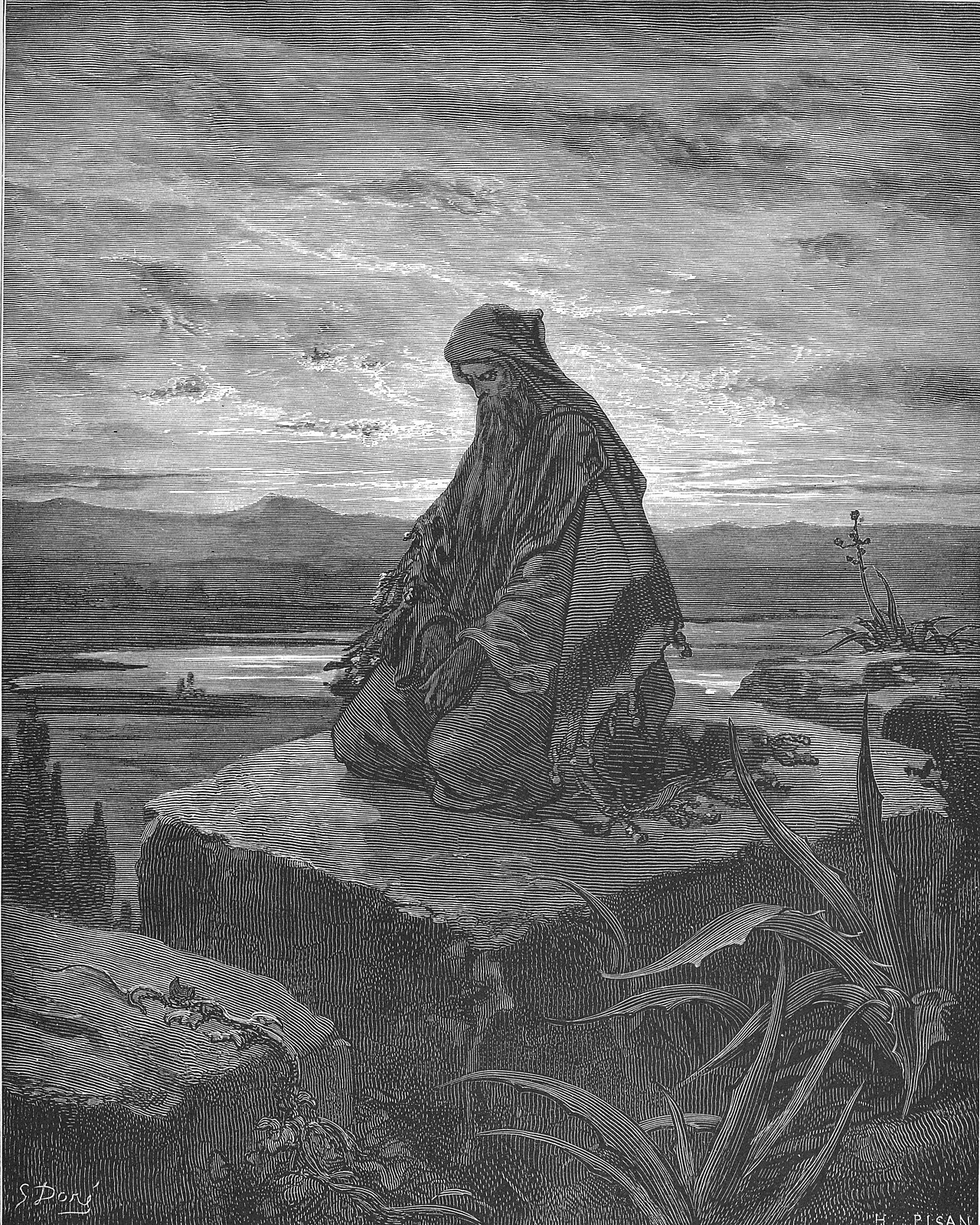
Isaiahchapter 60
22 verses · Isaiah · 8th century BC · The Prophets
Nations will come to your light, and kings to the brightness of your dawn.
Introduction
Isaiah, The Prophets, Isaiah Overview.
Isaiah wrote this for a people who had watched wealth and people leave their city by every road. The chapter opens with a command to a city sitting in darkness. It is poetry about a Jerusalem beyond any restoration in history. The prophet describes traffic arriving from every direction along the trade routes his hearers knew. Listen for the city gates and when they are shut. Listen for what replaces bronze, iron and wood. Listen also for the light in the last verses, which comes from the LORD rather than the sun.
Context
- Who
- People who had watched wealth leave their city in the wrong direction
- What
- A vision of Jerusalem shining with the LORD's glory as nations bring their wealth and her scattered children home.
- Where
- Jerusalem with its gates open, and the caravan routes of Arabia and the sea lanes of the Mediterranean.
- When
- Spoken about 700 to 690 BC on the site's reading, looking to a day beyond every return in history.
- Why
- To promise a defeated people a complete reversal, with the LORD Himself as their everlasting light.
Historical context
The traffic is described by route, and it is the real commercial map of the ancient world. Camels of Midian and Ephah and all the caravans from Sheba bringing gold and frankincense, that is the incense road up from southern Arabia, the richest overland trade there was. Flocks of Kedar and rams of Nebaioth, the northern Arabian herding tribes. And the ships of Tarshish first, the long-haul freighters of the western Mediterranean, bringing sons from far away with their silver and gold.
Show the rest of the historical context, 4 more paragraphs
The line about the gates is a security statement. Every walled city shut its gates at dusk and barred them, and being outside when they closed was a serious matter. Isaiah says your gates shall be open continually, day and night, they shall not be shut, which is only possible in a world with nothing left to fear.
The materials list is an upgrade schedule, one grade at a time: for bronze I will bring gold, for iron I will bring silver, for wood bronze, and for stones iron. Every ordinary material in the building trade is replaced by the next one up.
The timber comes from Lebanon, and the species are named as a builder would name them, cypress, pine, and box together, to beautify the place of my sanctuary. That was the standard source of quality construction wood for the whole region, and Solomon's temple had been built from it.
The last verses go past what any restoration achieved. The sun will no longer be your light by day, nor the moon for brightness, for the LORD will be your everlasting light. Read in a premillennial frame, this is the reign of the Messiah with the nations bringing their wealth to Jerusalem, not a description of the modest city rebuilt under Persian permission.
Significance
The opening command was given to people sitting in the dark: arise, shine, for your light has come. The reason is not that the darkness has lifted everywhere, the very next line says darkness covers the earth, and deep darkness the peoples.
Show the rest of the significance, 1 more paragraph
And the reversal of fortune is exact. Foreigners who broke the walls will build them; the sons of those who afflicted her will come bowing. For a defeated people, that was the whole ledger turned over.
This chapter in Jewish lifeWhat this chapter is in Jewish life and reading.
What is done
The site's own table in src/lib/hebraic/readings.ts sets this chapter in one prophetic reading of the annual cycle. It is read as the Haftarah of Ki Tavo, Isaiah 60:1 to 60:22, in both rites, on the Sabbath of the portion Deuteronomy 26:1 to 29:8. A congregation keeping that cycle hears the verses of each reference read aloud after the Torah portion of its Sabbath.
The corpus joins the chapter to the weeks of the Torah portions through the works arranged by portion. Under the second verse it carries Bereshit Rabbati, Parashat Bereshit 9. Under the third verse it carries Bereshit Rabbati, Parashat Bereshit 13. Under the sixth verse it carries Bereshit Rabbati, Parashat Toldot 1.
How it is read
Two commentators on this chapter carry English in the corpus. Rashi is quoted from The Judaica Press complete Tanach with Rashi, translated by A. J. Rosenberg, which Sefaria reports as CC-BY, and every quotation of it is held to fifty words or fewer because the translation is modern. Ibn Ezra is quoted from the version Sefaria titles Commentary of Ibn Ezra on Isaiah - trans. by M. Friedlander, 1873, which it reports as Public Domain.
Ibn Ezra's note on the first verse carries a reading most readers will not expect. He allows that the light is come if taken in a good sense, "but I think that it means thy light has set, and it has become dark". The darkness covering the earth in the second verse he joins to the distress of 59:19 (Ibn Ezra on Isaiah 60:1:2 and 60:2:1). The nations coming to the light he explains from ordinary sight: "He who is in darkness usually sees those that are dwelling in light". He reads the chapter's opening words as spoken by God to Zion (Ibn Ezra on Isaiah 60:3:1 and 60:8:1).
Rashi's notes on the chapter are mostly single words, and several follow Jonathan. The radiance of the fifth verse comes from the Aramaic word for light. The rams of Nebaioth and the Zion of the Holy One of Israel are read after Jonathan too (Rashi on Isaiah 60:5:1, 60:7:1 and 60:14:1). The ships of Tarshish that come as in the beginning he reads as the ships of Solomon in 1 Kings 10:22 (Rashi on Isaiah 60:9:1). The gates open continually he reads from the verb's form as a perpetual opening (Rashi on Isaiah 60:11:1).
The last verse carries Rashi's line on the time of the redemption: "If they are worthy, I will hasten it; if they are not worthy, it will be in its time" (Rashi on Isaiah 60:22:1).
What the rabbis say
The corpus carries forty rabbinic locators on this chapter and the text of none, so each is cited and linked here rather than quoted. On the first verse it holds Bamidbar Rabbah 11:5, Bamidbar Rabbah 2:10 and Bamidbar Rabbah 21:22. On the second verse it holds Aggadat Bereshit 55:2, Aggadat Bereshit 67:3 and Bereshit Rabbati, Parashat Bereshit 9. On the third verse it holds Bamidbar Rabbah 15:2, Bava Batra 75a:8 and Bereshit Rabbati, Parashat Bereshit 13. On the fourth verse it holds Aggadat Bereshit 55:1, Pesikta DeRav Kahana 22:3 and Shir HaShirim Rabbah 1:4:8.
On the fifth verse it holds Mekhilta DeRabbi Shimon Ben Yochai 15:1, Mekhilta DeRabbi Yishmael, Tractate Shirah 1:1 and Midrash Lekach Tov, Exodus 11:2:1. On the sixth verse it holds Bereshit Rabbati, Parashat Toldot 1, Midrash Lekach Tov, Exodus 3:20:1 and Midrash Lekach Tov, Numbers 24:17:1. On the seventh verse it holds Avodah Zarah 23b:3, Avodah Zarah 24a:15 and Bava Kamma 92a:7. On the eighth verse it holds Bamidbar Rabbah 20:20, Bava Batra 75b:6 and Ein Yaakov (Glick Edition), Bava Batra 5:29. On the eleventh verse it holds Otzar Midrashim, Midrashim of Rabbi Akiba, Aleph Bet of Rabbi Akiba (Version 1) 29.
On the twelfth verse it holds Bamidbar Rabbah 1:8, Jerusalem Talmud Sotah 7:5:2 and Midrash Aggadah, Leviticus 11:2:2. On the fourteenth verse it holds Eikhah Rabbah 1:23 and Pesikta Rabbati 29:34. On the seventeenth verse it holds Bamidbar Rabbah 4:4 and Bava Batra 9a:14. On the eighteenth verse it holds Midrash Aggadah, Deuteronomy 1:1:12. On the nineteenth verse it holds Bereshit Rabbah 59:5 and Introductions to Amoraic Literature, Part II (Notes and Interpretations for Chapters of the Talmud), Pesachim, Chapter I 53. On the twenty-first verse it holds Aggadat Bereshit 57:1 and Bamidbar Rabbah 11:1.
On the twenty-second verse it holds Avot DeRabbi Natan 21:1 and Bava Batra 133b:3. One more, Yalkut Shimoni on Torah 235:3, carries the anchor Isaiah 60:68, which this lane could not match to a verse. What each of them teaches is a saying of the rabbis, and is reported as theirs wherever this site quotes one. The quotations wait on a fetch that carries the text.
Sources: Rashi, Rashi on Isaiah 60:4:1 to 60:22:1, The Judaica Press complete Tanach with Rashi, translated by A. J. Rosenberg, reported CC-BY; Ibn Ezra, Ibn Ezra on Isaiah 60:1:1 to 60:18:1, Commentary of Ibn Ezra on Isaiah - trans. by M. Friedlander, 1873, reported Public Domain; The Sefaria corpus, scripts/data/sources/sefaria/isaiah/60.json, the 40 Talmud and Midrash locators of this chapter; The site's own files, src/lib/hebraic/readings.ts, the Haftarah entries for Ki Tavo (Isaiah 60:1 to 60:22).
The heads below are this chapter's scenes. The numbered points under each are its verses.
Arise, Shine, for Thy Light Is Come
Isaiah 60:1-3
Arise, shine, for your light has come: “Arise, shine, for your light has come” tells Zion to rise from the darkness of chapter 59, where the people groped. Verse 2 sets her light against a dark world: “darkness covers the earth”. Verse 3 draws the world toward it: “Nations will come to your light”.
Isaiah 60:1
“Arise - This is evidently addressed to the church, or to Zion regarded as the seat of the church. It is represented as having been in a state of affliction and calamity (compare the notes at Isa 3:26; Isa 52:1-2). She is now called on to arise from the dust, and to impart to others the rich privileges which were conferred on her. Shine - (אורי 'ôrı̂y).”
1 more voice on this verseWhat preachers and commentators have said about this verse, in their own words.
Isaiah 60:1
“As if he had said, "The Lord, having compassion upon thee, will rescue thee out of this darkness in which thou liest; thou hast been sufficiently punished; it is time that thy condition should begin to be improved." By the word brightness, therefore, he metaphorically denotes salvation and prosperity, as by "darkness" he formerly denoted a calamitous state of the Church.”
John Calvin · Commentaries (1554)reformed
thick darkness is over the peoples: Barnes notes that the Septuagint renders thick darkness as gnophos, a word for cloud. Jamieson, Fausset & Brown read His glory will appear as the Hebrew for seen in full view, and trace the light's spread in Isaiah 9:2. Calvin finds the contrast measuring God's love for his elect.
Isaiah 60:2
“For behold - Lo, darkness covers the earth. This is designed to turn the attention to the fact that all the rest of the world would be enveloped in deep spiritual night. Darkness - (See the notes at Isa 45:7). Shall cover the earth - Shall envelope the whole world except where it is illuminated by the gospel. It is needless to say that this was the fact when the Messiah came, and that it is still extensively true also. And gross darkness - Lowth renders this, ‘A thick vapor.’ Herder. ‘Deep obscurity.’ Septuagint, Γνόφος Gnophos - Cloud, shade, tempest.”
1 more voice on this verse
Isaiah 60:2
“The darkness - All kinds of errors. Shall be seen - Shall be conspicuous; as the Lord's arising, to the darkness covering the earth, so the glory being seen, answers to that gross darkness.”
John Wesley · Explanatory Notes upon the Old Testament (1765)evangelical
kings to the brightness of your dawn: Henry finds the brightness of Zion's dawn in the holiness and love of the first Christians, a light that drew the nations. Clarke counts it fulfilled in part, as the kings of Gentile nations received the light from the land of Judea. Ambrose named two such kings, Gratian and Theodosius.
Isaiah 60:3
“Prophecy did not lie, then, when it said, "Kings shall walk in thy light." They shall walk openly, and especially Gratian and Theodosius before other princes, no longer protected by the weapons of their soldiers but by their own merits; clothed not in purple garments but in the mantle of glory. In this world they took delight in pardoning many. How much the more are they consoled in the other life by the remembrance of their goodness, recalling that they had spared many? They now enjoy radiant light.”
Ambrose of Milan · written before 397 · On the Death of Theodosius 52patristic
1 more voice on this verse
Isaiah 60:3
“And the Gentiles shall come - So splendid shall be that glory, that it will attract the distant nations, and they shall come and participate in the blessings of the gospel. This contains the main statement which it is the design of this chapter to illustrate.”
Isaiah 60:4-5
Lift up your eyes and look around: “Lift up your eyes” opens a scene of return: “your sons will come from afar”. Verse 5 names what the city feels, “your heart will tremble and swell with joy”, fear and gladness together. Two streams feed her: “the riches of the sea will be brought to you”.
Isaiah 60:4
“Shall be nursed at thy side “Shall be carried at the side” - For תאמנה teamanah, shall be nursed, the Septuagint and Chaldee read תנשאנה tinnasenah, shall be carried. A MS. has על כתף תנשאנה al catheph tinnasenah, “shall be carried on the shoulder;” instead of על צד תאמנה al tsad teamanah, “shall be nursed on the side.” Another MS. has both כתף catheph and צד tsad. Another MS. has it thus: תאמנה:תנשאנה tinnasenah: teamanah, with a line drawn over the first word.”
Adam Clarke · Commentary on the Bible (1810-1826)evangelical
1 more voice on this verse
Isaiah 60:4
“Those that are brought into the church by the grace of God will be sure to bring all they are worth in with them, which with themselves they will devote to the honour and service of God and do good with in their places. (1.) The merchants shall write holiness to the Lord upon their merchandise and their hire, as ch. xxiii.”
Matthew Henry · Commentary on the Whole Bible (1707-1721)puritan
Then you will look and be radiant: Clarke follows the manuscripts that read you will fear for you will look, a difference of one letter, and Barnes judges the evidence too thin. Jamieson, Fausset & Brown take radiant as bright with joy. Henry sees a heart that swells to make room for the nations.
Isaiah 60:5
“Then shalt thou see - Lowth renders this, ‘Then shalt thou fear and overflow with joy;’ and supposes that it refers to the agitation and anxiety of mind attending the scene, and to the joy consequent on the numerous conversions. His authority for this change is, that forty manuscripts (two of them ancient) have תיראי, ‘thou shalt fear,’ instead of תראי tı̂re'ı̂y, ‘thou shalt see.’ But though the change is of a single letter, there is not sufficient authority to make it, nor does the sense require it.”
Isaiah 60:6-7
Caravans of camels will cover your land: “Caravans of camels will cover your land, young camels of Midian and Ephah”, so one verse maps the trade roads of Arabia into Zion. Verse 7 turns to flocks: “All the flocks of Kedar will be gathered to you”. Kedar and Nebaioth are sons of Ishmael at Genesis 25:13.
Isaiah 60:6
“Ephah - The Midianites, and Ephahites dwelt beyond Arabia. Sheba - A country in Arabia Felix, whose queen it was, that came to visit Solomon, and her bringing gifts might be a type of this, Solomon being a type of Christ. Gold - The principal commodities with which this country abounded, by which we are to understand whatever is precious.”
John Wesley · Explanatory Notes upon the Old Testament (1765)evangelical
1 more voice on this verse
Isaiah 60:6
“Our greatest services and gifts to the church are not acceptable further than we have an eye to the glory of God in them. And this must be our business in our attendance on public ordinances, to give unto the Lord the glory due to his name; for therefore, as these here, we are called out of darkness into light, that we should show forth the praises of him that called us, 1 Pet. ii.”
Matthew Henry · Commentary on the Whole Bible (1707-1721)puritan
go up on My altar with acceptance: Jamieson, Fausset & Brown trace Nebaioth to the Nabatheans. Clarke pictures the rams going up on the altar of their own accord, and among the heathen a willing victim was a good omen. Henry reads the flocks of Kedar as people who serve God, the living sacrifices of Romans 12:1.
Isaiah 60:7
“All the flocks of Kedar shall be gathered unto thee, the rams of Nebaioth shall minister unto thee,.... Nebaioth and Kedar were the sons of Ishmael, Gen 25:13, Ishmael's twelve sons, of which Nebaioth was the eldest, inhabited all the country from Euphrates to the Red sea, calling it the Nabatene country, as Josephus (b) says; these design the Turks and Saracens, who shall now be converted.”
2 more voices on this verse
Isaiah 60:7
“All the flocks of Kedar - On the word ‘Kedar,’ see the notes at Isa 21:16. The Kedarenians were a wandering tribe that frequently changed their residence, though it is probable they usually dwelt in the south part of Arabia Deserta, or the north of Arabia Petraea. They are mentioned as dwelling in beautiful tents Son 1:5: ‘I am black, but comely as the tents of Kedar,’ see Psa 120:5; compare Isa 21:16-17; Isa 42:11. The language here also means that that which constituted their principal wealth would come and enrich Jerusalem, or the church of God.”
Isaiah 60:7
“The flocks and rams are precious souls; for they are said to minister to the church, and to come up as living sacrifices, presenting themselves to God by a reasonable service on his altar, Rom. xii.”
Matthew Henry · Commentary on the Whole Bible (1707-1721)puritan
Isaiah 60:8-9
Who are these who fly like clouds: The question about those who “fly like clouds, like doves to their shelters” pictures ships under sail seen from far off. Verse 9 answers: “Surely the islands will wait for Me, with the ships of Tarshish in the lead”. The trade route named in chapter 23 now carries children home.
Isaiah 60:8
“For the soul has flights, as has been said, "Who are these that fly like clouds and like doves with their young?" You see, the soul has spiritual flights that, in a brief moment, circle the whole globe. For the thoughts of wise people are free and, insofar as they rise up from lower to higher shadows, so much and more they fly without the hindrance of any earthly weight, and they are the more carried along by the beating of spiritual wings onto that ethereal and rarefied place; [the soul] despises all worldly things.”
Ambrose of Milan · written before 397 · Concerning Virginity 17:108patristic
1 more voice on this verse
Isaiah 60:8
“And as the doves to their windows “And like doves upon the wing?” - Instead of אל el, to, forty-two MSS. of Kennicott’s, and one of mine, have by על, upon. For ארבתיהם arubboteyhem, their windows, read אברתיהם ebrotheyhem, their wings, transposing a letter. - Houbigant. The Septuagint render it συν νεοσσοις, “with their young;” they read אפרחיהם ephrocheyhem, nearer to the latter than to the present reading. - L.”
Adam Clarke · Commentary on the Bible (1810-1826)evangelical
with the ships of Tarshish in the lead: Clarke notes that twenty-five manuscripts and the Syriac read as at the first, recalling the ships that brought gold and silver to Solomon. For Barnes, ships of Tarshish means any large trading vessel. Gill cites the Targum, where the islands wait for the Word, and takes it of the Messiah.
Isaiah 60:9
“Surely the isles - On the meaning of the word ‘isles’ in Isaiah, see the notes at Isa 41:1. Shall wait for me - (See the notes at Isa 41:4). And the ships of Tarshish - (See the notes at Isa 2:16). The main idea here is clear. These ships were the principal vessels known to the Hebrews as employed in foreign commerce, and the prophet employs the name to denote ships in general that sailed to distant ports.”
1 more voice on this verse
Isaiah 60:9
“Surely the isles shall wait for me;.... The Targum is, "for my Word.'' The Messiah, and his coming.”
Gates Open Continually While Strangers Build Thy Walls
Isaiah 60:10-12
Foreigners will rebuild your walls: “Foreigners will rebuild your walls, and their kings will serve you” reverses conquest. Verse 11 gives the reversal a shape: “Your gates will always stand open”, words Revelation 21:25-26 carries forward. Verse 12 stands beside the promise: “For the nation or kingdom that will not serve you will perish”.
Isaiah 60:10
“And the sons of strangers - They who have been devoted to a foreign and a false religion shall become devoted to the true religion, and engage in the service of the true God. Shall build up thy walls - Jerusalem is represented as a ruined city. Her walls had been thrown down, and were lying prostrate. In restoring her to her former magnificence, strangers and foreigners would lend their cheerful aid.”
with their kings being led in procession: Barnes notes that cities shut their gates at night, and reads the open gates as a sign of converts arriving in such numbers. Jamieson, Fausset & Brown see the kings led in as willing captives, or else brought by judgment. Henry sees the gate of mercy, open night and day.
Isaiah 60:11
“Note, Christ is always ready to entertain those that come to him, is never out of the way, nor can they ever come unseasonably; the gate of mercy is always open, night and day, or shall soon be opened to those that knock.”
Matthew Henry · Commentary on the Whole Bible (1707-1721)puritan
1 more voice on this verse
Isaiah 60:11
“Therefore thy gates shall be open continually - The main idea here is, probably, that the accession from the pagan world, and the consequent influx of converts, would be so great, that there would be a necessity that the gates should never be closed. It is possible, also, that the prophet meant to describe that time as a period of security and peace. The gates of cities were closed in time of war, and at night, to guard them from danger.”
it will be utterly destroyed: Barnes reads the verse as the reason behind verse 11, kings coming to Zion because a nation that refused would perish. Aquinas remarks that the threat seems unfulfilled in a literal sense. Henry reads it through Psalm 2, where an iron rod breaks the kingdom that refuses the King.
Isaiah 60:12
“For the nation and kingdom - Perhaps this is given as a reason for What is said in the previous verse - that kings and their subjects should come to Zion and embrace the true religion, because if it were not done they would perish. This is certainly one reason why sinners hasten to embrace the Saviour; and when this truth becomes deeply impressed on a community, it is one of the means of a revival of religion.”
1 more voice on this verse
Isaiah 60:12
“But those who will not by faith submit to Jesus Christ, the King of the church, and serve him, shall perish eternally, Ps. ii. Those that will not be subject to Christ's golden sceptre, to the government of his word and Spirit, that will not be brought under, or kept in, by the discipline of his family, shall be broken in pieces by his iron rod.”
Matthew Henry · Commentary on the Whole Bible (1707-1721)puritan
Isaiah 60:13-14
“The glory of Lebanon will come to you”, as cedar of Lebanon built the temple of Solomon at 1 Kings 5:6. The city gets a new name, “the City of the LORD, Zion of the Holy One of Israel”, the title that runs through the book.
Isaiah 60:13
“The glory of Lebanon - The ‘glory of Lebanon,’ here means the trees that grew on Lebanon (see the notes at Isa 35:2). Shall come unto thee - That is, thy beauty and glory will be as great as if those valuable trees were brought and planted around the temple. The fir-tree - (See the notes at Isa 41:19; Isa 55:13). The box - (See also the notes at Isa 41:19).”
1 more voice on this verse
Isaiah 60:13
“The ark is called his footstool, because it was under the mercy-seat, Ps. cxxxii. This he will make glorious in the eyes of his people and of all their neighbours. The glory of the latter house, to which this refers, though in many instances inferior, was yet really greater than the glory of the former, because Christ came to that temple, Mal. iii.”
Matthew Henry · Commentary on the Whole Bible (1707-1721)puritan
The sons of your oppressors will come: Wesley notes that sons of your oppressors can mean the oppressors themselves, a Hebrew way of speaking, and reads their bowing as penitence. Jamieson, Fausset & Brown take the city's name as the royal court of the Holy One. Henry finds the church foreshadowed in the peace after exile.
Isaiah 60:14
“The happy and glorious state of the church is here further foretold, referring principally and ultimately to the Christian church and the spiritual peace of that, but under the type of that little gleam of outward peace which the Jews sometimes enjoyed after their return out of captivity. This is here spoken of, I.”
Matthew Henry · Commentary on the Whole Bible (1707-1721)puritan
The Sun No More Thy Light; a Little One Becomes a Nation
Isaiah 60:15-16
Whereas you have been forsaken and despised: “Whereas you have been forsaken and despised” names the ruin before its opposite: “I will make you an everlasting pride”. It closes on titles the book returns to, “your Savior and your Redeemer, the Mighty One of Jacob”, a title first given in Genesis 49:24.
Isaiah 60:15
“Whereas thou hast been forsaken - Hebrew, ‘Instead of (תחת tachath) thy being forsaken,’ that is, thy subsequent prosperity shall come in the place of thy being formerly forsaken. The forsaking here refers to the various calamities, persecutions, and trials, which she had been called to endure. So that no man went through thee - When the country was desolate and abandoned, so that no caravan passed from one part of it to another, or made it a thoroughfare in going to other lands (compare Lam 1:4; see the notes at Isa 34:10).”
2 more voices on this verse
Isaiah 60:15
“And they will be called the city of the Lord, Zion of holy Israel. On account of your being trapped and despised when there was no help, I will give you eternal rejoicing and joy for ages to come.”
Origen of Alexandria · written before 253 · Commentary on the Gospel of John 10:294patristic
Isaiah 60:15
“Yet considering how short Jerusalem's excellency was, and how short it came of the vast compass of this promise, we must look for the full accomplishment of it in the perpetual excellencies of the gospel church, far exceeding those of the Old-Testament church, and the glorious privileges and advantages of the Christian religion, which are indeed the joy of many generations.”
Matthew Henry · Commentary on the Whole Bible (1707-1721)puritan
nurse at the breasts of royalty: Wesley reads the milk as the wealth of nations given freely, the way milk flows from a mother. Aquinas takes the breasts as the defence and aid of kings. Jamieson, Fausset & Brown tie the knowing of the LORD to the favours shown Zion, and set it beside Isaiah 66:11-12.
Isaiah 60:16
“Thou shalt suck the milk of the Gentiles - This expression means, ‘Whatever is valuable and rich which they possess shall contribute to your welfare.’ The idea is the same substantially which occurs in the previous parts of the chapter, that the riches of the pagan world would become tributary to the advancement of the true religion.”
Isaiah 60:17-18
Instead of bronze I will bring you gold: “Instead of bronze I will bring you gold” pictures each material raised a grade. The same rule applies to rule itself: “I will appoint peace as your governor”. The walls and gates are named for what they guarantee: “you will name your walls Salvation and your gates Praise”.
Isaiah 60:17
“Poetically, with figurative allusion to the furniture of the temple; all things in that happy age to come shall be changed for the better. exactors--namely, of tribute. righteousness--All rulers in restored Jerusalem shall not only be peaceable and righteous, but shall be, as it were, "peace" and "righteousness" itself in their administration.”
Jamieson, Fausset & Brown · Commentary Critical and Explanatory on the Whole Bible (1871)reformed
1 more voice on this verse
Isaiah 60:17
“For brass - An allusion to the days of Solomon, when gold was as brass. Peace - Loving, meek, and peaceable. Righteousness - Most righteous.”
John Wesley · Explanatory Notes upon the Old Testament (1765)evangelical
you will name your walls Salvation: Wesley places the fulfilment in the thousand years of Christ's reign on earth, while Theodoret looks to the future life, free of all injustice. Henry sees the prophet rising here from the church on earth to the church in glory. Wesley pictures praise sung at the gates.
Isaiah 60:18
“Salvation - They shall be safe, and able to defend thee; thou shalt be as safe, as salvation itself can make thee. Thy gates - Within and upon thy gates and walls, thou shalt sing praises. All this will be fulfilled during the thousand years wherein Christ shall reign upon earth.”
John Wesley · Explanatory Notes upon the Old Testament (1765)evangelical
3 more voices on this verse
Isaiah 60:18
“Violence shall no more be heard in thy land - This is a most beautiful description of the peace and prosperity which would prevail in the times of the Messiah. If the gospel, in its purity, should prevail on earth, there would be no more scenes of violence and war. The battle-shout would be heard no more; the cry of violence, the clangor of arms would resound no more. The pure gospel of the Redeemer has never originated one war; never produced one scene of bloodshed; never once prompted to violence and strife.”
Isaiah 60:18
“Some give the definition that a city is an established community, administered according to law. And the definition that has been handed down of the city is in harmony with the celestial city, Jerusalem above. For there it is a community of the firstborn who have been enrolled in heaven, and this is established because of the unchanging manner of life of the saints, and it is administered according to the heavenly law. Therefore, it is not the privilege of human nature to learn the arrangement of that city and all this adornment.”
Basil of Caesarea · written before 379 · Homilies on the Psalms 18:4 (Psalm 45)patristic
Isaiah 60:18
“As the prophets sometimes insensibly pass from the blessings of the Jewish church to the spiritual blessings of the Christian church, which are eternal, so sometimes they rise from the church militant to the church triumphant, where, and where only, all the promised peace, and joy, and honour will be in perfection.”
Matthew Henry · Commentary on the Whole Bible (1707-1721)puritan
Isaiah 60:19-20
No longer will the sun be your light by day: The LORD takes the place of the created lights: “No longer will the sun be your light”, “for the LORD will be your everlasting light”. Revelation 21:23 keeps the picture for the city that needs no sun. Verse 20 gives its end: “the days of your sorrow will cease”.
Isaiah 60:19
“The Lord - Christ shall scatter all darkness and ignorance, and this light shall not wax, and wane, and suffer eclipses, and settings, as the sun and moon do, but shall be constant, without shadow of change. The glory - Always ministering matter of glorying in him.”
John Wesley · Explanatory Notes upon the Old Testament (1765)evangelical
1 more voice on this verse
Isaiah 60:19
“The sun shall be no more - A similar expression denoting the great prosperity and happiness of the church, occurs in Isa 30:26 (see the note at that place). The language here is exceedingly beautiful, and the idea is plain. It is designed to foretell the great glory which would exist in the church under the Messiah; a glory compared with which all that is furnished by the sun, moon, and stars would be as nothing.”
ConnectionsRevelation 21:23
your moon will not wane: Henry sets the verse beside Joshua's day, when the sun stood still for one day, and finds here an everlasting day. Barnes reads it as a promise that no total night of error and calamity will fall on the church again. Spurgeon recalls how Israel's sun set once under idolatry.
Isaiah 60:20
“Thy sun shall no more go down - There shall be no total and long night of calamity, error, and sin. This is designed to describe the flourishing and glorious state of the church. It, of course, does not mean that there should be no times of calamity, no period of ignorance, no scenes of persecution; but it means that there should not be total night. Truth should reign on the earth, and there never would be a time when the light of salvation would be extinct.”
1 more voice on this verse
Isaiah 60:20
“We read of the sun's standing still once, and not hasting to go down for the space of a day, and it was a glorious day, never was the like; but what was that to the day that shall never have a night?”
Matthew Henry · Commentary on the Whole Bible (1707-1721)puritan
ConnectionsRevelation 22:5
Isaiah 60:21-22
Then all your people will be righteous: “Then all your people will be righteous”, named “the branch of My planting”, the branch word of 11:1. Verse 22 closes with growth: “The least of you will become a thousand”. The last line holds the time and the speed together: “in its time I will accomplish it quickly”.
Isaiah 60:21
“Thy people also shall be all righteous - (See the notes at Isa 4:2). They shall inherit the land for ever - (See the notes at Isa 49:8; Isa 54:3; compare Isa 65:9; Mat 5:5). The branch of my planting - On the meaning of the word branch, see the notes at Isa 11:1; Isa 14:19. Here it means a scion or shoot which Yahweh had planted, and which had sprung up under his culture. Grotius supposes it means posterity.”
1 more voice on this verse
Isaiah 60:21
“They shall be all righteous, that is, they shall be entirely righteous; as there shall be none corrupt among them, so there shall be no corruption in them; the spirits of just men shall there be made perfect. And they shall be all the righteous together who shall replenish the New Jerusalem; it is called the congregation of the righteous, Ps. i.”
Matthew Henry · Commentary on the Whole Bible (1707-1721)puritan
The least of you will become a thousand: Aquinas compares the least becoming a thousand to the mighty nation that came from Abraham. Clarke separates the LORD's time, already fixed, from how quickly the LORD will accomplish it once that time arrives. Barnes names it the fullness of time in Galatians 4:4.
Isaiah 60:22
“I the Lord will hasten it in his time - There is a time set for the fulfillment of this prophecy: that time must come before it begins to take place; but when it does begin, the whole will be performed in a short space. It is not, therefore, the time determined for the event that shall be hastened, but all the circumstances of the event; all the parts of the prediction shall be speedily completed. I the Lorde in hys tyme sodeynly schal boun thys. - Old MS. Bible.”
Adam Clarke · Commentary on the Bible (1810-1826)evangelical
1 more voice on this verse
Isaiah 60:22
“And so wonderful is all this promise that it needed the ratification with which it is closed: I the Lord will hasten it in his time --all that is here said relating to the Jewish and Christian church, to the militant and triumphant church, and to every particular believer.”
Matthew Henry · Commentary on the Whole Bible (1707-1721)puritan
Keep studying
People and groups1
Places1
Sources for this chapter
The summary
Jamieson, Fausset & Brown, Commentary Critical and Explanatory; John Calvin, Commentaries; John Wesley, Notes on the Old Testament and Matthew Henry, Complete Commentary.
The exposition
Adam Clarke, Commentary on the Bible; Albert Barnes; Ambrose of Milan, ON THE DEATH OF THEODOSIUS 52; Charles Spurgeon, The Metropolitan Tabernacle Pulpit, Sermon No. 1176: “The Eternal Day” (lightly modernized text, CCEL edition); Franz Delitzsch, Biblical Commentary on the Prophecies of Isaiah; Jamieson, Fausset & Brown, Commentary Critical and Explanatory on the Whole Bible; Jamieson, Fausset and Brown, Commentary Critical and Explanatory on the Whole Bible; John Calvin, Commentaries; John Gill; John Wesley, Explanatory Notes upon the Old Testament; Matthew Henry, Commentary on the Whole Bible; Theodoret of Cyrus, COMMENTARY ON ISAIAH 19:60.18 and Thomas Aquinas, Commentary on Isaiah.