
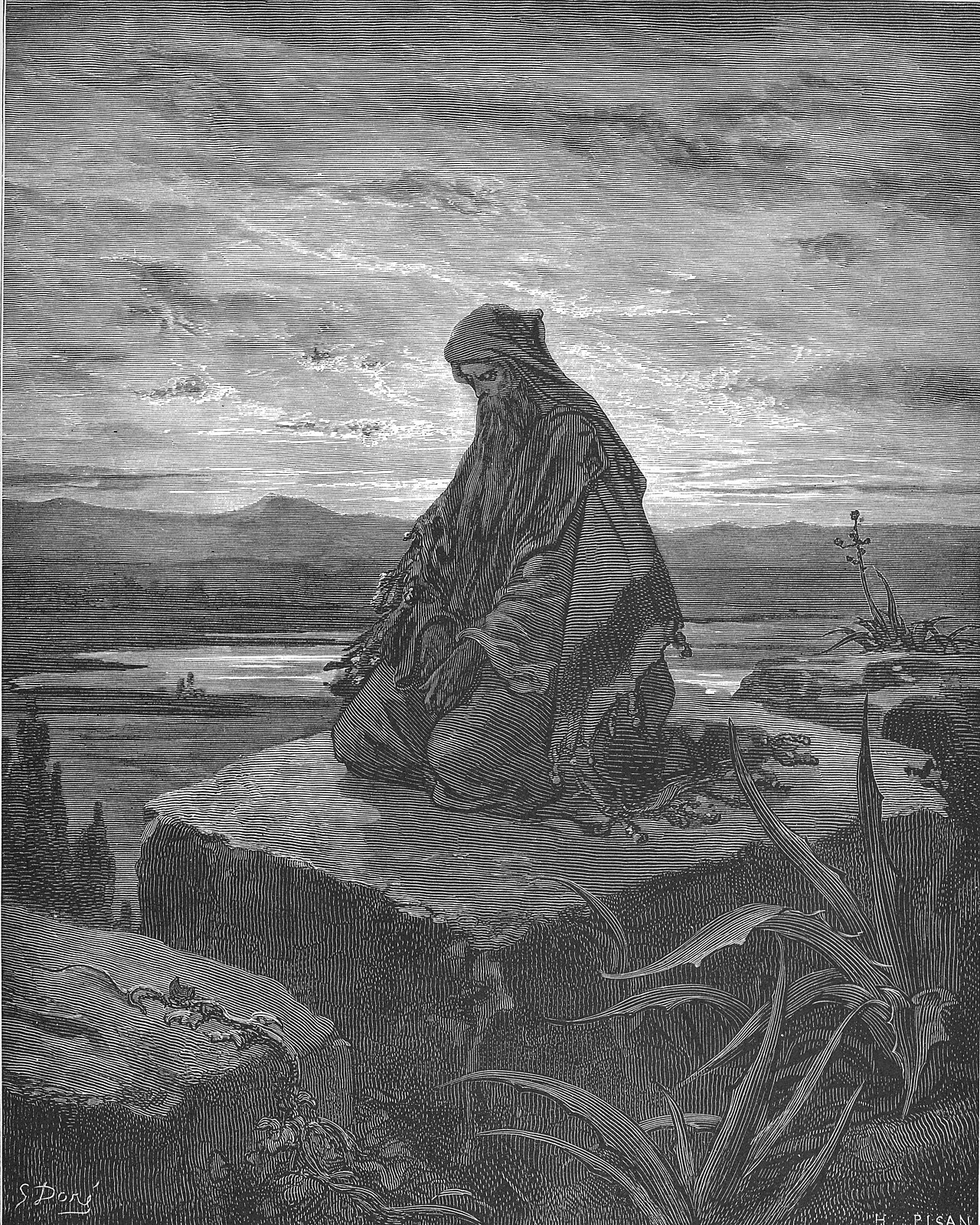
Isaiahchapter 29
24 verses · Isaiah · 8th century BC · The Prophets
Therefore the Lord said: “These people draw near to Me with their mouths and honor Me with their lips, but their hearts are far from Me. Their worship of Me is but rules taught by men.
Introduction
Isaiah, The Prophets, Isaiah Overview.
Isaiah spoke this chapter to Jerusalem in the years when Assyria's armies were closing on Judah. The city kept its festivals on time, and its people knew the right words for worship. The chapter sets that careful religion against what God sees in the heart, and it turns the city's own name into a warning. Listen for the pictures of sleep, of a dream and of a scroll that no one will read. Jesus quoted one sentence of this chapter to the religious teachers of His day, and a reader should find it.
Context
- Who
- Worshippers who said the right words every day without thinking about them
- What
- A woe on Jerusalem, called Ariel, that foretells its siege and sudden rescue and then exposes a worship of the lips alone.
- Where
- Jerusalem under siege, with the temple and its altar in view.
- When
- About 705 to 701 BC, as Assyria moved against Judah.
- Why
- To warn a city whose religion had become routine that God would act in a way its wise men could not explain, and to promise joy to the humble.
Historical context
Ariel is a pun with a blade in it. The word can mean lion of God, and it is also the term used for the hearth of the great altar, the burning top of the altar where the fire never went out. Isaiah calls Jerusalem Ariel, the city where sacrifices burn, and then says he will make her Ariel: a place of burning.
Show the rest of the historical context, 4 more paragraphs
The siege is described in engineering terms. God says he will camp against her all around, lay siege with a mound, and raise siege works. That is Assyrian practice exactly: a ramp of packed earth and rubble built up against the weakest stretch of wall so battering rams could be pushed to the top. One of those ramps still survives at Lachish, the Judean city Assyria took in 701 BC, and the assault on it is carved in detail on the palace reliefs from Nineveh.
The voice from the ground is a medium's voice. Isaiah says the city will speak low out of the dust, and her speech will whisper like one who consults a spirit, the thin, muttering sound a practitioner produced. Then, suddenly, the besieging armies become a dream: a hungry man dreams he is eating and wakes empty. Which is what happened outside those walls.
The scroll scene turns on how documents worked. A sealed roll could only be opened by an authorized party, and reading at all was a specialized skill. Isaiah gives the vision to a literate man, who says he cannot read it because it is sealed, and to an unlettered man, who says he cannot read. Between the two, nobody hears it, which is the point.
Then the verdict on their worship: this people draw near with their mouth and honor me with their lips, but their heart is far from me, and their fear of me is a commandment of men learned by rote. Followed by the potter's shop, shall the thing made say of its maker, he did not make me?
Significance
To hearers whose religion had become a routine performed correctly, God says he will do a marvelous work among them, and the wisdom of their wise men will perish. The professionals will be the last to understand.
Show the rest of the significance, 1 more paragraph
And the promise at the end goes to the people the professionals ignored. The deaf hear the words of the book, the blind see out of gloom, the meek increase their joy, and the poor rejoice in the Holy One of Israel.
This chapter in Jewish lifeWhat this chapter is in Jewish life and reading.
What is done
Two verses of this chapter close a Haftarah. In the Ashkenazi rite the Haftarah of the portion Shemot, which reads Exodus 1:1 to 6:1, is Isaiah 27:6 to 28:13 and then 29:22 to 29:23, as the site's table in src/lib/hebraic/readings.ts records it. The reading leaps over the rest of chapter 28 and almost all of this one to end on the God who redeemed Abraham and on Jacob's children hallowing His name. The same table records that the Sephardi rite reads Jeremiah 1:1 to 2:3 with that portion instead.
How it is read
Rashi is quoted here from The Judaica Press complete Tanach with Rashi, translated by A. J. Rosenberg, which Sefaria reports as CC-BY. The corpus carries no English for any other commentator on this chapter. Ariel is read three ways in the first note. Jonathan renders it the altar of the Lord, as Ezekiel 43:16 does, and Rashi gives the reason from Tractate Yoma 21b, the heavenly fire that lay like a lion on the altar. The Sages read it of the Temple building, narrow at the back and wide at the front (Rashi on Isaiah 29:1:1). The multitude that becomes dust is the army of Sennacherib (Rashi on Isaiah 29:5:1).
The sealed book of the eleventh and twelfth verses Rashi reads through the stargazers of Israel, who trusted in adjuring the heavenly princes by name. God exchanges the princes, so that fire answers "This is not mine" and the names no longer work (Rashi on Isaiah 29:10:1 and 29:12:1). The people who honour God with their lips while their heart is far off he reads through Jonathan as a people who raised themselves up (Rashi on Isaiah 29:13:1).
The fourteenth verse carries a teaching about learning. "The taking away of the sages of Israel is twice as hard as the destruction of the Temple and all the curses in Deuteronomy" (Rashi on Isaiah 29:14:1). The reason he gives is that the verse doubles the word for wonder. The potter and the clay answer the people who hide their counsel: clay cannot deny its maker (Rashi on Isaiah 29:16:1). The Haftarah of Shemot closes on the twenty-second and twenty-third verses. Rashi reads the first as the God who redeemed Abraham from Ur of the Chaldees (Rashi on Isaiah 29:22:1). He reads the second as Jacob seeing children who hallow the Name, "e. g., Hananiah, Mishael, and Azariah" (Rashi on Isaiah 29:23:1).
What the rabbis say
The corpus carries forty rabbinic locators on this chapter and the text of none, so each is cited by ref here and none is quoted or paraphrased. On the first verse it holds Aggadat Bereshit 56:1, Avot DeRabbi Natan 1:6, Berakhot 18b:1 and Eikhah Rabbah, Petichta 26. On the fourth verse it holds Ein Yaakov (Glick Edition), Rosh Hashanah 4:4, Ein Yaakov, Rosh Hashanah 4:3, Ein Yaakov, Sanhedrin 7:19 and Jerusalem Talmud Sanhedrin 7:10:10. On the fifth verse it holds Midrash Sekhel Tov, Shemot 9:9:1. On the sixth verse it holds Midrash Lekach Tov, Numbers 21:15:1. On the ninth verse it holds Midrash Tehillim 75:4 and Midrash Tehillim 75:5.
On the tenth verse it holds Bamidbar Rabbah 14:4, Bereshit Rabbah 17:5, Bereshit Rabbah 44:17 and Midrash Sekhel Tov, Bereshit 15:12:1. On the twelfth verse it holds Midrash Tehillim 119:31 and Otzar Midrashim, Midrash on Psalms, Addendum to Psalm 118 63. On the thirteenth verse it holds Tanna DeBei Eliyahu Rabbah 26:1. On the fourteenth verse it holds Eikhah Rabbah 1:37, Ein Yaakov (Glick Edition), Shabbat 20:1, Ein Yaakov, Shabbat 20:1 and Midrash Aggadah, Exodus 5:1:2. On the fifteenth verse it holds Aggadat Bereshit 67:1, Bamidbar Rabbah 1:1, Bamidbar Rabbah 2:10 and Bamidbar Rabbah 9:1.
On the nineteenth verse it holds Bamidbar Rabbah 11:1, Kohelet Rabbah 7:2:1, Midrash Aggadah, Leviticus 12:4:1 and Midrash Tanchuma Buber, Tazria 7:1. On the twenty-first verse it holds Midrash Lekach Tov, Exodus 2:14:1. On the twenty-second verse it holds Aggadat Bereshit 65:4, Aggadat Bereshit 84:2, Bamidbar Rabbah 2:13 and Bereshit Rabbah 63:2. On the twenty-third verse it holds Ein Yaakov (Glick Edition), Megillah 2:2, Jerusalem Talmud Berakhot 2:4:10, Megillah 17b:10 and Midrash Tanchuma Buber, Kedoshim 1:1. What each of them teaches is a saying of the rabbis, and it is reported as theirs wherever this site quotes one. The quotations wait on a fetch that carries the text.
Sources: Rashi, Rashi on Isaiah 29:1:1 to 29:24:1, The Judaica Press complete Tanach with Rashi, translated by A. J. Rosenberg, reported CC-BY; The Sefaria corpus, scripts/data/sources/sefaria/isaiah/29.json, the 40 Talmud and Midrash locators of this chapter; The site's own files, src/lib/hebraic/readings.ts, the Haftarah of Shemot (Ashkenazi, Isaiah 27:6 to 28:13 and 29:22 to 29:23), and src/data/bible/chapter-verse-counts.json for the verse count.
The heads below are this chapter's scenes. The numbered points under each are its verses.
Ariel Besieged: a Dream of Eating That Fades at Waking
Isaiah 29:1-2
the city of Ariel where David camped!: Ariel names Jerusalem, "the city of Ariel where David camped", and the older writers give the word two senses, lion of God or altar hearth. Then "I will constrain Ariel", and the city will be true to her name: "she will be like an altar hearth before Me".
Isaiah 29:1
“Wo - (compare the note at Isa 18:1). To Ariel - There can be no doubt that Jerusalem is here intended. The declaration that it was the city where David dwelt, as well as the entire scope of the prophecy, proves this.”
1 more voice on this verseWhat preachers and commentators have said about this verse, in their own words.
Isaiah 29:1
“The distress of Jerusalem foretold. Though Jerusalem be a strong city, as a lion, though a holy city, as a lion of God, yet, if iniquity be found there, woe be to it. It was the city where David dwelt; it was he that brought that to it which was its glory, and which made it a type of the gospel church, and his dwelling in it was typical of Christ's residence in his church.”
Matthew Henry · Commentary on the Whole Bible (1707-1721)puritan
she will be like an altar hearth: Ariel will be like an altar hearth, the fire pit of the great altar where the sacrifices burned. Adam Clarke reads the city as the seat of the fire of God, a fire that issues from it to consume his enemies. Mourning and lamentation replace the festivals of verse 1.
Isaiah 29:2
“There shall be heaviness and sorrow “There shall be continual mourning and sorrow” - Instead of your present joy and festivity. And it shall be unto me as Ariel “And it shall be unto me as the hearth of the great altar” - That is, it shall be the seat of the fire of God; which shall issue from thence to consume his enemies. See note on Isa 29:1 (note).”
Adam Clarke · Commentary on the Bible (1810-1826)evangelical
Isaiah 29:3-4
I will camp in a circle around you: The LORD takes the besieger's part: "I will camp in a circle around you". The city will "speak from the ground", the whisper of a medium calling up the dead. Gill and Delitzsch note that Jerusalem is brought to the kind of voice her law forbade in a medium.
Isaiah 29:3
“And I will camp against thee - That is, I will cause an army to pitch their tents there for a siege. God regards the armies which he would employ as under his control, and speaks of them as if he would do it himself (see the note at Isa 10:5). Round about - (כדוּר kadûr). As in a circle; that is, he would encompass or encircle the city.”
you will speak from the ground: Adam Clarke notes that Jews and pagans held the dead spoke from the ground in a thin, feeble voice, and he cites the ancient poets. Isaiah 8:19 names spiritists who whisper and mutter. Jerusalem, brought low into the dust, will speak like one of those spirits.
Isaiah 29:4
“And thy speech shall be low out of the dust “And from out of the dust thou shalt utter a feeble speech” - That the souls of the dead uttered a feeble stridulous sound, very different from the natural human voice, was a popular notion among the heathens as well as among the Jews. This appears from several passages of their poets; Homer, Virgil, Horace.”
Adam Clarke · Commentary on the Bible (1810-1826)evangelical
1 more voice on this verse
Isaiah 29:4
“Jerusalem shall be as a captive, humbled to the dust. Her voice shall come from the earth as that of the spirit-charmers or necromancers (Isa 8:19), faint and shrill, as the voice of the dead was supposed to be. Ventriloquism was doubtless the trick caused to make the voice appear to come from the earth (Isa 19:3).”
Jamieson, Fausset & Brown · Commentary Critical and Explanatory on the Whole Bible (1871)reformed
Isaiah 29:5-6
your many foes will be like fine dust: The siege is reversed: "your many foes will be like fine dust", and it comes "suddenly, in an instant". The LORD of Hosts comes "with thunder and earthquake and loud noise, with windstorm and tempest". The fall of Sennacherib's army in one night is recorded at Isaiah 37:36.
Isaiah 29:5
“Moreover - These verses Isa 29:5, Isa 29:7-8 contain a beautiful description of the destruction of the army of Sennacherib. Though they had laid the plan of a regular siege; though the city, in itself, would not be able to hold out against them, and all was alarm and conscious imbecility within; yet in an instant the siege would be raised, and the advancing hosts of the Assyrians would all be gone. The multitude of thy strangers - The multitude of the strangers that shall besiege thee; called ‘thy strangers,’ because they besieged, or oppressed thee.”
visited by the LORD of Hosts: Albert Barnes takes you in this verse as the Assyrian army itself, the prophet turning in mid vision from the city to address its besiegers. Thunder, earthquake, windstorm and consuming flame gather every sign that the LORD of Hosts has gone to war. Isaiah 37 records how that army fell.
Isaiah 29:7-8
All the nations that war against Ariel "will be like a dream, like a vision in the night", gone when one wakes. The picture is doubled, for "a hungry man dreams he is eating, then awakens still hungry". So it will be "for all the many nations".
as when a hungry man dreams: Jamieson, Fausset and Brown set the hungry man who dreams beside Psalm 73:20, where the wicked vanish like a dream when one awakens. The armies marching on Mount Zion dream of eating the city. They awaken hungry and parched.
Isaiah 29:8
“Their disappointment in the very height of their confident expectation of taking Jerusalem shall be as great as that of the hungry man who in a dream fancies he eats, but awakes to hunger still (Ps 73:20); their dream shall be dissipated on the fatal morning (Isa 37:36). soul--simply his appetite: he is still thirsty.”
Jamieson, Fausset & Brown · Commentary Critical and Explanatory on the Whole Bible (1871)reformed
1 more voice on this verse
Isaiah 29:8
“It shall even be ... - This is a most striking figure representing the earnest desire of the Assyrian to possess the city of Jerusalem, and his utter disappointment. The comparison is elegant and beautiful in the highest degree. It is performed up to great perfection; and is perfectly suited to illustrate the object in view. The same image substantially is found in the classic writers; and this, says Lowth, may, for beauty and ingenuity, fairly come in competition with one of the most elegant of Virgil (greatly improved from Homer, “Iliad” xxii.”
A Sealed Book, and Lips That Draw Near While Hearts Stay Far
Isaiah 29:9-10
be drunk, but not with wine: The people are told, "Stop and be astonished", and to "be drunk, but not with wine", for their stupor is the LORD's own doing. Verse 10 says "the LORD has poured out on you a spirit of deep sleep", and He has shut the eyes of the prophets.
a spirit of deep sleep: Poured out is the verb for pouring a drink offering, and Barnes reads the LORD as drenching his people with a spirit of deep sleep. He ties the verse to the commission at Isaiah 6:9-10. The seers whose office was sight now sleep with covered heads.
Isaiah 29:10
“Quoted by Paul, with variations from the Septuagint, Ro 11:8. Ps 69:23. eyes; the prophets, &c.--rather, "hath closed your eyes, the prophets; and your heads (Margin; see also Isa 3:2), the seers, He hath covered." The Orientals cover the head to sleep; thus "covered" is parallel to "closed your eyes" (Jud 4:19).”
Jamieson, Fausset & Brown · Commentary Critical and Explanatory on the Whole Bible (1871)reformed
2 more voices on this verse
Isaiah 29:10
“For the Lord hath poured out upon you a spirit of deep sleep,.... Gave them up to a stupid frame of spirit; to a reprobate mind, a mind void of judgment and sense; to judicial blindness and hardness of heart: this was remarkably fulfilled in the Jews, in the times of Christ and his apostles, who choosing darkness rather than the light of the Gospel, which shone around them, were righteously given up to such a temper of mind; and to nothing else can be imputed their obstinate rejection of the Messiah, against the most glaring light and evidence.”
Isaiah 29:10
“For the Lord hath poured out upon you - The word rendered ‘hath poured out’ (נסך nâsak) is usually referred to the act of pouring out a libation, or drink-offering in worship Exo 30:9; Hos 9:4; Isa 30:1. Here it means that Yahweh had, as it were, “drenched them” (Septuagint, πεπότικε pepotike) with a spirit of stupefaction. This is traced to God in accordance with the usual custom in the Bible, by which his providential agency is recognized in all events (see the notes at Isa 6:9-10).”
Cross references
Isaiah 29:10
- Quoted inRomans 11:8as it is written: “God gave them a spirit of stupor, eyes that could not see, and ears that could not hear, to this very day.”
'God hath given them the spirit of slumber' (w/ Deu 29:4; 'as it is written')
Isaiah 29:11-12
like the words sealed in a scroll: The whole vision is "like the words sealed in a scroll". One who can read it says, "I cannot, because it is sealed", and one who cannot read says, "I cannot read". Neither reaches the message, the one stopped by the seal and the other by his lack of learning.
Isaiah 29:11
“And the vision of all is become unto you as the words of a book that is sealed,.... The prophecies of all the prophets contained in the Scriptures; or all the prophecies in the book of Isaiah, concerning the Messiah, were no more seen, known, and understood, both by the priests and the people, than if they had been in a book, written, rolled up, and sealed.”
1 more voice on this verse
Isaiah 29:11
“The fulfilling of prophecy is the best exposition of it. The poor Gentiles shall then have divine revelation brought among them; and those that sat in darkness shall see a great light, those that were blind shall see out of obscurity; for the gospel was sent to them to open their eyes, Acts xxvi.”
Matthew Henry · Commentary on the Whole Bible (1707-1721)puritan
if the scroll is handed to one: John Gill observes that the man handed the scroll pleads only that he cannot read, with no word about the seal. The learned man of verse 11 had the skill and pleaded the seal. Both excuses leave the scroll unread.
Isaiah 29:12
“And the book is delivered to him that is not learned,.... Or that knows not a book or letters, as before, and so consequently cannot read, having never been put to school, or learned to read: saying, Read this, I pray thee; or "now" (w), at once, immediately: and he saith, I am not learned; he does not excuse himself on account of its being sealed, but on account of his want of learning; which shows the former was but an excuse.”
1 more voice on this verse
Isaiah 29:12
“Of all - Of all, your prophets. As a book - In which no man can read, while it is sealed up, as books then sometimes were, being made in the form of rolls.”
John Wesley · Explanatory Notes upon the Old Testament (1765)evangelical
Isaiah 29:13-14
"These people draw near to Me with their mouths and honor Me with their lips, but their hearts are far from Me". Jesus quotes this verse against the Pharisees at Matthew 15:8 and 9. So the LORD will "confound these people with wonder upon wonder".
Isaiah 29:13
“Wherefore the Lord said - This verse, with the following, is designed to denounce the divine judgment on their formality of worship. They kept up the forms of religion, but they witcheld the affections of their hearts from God; and he, therefore, says that he will proceed to inflict on them exemplary and deserved punishment. This people draw near me - That is, in the temple, and in the forms of external devotion. And with their lips do honor me - They professedly celebrate my praise, and acknowledge me in the forms of devotion.”
1 more voice on this verse
Isaiah 29:13
“He that is greater than the heart, and knows all things, knows that though they draw nigh to him with their mouth, and honour him with their lips, yet they are not sincere worshippers. To worship God is to make our approaches to him, and to present our adorations of him; it is to draw nigh to him as those that have business with him, with an intention therein to honour him.”
Matthew Henry · Commentary on the Whole Bible (1707-1721)puritan
Cross references
Isaiah 29:13
- Quoted inMark 7:6“Jesus answered them, “Isaiah prophesied correctly about you hypocrites, as it is written: ‘These people honor Me with their lips, but their hearts are far from Me.”
'This people honoureth me with their lips' ('well hath Esaias prophesied')
- Quoted inMatthew 15:8“‘These people honor Me with their lips, but their hearts are far from Me.”
'This people draweth nigh with their mouth' (Isaiah's prophecy of hypocrisy)
The wisdom of the wise will vanish: Wonder upon wonder recalls the strange work of the LORD at Isaiah 28:21. Jamieson, Fausset and Brown note that the wise are struck where they take most pride, their wisdom hidden when the people need it most. Paul quotes the line at First Corinthians 1:19.
Isaiah 29:14
“I will proceed to do - Hebrew, ‘I will add to do;’ that is, I will do it. For the wisdom of their wise men shall perish - I will bring calamity upon them which shall baffle all the skill and wisdom of their wise men. Shall be hid - That is, shall not appear; shall vanish. It shall not be sufficient to prevent the calamities that shall come upon the nation.”
2 more voices on this verse
Isaiah 29:14
From my youth up until now I have spent many years in writing various works and have always tried to teach my hearers the doctrine that I have been taught publicly in church. I have not followed the philosophers in their discussions but have preferred to acquiesce in the plain words of the apostles. For I have known that it is written, "I will destroy the wisdom of the wise and will bring to nothing the understanding of the prudent," and "the foolishness of God is wiser than men."
Jerome · written before 420 · LETTER 133.12patristic
Isaiah 29:14
“The "marvellous work" is one of unparalleled vengeance on the hypocrites: compare "strange work," Isa 28:21. The judgment, too, will visit the wise in that respect in which they most pride themselves; their wisdom shall be hid, that is, shall no longer appear, so as to help the nation in its distress (compare 1Co 1:19).”
Jamieson, Fausset & Brown · Commentary Critical and Explanatory on the Whole Bible (1871)reformed
Cross references
Isaiah 29:14
- Quoted in1 Corinthians 1:19For it is written: “I will destroy the wisdom of the wise; the intelligence of the intelligent I will frustrate.”
'I will destroy the wisdom of the wise' ('it is written')
Isaiah 29:15-16
those who dig deep to hide their plans: A woe falls on "those who dig deep to hide their plans from the LORD", who work in darkness. Isaiah answers with the potter and the clay, "You have turned things upside down, as if the potter were regarded as clay". Gill and Delitzsch trace the figure to Romans 9:20.
Isaiah 29:15
“The reference is to the secret plan which many of the Jewish nobles had of seeking Egyptian aid against Assyria, contrary to the advice of Isaiah. At the same time the hypocrite in general is described, who, under a plausible exterior, tries to hide his real character, not only from men, but even from God.”
Jamieson, Fausset & Brown · Commentary Critical and Explanatory on the Whole Bible (1871)reformed
You have turned things upside down: Barnes reads you have turned things upside down as the perversion of every truth in Jerusalem, where formality passed for faith and plans were hidden. The pottery that calls the potter senseless has reversed the order of creation. The clay sits in judgment on the potter.
Isaiah 29:16
“Surely your turning of things upside down - Your perversion of all things. They had no just views of truth. They deemed mere formality to be all that was required. They attempted to conceal their plans even from Yahweh; and everything in the opinions and practice of the nation had become perverted and erroneous. There has been much diversity in rendering this phrase.”
The Deaf Shall Hear and Lebanon Turn to a Fruitful Field
Isaiah 29:17-19
will not Lebanon become an orchard: In a very short time the order of things is reversed, and "Lebanon become an orchard". Then "the deaf will hear the words of the scroll", the scroll sealed in verse 11, and "the eyes of the blind will see". "The humble will increase their joy in the LORD".
Isaiah 29:17
“Is it not yet a very little while,.... In a short space of time, in a few years, what follows would come to pass; when there would be a strange change and alteration made in the world, and by which it would appear, that the Lord not only knows, but foreknows, all things: and Lebanon shall be turned into a fruitful field; the forest of Lebanon should be as Carmel.”
1 more voice on this verse
Isaiah 29:17
“Is it not yet a very little while - The idea here is, ‘you have greatly perverted things in Jerusalem. The time is at hand when there shall be “other” overturnings - when the wicked shall be cut off, and when there shall be poured out upon the nation such judgments that the deaf shall hear, and the blind see, and when those who have erred in spirit shall come to understanding’ Isa 29:18-24. And Lebanon shall be tutored into a fruitful field - This is evidently a proverbial expression, denoting any great revolution of things.”
the deaf will hear the words: Albert Barnes reads the deaf and the blind as the people who held the law of God and could make nothing of it. On that day the words of the scroll reach them. The deep darkness lifts, and their eyes see the truth clearly.
Isaiah 29:18
“Shall the deaf hear the words of the book - They who now have the law and do not understand it, the people who seem to be deaf to all that God says, shall hear and understand it. Shall see out of obscurity ... - That is, the darkness being removed, they shall see clearly the truth of God, and discern and love its beauty. Their eyes are now blinded, but then they shall see clearly.”
The humble will increase their joy: The humble renders the Hebrew anavim, which Albert Barnes takes as the oppressed and afflicted who bore their trials with faith. Increase is literally add in Hebrew. Their joy in the LORD, kept through distress, grows when the Holy One of Israel acts.
Isaiah 29:19
“The meek - The word ‘meek’ usually refers to those who are patient in the reception of injuries, but the Hebrew word used here (ענוים ‛ănâviym) means properly the oppressed, the afflicted, the unhappy Psa 9:13; Psa 10:12, Psa 10:17; Pro 3:34; Isa 11:4. It involves usually the idea of humility or “virtuous suffering” (compare Psa 25:9; Psa 37:11; Psa 69:33). Here it may denote the pious of the land who were oppressed, and subjected to trials. Shall increase - Margin, as in Hebrew, ‘Add.’ It means, that they should greatly rejoice in the Lord.”
2 more voices on this verse
Isaiah 29:19
“This intimates that even in their distress they kept up their joy in the Lord, but now they increased it. Note, Those who, when they are in trouble, can truly rejoice in God, shall soon have cause given them greatly to rejoice in him. When joy in the world is decreasing and fading joy in God is increasing and getting round.”
Matthew Henry · Commentary on the Whole Bible (1707-1721)puritan
Isaiah 29:19
“Meek - The humble and meek believers. Poor - Mean and despicable people, such as the Gentiles were in the opinion of the Jews, and such as the greatest part of the first Christians were.”
John Wesley · Explanatory Notes upon the Old Testament (1765)evangelical
Isaiah 29:20-21
the ruthless will vanish: In verse 20 "the ruthless will vanish", and verse 21 names them. They "indict a man with a word", they "ensnare the mediator at the gate", and they "with false charges deprive the innocent of justice". Wesley and Clarke take the gate here as the place of judgment.
Isaiah 29:20
“For the terrible one - The violent one (עריץ ‛ârı̂yts), the oppressor, who had exercised cruelty over them. This, I suppose, refers to the haughty among the Jews themselves; to those who held offices of power, and who abused them to oppress the poor and needy. And the scorner - (see Isa 28:14, Isa 28:22). Is consumed - Shall be entirely destroyed. And all that watch for iniquity - That is, who anxiously seek for opportunities to commit iniquity.”
who ensnare the mediator at the gate: To indict a man with a word renders a Hebrew phrase meaning to make a man a sinner, that is, to declare him guilty. John Wesley places the mediator at the gate, where the people gathered and the prophets gave their messages. The ruthless turned justice against the prophets.
Isaiah 29:21
“They put the worst construction upon what was said, and made it criminal by strained innuendoes. Those who consider how apt we all are to speak unadvisedly, and to mistake what we hear, will think it very unjust and unfair to make a man an offender for a word. (4.) They did all they could to bring those into trouble that dealt faithfully with them and told them of their faults.”
Matthew Henry · Commentary on the Whole Bible (1707-1721)puritan
2 more voices on this verse
Isaiah 29:21
“That make a man an offender - literally, ‘who cause a man to sin’ (מחטיאי machăṭı̂y'ēy); that is, who hold a man to be guilty, or a criminal.”
Isaiah 29:21
“For him - For God's faithful prophets and ministers. The gate - There the people used to assemble, both upon civil and sacred accounts, and there prophets used to deliver their prophecies. The just - The faithful ministers of God.”
John Wesley · Explanatory Notes upon the Old Testament (1765)evangelical
Isaiah 29:22-24
The LORD "who redeemed Abraham" speaks of the house of Jacob, and the shame is lifted: "No longer will Jacob be ashamed". When Jacob sees "his children around him", they will "sanctify the Holy One of Jacob". Then "the wayward in spirit will come to understanding".
Isaiah 29:22
“Who redeemed Abraham - As God redeemed Abraham from among idolaters and workers of iniquity, so will he redeem those who hear the words of the Book, and are humbled before him, Isa 29:18, Isa 29:19. Concerning the house of Jacob “The God of the house of Jacob” - I read אל El as a noun, not a preposition: the parallel line favors this sense; and there is no address to the house of Jacob to justify the other.”
Adam Clarke · Commentary on the Bible (1810-1826)evangelical
2 more voices on this verse
Isaiah 29:22
“Redeemed - From manifold dangers, and especially from idolatry. Jacob - The Israelites or posterity of Jacob, who had great cause to be ashamed, for their continued infidelity, shall at last be brought back to the God of their fathers, and to their Messiah.”
John Wesley · Explanatory Notes upon the Old Testament (1765)evangelical
Isaiah 29:22
“This is opposed to his being ashamed and waxing pale; when he is delivered from his contempts and dangers he shall not magnify himself, but sanctify the Holy One of Jacob. If God make our condition easy, we must endeavour to make his name glorious. Parents and children are ornaments and comforts indeed to each other when they join in sanctifying the name of God.”
Matthew Henry · Commentary on the Whole Bible (1707-1721)puritan
the work of My hands: Albert Barnes reads the work of My hands as the renewal of the nation by the agency of God alone, and he compares Ephesians 2:10. Jacob will see his children honor the name of the LORD. His shame ends in awe of the God of Israel.
Isaiah 29:23
“But when he seeth his children - The sense is, ‘he shall not be ashamed of his sons, for he shall see them henceforward walking in the ways of piety and virtue.’ The work of my hands - That is, this change Isa 29:17-19 by which the nation will be reformed, will be produced by the agency of God himself. The sentiment is in accordance with the doctrines of the Scriptures everywhere, that people are recovered from sin by the agency of God alone (compare Isa 60:21; Eph 2:10).”
1 more voice on this verse
Isaiah 29:23
“He seeth - When the believing seed of Jacob shall see those children, whom they have begotten to God, by the gospel, even the Gentiles. The work - The children, not of the flesh, but of the promise, whom I, by my almighty grace, have regenerated.”
John Wesley · Explanatory Notes upon the Old Testament (1765)evangelical
Jerome hears in those who grumble the murmuring of Israel in the wilderness, a people now ready to accept the instruction of the law. The Greek version adds a line in which stammering tongues learn to speak peace. The wayward in spirit come to understanding.
Isaiah 29:24
“They also that erred in spirit - (see Isa 29:9-10). Shall learn doctrine - When” this would occur the prophet does not state. It “may” be intended to denote the times of Hezekiah; or the times subsequent to the captivity; or possibly it may refer to the times under the Messiah. All that the prophet teaches is, that at some future period in the history of the Jews, there would be such a reform that they should be regarded as the worthy descendants of the pious patriarch Jacob.”
Keep studying
Places1
Words12
Subjects1
Sources for this chapter
The summary
Jamieson, Fausset & Brown, Commentary Critical and Explanatory; John Calvin, Commentaries; John Wesley, Notes on the Old Testament and Matthew Henry, Complete Commentary.
The exposition
Adam Clarke, Commentary on the Bible; Albert Barnes; Franz Delitzsch, Biblical Commentary on the Prophecies of Isaiah; George Adam Smith, The Book of Isaiah, Expositor's Bible; Jamieson, Fausset & Brown, Commentary Critical and Explanatory on the Whole Bible; Jerome, Commentary on Isaiah; John Calvin, Commentary on the Book of the Prophet Isaiah; John Gill; John Wesley, Explanatory Notes upon the Old Testament; Joseph Addison Alexander, Commentary on the Prophecies of Isaiah and Matthew Henry, Commentary on the Whole Bible.