
Isaiah 29:2
in Isaiah 29And I will constrain Ariel, and there will be mourning and lamentation; she will be like an altar hearth before Me.
BSB
The same verse in ASV and KJV ▾
ASV
then will I distress Ariel, and there shall be mourning and lamentation; and she shall be unto me as Ariel.
KJV
Yet I will distress Ariel, and there shall be heaviness and sorrow: and it shall be unto me as Ariel.
⋯
This verse in Isaiah 29
Commentary
8 notes on this verseThere shall be heaviness and sorrow “There shall be continual mourning and sorrow” - Instead of your present joy and festivity. And it shall be unto me as Ariel “And it shall be unto me as the hearth of the great altar” - That is, it shall be the seat of the fire of God; which shall issue from thence to consume his enemies. See note on Isa 29:1 (note).
This site's exposition
the city where David dwelt
on Isaiah 29:1-2
Ariel names Jerusalem by a word the older writers read two ways, the lion of God or the hearth of the altar, the city David pitched his camp against and then made his own. The Lord addresses her by the feast calendar itself, add ye year to year, let them kill sacrifices, the round of worship going on as usual while the threat gathers. Yet I will distress Ariel turns the city's own name against her: the altar hearth will now burn with grief, and Jerusalem shall be to the Lord as her own name describes.
The record, by era
The Church Fathers1 voice
(Chapter 19, verse 1, and following) Woe to Ariel, Ariel the city that David besieged. Year after year is added, the appointed feasts have come to an end. I will besiege Ariel, and she will be sad and mournful; she will be like an Ariel to me. I will encircle you like a sphere, and I will throw up a mound against you, and I will set up siege works against you.
The Medieval Church1 voice
The siege: and I will make a trench, namely, by the Chaldees: and lay siege against it (Ezek 4:2); and he intimates the taking of the city from its sadness: and it shall be in sorrow: my sighs are many (Lam 1:22). 654. Third, he …
The Puritans and the Awakening2 voices
), mourning and lamentation --so these two words are sometimes rendered. Those that are most merry and jovial are commonly, when they come to be in distress, most overwhelmed with heaviness and sorrow; their laughter is then turned into mourning.
quarantine:debris (2026-07-29) — leading-punctuation+unbalanced-parens
Yet I will distress Ariel,....
The Nineteenth Century1 voice
A commentator
Jamieson, Fausset & Brown1802–1910
Commentary Critical and Explanatory on the Whole Bible (1871)
proposed
Yet--rather, "Then." heaviness . . . sorrow--rather, preserving the Hebrew paronomasia, "groaning" and "moaning." as Ariel--either, "the city shall be as a lion of God," that is, it shall emerge from its dangers unvanquished; or "it shall be as the altar of burnt offering," consuming with fire the besiegers (Isa 29:6;
quarantine:debris (2026-07-29) — unbalanced-parens
1 more voice on this verse
The Nineteenth Century1 voice
A commentator
Albert Barnes1798–1870
Notes, Explanatory and Practical, on the Old and New Testaments (1832-1869)
proposed
Yet I will distress Ariel - The reference here is doubtless to the siege which God says Isa 29:3 he would bring upon the guilty and formal city. And there shall be heaviness and sorrow - This was true of the city in the siege of Sennacherib, to which this probably refers. Though the city was delivered in a sudden and remarkable manner (see the note at Isa 29:7-8), yet it was also true that it was reduced to great distress (see Isa. 36; 37) And it shall be unto me as Ariel - This phrase shows that in Isa 29:1 Jerusalem is called ‘Ariel,’ because it contained the great altar, and was the place of sacrifice. The word “Ariel” here is to be understood in the sense “of the hearth of the great altar;” and the meaning is, ‘I will indeed make Jerusalem like the great altar; I will make it the burning place of wrath where my enemies shall be consumed as if they were on the altar of burnt sacrifice.’ Thus in Isa 30:9, it is said of Yahweh that his ‘fire is in Zion, and his furnace in Jerusalem.’ This is a strong expression, denoting the calamity that was approaching; and though the main reference in this whole passage is to the distress that would come upon them in the invasion of Sennacherib, yet there is no impropriety in supposing that there was presented to the mind of the prophet in vision the image of the total ruin that would come yet upon the city by the Chaldeans - when the temple, the palaces, and the dwellings of the magnificent city of David would be in flames, and like a vast blazing altar consuming that which was laid upon it.
How the passage was read
What the Jewish commentators add
On the verses either side of this one
Woe to the altar, the altar which is built in the city in which David dwelt; because of the assembly of the armies which are gathering themselves together against her year by year, because the festivals shall cease.
This section is reception history: how the passage was read and kept in the Jewish tradition. Where a reading parts from an essential of the Christian faith, the section says so at that point.
Texts and citation data: Sefaria; each excerpt follows its version’s licence. 3 further sources are cited on this chapter that carry no English text this site may quote or only restate the verse.
The words behind it
8 Hebrew wordsEvery Hebrew word of this verse in the order it stands, with what it means and the door to its own study. The last column counts the times a word stands in the whole Bible: the rarer the word, the more the places it appears belong together.
| Hebrew | Sound | Meaning | Word study | In the Bible |
|---|---|---|---|---|
| וַהֲצִיק֖וֹתִי | vahatzikoti | and I will bring distress | H6693 → | 11 times |
| לַֽאֲרִיאֵ֑ל | laariel | to Ariel | H740 → | 6 times |
| וְהָיְתָ֤ה | vehayetah | and it will be | H1961 → | 3559 times |
| תַֽאֲנִיָּה֙ | taaniyah | mourning | H8386 → | |
| וַֽאֲנִיָּ֔ה | vaaniyah | and lamentation | H592 → | |
| וְהָ֥יְתָה | vehayetah | and it will be | H1961 → | 3559 times |
| לִּ֖י | li | to me | ||
| כַּאֲרִיאֵֽל׃ | kaariel | like Ariel | H740 → | 6 times |
וַהֲצִיק֖וֹתִיand I will bring distress
vahatzikotiH6693 →11 times
לַֽאֲרִיאֵ֑לto Ariel
laarielH740 →6 times
וְהָיְתָ֤הand it will be
vehayetahH1961 →3559 times
תַֽאֲנִיָּה֙mourning
taaniyahH8386 →
וַֽאֲנִיָּ֔הand lamentation
vaaniyahH592 →
וְהָ֥יְתָהand it will be
vehayetahH1961 →3559 times
לִּ֖יto me
li
כַּאֲרִיאֵֽל׃like Ariel
kaarielH740 →6 times
A shaded row is a word that stands 400 times or fewer in the Bible.
The walk
8 stopsEach card is a verse this one points to, and under it the verses that one points to in turn. Where several paths arrive at the same place, that place is listed first: the text keeps returning to it.
Through
Isaiah 34:6The sword of the LORD is bathed in blood. It drips with fat—with the blood of lambs and goats, with the fat of the kidneys of rams. For the LORD has a sacrifice in…
it leads to
- Isaiah 63:1
Who is this coming from Edom, from Bozrah with crimson-stained garments? Who is this robed in splendor, marching in the greatness of His strength? “It is I, proclaiming vindication, mighty to save.”
- Jeremiah 49:13
For by Myself I have sworn, declares the LORD, that Bozrah will become a desolation, a disgrace, a ruin, and a curse, and all her cities will be in ruins forever.”
- Isaiah 63:1
Through
Lamentations 2:5The Lord is like an enemy; He has swallowed up Israel. He has swallowed up all her palaces and destroyed her strongholds. He has multiplied mourning and lamentation for the Daughter of Judah.
it leads to
- Lamentations 2:2
Without pity the Lord has swallowed up all the dwellings of Jacob. In His wrath He has demolished the fortified cities of the Daughter of Judah. He brought to the ground and defiled her…
- 2 Kings 25:9
He burned down the house of the LORD, the royal palace, and all the houses of Jerusalem—every significant building.
- Jeremiah 30:14
All your lovers have forgotten you; they no longer seek you, for I have struck you as an enemy would, with the discipline of someone cruel, because of your great iniquity and your numerous…
- Lamentations 2:4
He has bent His bow like an enemy; His right hand is positioned. Like a foe He has killed all who were pleasing to the eye; He has poured out His wrath like fire…
- Jeremiah 52:13
He burned down the house of the LORD, the royal palace, and all the houses of Jerusalem—every significant building.
- Lamentations 2:2
Through
Isaiah 17:14In the evening, there is sudden terror! Before morning, they are no more! This is the portion of those who loot us and the lot of those who plunder us.
it leads to
- 2 Kings 19:35
And that very night the angel of the LORD went out and struck down 185,000 men in the camp of the Assyrians. When the people got up the next morning, there were all the…
- 2 Kings 19:35
Where this verse is studied
On this page
About Isaiah
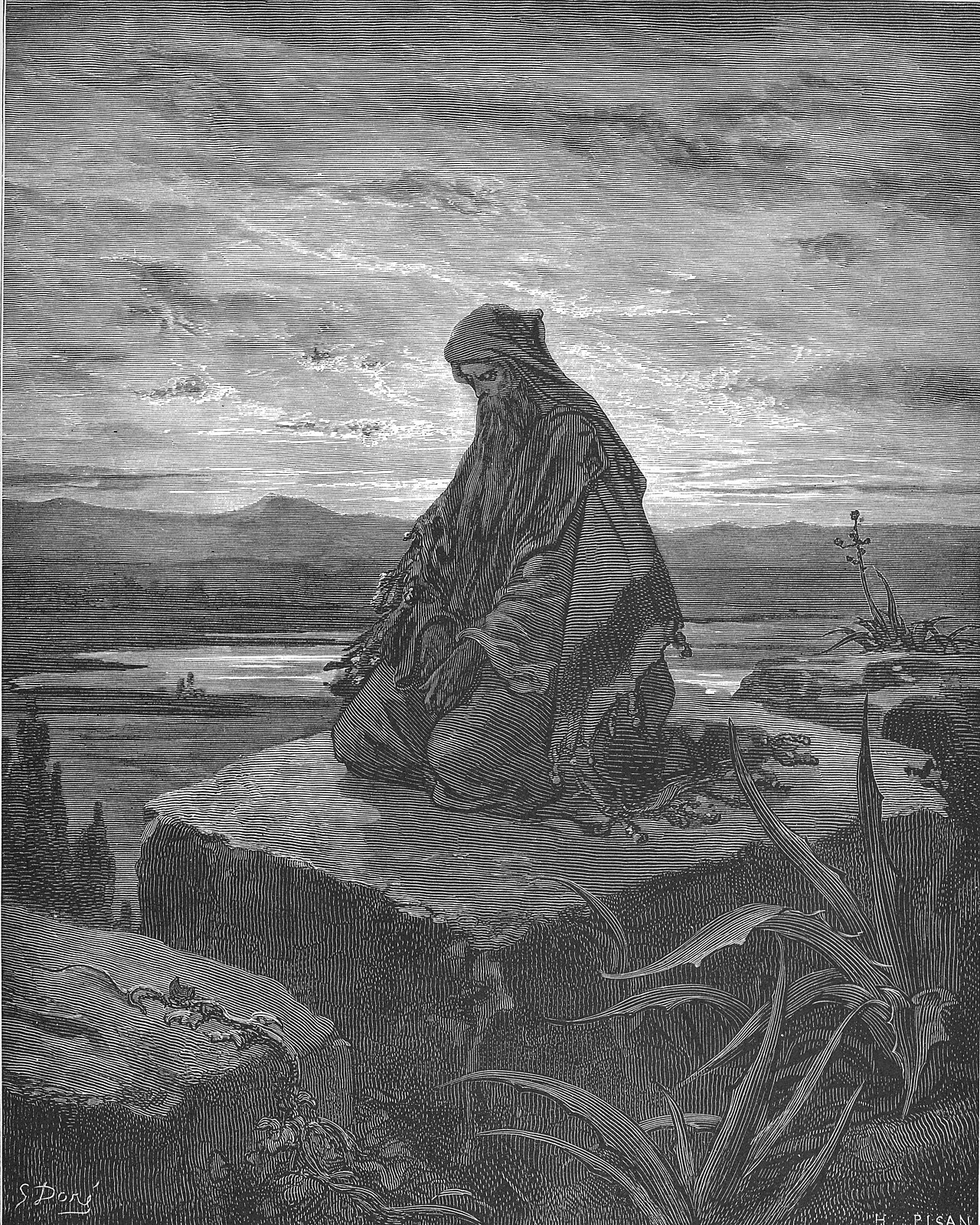
This page draws on Adam Clarke, Commentary on the Bible; Albert Barnes, Notes on the Book of Isaiah; Albert Barnes, Notes, Explanatory and Practical, on the Old and New Testaments (1832-1869); Jamieson, Fausset & Brown, Commentary Critical and Explanatory on the Whole Bible; Jerome, Commentary on Isaiah; John Gill, Exposition of the Old Testament (1748-1763); Matthew Henry, Commentary on the Whole Bible and Thomas Aquinas, Commentary on Isaiah.