
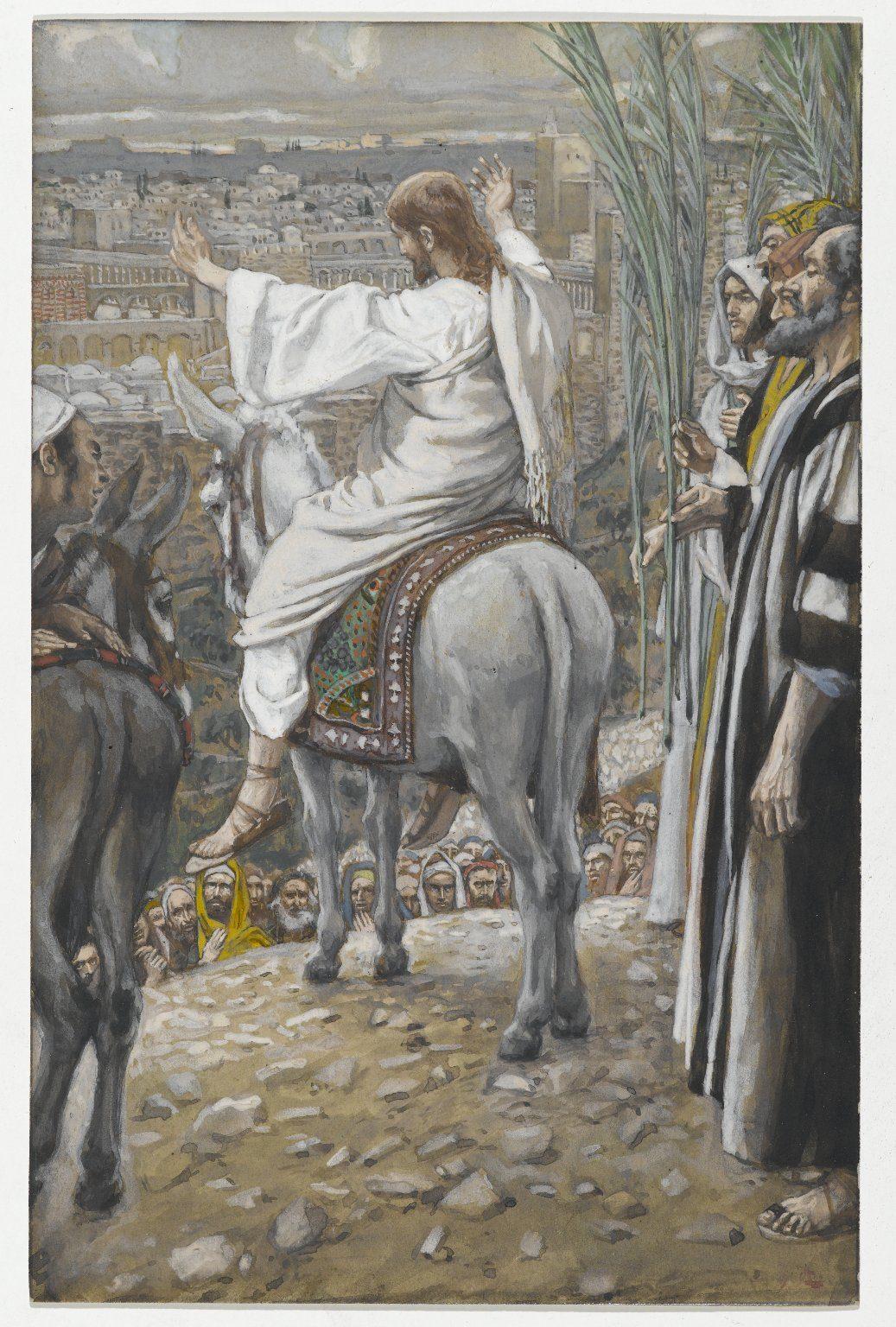
James Tissot, The Lord Wept, 1886 to 1894. Public domain.
Luke 9:51 · Subject · Featured Study
The Journey to Jerusalem in Luke
Luke follows Jesus on His last road, from Galilee to Jerusalem.
Jesus set out knowing that the road ended at a cross.
Nevertheless, I must keep going today and tomorrow and the next day, for it is not admissible for a prophet to perish outside of Jerusalem.
Nevertheless, I must keep going today and tomorrow and the next day, for it is not admissible for a prophet to perish outside of Jerusalem.
- Book
- Luke
- Hold in memory
- Luke 9:51, Luke 13:33
Summary
From the end of Luke 9, Jesus is on His way to Jerusalem, and Luke never lets the reader forget it. Much of His teaching in this Gospel is given on the way.
- The Good Samaritan, the lost son and Zacchaeus all belong to this part of Luke.
- Luke opens the road with the day of His ascension, and readers have argued over the word.
- Matthew Henry matched part of the road to the Feast of Dedication in winter.
He Set Out for Jerusalem
Luke opens the road with a verse that names both its goal and its reason.
As the day of His ascension approached, Jesus resolutely set out for Jerusalem.Luke ties the start of the road to the end of Jesus' time on earth.
On the mountain of the transfiguration Moses and Elijah had already spoken with Jesus about the departure He would accomplish at Jerusalem (Luke 9:31).
J. C. Ryle saw in the verse Jesus' steady resolve toward His own death. The betrayal, the trial and the cross lay before His mind, Ryle wrote, and He never flinched from the work.
The Travel Notices
The notices fall at the turns of the story, from the Samaritan village to the Mount of Olives.
Eight notices keep Jerusalem in view from Luke 9 to Luke 19.
| Notice | What Luke says | What follows |
|---|---|---|
| Luke 9:51 | the road begins | messengers sent into a Samaritan village |
| Luke 9:53 | the Samaritans refuse Him because He is heading for Jerusalem | the cost of following Him |
| Luke 13:22 | He teaches in towns and villages on His way toward Jerusalem | the narrow door |
| Luke 13:33 | the Pharisees warn Him about Herod | His lament over the city |
| Luke 17:11 | He passes between Samaria and Galilee on His way | the ten lepers |
| Luke 18:31 | Jesus tells the Twelve that the prophets' words about Him will be fulfilled in Jerusalem | the blind man near Jericho |
| Luke 19:11 | He is near Jerusalem, and the people expect the kingdom at once | the parable of the ten minas |
| Luke 19:28 | He goes on ahead of the crowd, up to Jerusalem | the descent from the Mount of Olives |
Luke 19:11, Luke 19:28
The road runs through Samaria to Jericho and up to the villages on the Mount of Olives.
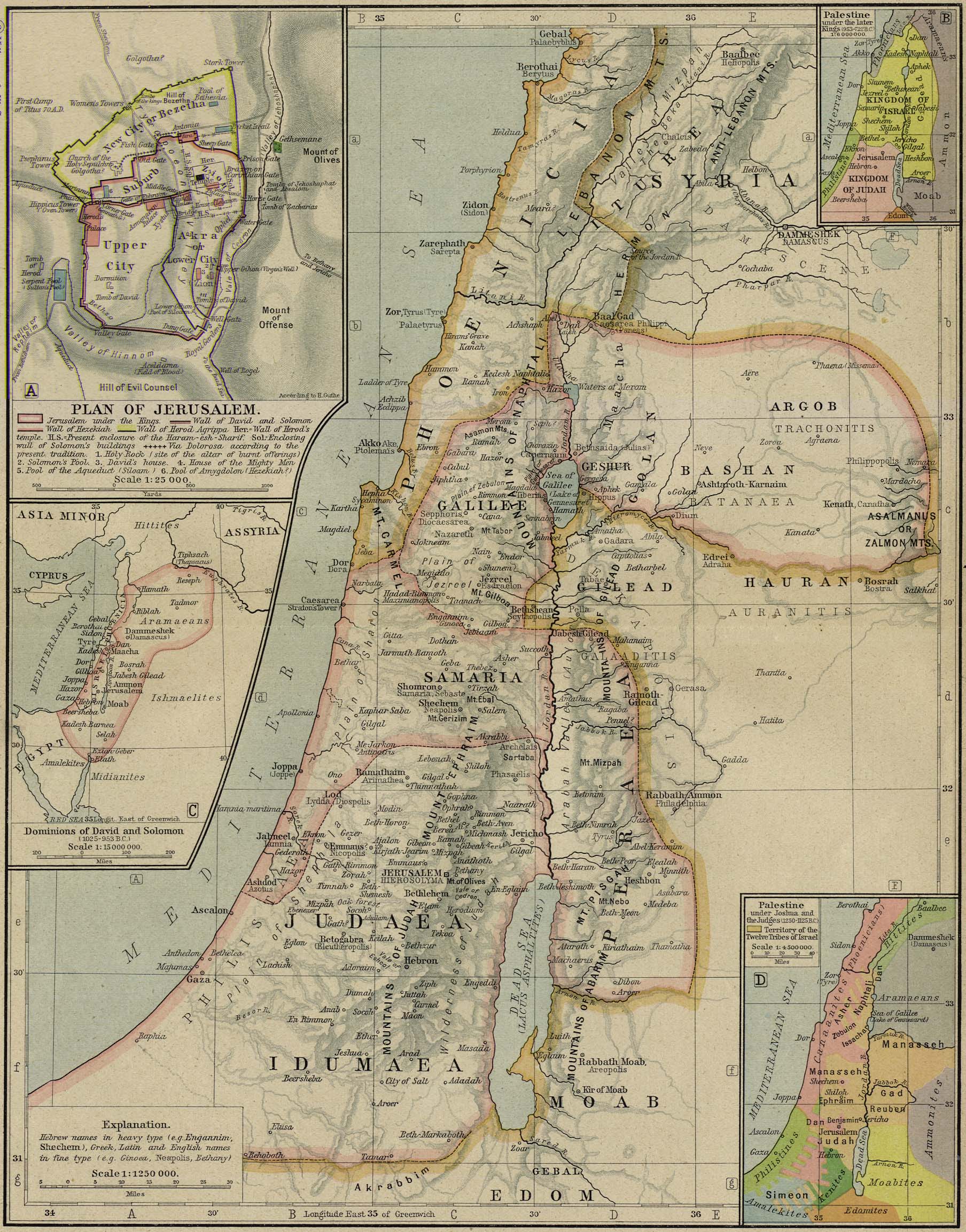
- Located: the site is known
- Identified: the point stands for an area, or is rounded
- Proposed: one candidate among several
- The route, in the order the text gives
- 1Samaria, A Samaritan village refuses Him, Luke 9:52 to 53
- 2Jericho, The blind man healed and Zacchaeus called, Luke 18:35 and Luke 19:1
- 3Bethany, The village on the Mount of Olives, Luke 19:29
- 4?Bethphage, Two disciples sent for the colt, Luke 19:29
- 5Jerusalem, Jesus sees the city and weeps over it, Luke 19:41
Base map: Reference map of ancient Palestine, Rand McNally reference map (1926), public domain. Places with a place page stand at its coordinates and the others at the point cited for each, set on the plate by Jerusalem and Damascus, as the plate prints them.
Bethphage stands at et-Tur, the site OpenBible.info ranks first with a score of 336 of 1,000.
One Road or Many Visits
Readers differ over whether these chapters of Luke follow one road in order.
One last road, told in orderHeinrich Meyer, Critical and Exegetical Commentary on the New Testament (1873), on Luke 10:1 and Luke 10:17
Meyer argued against Hermann Olshausen that the return of the seventy-two does not prove Luke had dropped the order of events on the road.
The objection: Olshausen, as Meyer reports him, took the words after this at Luke 10:1 as no mark of time and the passage as a fragment from an earlier period.
Teaching from other times gathered on the roadAdam Clarke, Commentary on the Bible (1832), on Luke 9:57
Clarke judged that the meeting of Luke 9:57 took place at Capernaum, as Matthew tells it, and not on the way to Jerusalem.
The objection: Luke keeps the road in view through the whole section, up to Luke 19:28.
More than one visit, matched to John's feastsAdam Clarke, Commentary on the Bible (1832), on Luke 9:53; Matthew Henry, Commentary on the Whole Bible (1710), on Luke 13:22
Clarke tied the Samaritan refusal of Luke 9:53 to the Feast of Tabernacles (John 7:2). Henry tied the travels of Luke 13:22 to the Feast of Dedication, which was in winter (John 10:22).
The objection: Luke names no feast between the start of the road and the Passover of Luke 22:1.
Teaching on the Road
Many parables and meetings that only Luke records stand along the road.
THE GOOD SAMARITAN
A Samaritan cares for a man beaten on the road from Jerusalem to Jericho.
THE RICH FOOL
A rich man plans bigger barns on the night his life is required of him.
THE LOST SON
A father runs to welcome home the son who wasted his share.
THE RICH MAN AND LAZARUS
A rich man in torment sees the beggar who lay at his gate at Abraham's side.
THE TAX COLLECTOR'S PRAYER
Two men pray in the temple, and the one who begs for mercy goes home justified.
ZACCHAEUS
A chief tax collector of Jericho receives Jesus into his house.
The lost son, The rich man and Lazarus, The tax collector's prayer, Zacchaeus
Luke places all six between the start of the road and its last notice (Luke 19:28).
Why the Road Ends in Jerusalem
Jesus answered a threat with a word about where a prophet must die.
Some Pharisees told Jesus to leave, because Herod wanted to kill Him, and Jesus called Herod a fox (Luke 13:31 to 32).
Albert Barnes read the answer as calm resolve. Jesus would leave Herod's land when His time came, because He was going up to Jerusalem to die.
Theophylact explained that the saying forced nothing on the people of Jerusalem. Jesus spoke of the city's thirst for the prophets' blood, as a man might say of a road where a robber lurks that it will see bloodshed.
O Jerusalem, Jerusalem, who kills the prophets and stones those sent to her, how often I have longed to gather your children together as a hen gathers her chicks under her wings, but you were unwilling!Jesus turns from Herod's threat to grief over the city that would kill Him.
The Word for His Taking Up
Bede, Albert Barnes and Bishop Pearce read Luke's rare noun for His taking up in three ways.
The noun, analēmpsis, stands only here in the New Testament, and the Berean text renders it ascension.
The time of His passionBede, On the Gospel of Luke (735), on Luke 9:51; John Wesley, Explanatory Notes upon the New Testament (1755), on Luke 9:51
Bede read the day of His taking up as the time of His passion, which drew near as Jesus came step by step toward Jerusalem. John Wesley also read it as the passion, and he wrote that Luke looks through it to the glory that followed.
The objection: Albert Barnes noted that the word means a removal from a lower to a higher place.
His ascension to heavenAlbert Barnes, Notes, Explanatory and Practical, on the Old and New Testaments (1832 to 1869), on Luke 9:51
Barnes took the word as the ascension of Jesus and pointed to the same language in Acts 1:11 and Acts 1:22. He added that Jesus resolved to go to Jerusalem and die, and so chose to give His life.
The objection: Bishop Pearce, as Adam Clarke reports him, held that the verb before it marks a time already completed, which the ascension was not.
His withdrawing from Judea came to an endBishop Pearce, as reported by Adam Clarke, Commentary on the Bible (1832), on Luke 9:51
Pearce read the word as Jesus retiring or withdrawing Himself. The time had come when Jesus would no longer keep away from Judea and Jerusalem, as He had done until His work was done.
The objection: the noun names a taking up, and Luke's Gospel ends with Jesus carried up into heaven (Luke 24:51).
He Wept Over the City
Jesus grieved for the city that would reject Him.
As Jesus approached Jerusalem and saw the city, He wept over it and said, “If only you had known on this day what would bring you peace! But now it is hidden from your eyes.Jesus speaks of the city's coming fall even as He weeps over it.
Matthew Henry placed the moment on the descent from the Mount of Olives, where the whole city came into view. He noted that we never read that Jesus laughed, but we often find Him in tears.
Cyril of Alexandria wrote on why Luke records the tears at all.
“For Christ had compassion upon the Jews, who wills that all men should be saved. Which had not been plain to us, were it not revealed by a certain mark of His humanity. For tears poured forth are the tokens of sorrow.”
Cyril of Alexandria · Catena Aurea by Aquinas · on Luke 19:41Patristic
Sources
Scripture is the Berean Standard Bible.
- J. C. Ryle, Expository Thoughts on the Gospels: Luke (1858), on Luke 9:51 to 56.
- Bede, On the Gospel of Luke (735), on Luke 9:51.
- Albert Barnes, Notes, Explanatory and Practical, on the Old and New Testaments (1832 to 1869), on Luke 9:51 and Luke 13:33.
- John Wesley, Explanatory Notes upon the New Testament (1755), on Luke 9:51.
- Adam Clarke, Commentary on the Bible (1832), on Luke 9:51, Luke 9:53, Luke 9:57 and Luke 13:22, with Bishop Pearce on Luke 9:51.
- Matthew Henry, Commentary on the Whole Bible (1710), on Luke 13:22 and Luke 19:41.
- Theophylact of Ohrid (1107), on Luke 13:33, in Thomas Aquinas, Catena Aurea (1264)
- Cyril of Alexandria (444), on Luke 19:41, in Thomas Aquinas, Catena Aurea (1264)
- Heinrich August Wilhelm Meyer, Critical and Exegetical Commentary on the New Testament, on Luke 10 (1873)
- OpenBible.info, Bible Geocoding Data, ancient.jsonl, the identifications of Bethphage.
Keep Studying
Studies9
People and groups3
Go further8