
Romans 3:24
in Romans 3and are justified freely by His grace through the redemption that is in Christ Jesus.
BSB
The same verse in ASV and KJV ▾
ASV
being justified freely by his grace through the redemption that is in Christ Jesus:
KJV
Being justified freely by his grace through the redemption that is in Christ Jesus:
⋯
This verse in Romans 3
Commentary
21 notes on this verseTherefore the righteousness of God, coming through faith in Jesus Christ to all who believe, whether they be Jews or Greeks, justifies them once cleansed of their former crimes, and makes them capable of the glory of God: and this he does not from their merits, nor for their works, but freely bestows glory upon those who believe. "Through the redemption," he says, "which is in Christ Jesus." Let us consider more attentively what is meant by the redemption which is in Christ Jesus.
This site's exposition
justified freely by His grace
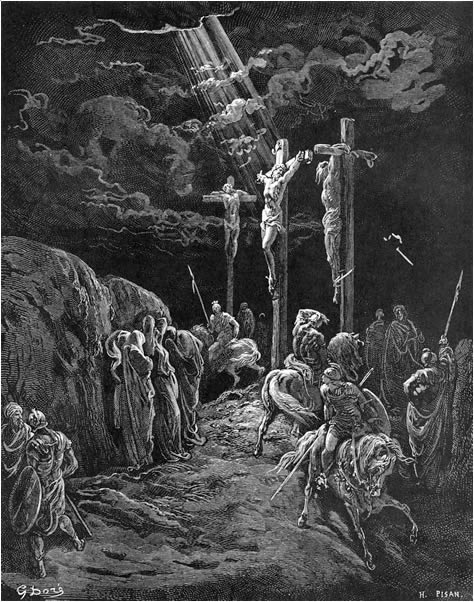
Three words are stacked in one verse, justified, grace and redemption, and freely is dorean, given without cause. Redemption is apolytrosis, the ransom paid to release a captive, the word a marketplace used for buying a slave out of slavery. The whole of it is in Christ Jesus.
The record, by era
The Church Fathers3 voices
They are justified freely because they have not done anything nor given anything in return, but by faith alone they have been made holy by the gift of God. Paul testifies that the grace of God is in Christ, because we have been redeemed by …
Grace is the glory of God, not the merit of him who has been freed.
"Being justified freely by His grace through the redemption that is in Christ Jesus: Whom God hath set forth to be a propitiation through faith in His blood, to declare His righteousness." See by how many proofs he makes good what was said. First, from the worthiness of the person, for it is not a man who doeth these things, that He should be too weak for it, but God all-powerful. For it is to God, he says, that the righteousness belongs. Again, from the Law and the Prophets. For you need not be afraid at hearing the "without the Law," inasmuch as the Law itself approves this. Thirdly, from the sacrifices under the old dispensation. For it was on this ground that he said, "In His blood," to call to their minds those sheep and calves. For if the sacrifices of things without reason, he means, cleared from sin, much more would this blood. And he does not say barely "redemption," but "entire redemption," to show that we should come no more into such slavery. And for this same reason he calls it a propitiation, to show that if the type had such force, much more would the reality display the same. But to show again that it was no novel thing or recent, he says, "fore-ordained;" and by saying God "fore-ordained," and showing that the good deed is the Father's, he showeth it to be the Son's also. For the Father "fore-ordained," but Christ in His own blood wrought the whole aright.
The Medieval Church2 voices
But do not despair. All are justified freely by the grace of God, and this grace comes through redemption, that is, through the complete liberation accomplished by Christ, for He justified us by giving Himself as a ransom for us.
Since from the beginning Christ was most holy, he could not advance in holiness for himself. He merited, however, for us, who by his merit are justified through grace, advance in justice, and are crowned with eternal glory. And through this, all our merits are …
14 more voices on this verse
The Medieval Church1 voice
Consequently, because all have sinned and cannot of themselves be justified, they need some other cause to make them just. This cause he indicates when he continues, being justified. First, he shows that such justification exists without the law, i.e., that it does not come …
The Puritans and the Awakening4 voices
That word of God took hold of my heart, Ye are justified freely by His grace, through the redemption that is in Christ Jesus. Rom. iii. 24. But oh! what a turn it made upon me!
By his grace - Not their own righteousness or works. Through the redemption - The price Christ has paid. Freely by his grace - One of these expressions might have served to convey the apostle's meaning; but he doubles his assertion, in order to give us the fullest conviction of the truth, and to impress us with a sense of its peculiar importance.
4 ), but there was a reason; he saw that what he did prospered. There was something in Joseph to invite that grace; but the grace of God communicated to us comes freely, freely; it is free grace, mere mercy; nothing in us to deserve such favours: no, it is all through the redemption that is in Jesus Christ.
quarantine:debris (2026-07-29) — leading-citation-number+unbalanced-parens
Being justified freely by his grace,.... The matter of justification is before expressed, and the persons that share in this blessing are described; here the several causes of it are mentioned.
The Nineteenth Century9 voices
Being justified freely by his grace - So far from being able to attain the glory of God by their obedience, they are all guilty: and, to be saved, must be freely pardoned by God’s grace; which is shown to them who believe, through the redemption, απολυτρωσεως, the ransom price, which is in the sacrifice of Christ Jesus. The original is compounded of απο, from, and λυτροω, I redeem, and properly means the price laid down for the redemption of a captive.
A commentator
Jamieson, Fausset & Brown1802–1910
Commentary Critical and Explanatory on the Whole Bible (1871)
proposed
justified freely--without anything done on our part to deserve. by his grace--His free love. through the redemption that is in Christ Jesus--a most important clause; teaching us that though justification is quite gratuitous, it is not a mere fiat of the divine will, but based on a "Redemption," that is, "the payment of a Ransom," in Christ's death.
quarantine:debris (2026-07-29) — starts-lowercase
A commentator
Charles Spurgeon1834–1892
The Metropolitan Tabernacle Pulpit, Sermon No. 3038: “Justice Vindicated And Righteousness Exemplified” (lightly modernized text, CCEL edition) · Written before 1892.
proposed
THE death of our Lord Jesus Christ answered many valuable purposes. It manifested the manifold Wisdom of God. To angels in Heaven and to saints on earth, God never appeared so infinitely wise as in the ordaining of the plan of salvation by the substitution of His Son for guilty sinners. That death also revealed God's amazing love. It proclaimed to astonished worlds how "God so loved the world, that He gave His only begotten Son, that whoever believes in Him should not perish, but have everlasting life." The Atonement of Christ answered the purpose, moreover, of purifying His people.
THE hill of comfort is the hill of calvary; the house of consolation is builded with the wood of the cross; the temple of heavenly cordials is founded upon the riven rock, riven by the spear which pierced its side. No scene in sacred history ever gladdens the soul like the scene on Calvary. “Is it not strange, the darkest hour That ever dawn’d on sinful earth Should touch the heart with softer power For comfort, than an angel’s mirth? That to the cross the mourner’s eye should turn, Sooner than where the stars of Bethlehem burn?”
THE hill of comfort is the hill of calvary; the house of consolation is builded with the wood of the cross; the temple of heavenly cordials is founded upon the riven rock, riven by the spear which pierced its side. No scene in sacred history ever gladdens the soul like the scene on Calvary. “Is it not strange, the darkest hour That ever dawn’d on sinful earth Should touch the heart with softer power For comfort, than an angel’s mirth? That to the cross the mourner’s eye should turn, Sooner than where the stars of Bethlehem burn?” Nowhere does the soul ever find such consolation as on that very spot where misery reigned, where woe triumphed, where agony reached its climax. There grace hath dug a fountain, which ever gusheth with waters pure as crystal, each drop capable of alleviating the woes and the agonies of mankind. Ye have had your seasons of woe, my brethren and my sisters in Christ Jesus; and ye will confess it was not at Olivet that ye ever found comfort, not on the hill of Sinai, nor on Tabor; but Gethsemane, Gabbatha, and Golgotha have been a means of comfort to you. The bitter herbs of Gethsemane have often taken away the bitters of your life; the scourge of Gabbatha hath often scourged away your cares, and the groans of Calvary have put all other groans to flight. We have, this morning, then, a subject which I trust may be the means of comforting God’s saints, seeing it takes its rise at the cross, and thence runs on in a rich stream of perennial blessing to all believers. You note, we have in our text, first of all, the redemption of Christ Jesus; secondly, the justification of sinners flowing from it; and then thirdly, the manner of the giving of this justification, “freely by his grace.” I. First, then, we have THE REDEMPTION THAT IS IN OR BY CHRIST JESUS. The figure of redemption is very simple, and has been very frequently used in Scripture.
A commentator
Charles Spurgeon1834–1892
The Metropolitan Tabernacle Pulpit, Sermon No. 3038: “Justice Vindicated And Righteousness Exemplified” (lightly modernized text, CCEL edition) · Written before 1892.
proposed
THE death of our Lord Jesus Christ answered many valuable purposes. It manifested the manifold Wisdom of God. To angels in Heaven and to saints on earth, God never appeared so infinitely wise as in the ordaining of the plan of salvation by the substitution of His Son for guilty sinners. That death also revealed God's amazing love. It proclaimed to astonished worlds how "God so loved the world, that He gave His only begotten Son, that whoever believes in Him should not perish, but have everlasting life." The Atonement of Christ answered the purpose, moreover, of purifying His people. That He might sanctify the people by His own blood, He suffered outside the camp. He loved His Church and gave Himself for it, we know, "that He might present it to Himself a glorious Church, not having spot, or wrinkle, or any such thing." The Cross has also been the great battering-ram for breaking down the middle wall of partition between Jew and Gentile. It is by Christ's blood that we are made one. "Now therefore you are no more strangers and foreigners, but fellow citizens with the saints, and of the household of God." Caste is abolished and invidious distinctions are set aside. There is no longer in Christ Jesus barbarian, Scythian, bond or free, circumcised or uncircumcised, but Christ is All-in-All. That same atoning Sacrifice also broke down the wall which separated both Jew and Gentile from God—"that He might reconcile both unto God in one body by the Cross, having slain the enmity thereby." The alienation prevailed till the reconciliation was effected by the precious blood of Jesus. We remain enemies in our minds by wicked works until we see the great love with which He loved us, and then that love melts our heart and makes us friends ofGod.
A commentator
Charles Spurgeon1834–1892
The Metropolitan Tabernacle Pulpit, Sermon No. 3488: “Justification, Propitiation, Declaration” (lightly modernized text, CCEL edition) · Written before 1892.
proposed
I think, dear Friends, some of you will be saying, "There is that same old Doctrine again that we are so continually hearing," and I am sure if you do say it I shall not be surprised. Nor, on the other hand, shall I make any sort of excuse. The Doctrine of Justification by Faith through the substitutionary Sacrifice of Christ is very much to my ministry what bread and salt are to the table. As often as ever the table is set, there are those necessary things.
A commentator
Charles Spurgeon1834–1892
The Metropolitan Tabernacle Pulpit, Sermon No. 3488: “Justification, Propitiation, Declaration” (lightly modernized text, CCEL edition) · Written before 1892.
proposed
I think, dear Friends, some of you will be saying, "There is that same old Doctrine again that we are so continually hearing," and I am sure if you do say it I shall not be surprised. Nor, on the other hand, shall I make any sort of excuse. The Doctrine of Justification by Faith through the substitutionary Sacrifice of Christ is very much to my ministry what bread and salt are to the table. As often as ever the table is set, there are those necessary things. I regard that Doctrine as being one that is to be preached continually, to be mixed up with all our sermons, even as, under the Law of God it was said, "With all your offerings you shall offer salt." This is the very salt of the Gospel! Indeed, it is impossible to bring it forward too often. It is the soul-saving Doctrine—it is the foundation Doctrine of the Gospel of Jesus Christ! It is that by which God is pleased to bring many into reconciliation with Himself. As the schoolmaster takes care to ground his scholars well in grammar, that they may get hold of the very roots of the language, so must we be rooted and grounded in this fundamental and cardinal Truth of God—justification through the righteousness of Jesus Christ! Martin Luther, who used to preach this Doctrine very vehemently and forcibly, yet declared that he felt as if he could knock the Bible about the peoples' heads if he could by any means get this Doctrine into them—for as soon after they had learned it, they forgot it! Over and over, and over again must the Christian minister continue to insist upon this Truth—that God was in Christ, reconciling the world unto Himself, not imputing their trespasses unto them.
A commentator
Albert Barnes1798–1870
Notes, Explanatory and Practical, on the Old and New Testaments (1832-1869)
proposed
Being justified - Being treated as if righteous; that is, being regarded and treated as if they had kept the Law. The apostle has shown that they could not be so regarded and treated by any merit of their own, or by personal obedience to the Law. He now affirms that if they were so treated, it must be by mere favor, and as a matter not of right, but of gift. This is the essence of the gospel. And to show this, and the way in which it is done, is the main design of this Epistle. The expression here is to be understood as referring to all who are justified; Rom 3:22. The righteousness of God by faith in Jesus Christ, is “upon all who believe,” who are all “justified freely by his grace.” Freely - δωρεὰν dōrean. This word stands opposed to what is purchased, or which is obtained by labor, or which is a matter of claim. It is a free, undeserved gift, not merited by our obedience to the Law, and not that to which we have any claim. The apostle uses the word here in reference to those who are justified. To them it is a mere undeserved gift, It does not mean that it has been obtained, however, without any price or merit from anyone, for the Lord Jesus has purchased it with his own blood, and to him it becomes a matter of justice that those who were given to him should be justified, 1Co 6:20; 1Co 7:23; 2Pe 2:1; 1Pe 2:9. (Greek). Act 20:28; Isa 53:11. We have no offering to bring, and no claim. To us, therefore, it is entirely a matter of gift. By his grace - By his favor; by his mere undeserved mercy; see the note at Rom 1:7. Through the redemption - διὰ τῆς ἀπολυτρώσεως dia tēs apolutrōseōs. The word used here occurs only 10 times in the New Testament, Luk 21:28; Rom 3:24; Rom 8:23; 1Co 1:30; Eph 1:7, Eph 1:14; Eph 4:30; Col 1:14; Heb 9:15; Heb 11:35. […]
The words behind it
12 Greek wordsEvery Greek word of this verse in the order it stands, with what it means and the door to its own study. The last column counts the times a word stands in the whole Bible: the rarer the word, the more the places it appears belong together.
| Greek | Sound | Meaning | Word study | In the Bible |
|---|---|---|---|---|
| δικαιούμενοι | dikaioumenoi | being justified | G1344 → | 38 times |
| δωρεὰν | dorean | freely | G1432 → | |
| τῇ | tea | by the | G3588 → | 19766 times |
| αὐτοῦ | autou | of Him | G846 → | 5565 times |
| χάριτι | chariti | grace | G5485 → | 153 times |
| διὰ | dia | through | G1223 → | 664 times |
| τῆς | tes | the | G3588 → | 19766 times |
| ἀπολυτρώσεως | apolutroseos | redemption | G629 → | |
| τῆς | tes | that | G3588 → | 19766 times |
| ἐν | en | [is] in | G1722 → | 2738 times |
| Χριστῷ | christo | Christ | G5547 → | 523 times |
| Ἰησοῦ, | iesou | Jesus, | G2424 → | 908 times |
δικαιούμενοιbeing justified
dikaioumenoiG1344 →38 times
δωρεὰνfreely
doreanG1432 →
τῇby the
teaG3588 →19766 times
αὐτοῦof Him
autouG846 →5565 times
χάριτιgrace
charitiG5485 →153 times
διὰthrough
diaG1223 →664 times
τῆςthe
tesG3588 →19766 times
ἀπολυτρώσεωςredemption
apolutroseosG629 →
τῆςthat
tesG3588 →19766 times
ἐν[is] in
enG1722 →2738 times
ΧριστῷChrist
christoG5547 →523 times
Ἰησοῦ,Jesus,
iesouG2424 →908 times
A shaded row is a word that stands 400 times or fewer in the Bible.
The walk
8 stopsEach card is a verse this one points to, and under it the verses that one points to in turn. Where several paths arrive at the same place, that place is listed first: the text keeps returning to it.
Through
Titus 2:14He gave Himself for us to redeem us from all lawlessness and to purify for Himself a people for His own possession, zealous for good deeds.
it leads to
- Hebrews 9:14
how much more will the blood of Christ, who through the eternal Spirit offered Himself unblemished to God, purify our consciences from works of death, so that we may serve the living God!
- Ephesians 2:10
For we are God’s workmanship, created in Christ Jesus to do good works, which God prepared in advance as our way of life.
- 1 Peter 2:9
But you are a chosen people, a royal priesthood, a holy nation, a people for God’s own possession, to proclaim the virtues of Him who called you out of darkness into His marvelous light.
- Hebrews 9:14
Through
Colossians 1:14in whom we have redemption, the forgiveness of sins.
it leads to
- Ephesians 1:7
In Him we have redemption through His blood, the forgiveness of our trespasses, according to the riches of His grace
- Romans 3:24–25
and are justified freely by His grace through the redemption that is in Christ Jesus.
- 1 Peter 1:19–20
but with the precious blood of Christ, a lamb without blemish or spot.
- Hebrews 9:22
According to the law, in fact, nearly everything must be purified with blood, and without the shedding of blood there is no forgiveness.
- Hebrews 9:12
He did not enter by the blood of goats and calves, but He entered the Most Holy Place once for all by His own blood, thus securing eternal redemption.
- Ephesians 1:7
Where this verse is studied
By subject
Grace35 verses
Redemption35 verses
On this page
Studies10
About Romans
This page draws on 18 works. Open the list of works
This page draws on Adam Clarke, Commentary on the Bible; Albert Barnes, Notes, Explanatory and Practical, on the Old and New Testaments (1832-1869); Ambrosiaster, COMMENTARY ON PAUL'S EPISTLES; Bonaventure, Breviloquium; Charles Spurgeon, The Metropolitan Tabernacle Pulpit, Sermon No. 3038: “Justice Vindicated And Righteousness Exemplified” (lightly modernized text, CCEL edition); Charles Spurgeon, The New Park Street Pulpit, Sermon No. 126: “Justification by Grace” (lightly modernized text, CCEL edition); Charles Spurgeon, The Metropolitan Tabernacle Pulpit, Sermon No. 3488: “Justification, Propitiation, Declaration” (lightly modernized text, CCEL edition); Jamieson, Fausset & Brown, Commentary Critical and Explanatory on the Whole Bible; John Bunyan, Grace Abounding to the Chief of Sinners; John Chrysostom, Homily on Romans 7; John Gill, Exposition of the New Testament (1746-1748); John Wesley, Explanatory Notes upon the New Testament; Matthew Henry, Commentary on the Whole Bible; Origen of Alexandria, COMMENTARY ON THE EPISTLE TO THE ROMANS; Prosper of Aquitaine, GRACE AND FREE WILL 10.2; Robert Haldane, Exposition of the Epistle to the Romans; Theophylact of Ohrid, Commentary on Romans and Thomas Aquinas, Commentary on Romans.