
Numbers 16:40
in Numbers 16just as the LORD commanded him through Moses. This was to be a reminder to the Israelites that no outsider who is not a descendant of Aaron should approach to offer incense before the LORD, lest he become like Korah and his followers.
BSB
The same verse in ASV and KJV ▾
ASV
to be a memorial unto the children of Israel, to the end that no stranger, that is not of the seed of Aaron, come near to burn incense before Jehovah; that he be not as Korah, and as his company: as Jehovah spake unto him by Moses.
KJV
To be a memorial unto the children of Israel, that no stranger, which is not of the seed of Aaron, come near to offer incense before the Lord; that he be not as Korah, and as his company: as the Lord said to him by the hand of Moses.
⋯
This verse in Numbers 16
Commentary
4 notes on this verseThis site's exposition
So Eleazar the priest took the bronze censers
on Numbers 16:39-40
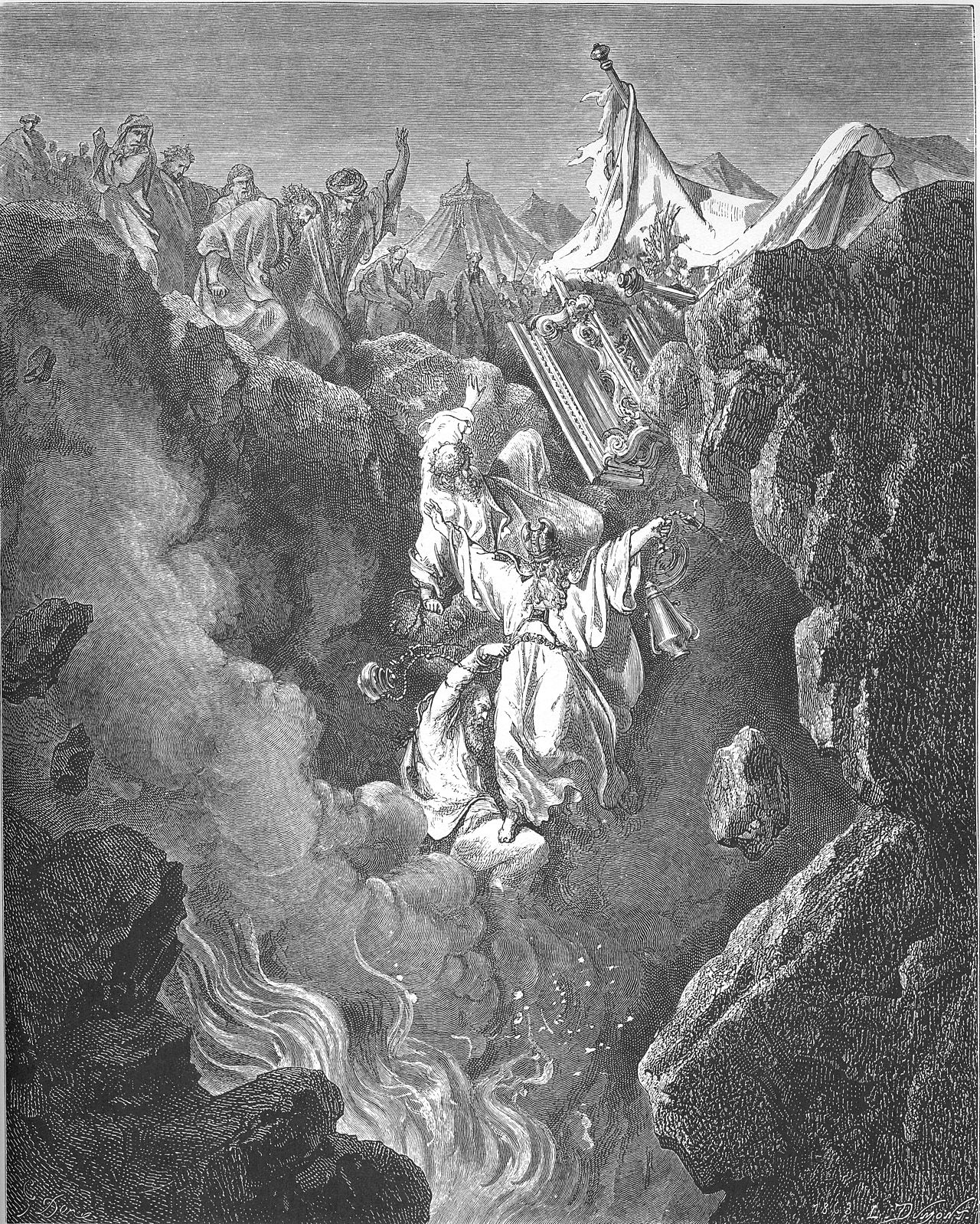
Eleazar does the work, and the plates go on the altar where every worshiper will see them. Their rule is one line: no outsider who is not a descendant of Aaron should approach to offer incense before the LORD. At 2 Chronicles 26:16-21 King Uzziah takes a censer, is rebuked by the priests and is struck with leprosy.
This site's exposition
no outsider who is not a descendant of Aaron
The word for outsider is the one Numbers 3:10 and 18:7 use for anyone outside the priestly family, and here it takes in Korah's own Levites. The warning carries Korah's name. The rule is fixed to the altar itself.
The record, by era
The Puritans and the Awakening2 voices
To be a memorial unto the children of Israel,....
These censers were preserved in terrorem, that others might hear and fear, and do no more presumptuously. Thus God has provided that his wonderful works, both in mercy and judgment, should be had in everlasting remembrance, that the end of them may be answered, and they may serve for instruction and admonition to those on whom the ends of the world are come.
The words behind it
28 Hebrew wordsEvery Hebrew word of this verse in the order it stands, with what it means and the door to its own study. The last column counts the times a word stands in the whole Bible: the rarer the word, the more the places it appears belong together.
| Hebrew | Sound | Meaning | Word study | In the Bible |
|---|---|---|---|---|
| זִכָּר֞וֹן | zikaron | a reminder | H2146 → | 24 times |
| לִבְנֵ֣י | livnei | to [the] people of | H1121 → | 4930 times |
| יִשְׂרָאֵ֗ל | yisrael | Israel | H3478 → | 2507 times |
| לְ֠מַעַן | lemaan | so that | H4616 → | 272 times |
| אֲשֶׁ֨ר | ʾasher | that | H834 → | 5497 times |
| לֹֽא־ | lo'- | not | H3808 → | 5168 times |
| יִקְרַ֜ב | yikrav | he may draw near | H7126 → | 280 times |
| אִ֣ישׁ | ʾish | a man | H376 → | 1663 times |
| זָ֗ר | zar | strange | H2114 → | 77 times |
| אֲ֠שֶׁר | ʾasher | who | H834 → | 5497 times |
| לֹ֣א | lo' | not | H3808 → | 5168 times |
| מִזֶּ֤רַע | mizera' | [is] one of [the] offspring of | H2233 → | 229 times |
| אַהֲרֹן֙ | ʾaharon | Aaron | H175 → | 347 times |
| ה֔וּא | hu' | he | H1931 → | 1879 times |
| לְהַקְטִ֥יר | lehaktir | to make smoke | H6999 → | 116 times |
| קְטֹ֖רֶת | ketoret | incense | H7004 → | 60 times |
| לִפְנֵ֣י | lifnei | <to> before | H6440 → | 2123 times |
| יְהוָ֑ה | yahweh | Yahweh | H3068 → | 6520 times |
| וְלֹֽא־ | velo'- | and not | H3808 → | 5168 times |
| יִהְיֶ֤ה | yihyeh | he will be | H1961 → | 3559 times |
| כְקֹ֙רַח֙ | khekorach | like Korah | H7141 → | 26 times |
| וְכַ֣עֲדָת֔וֹ | vekhaadato | and like company his | H5712 → | 149 times |
| כַּאֲשֶׁ֨ר | kaasher | just as | H834 → | 5497 times |
| דִּבֶּ֧ר | diber | he had spoken | H1696 → | 1141 times |
| יְהוָ֛ה | yahweh | Yahweh | H3068 → | 6520 times |
| בְּיַד־ | beyad- | by [the] hand of | H3027 → | 1618 times |
| מֹשֶׁ֖ה | mosheh | Moses | H4872 → | 765 times |
| לֽוֹ׃ | lo | to <the> him |
זִכָּר֞וֹןa reminder
zikaronH2146 →24 times
לִבְנֵ֣יto [the] people of
livneiH1121 →4930 times
יִשְׂרָאֵ֗לIsrael
yisraelH3478 →2507 times
לְ֠מַעַןso that
lemaanH4616 →272 times
אֲשֶׁ֨רthat
ʾasherH834 →5497 times
לֹֽא־not
lo'-H3808 →5168 times
יִקְרַ֜בhe may draw near
yikravH7126 →280 times
אִ֣ישׁa man
ʾishH376 →1663 times
זָ֗רstrange
zarH2114 →77 times
אֲ֠שֶׁרwho
ʾasherH834 →5497 times
לֹ֣אnot
lo'H3808 →5168 times
מִזֶּ֤רַע[is] one of [the] offspring of
mizera'H2233 →229 times
אַהֲרֹן֙Aaron
ʾaharonH175 →347 times
ה֔וּאhe
hu'H1931 →1879 times
לְהַקְטִ֥ירto make smoke
lehaktirH6999 →116 times
קְטֹ֖רֶתincense
ketoretH7004 →60 times
לִפְנֵ֣י<to> before
lifneiH6440 →2123 times
יְהוָ֑הYahweh
yahwehH3068 →6520 times
וְלֹֽא־and not
velo'-H3808 →5168 times
יִהְיֶ֤הhe will be
yihyehH1961 →3559 times
כְקֹ֙רַח֙like Korah
khekorachH7141 →26 times
וְכַ֣עֲדָת֔וֹand like company his
vekhaadatoH5712 →149 times
כַּאֲשֶׁ֨רjust as
kaasherH834 →5497 times
דִּבֶּ֧רhe had spoken
diberH1696 →1141 times
יְהוָ֛הYahweh
yahwehH3068 →6520 times
בְּיַד־by [the] hand of
beyad-H3027 →1618 times
מֹשֶׁ֖הMoses
moshehH4872 →765 times
לֽוֹ׃to <the> him
lo
A shaded row is a word that stands 400 times or fewer in the Bible.
The walk
8 stopsEach card is a verse this one points to, and under it the verses that one points to in turn. Where several paths arrive at the same place, that place is listed first: the text keeps returning to it.
Through
Numbers 1:51Whenever the tabernacle is to move, the Levites are to take it down, and whenever it is to be pitched, the Levites are to set it up. Any outsider who goes near it must…
it leads to
- Numbers 3:38
Moses, Aaron, and Aaron’s sons were to camp to the east of the tabernacle, toward the sunrise, before the Tent of Meeting. They were to perform the duties of the sanctuary as a service…
Reached by 2 separate paths from here.
- Numbers 3:10
So you shall appoint Aaron and his sons to carry out the duties of the priesthood; but any outsider who approaches the tabernacle must be put to death.”
- 2 Samuel 6:7
And the anger of the LORD burned against Uzzah, and God struck him down on the spot for his irreverence, and he died there beside the ark of God.
- 1 Samuel 6:19
But God struck down some of the people of Beth-shemesh because they looked inside the ark of the LORD. He struck down seventy men, and the people mourned because the LORD had struck them…
- Numbers 18:22
No longer may the Israelites come near to the Tent of Meeting, or they will incur guilt and die.
- Numbers 3:38
Through
Numbers 3:10So you shall appoint Aaron and his sons to carry out the duties of the priesthood; but any outsider who approaches the tabernacle must be put to death.”
it leads to
- Numbers 1:51
Whenever the tabernacle is to move, the Levites are to take it down, and whenever it is to be pitched, the Levites are to set it up. Any outsider who goes near it must…
- Numbers 18:7
But only you and your sons shall attend to your priesthood for everything concerning the altar and what is inside the veil, and you are to perform that service. I am giving you the…
- Romans 12:7
if it is serving, let him serve; if it is teaching, let him teach;
- Numbers 1:51
Where this verse is studied
On this page
About Numbers
Who and where
3 names in this verse with a page on the site.
- PersonExodus and Wilderness PeriodMosesIsrael's deliverer from Egyptian slavery, covenant mediator, and lawgiver.
- PersonExodus eraAaronBrother of Moses and Israel's first high priest; his rod budded, his garments were for glory and beauty, and his line carried the…
- PersonWildernessKorahThe Kohathite Levite who led two hundred fifty princes against Moses and Aaron — "ye take too much upon you" — and was swallowed a…
This page draws on Albert Barnes, Notes, Explanatory and Practical, on the Old and New Testaments; Alfred Edersheim, The Temple: Its Ministry and Services; John Gill, Exposition of the Old Testament (1748-1763); Keil and Delitzsch, Biblical Commentary on the Old Testament: The Pentateuch and Matthew Henry, Commentary on the Whole Bible.