
Numbers 16:27
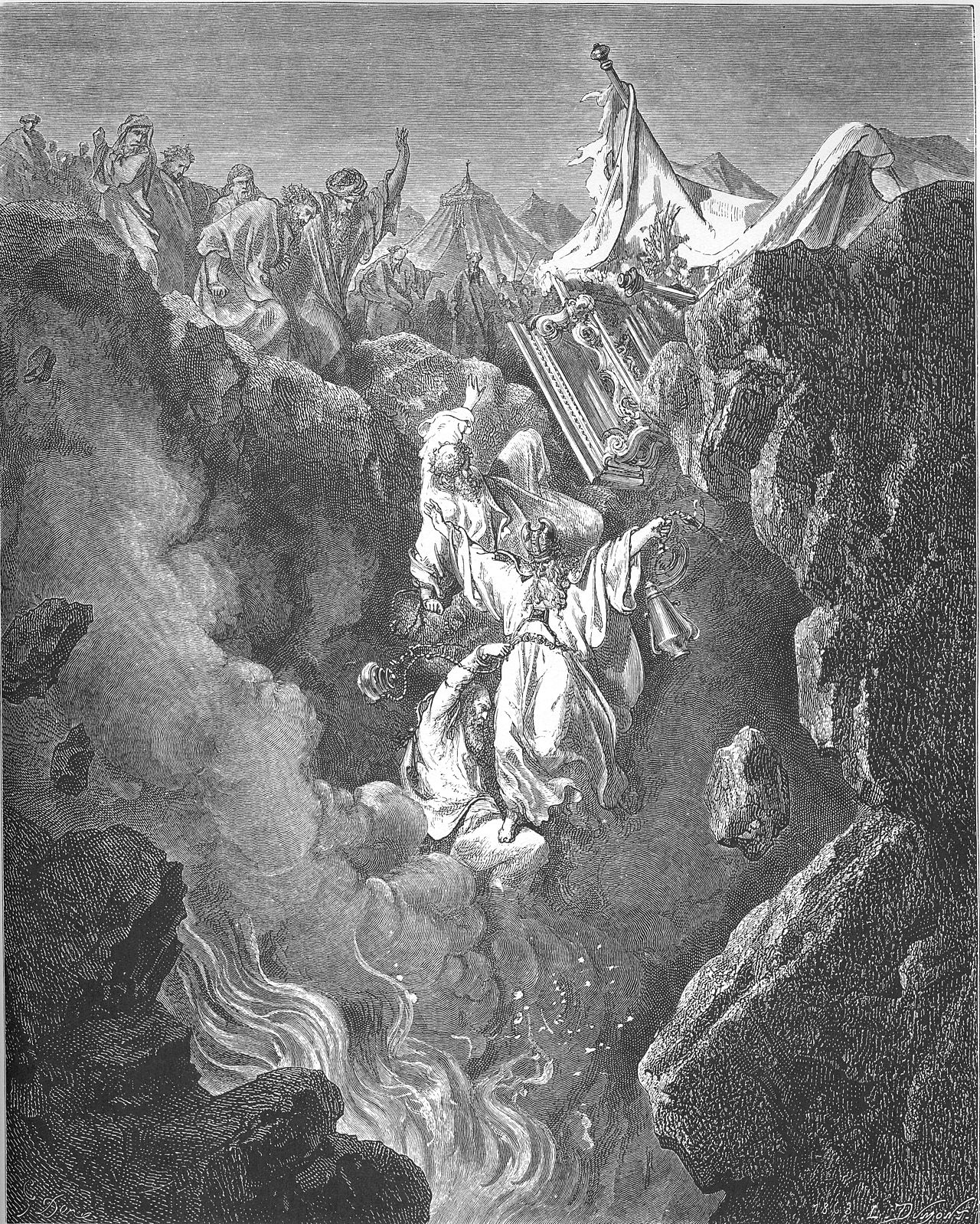
in Numbers 16So they moved away from the dwellings of Korah, Dathan, and Abiram. Meanwhile, Dathan and Abiram had come out and stood at the entrances to their tents with their wives and children and infants.
BSB
The same verse in ASV and KJV ▾
ASV
So they gat them up from the tabernacle of Korah, Dathan, and Abiram, on every side: and Dathan and Abiram came out, and stood at the door of their tents, and their wives, and their sons, and their little ones.
KJV
So they gat up from the tabernacle of Korah, Dathan, and Abiram, on every side: and Dathan and Abiram came out, and stood in the door of their tents, and their wives, and their sons, and their little children.
⋯
This verse in Numbers 16
Commentary
6 notes on this verseThis site's exposition
they gat up from the tabernacle of Korah
The households come out and stand in the tent doors, wives and sons and little children, and the text records it and adds nothing. Deuteronomy 11:6 recalls this day and names Dathan and Abiram alone, with Korah left out of it. Numbers 26:11 adds the line that carries furthest, notwithstanding the children of Korah died not, and 1 Chronicles 6:37-38 traces Heman the singer back through Korah, the son of Izhar, the son of Kohath, which are the words of verse 1 here. Psalms 42, 44 to 49, 84, 85, 87 and 88 stand under the name of the sons of Korah.
The record, by era
The Puritans and the Awakening3 voices
So they gat up from the tabernacle of Korah, Dathan, and Abiram, on every side,....
It was in answer to the prayer of Moses that God thus stirred up the hearts of the congregation to shift for their own preservation. Note, To those whom God will save he gives repentance, that they may recover themselves out of the snare of the devil. Grace to separate from evil doers is one of the things that accompany salvation.
There, as in the place of rendezvous, Dathan and Abiram staid, when Korah and his friends went up to the tabernacle of the Lord, waiting the issue of their trial; but here we are told how they had their business done, before that trial was over. For God will take what method he pleases in his judgments.
The Nineteenth Century2 voices
A commentator
Jamieson, Fausset & Brown1802–1910
Commentary Critical and Explanatory on the Whole Bible (1871)
proposed
the tabernacle of Korah, Dathan, and Abiram--Korah being a Kohathite, his tent could not have been in the Reubenite camp, and it does not appear that he himself was on the spot where Dathan and Abiram stood with their families.
quarantine:debris (2026-07-29) — starts-lowercase
A commentator
Albert Barnes1798–1870
Notes, Explanatory and Practical, on the Old and New Testaments (1832-1869)
proposed
Stood in the door of their tents - Apparently in contumacious defiance.
The words behind it
16 Hebrew wordsEvery Hebrew word of this verse in the order it stands, with what it means and the door to its own study. The last column counts the times a word stands in the whole Bible: the rarer the word, the more the places it appears belong together.
| Hebrew | Sound | Meaning | Word study | In the Bible |
|---|---|---|---|---|
| וַיֵּעָל֗וּ | vaiyealu | and they took themselves up | H5927 → | 890 times |
| מֵעַ֧ל | meal | from at | H5921 → | 5755 times |
| מִשְׁכַּן־ | mishkan- | [the] dwelling place of | H4908 → | 139 times |
| קֹ֛רֶח | korech | Korah | H7141 → | 26 times |
| דָּתָ֥ן | datan | Dathan | H1885 → | 10 times |
| וַאֲבִירָ֖ם | vaaviram | and Abiram | H48 → | 11 times |
| מִסָּבִ֑יב | misaviv | from all around | H5439 → | 336 times |
| וְדָתָ֨ן | vedatan | and Dathan | H1885 → | 10 times |
| וַאֲבִירָ֜ם | vaaviram | and Abiram | H48 → | 11 times |
| יָצְא֣וּ | yatzeu | they came out | H3318 → | 1067 times |
| נִצָּבִ֗ים | nitzavim | standing | H5324 → | 75 times |
| פֶּ֚תַח | petach | [the] entrance of | H6607 → | 164 times |
| אָֽהֳלֵיהֶ֔ם | ʾoholeihem | tents their | H168 → | 345 times |
| וּנְשֵׁיהֶ֥ם | unesheihem | and wives their | H802 → | 781 times |
| וּבְנֵיהֶ֖ם | uveneihem | and sons their | H1121 → | 4930 times |
| וְטַפָּֽם׃ | vetapam | and little one[s] their | H2945 → | 42 times |
וַיֵּעָל֗וּand they took themselves up
vaiyealuH5927 →890 times
מֵעַ֧לfrom at
mealH5921 →5755 times
מִשְׁכַּן־[the] dwelling place of
mishkan-H4908 →139 times
קֹ֛רֶחKorah
korechH7141 →26 times
דָּתָ֥ןDathan
datanH1885 →10 times
וַאֲבִירָ֖םand Abiram
vaaviramH48 →11 times
מִסָּבִ֑יבfrom all around
misavivH5439 →336 times
וְדָתָ֨ןand Dathan
vedatanH1885 →10 times
וַאֲבִירָ֜םand Abiram
vaaviramH48 →11 times
יָצְא֣וּthey came out
yatzeuH3318 →1067 times
נִצָּבִ֗יםstanding
nitzavimH5324 →75 times
פֶּ֚תַח[the] entrance of
petachH6607 →164 times
אָֽהֳלֵיהֶ֔םtents their
ʾoholeihemH168 →345 times
וּנְשֵׁיהֶ֥םand wives their
unesheihemH802 →781 times
וּבְנֵיהֶ֖םand sons their
uveneihemH1121 →4930 times
וְטַפָּֽם׃and little one[s] their
vetapamH2945 →42 times
A shaded row is a word that stands 400 times or fewer in the Bible.
The walk
8 stopsEach card is a verse this one points to, and under it the verses that one points to in turn. Where several paths arrive at the same place, that place is listed first: the text keeps returning to it.
Through
Proverbs 16:18Pride goes before destruction, and a haughty spirit before a fall.
it leads to
- Proverbs 11:2
When pride comes, disgrace follows, but with humility comes wisdom.
Reached by 2 separate paths from here.
- Isaiah 2:11–12
The proud look of man will be humbled, and the loftiness of men brought low; the LORD alone will be exalted in that day.
- Proverbs 18:12
Before his downfall a man’s heart is proud, but humility comes before honor.
- Obadiah 1:3–4
The pride of your heart has deceived you, O dwellers in the clefts of the rocks whose habitation is the heights, who say in your heart, ‘Who can bring me down to the ground?’
- Proverbs 29:23
A man’s pride will bring him low, but a humble spirit will obtain honor.
- Proverbs 11:2
Through
Proverbs 18:12Before his downfall a man’s heart is proud, but humility comes before honor.
it leads to
- Proverbs 15:33
The fear of the LORD is the instruction of wisdom, and humility comes before honor.
- 1 Peter 5:5
Young men, in the same way, submit yourselves to your elders. And all of you, clothe yourselves with humility toward one another, because, “God opposes the proud, but gives grace to the humble.”
- Ezekiel 28:2
“Son of man, tell the ruler of Tyre that this is what the Lord GOD says: Your heart is proud, and you have said, ‘I am a god; I sit in the seat of…
- Proverbs 15:33
Where this verse is studied
On this page
Studies3
On this verse
On this chapter
About Numbers
Who and where
1 name in this verse with a page on the site.
This page draws on Albert Barnes, Notes, Explanatory and Practical, on the Old and New Testaments (1832-1869); Jamieson, Fausset & Brown, Commentary Critical and Explanatory on the Whole Bible; John Gill, Exposition of the Old Testament; John Gill, Exposition of the Old Testament (1748-1763); Keil and Delitzsch, Biblical Commentary on the Old Testament: The Pentateuch and Matthew Henry, Commentary on the Whole Bible.