
Numbers 16:2
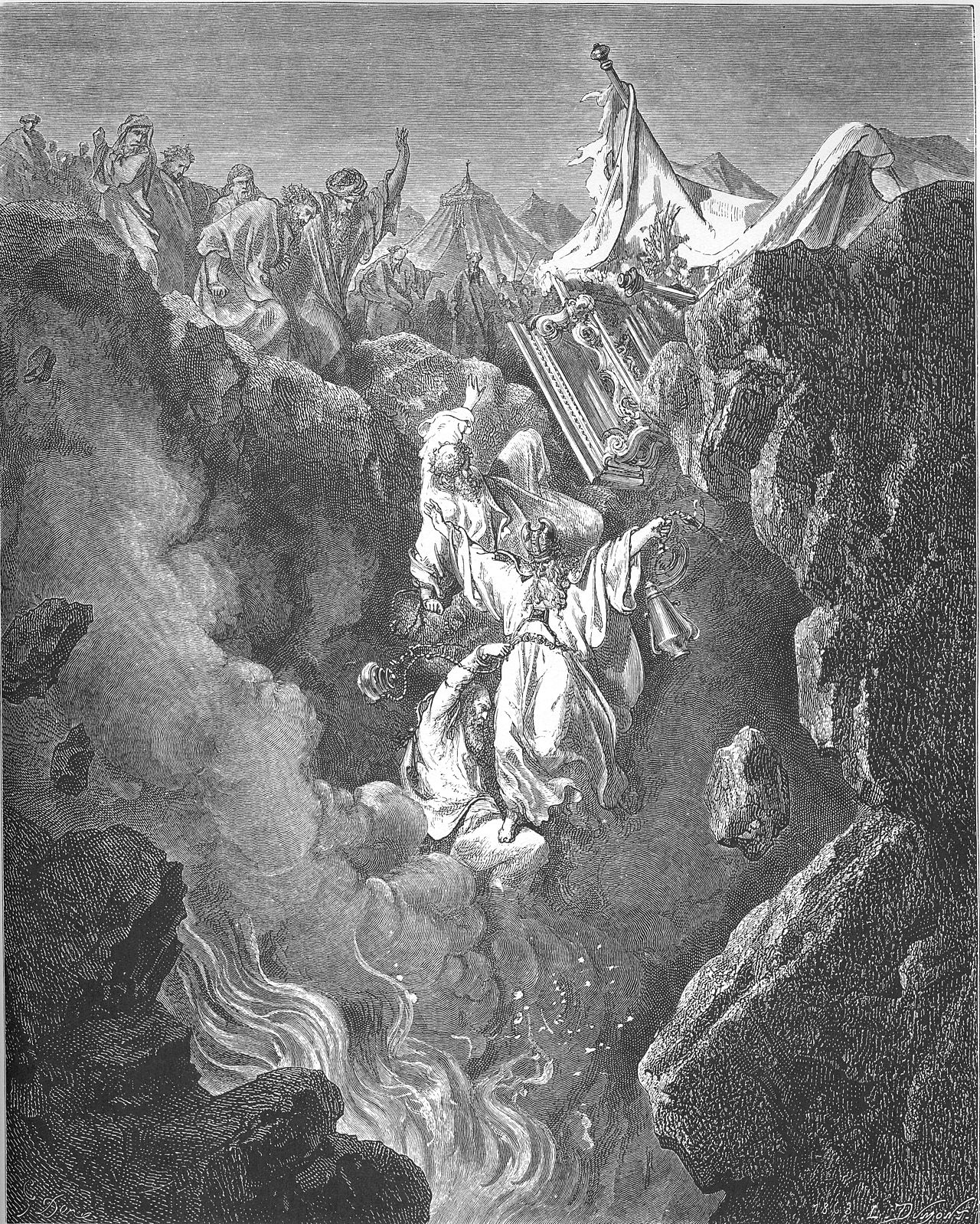
in Numbers 16a rebellion against Moses, along with 250 men of Israel renowned as leaders of the congregation and representatives in the assembly.
BSB
The same verse in ASV and KJV ▾
ASV
and they rose up before Moses, with certain of the children of Israel, two hundred and fifty princes of the congregation, called to the assembly, men of renown;
KJV
And they rose up before Moses, with certain of the children of Israel, two hundred and fifty princes of the assembly, famous in the congregation, men of renown:
⋯
This verse in Numbers 16
Commentary
5 notes on this verseNote, The pride, ambition, and emulation, of great men, have always been the occasion of a great deal of mischief both in churches and states. God by his grace make great men humble, and so give peace in our time, O Lord! Famous men, and men of renown, as these are described to be, were the great sinners of the old world, Gen. vi.
This site's exposition
Korah, the son of Izhar, the son of Kohath
on Numbers 16:1-2
Korah is a Kohathite and Dathan and Abiram are Reubenites, and the two families camped on the same side of the tabernacle, Kohath at 3:29 and Reuben at 2:10, which Matthew Henry reads as how the one drew in the other. Albert Barnes finds the grievance in 3:30, where Elizaphan of the youngest Kohathite branch was made chief over the families of Kohath. The two hundred and fifty who rise with them are called men of renown, a phrase the King James Old Testament uses in one other place, Genesis 6:4.
The record, by era
The Church Fathers1 voice
Their bellies' fullness was followed by rebellion, which often rouses occasions of destructive danger. We say that a person is provoked when roused to anger by wicked deeds or very harsh words of others. The verse points to the incident when Dathan and Abiram roused …
The Puritans and the Awakening1 voice
And they rose up before Moses,....
The Nineteenth Century1 voice
A commentator
Albert Barnes1798–1870
Notes, Explanatory and Practical, on the Old and New Testaments (1832-1869)
proposed
The “princes” appear to have belonged to the other tribes (compare Num 27:3).
How the passage was read
What the Jewish commentators add
On the verses either side of this one
“This section is explained in a beautiful way in the Midrash of Rabbi Tanchuma. 1 The Rabbis of the Talmud composed two great exegetical commentaries on the Bible, whose aim was to spread moral, ethical and religious teachings, as they are derived from a study of the Scriptures.
This section is reception history: how the passage was read and kept in the Jewish tradition. Where a reading parts from an essential of the Christian faith, the section says so at that point.
Texts and citation data: Sefaria; each excerpt follows its version’s licence. 4 further sources are cited on this chapter that carry no English text this site may quote or only restate the verse.
The words behind it
14 Hebrew wordsEvery Hebrew word of this verse in the order it stands, with what it means and the door to its own study. The last column counts the times a word stands in the whole Bible: the rarer the word, the more the places it appears belong together.
| Hebrew | Sound | Meaning | Word study | In the Bible |
|---|---|---|---|---|
| וַיָּקֻ֙מוּ֙ | vaiyakumu | and they rose up | H6965 → | 628 times |
| לִפְנֵ֣י | lifnei | <to> before | H6440 → | 2123 times |
| מֹשֶׁ֔ה | mosheh | Moses | H4872 → | 765 times |
| וַאֲנָשִׁ֥ים | vaanashim | and men | H582 → | 566 times |
| מִבְּנֵֽי־ | mibenei- | from [the] people of | H1121 → | 4930 times |
| יִשְׂרָאֵ֖ל | yisrael | Israel | H3478 → | 2507 times |
| חֲמִשִּׁ֣ים | chamishim | fifty | H2572 → | 163 times |
| וּמָאתָ֑יִם | umatayim | and two hundred | H3967 → | 581 times |
| נְשִׂיאֵ֥י | nesiei | leaders of | H5387 → | 134 times |
| עֵדָ֛ה | ʾedah | [the] congregation | H5712 → | 149 times |
| קְרִאֵ֥י | keriei | called of | H7148 → | |
| מוֹעֵ֖ד | moed | [the] appointed meeting | H4150 → | 223 times |
| אַנְשֵׁי־ | ʾanshei- | men of | H582 → | 566 times |
| שֵֽׁם׃ | shem | name | H8034 → | 864 times |
וַיָּקֻ֙מוּ֙and they rose up
vaiyakumuH6965 →628 times
לִפְנֵ֣י<to> before
lifneiH6440 →2123 times
מֹשֶׁ֔הMoses
moshehH4872 →765 times
וַאֲנָשִׁ֥יםand men
vaanashimH582 →566 times
מִבְּנֵֽי־from [the] people of
mibenei-H1121 →4930 times
יִשְׂרָאֵ֖לIsrael
yisraelH3478 →2507 times
חֲמִשִּׁ֣יםfifty
chamishimH2572 →163 times
וּמָאתָ֑יִםand two hundred
umatayimH3967 →581 times
נְשִׂיאֵ֥יleaders of
nesieiH5387 →134 times
עֵדָ֛ה[the] congregation
ʾedahH5712 →149 times
קְרִאֵ֥יcalled of
kerieiH7148 →
מוֹעֵ֖ד[the] appointed meeting
moedH4150 →223 times
אַנְשֵׁי־men of
ʾanshei-H582 →566 times
שֵֽׁם׃name
shemH8034 →864 times
A shaded row is a word that stands 400 times or fewer in the Bible.
The walk
8 stopsEach card is a verse this one points to, and under it the verses that one points to in turn. Where several paths arrive at the same place, that place is listed first: the text keeps returning to it.
Through
Genesis 6:4The Nephilim were on the earth in those days—and afterward as well—when the sons of God had relations with the daughters of men. And they bore them children who became the mighty men of…
it leads to
- Numbers 13:33
We even saw the Nephilim there—the descendants of Anak that come from the Nephilim! We seemed like grasshoppers in our own sight, and we must have seemed the same to them!”
- Deuteronomy 3:11
(For only Og king of Bashan had remained of the remnant of the Rephaim. His bed of iron, nine cubits long and four cubits wide, is still in Rabbah of the Ammonites.)
- 2 Samuel 21:15–22
Once again the Philistines waged war against Israel, and David and his servants went down and fought against the Philistines; but David became exhausted.
- 1 Samuel 17:4
Then a champion named Goliath, who was from Gath, came out from the Philistine camp. He was six cubits and a span in height,
- Deuteronomy 2:20–21
(That too was regarded as the land of the Rephaim, who used to live there, though the Ammonites called them Zamzummites.
- Numbers 13:33
Through
Numbers 1:16These men were appointed from the congregation; they were the leaders of the tribes of their fathers, the heads of the clans of Israel.
it leads to
- Exodus 18:25
So Moses chose capable men from all Israel and made them heads over the people as leaders of thousands, of hundreds, of fifties, and of tens.
- Exodus 18:21
Furthermore, select capable men from among the people—God-fearing, trustworthy men who are averse to dishonest gain. Appoint them over the people as leaders of thousands, of hundreds, of fifties, and of tens.
- Exodus 18:25
Through
Numbers 26:9and the sons of Eliab were Nemuel, Dathan, and Abiram. It was Dathan and Abiram, chosen by the congregation, who fought against Moses and Aaron with the followers of Korah who rebelled against the…
it leads to
- Numbers 1:16
These men were appointed from the congregation; they were the leaders of the tribes of their fathers, the heads of the clans of Israel.
- Numbers 1:16
Where this verse is studied
On this page
Studies3
On this verse
On this chapter
About Numbers
Who and where
1 name in this verse with a page on the site.
This page draws on Albert Barnes, Notes on the Old Testament; Albert Barnes, Notes, Explanatory and Practical, on the Old and New Testaments (1832-1869); Cassiodorus, EXPOSITION OF THE PSALMS 105:16-17; John Gill, Exposition of the Old Testament (1748-1763) and Matthew Henry, Commentary on the Whole Bible.