
Matthew 9:10
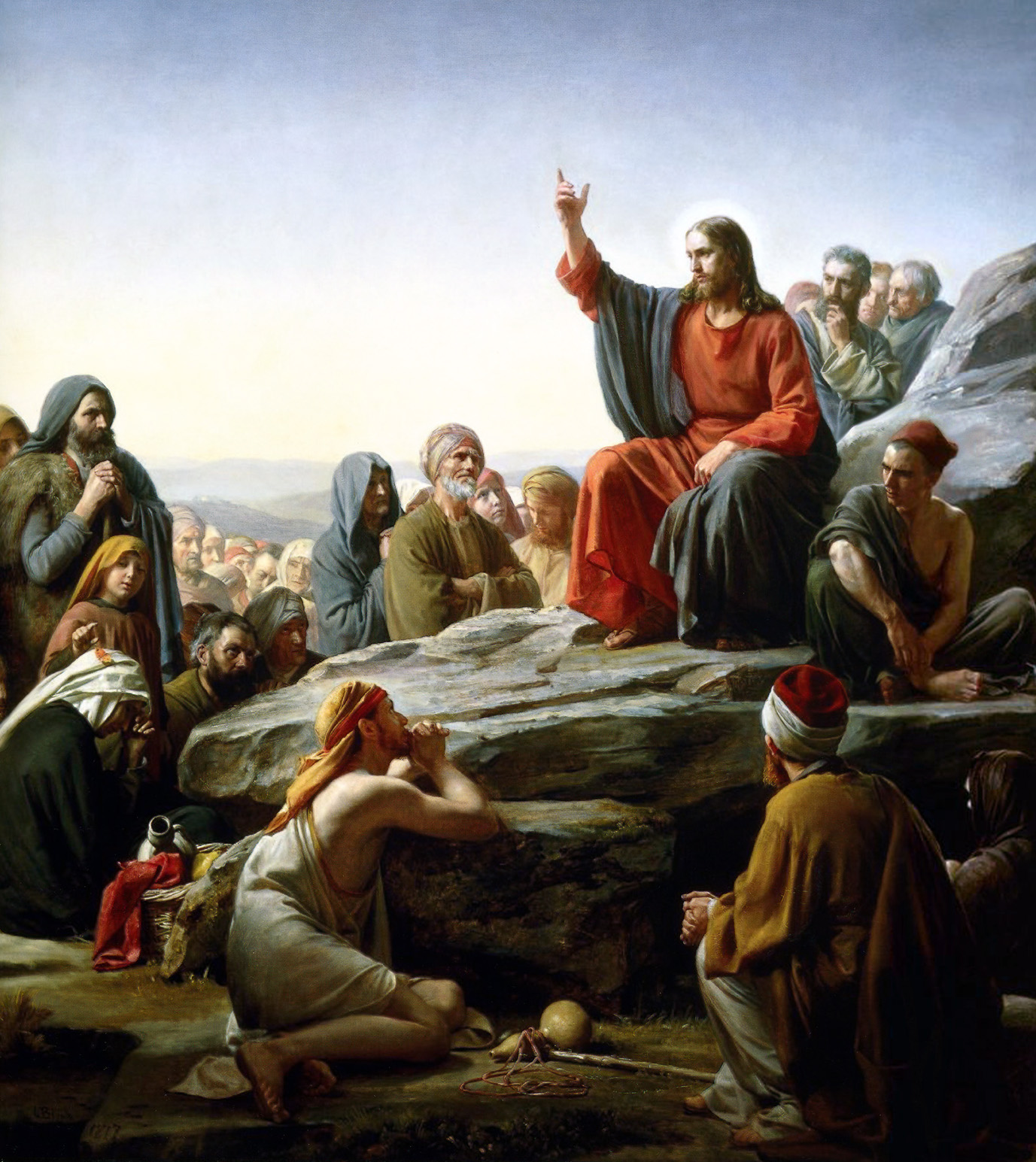
in Matthew 9Later, as Jesus was dining at Matthew’s house, many tax collectors and sinners came and ate with Him and His disciples.
BSB
The same verse in ASV and KJV ▾
ASV
And it came to pass, as he sat at meat in the house, behold, many publicans and sinners came and sat down with Jesus and his disciples.
KJV
And it came to pass, as Jesus sat at meat in the house, behold, many publicans and sinners came and sat down with him and his disciples.
⋯
This verse in Matthew 9
Commentary
18 notes on this verseFor they do not come to Jesus while they remain in their original condition of sin, as the Pharisees and Scribes complain, but in penitence, as what follows proves; But Jesus hearing said, They that be whole need not a physician, but they that are sick.
This site's exposition
as Jesus was dining at Matthew’s house
on Matthew 9:10-11
Jesus was dining at Matthew’s house, and many tax collectors and sinners came and ate with Him, the very company the Pharisees would avoid. The Pharisees put their question to His disciples, Why does your Teacher eat with tax collectors and sinners. In that culture a shared table declared acceptance.
The record, by era
The Church Fathers5 voices
Matthew has not said in whose house Jesus sat at meat (on this occasion), from which we might suppose, that this was not told in its proper order, but that what took place at some other time is inserted here as it happened to come into his mind; did not Mark and Luke who relate the same show that it was in Levi's, that is, in Matthew's house.
Nor would the name of publicans have been so execrable in the eyes of the Lord, unless as being a "strange" name,-a (name) of such as put up the pathways of the very sky, and earth, and sea, for sale. Moreover, when (the writer) adjoins "sinners" to "publicans," it does not follow that he shows them to have been Jews, albeit some may possibly have been so; but by placing on a par the one genus of heathens-some sinners by office, that is, publicans; some by nature, that is, not publicans-he has drawn a distinction between them.
(V. 10 seq.) And it came to pass, as he sat at table in his house, behold many publicans and sinners came and sat down with Jesus and his disciples. And when the Pharisees saw it, they said to his disciples, 'Why does your teacher eat with tax collectors and sinners?' But when Jesus heard it, he said, 'Those who are well have no need of a physician, but those who are sick. Go and learn what this means: "I desire mercy, and not sacrifice." For I came not to call the righteous, but sinners.''
Having therefore called him, He also honored him with a very great honor by partaking straightway of his table; for in this way He would both give him good hope for the future, and lead him on to a greater confidence. For not in a long time, but at once, He healed his vice. And not with him only doth He sit down to meat, but with many others also; although this very thing was accounted a charge against Him, that He chased not away the sinners. But neither do they conceal this point, what sort of blame is endeavored to be fixed on His proceedings. Now the publicans come together as to one of the same trade; for he, exulting in the entrance of Christ, had called them all together. The fact is, Christ used to try every kind of treatment; and not when discoursing only, nor when healing, nor when reproving His enemies, but even at His morning meal, He would often correct such as were in a bad way; hereby teaching us, that every season and every work may by possibility afford us profit. And yet surely what was then set before them came of injustice and covetousness; but Christ refused not to partake of it, because the ensuing gain was to be great: yea rather He becomes partaker of the same roof and table with them that have committed such offenses. For such is the quality of a physician; unless he endure the corruption of the sick, he frees them not from their infirmity. And yet undoubtedly He incurred hence an evil report: first by eating with him, then in Matthew's house, and thirdly, in company with many publicans. See at least how they reproach Him with this. […]
Jesus' sitting at table has more significance for Matthew than just dining. Jesus will be feasting not on food but on the return of sinners. He will call them back through feasting, collegiality and human affection, enjoying himself with their pleasant conversation while reclining at …
11 more voices on this verse
The Medieval Church3 voices
"And it came to pass, as Jesus sat at table in the house, behold, many publicans and sinners came and sat down with Him and His disciples. And when the Pharisees saw it, they said unto His disciples, Why eateth your Master with publicans and …
(ap. Anselm.) As a meet return for the heavenly mercy, Matthew prepared a great feast for Christ in his house, bestowing his temporal goods on Him of whom he looked to receive everlasting goods. It follows, And it came to pass as he sat at meat in the house. (ap. Anselm.) The Publicans were they who were engaged in public business, which seldom or never can be carried on without sin. And a beautiful omen of the future, that he that was to be an Apostle and doctor of the Gentiles, at his first conversion draws after him a great multitude of sinners to salvation, already performing by his example what he was shortly to perform by word. (ord.) Tertullian says that these must have been Gentiles, because Scripture says, There shall be no payer of tribute in Israel, as if Matthew were not a Jew. But the Lord did not sit down to meat with Gentiles, being more especially careful not to break the Law, as also He gave commandment to His disciples below, Go not into the way of the Gentiles.
He continues: As he was at table in the house, many tax collectors and sinners came and sat down with Jesus and his disciples. Here he shows how many were called to intimacy. Hence he says, As he sat at table... Others say that he …
The Puritans and the Awakening2 voices
He invited many publicans and sinners to meet him. This was the chief thing Matthew aimed at in this treat, that he might have an opportunity of bringing his old associates acquainted with Christ. He knew by experience what the grace of Christ could do, and would not despair concerning them.
And it came to pass, as Jesus sat at meat in the house,....
The Nineteenth Century6 voices
Sat at meat in the house - Viz. of Matthew, who it appears, from Luk 5:29, made a great feast on the occasion, thus testifying his gratitude for the honor done him; and that his friends and acquaintances might profit by the teaching of his new master, he invites them to the entertainment that was honored by the presence of Christ. His companions, it appears, were not of the most creditable kind.
A commentator
Charles Spurgeon1834–1892
The Metropolitan Tabernacle Pulpit, Sermon No. 2889: “Christ Receiving Sinners” (lightly modernized text, CCEL edition) · Written before 1892.
How strangely different was our Lord Jesus Christ from the philosophers of Greece! They were reserved in their demeanor—eclectic, or studiously choice in their tastes and jealous of contact with their fellow creatures. Retiring from the busy haunts of men to encircle themselves with an atmosphere created by their own breath, they wanted none in their society but those who were fit companions for men so exalted in wisdom. Their disciples looked up to them with profound and insincere reverence—and they, themselves, in their various halls and classrooms, talked as men might who were teaching little children.
A commentator
Jamieson, Fausset & Brown1802–1910
Commentary Critical and Explanatory on the Whole Bible (1871)
Luke says (Lu 5:29) that "Levi made Him a great feast," or "reception," while Matthew merely says, "He sat at meat"; and Mark and Luke say that it was in Levi's "own house," while Matthew merely says, "He sat at meat in the house." Whether this feast was made now, or not till afterwards, is a point of some importance in the order of events, and not agreed among harmonists.
Let us notice, in the first part of this passage, our Lord’s knowledge of men’s thoughts. There were certain of the scribes who found fault with the words which Jesus spoke to a man sick of the palsy: they said secretly among themselves, “This man blasphemeth.”They probably supposed that no one knew what was going on in their minds: they had yet to learn that the Son of God could read hearts, and discern spirits. Their malicious thought was publicly exposed: they were put to open shame. Jesus “ knew their thoughts.” There is an important lesson for us here. “All things are naked and open unto the eyes of Him with whom we have to do.” ( Hebrews 4:13 ). Nothing can be concealed from Christ. What do we think of, in private, when no one sees us? What do we think of in church when we seem grave and serious? What are we thinking of at this moment, while these words pass under our eyes? Jesus knows. Jesus sees. Jesus records. Jesus will one day summon us to give account. It is written that “God shall judge the secrets of men by Jesus Christ, according to my gospel.” ( Romans ). Surely we ought to be very humble when we consider these things: we ought to thank God daily that the blood of Christ can cleanse from all sin; we ought often to cry, “Let the words of my mouth, and the meditation of my heart be acceptable in your sight.” (Psalm ). Let us notice, in the second place, the wonderful call of the apostle Matthew to be Christ’s disciple. We find the man, who afterwards was the first to write a Gospel, sitting at the receipt of custom. We see him absorbed in his worldly calling, and possibly thinking of nothing but money and gain; but suddenly the Lord Jesus calls on him to follow him, and become his disciple. At once Matthew obeys. He makes haste, and delays not, to keep Christ’s commandments ( Psalm 119:60 ). He rises and follows him.
A commentator
Charles Spurgeon1834–1892
The Metropolitan Tabernacle Pulpit, Sermon No. 2889: “Christ Receiving Sinners” (lightly modernized text, CCEL edition) · Written before 1892.
proposed
How strangely different was our Lord Jesus Christ from the philosophers of Greece! They were reserved in their demeanor—eclectic, or studiously choice in their tastes and jealous of contact with their fellow creatures. Retiring from the busy haunts of men to encircle themselves with an atmosphere created by their own breath, they wanted none in their society but those who were fit companions for men so exalted in wisdom. Their disciples looked up to them with profound and insincere reverence—and they, themselves, in their various halls and classrooms, talked as men might who were teaching little children. And their pupils were completely subject to their dictation, but they always kept "the common people" at a distance, for they concerned not themselves to instruct the many, but only to teach the few who were ambitious to become wise like themselves! Our blessed Lord and Master was no philosopher of this sort, shut up with His few disciples by themselves. He had His chosen twelve, but He and they mingled freely with the populace. He was a man among men and not a philosopher among those shut out from men. True, He taught greater wisdom than all the sages knew—and better philosophy than all the wise men of Greece understood—but He was still familiar with the people, tender-hearted, mild and of a gentle spirit. We have an instance of this here, where we read of Jesus doing what Solon or Socrates would never have done, for He sat down to take a meal with the common people around Him, eating with publicans and sinners! How different, moreover, we may add, was Christ from the great Prophets of the olden time! With the utmost stretch of imagination, you cannot conceive of Moses sitting down to eat with sinners. He was a king in Jeshurun—an awful majesty surrounded the Prophet of Horeb who was mighty in word and deed.
A commentator
Albert Barnes1798–1870
Notes, Explanatory and Practical, on the Old and New Testaments (1832-1869)
proposed
And it came to pass, as Jesus sat at meat in the house - This was at a feast given to him by “Levi” or “Matthew,” Luk 5:29. This is another circumstance favorable to Matthew, but omitted by him, and recorded by Luke; showing also that the apostles were averse to praising themselves. To receive Christ hospitably and kindly was a commendable act, and it strongly evinces Matthew’s freedom from ostentation that he has not himself mentioned the fact. It thus illustrates the command of the Saviour, as recorded by himself, Mat 6:1-4. At meat - At the table; at supper. Many publicans and sinners came - Probably the old friends of Matthew who had been invited by him. The character of a “publican,” or tax-gatherer, among the Jews was commonly not very respectable (see notes at Mat 5:47; Mat 18:17), and there is no improbability in supposing that Matthew, before his conversion, had sustained the general character of such people, and that his associations and friendships had been among those who were not remarkable for their morality.
How the passage was read
On Matthew 9:9-17On Matthew 9:9-17
Why eating at Matthew's table shocked, and why the fasting question was sincere
The Pharisaic program was a table program. A chaver (“associate,” a member of the fellowship) undertook to eat only properly tithed, ritually pure food, and therefore would not accept the hospitality of an am ha'aretz (“people of the land,” the ordinary non-observant), whose food and vessels could not be trusted; the Mishnah sets out those membership terms (Demai 2:2). Tax collectors stood lower still: collaborators living by extortion, so far outside the community's trust that the Mishnah rules a house unclean if tax collectors have entered it (Taharot 7:6). Reclining at Matthew's table was therefore not loose etiquette; it was a deliberate crossing of a purity-and-loyalty boundary, and Jesus defends it from the prophets: “I desire mercy, and not sacrifice” (Hosea 6:6).
The fasting question that follows comes from devout practice, not hostility: John's own disciples fasted. The Torah commands one fast a year (the Day of Atonement); the pious added voluntary fasts, by Jesus' day typically Monday and Thursday, a rhythm the Talmud's fasting tractate discusses (Ta'anit 12a) and the Pharisee of Luke 18:12 names: “I fast twice in the week.” Jesus' answer runs on the tradition's own wedding law: a bridegroom is exempt from reciting the Shema on his wedding night, because joy overrides (Mishnah Berakhot 2:5). “Can the wedding guests mourn while the bridegroom is with them?” claims that exemption for His whole company, and quietly takes the Bridegroom's role, which in the Prophets belongs to God Himself (Hosea 2, Isaiah 62:5).
This section is reception history: how the passage was read and kept in the Jewish tradition. Where a reading parts from an essential of the Christian faith, the section says so at that point.
Sources: Mishnah Demai 2:2 (the associate's table discipline) · Mishnah Taharot 7:6 (tax collectors and the unclean house) · Mishnah Berakhot 2:5 (the bridegroom's exemption) · Ta'anit 12a (Babylonian Talmud, the voluntary fast days)
The words behind it
21 Greek wordsEvery Greek word of this verse in the order it stands, with what it means and the door to its own study. The last column counts the times a word stands in the whole Bible: the rarer the word, the more the places it appears belong together.
| Greek | Sound | Meaning | Word study | In the Bible |
|---|---|---|---|---|
| καὶ | kai | And | G2532 → | 9120 times |
| ἐγένετο | egeneto | it came to pass | G1096 → | 667 times |
| αὐτοῦ | autou | when he | G846 → | 5565 times |
| ἀνακειμένου | anakeimenou | is reclining | G345 → | 13 times |
| ἐν | en | in | G1722 → | 2738 times |
| τῇ | tea | the | G3588 → | 19766 times |
| οἰκίᾳ, | oikia | house, | G3614 → | 93 times |
| καὶ | kai | that | G2532 → | 9120 times |
| ἰδοὺ | idou | behold | G2400 → | 200 times |
| πολλοὶ | polloi | many | G4183 → | 367 times |
| τελῶναι | telonai | tax collectors | G5057 → | 21 times |
| καὶ | kai | and | G2532 → | 9120 times |
| ἁμαρτωλοὶ | hamartoloi | sinners | G268 → | 47 times |
| ἐλθόντες | elthontes | having come | G2064 → | 628 times |
| συνανέκειντο | sunanekeinto | they were reclining with | G4873 → | |
| τῷ | to | <the> | G3588 → | 19766 times |
| Ἰησοῦ | iesou | Jesus | G2424 → | 908 times |
| καὶ | kai | and | G2532 → | 9120 times |
| τοῖς | tois | the | G3588 → | 19766 times |
| μαθηταῖς | mathetais | disciples | G3101 → | 260 times |
| αὐτοῦ. | autou | of Him. | G846 → | 5565 times |
καὶAnd
kaiG2532 →9120 times
ἐγένετοit came to pass
egenetoG1096 →667 times
αὐτοῦwhen he
autouG846 →5565 times
ἀνακειμένουis reclining
anakeimenouG345 →13 times
ἐνin
enG1722 →2738 times
τῇthe
teaG3588 →19766 times
οἰκίᾳ,house,
oikiaG3614 →93 times
καὶthat
kaiG2532 →9120 times
ἰδοὺbehold
idouG2400 →200 times
πολλοὶmany
polloiG4183 →367 times
τελῶναιtax collectors
telonaiG5057 →21 times
καὶand
kaiG2532 →9120 times
ἁμαρτωλοὶsinners
hamartoloiG268 →47 times
ἐλθόντεςhaving come
elthontesG2064 →628 times
συνανέκειντοthey were reclining with
sunanekeintoG4873 →
τῷ<the>
toG3588 →19766 times
ἸησοῦJesus
iesouG2424 →908 times
καὶand
kaiG2532 →9120 times
τοῖςthe
toisG3588 →19766 times
μαθηταῖςdisciples
mathetaisG3101 →260 times
αὐτοῦ.of Him.
autouG846 →5565 times
A shaded row is a word that stands 400 times or fewer in the Bible.
The walk
5 stopsEach card is a verse this one points to, and under it the verses that one points to in turn. Where several paths arrive at the same place, that place is listed first: the text keeps returning to it.
Through
John 9:31We know that God does not listen to sinners, but He does listen to the one who worships Him and does His will.
it leads to
- Proverbs 15:29
The LORD is far from the wicked, but He hears the prayer of the righteous.
- Isaiah 1:15
When you spread out your hands in prayer, I will hide My eyes from you; even though you multiply your prayers, I will not listen. Your hands are covered with blood.
- Proverbs 28:9
Whoever turns his ear away from hearing the law, even his prayer is detestable.
- Micah 3:4
Then they will cry out to the LORD, but He will not answer them. At that time He will hide His face from them because of the evil they have done.
- Proverbs 1:28–29
Then they will call on me, but I will not answer; they will earnestly seek me, but will not find me.
- Proverbs 15:29
Where this verse is studied
On this page
Studies12
On this verse
On this chapter
About Matthew
This page draws on 16 works. Open the list of works
This page draws on Adam Clarke, Commentary on the Bible; Albert Barnes, Notes, Explanatory and Practical, on the Old and New Testaments (1832-1869); Augustine of Hippo, Catena Aurea by Aquinas; Charles Spurgeon, The Metropolitan Tabernacle Pulpit, Sermon No. 2889: “Christ Receiving Sinners” (lightly modernized text, CCEL edition); Glossa Ordinaria, Catena Aurea by Aquinas; J.C. Ryle, Expository Thoughts on the Gospels: Matthew; Jamieson, Fausset & Brown, Commentary Critical and Explanatory on the Whole Bible; Jerome, Catena Aurea by Aquinas; Jerome, Commentary on Matthew; John Chrysostom, Homily on the Gospel of Matthew 30; John Gill, Exposition of the New Testament (1746-1748); Matthew Henry, Commentary on the Whole Bible; Peter Chrysologus, SERMONS 29:4; Tertullian, On Modesty; Theophylact of Ohrid, Commentary on Matthew and Thomas Aquinas, Commentary on Matthew.