
Lamentations 1:7
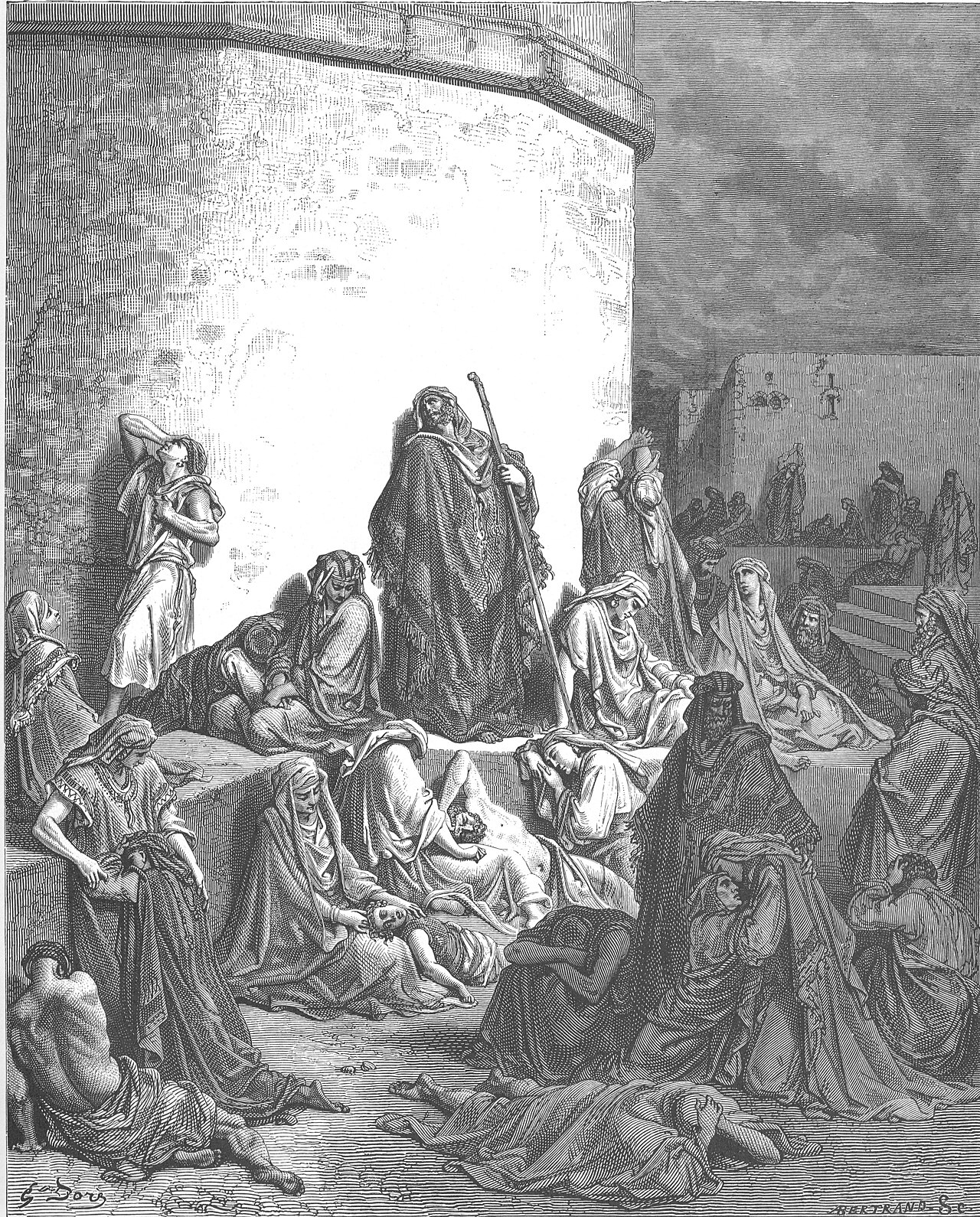
in Lamentations 1In the days of her affliction and wandering Jerusalem remembers all the treasures that were hers in days of old. When her people fell into enemy hands she received no help. Her enemies looked upon her, laughing at her downfall.
BSB
The same verse in ASV and KJV ▾
ASV
Jerusalem remembereth in the days of her affliction and of her miseries all her pleasant things that were from the days of old: When her people fell into the hand of the adversary, and none did help her, The adversaries saw her, they did mock at her desolations.
KJV
Jerusalem remembered in the days of her affliction and of her miseries all her pleasant things that she had in the days of old, when her people fell into the hand of the enemy, and none did help her: the adversaries saw her, and did mock at her sabbaths.
⋯
This verse in Lamentations 1
Commentary
10 notes on this verseA commentator
Albert Barnes1798–1870
Notes, Explanatory and Practical, on the Old and New Testaments (1832-1869)
Jerusalem remembers in the days of her affliction, And of her homelessness, All her pleasant things which have been from the days of old: Now that her people fall by the hand of the adversary, And she hath no helper; Her adversaries have seen her, They have mocked at her sabbath-keepings. The word rendered “homelessless” means wanderings, and describes the state of the Jews, cast forth from their homes and about to be dragged into exile. Sabbaths - Or, sabbath-keepings, and the cessation from labor every seventh day struck foreigners as something strange, and provoked their ridicule.
This site's exposition
In the days of her affliction and wandering Jerusalem remembers
on Lamentations 1:7-9
Jerusalem “remembers all the treasures that were hers in days of old” while her enemies laugh at her downfall, so memory adds to the affliction. Her uncleanness stains her skirts because “she did not consider her end”, and the unit closes on the line: “Look, O LORD, on my affliction”.
The record, by era
The Medieval Church2 voices
ZAIN: first topic of complaint. THE ENEMIES HAVE SEEN HER: the thirteenth topic of indignation, because insult has been added to injury. Historical interpretation. AND JERUSALEM HAS REMEMBERED &c: she remembers HER DESIRABLE THINGS, not for consolation, but to multiply the pain, when HER PEOPLE …
Here in Verse 7 is recounted the misery within a memory of past events. First is touched upon the very memory of events in past afflictions. Such, when recalled, excite a weariness. As said: "Jerusalem remembers in the days of her affliction and bitterness". That …
The Puritans and the Awakening3 voices
Like Job's friends, they saw it was to no purpose, her grief was so great; and miserable comforters were they all in such a case. Jerusalem's God is here complained to concerning all these things, and all is referred to his compassionate consideration (
quarantine:debris (2026-07-29) — unbalanced-parens
); they were hemmed in on every side, and, which way soever they attempted to flee, they found themselves embarrassed. When they made the best of their way they could make nothing of it, but were overtaken and overcome; so that every where her adversaries are the chief and her enemies prosper (
quarantine:debris (2026-07-29) — leading-punctuation
Jerusalem remembered in the days of her affliction and of her miseries,....
3 more voices on this verse
The Puritans and the Awakening1 voice
Zion calls them her sabbaths, for the sabbath was made for men; they are his institutions, but they are her privileges; and the contempt put upon sabbaths all the sons of Zion take to themselves and lay to heart accordingly; nor will they look upon sabbaths, or any other divine ordinances, as less honourable, nor value them less, for their being mocked at.
The Nineteenth Century2 voices
A commentator
Jamieson, Fausset & Brown1802–1910
Commentary Critical and Explanatory on the Whole Bible (1871)
MAURER translates it "ruin." But English Version better expresses the point of their "mocking," namely, their involuntary "Sabbaths," that is, the cessation of all national movements. A fourth line is added in this stanza, whereas in all the others there are but three.
Did mock at her Sabbaths - משבתה mishbatteha. Some contend that Sabbaths are not intended here. The Septuagint has κατοικεσια αυτης, “her habitation;” the Chaldee, על טובהא al tubaha, “her good things;” the Syriac, al toboroh, “her breach.” The Vulgate and Arabic agree with the Hebrew. Some of my oldest MSS. have the word in the plural number, משבתיה mishbatteyha, “her Sabbaths.” A multitude of Kennicott’s MSS. have the same reading. The Jews were despised by the heathen for keeping the Sabbath. Juvenal mocks them on that account: - - cui septima quaeque fuit lux Ignava et partem vitae non attigit ullam. Sat. v. “To whom every seventh day was a blank, and formed not any part of their life.” St. Augustine represents Seneca as doing the same: - Inutiliter id eos facere affirmans, quod septimani ferme partem aetatis suae perdent vacando, et multa in tempore urgentia non agendo laedantur. “That they lost the seventh part of their life in keeping their Sabbaths; and injured themselves by abstaining from the performance of many necessary things in such times.” He did not consider that the Roman calendar and customs gave them many more idle days than God had prescribed in Sabbaths to the Jews. The Sabbath is a most wise and beneficent ordinance.
The words behind it
23 Hebrew wordsEvery Hebrew word of this verse in the order it stands, with what it means and the door to its own study. The last column counts the times a word stands in the whole Bible: the rarer the word, the more the places it appears belong together.
| Hebrew | Sound | Meaning | Word study | In the Bible |
|---|---|---|---|---|
| זָֽכְרָ֣ה | zakherah | she has remembered | H2142 → | 230 times |
| יְרוּשָׁלִַ֗ם | yerushalim | Jerusalem | H3389 → | 643 times |
| יְמֵ֤י | yemei | [the] days of | H3117 → | 2304 times |
| עָנְיָהּ֙ | ʾaneyah | affliction her | H6040 → | 36 times |
| וּמְרוּדֶ֔יהָ | umerudeiha | and homelessness<es> her | H4788 → | |
| כֹּ֚ל | kol | all | H3605 → | 5413 times |
| מַחֲמֻדֶ֔יהָ | machamudeiha | precious things her | H4262 → | |
| אֲשֶׁ֥ר | ʾasher | which | H834 → | 5497 times |
| הָי֖וּ | hayu | they were | H1961 → | 3559 times |
| מִ֣ימֵי | mimei | from days of | H3117 → | 2304 times |
| קֶ֑דֶם | kedem | antiquity | H6924 → | 87 times |
| בִּנְפֹ֧ל | binfol | when fell | H5307 → | 435 times |
| עַמָּ֣הּ | ʾamah | people her | H5971 → | 1873 times |
| בְּיַד־ | beyad- | in [the] hand of | H3027 → | 1618 times |
| צָ֗ר | tzar | an opponent | H6862 → | 109 times |
| וְאֵ֤ין | veein | and not | H369 → | 789 times |
| עוֹזֵר֙ | ozer | a helper | H5826 → | |
| לָ֔הּ | lah | [belonged] to her | ||
| רָא֣וּהָ | rauha | they saw her | H7200 → | 1300 times |
| צָרִ֔ים | tzarim | opponents | H6862 → | 109 times |
| שָׂחֲק֖וּ | sachaku | they laughed | H7832 → | |
| עַ֥ל | ʾal | at | H5921 → | 5755 times |
| מִשְׁבַּתֶּֽהָ׃ ס | mishbateha | annihilation<s> her | H4868 → |
זָֽכְרָ֣הshe has remembered
zakherahH2142 →230 times
יְרוּשָׁלִַ֗םJerusalem
yerushalimH3389 →643 times
יְמֵ֤י[the] days of
yemeiH3117 →2304 times
עָנְיָהּ֙affliction her
ʾaneyahH6040 →36 times
וּמְרוּדֶ֔יהָand homelessness<es> her
umerudeihaH4788 →
כֹּ֚לall
kolH3605 →5413 times
מַחֲמֻדֶ֔יהָprecious things her
machamudeihaH4262 →
אֲשֶׁ֥רwhich
ʾasherH834 →5497 times
הָי֖וּthey were
hayuH1961 →3559 times
מִ֣ימֵיfrom days of
mimeiH3117 →2304 times
קֶ֑דֶםantiquity
kedemH6924 →87 times
בִּנְפֹ֧לwhen fell
binfolH5307 →435 times
עַמָּ֣הּpeople her
ʾamahH5971 →1873 times
בְּיַד־in [the] hand of
beyad-H3027 →1618 times
צָ֗רan opponent
tzarH6862 →109 times
וְאֵ֤יןand not
veeinH369 →789 times
עוֹזֵר֙a helper
ozerH5826 →
לָ֔הּ[belonged] to her
lah
רָא֣וּהָthey saw her
rauhaH7200 →1300 times
צָרִ֔יםopponents
tzarimH6862 →109 times
שָׂחֲק֖וּthey laughed
sachakuH7832 →
עַ֥לat
ʾalH5921 →5755 times
מִשְׁבַּתֶּֽהָ׃ סannihilation<s> her
mishbatehaH4868 →
A shaded row is a word that stands 400 times or fewer in the Bible.
The walk
8 stopsEach card is a verse this one points to, and under it the verses that one points to in turn. Where several paths arrive at the same place, that place is listed first: the text keeps returning to it.
Through
Psalms 42:4These things come to mind as I pour out my soul: how I walked with the multitude, leading the procession to the house of God with shouts of joy and praise.
it leads to
- Isaiah 30:29
You will sing as on the night of a holy festival, and your heart will rejoice like one who walks to the music of a flute, going up to the mountain of the LORD,…
- Psalms 122:1
I was glad when they said to me, “Let us go to the house of the LORD.”
- 1 Samuel 1:15–16
“No, my lord,” Hannah replied. “I am a woman oppressed in spirit. I have not had any wine or strong drink, but I have poured out my soul before the LORD.
- Psalms 62:8
Trust in Him at all times, O people; pour out your hearts before Him. God is our refuge. Selah
- Isaiah 30:29
Through
Psalms 79:4We have become a reproach to our neighbors, a scorn and derision to those around us.
it leads to
- Psalms 80:6
You make us contend with our neighbors; our enemies mock us.
- Ezekiel 36:15
I will no longer allow the taunts of the nations to be heard against you, and you will no longer endure the reproach of the peoples or cause your nation to stumble, declares the…
- Lamentations 5:1
Remember, O LORD, what has happened to us. Look and see our disgrace!
- Psalms 89:41
All who pass by plunder him; he has become a reproach to his neighbors.
- Psalms 80:6
Where this verse is studied
On this page
About Lamentations
Who and where
1 name in this verse with a page on the site.
This page draws on Adam Clarke, Commentary on the Bible; Albert Barnes, Notes, Explanatory and Practical, on the Old and New Testaments (1832-1869); Carl Friedrich Keil, Lamentations; Glossa Ordinaria, Commentary (church-history corpus); Jamieson, Fausset & Brown, Commentary Critical and Explanatory on the Whole Bible; John Gill, Exposition of the Old Testament (1748-1763); Matthew Henry, Commentary on the Whole Bible and Thomas Aquinas, Commentary on Lamentations.