
Lamentations 1:5
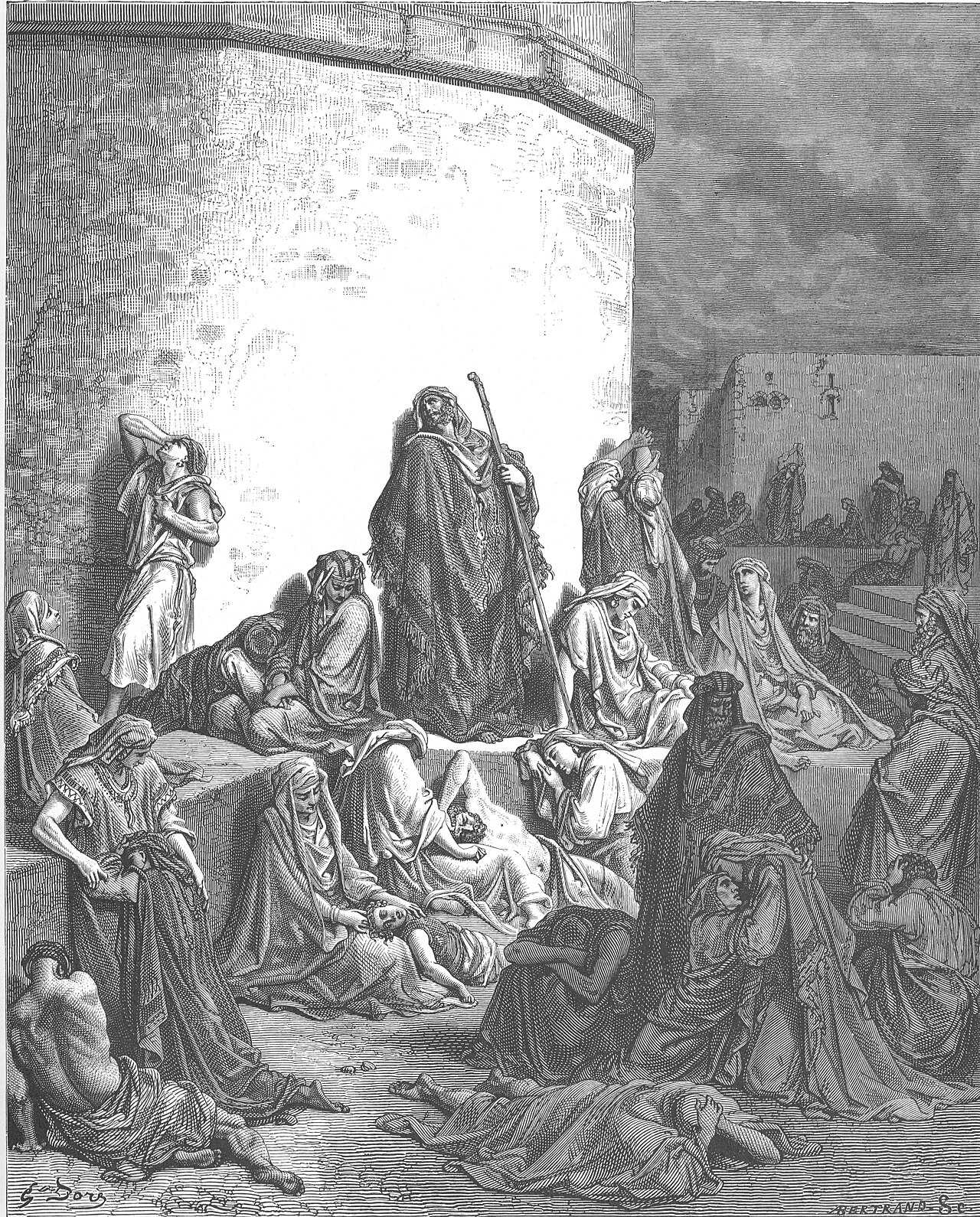
in Lamentations 1Her foes have become her masters; her enemies are at ease. For the LORD has brought her grief because of her many transgressions. Her children have gone away as captives before the enemy.
BSB
The same verse in ASV and KJV ▾
ASV
Her adversaries are become the head, her enemies prosper; For Jehovah hath afflicted her for the multitude of her transgressions: Her young children are gone into captivity before the adversary.
KJV
Her adversaries are the chief, her enemies prosper; for the Lord hath afflicted her for the multitude of her transgressions: her children are gone into captivity before the enemy.
⋯
This verse in Lamentations 1
Commentary
9 notes on this verseA commentator
Albert Barnes1798–1870
Notes, Explanatory and Practical, on the Old and New Testaments (1832-1869)
Are the chief ... prosper - Or, “are become the head”... are at rest. Judaea is so entirely crushed that her enemies did not need to take precautions against resistance on her part. Children - i. e. “young children,” who are driven before the enemy (literally the adversary), not as a flock of lambs which follow the shepherd, but for sale as slaves.
This site's exposition
The roads to Zion mourn
on Lamentations 1:4-6
The roads grieve, since “no one comes to her appointed feasts”, the pilgrim festivals the Law set in Deuteronomy 16:16. The temple's people are named: “her priests groan, her maidens grieve”. Her princes “are like deer that find no pasture”, too weak “to flee in the face of the hunter”.
This site's exposition
Her foes have become her masters
The Hebrew says her foes have become the head, the reversal Moses warned of in Deuteronomy 28:44. The poem names the cause for the first time. Albert Barnes notes her children go before the enemy as slaves, and Matthew Henry reads the grief as the sentence of a righteous Judge.
The record, by era
The Medieval Church2 voices
HER ADVERSARIES HAVE BECOME: the eighth topic of complaint. Historical interpretation. HER ADVERSARIES HAVE BECOME HER LORDS; HER ENEMIES ARE ENRICHED, because the Lord has spoken through Moses, namely, saying in Deuteronomy: The Lord make thee to fall down before thy enemies, and be scattered …
Here in Verse 5 is loudly lamented oppression, insofar as to the captives. So, first is bewailed captivity of minor persons, second, of major persons. As further on is said in Verse 6: "From the daughter of Zion has departed all her majesty." Regarding minor …
The Puritans and the Awakening3 voices
); which way soever their sword turns they get the better. Such straits do men bring themselves into by sin. If we allow that which is our greatest adversary and enemy to have dominion over us, and to be chief in us, justly will our other enemies be suffered to have dominion over us.
quarantine:debris (2026-07-29) — leading-punctuation+unbalanced-parens
) and he has done it as a righteous Judge, for she has sinned. Her sins are for number numberless. Her sins are many more. it is for the multitude of her transgressions that the Lord has afflicted her.
quarantine:debris (2026-07-29) — leading-punctuation+unbalanced-parens
Her adversaries are the chief,....
1 more voice on this verse
The Nineteenth Century1 voice
Her adversaries are the chief - They have now supreme dominion over the whole land.
The words behind it
16 Hebrew wordsEvery Hebrew word of this verse in the order it stands, with what it means and the door to its own study. The last column counts the times a word stands in the whole Bible: the rarer the word, the more the places it appears belong together.
| Hebrew | Sound | Meaning | Word study | In the Bible |
|---|---|---|---|---|
| הָי֨וּ | hayu | they have become | H1961 → | 3559 times |
| צָרֶ֤יהָ | tzareiha | opponents her | H6862 → | 109 times |
| לְרֹאשׁ֙ | lerosh | <into> a head | H7218 → | 599 times |
| אֹיְבֶ֣יהָ | ʾoyeveiha | enemies her | H341 → | 282 times |
| שָׁל֔וּ | shalu | they are at ease | H7951 → | |
| כִּֽי־ | ki- | for | H3588 → | 4482 times |
| יְהוָ֥ה | yahweh | Yahweh | H3068 → | 6520 times |
| הוֹגָ֖הּ | hogah | he has caused grief to her | H3013 → | 8 times |
| עַ֣ל | ʾal | on | H5921 → | 5755 times |
| רֹב־ | rov- | [the] multitude of | H7230 → | 149 times |
| פְּשָׁעֶ֑יהָ | peshaeiha | transgressions her | H6588 → | 93 times |
| עוֹלָלֶ֛יהָ | olaleiha | children her | H5768 → | 20 times |
| הָלְכ֥וּ | halekhu | they have gone | H1980 → | 1546 times |
| שְׁבִ֖י | shevi | captivity | H7628 → | |
| לִפְנֵי־ | lifnei- | <to> before | H6440 → | 2123 times |
| צָֽר׃ ס | tzar | an opponent | H6862 → | 109 times |
הָי֨וּthey have become
hayuH1961 →3559 times
צָרֶ֤יהָopponents her
tzareihaH6862 →109 times
לְרֹאשׁ֙<into> a head
leroshH7218 →599 times
אֹיְבֶ֣יהָenemies her
ʾoyeveihaH341 →282 times
שָׁל֔וּthey are at ease
shaluH7951 →
כִּֽי־for
ki-H3588 →4482 times
יְהוָ֥הYahweh
yahwehH3068 →6520 times
הוֹגָ֖הּhe has caused grief to her
hogahH3013 →8 times
עַ֣לon
ʾalH5921 →5755 times
רֹב־[the] multitude of
rov-H7230 →149 times
פְּשָׁעֶ֑יהָtransgressions her
peshaeihaH6588 →93 times
עוֹלָלֶ֛יהָchildren her
olaleihaH5768 →20 times
הָלְכ֥וּthey have gone
halekhuH1980 →1546 times
שְׁבִ֖יcaptivity
sheviH7628 →
לִפְנֵי־<to> before
lifnei-H6440 →2123 times
צָֽר׃ סan opponent
tzarH6862 →109 times
A shaded row is a word that stands 400 times or fewer in the Bible.
The walk
8 stopsEach card is a verse this one points to, and under it the verses that one points to in turn. Where several paths arrive at the same place, that place is listed first: the text keeps returning to it.
Through
Ezekiel 9:9He replied, “The iniquity of the house of Israel and Judah is exceedingly great. The land is full of bloodshed, and the city is full of perversity. For they say, ‘The LORD has forsaken…
it leads to
- Ezekiel 8:12
“Son of man,” He said to me, “do you see what the elders of the house of Israel are doing in the darkness, each at the shrine of his own idol? For they are…
- Job 22:13
Yet you say: ‘What does God know? Does He judge through thick darkness?
- 2 Chronicles 36:14–16
Furthermore, all the leaders of the priests and the people multiplied their unfaithful deeds, following all the abominations of the nations, and they defiled the house of the LORD, which He had consecrated in…
- Ezekiel 7:23
Forge the chain, for the land is full of crimes of bloodshed, and the city is full of violence.
- Ezekiel 8:12
Through
Jeremiah 39:9Then Nebuzaradan captain of the guard carried away to Babylon the remnant of the people who had remained in the city, along with the deserters who had defected to him.
it leads to
- Jeremiah 40:1
This is the word that came to Jeremiah from the LORD after Nebuzaradan captain of the guard had released him at Ramah, having found him bound in chains among all the captives of Jerusalem…
- Genesis 37:36
Meanwhile, the Midianites sold Joseph in Egypt to Potiphar, an officer of Pharaoh and captain of the guard.
- Jeremiah 10:18
For this is what the LORD says: “Behold, at this time I will sling out the inhabitants of the land and bring distress upon them so that they may be captured.”
- 2 Kings 25:11
Then Nebuzaradan captain of the guard carried into exile the people who remained in the city, along with the deserters who had defected to the king of Babylon and the rest of the population.
- Jeremiah 40:1
Where this verse is studied
On this page
About Lamentations
This page draws on Adam Clarke, Commentary on the Bible; Albert Barnes, Notes, Explanatory and Practical, on the Old and New Testaments (1832-1869); Glossa Ordinaria, Commentary (church-history corpus); John Gill, Exposition of the Old Testament; John Gill, Exposition of the Old Testament (1748-1763); Matthew Henry, Commentary on the Whole Bible and Thomas Aquinas, Commentary on Lamentations.