
Joshua 3:4
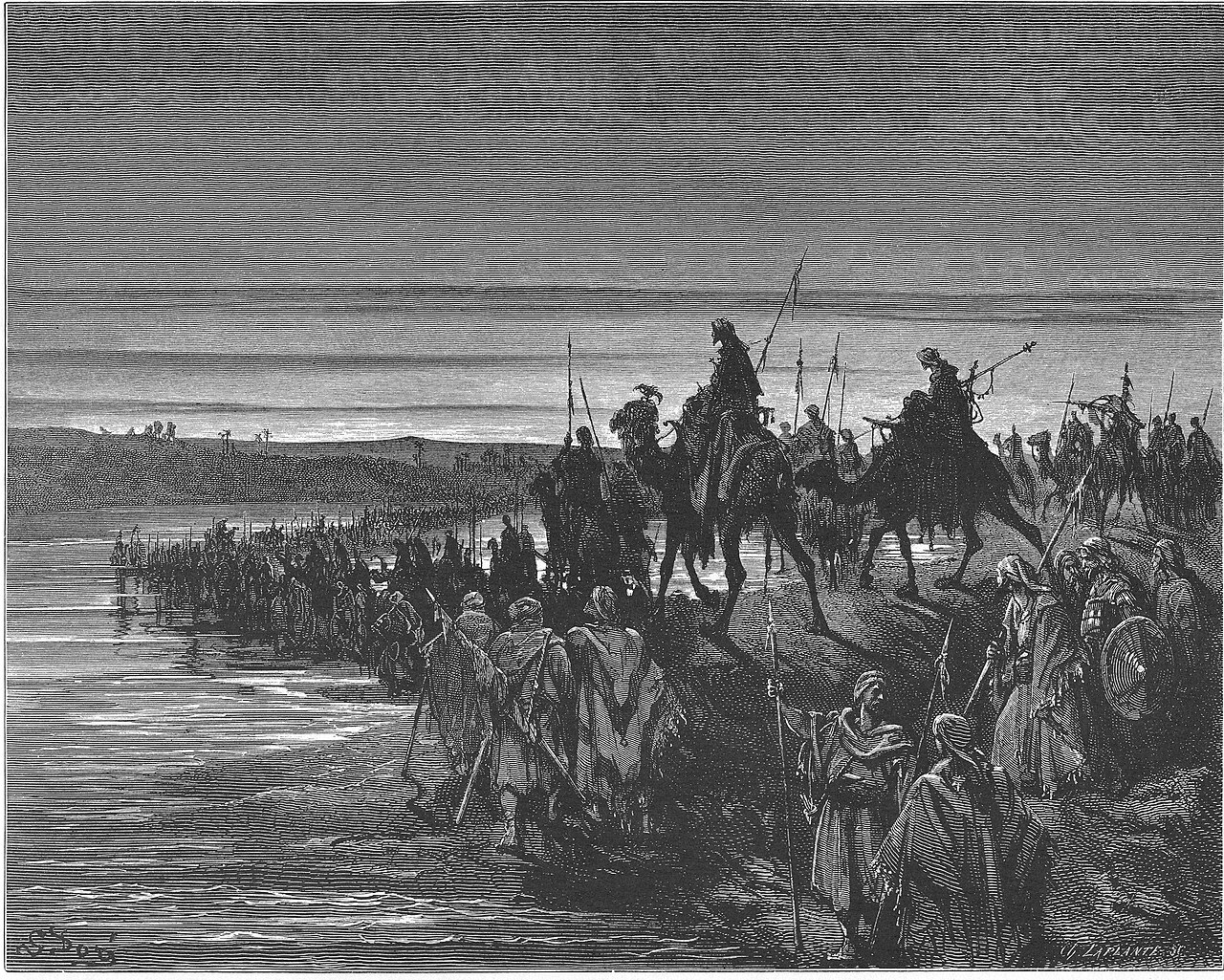
in Joshua 3But keep a distance of about two thousand cubits between yourselves and the ark. Do not go near it, so that you can see the way to go, since you have never traveled this way before.”
BSB
The same verse in ASV and KJV ▾
ASV
Yet there shall be a space between you and it, about two thousand cubits by measure: come not near unto it, that ye may know the way by which ye must go; for ye have not passed this way heretofore.
KJV
Yet there shall be a space between you and it, about two thousand cubits by measure: come not near unto it, that ye may know the way by which ye must go: for ye have not passed this way heretofore.
⋯
This verse in Joshua 3
Commentary
11 notes on this verseAbout two thousand cubits - This distance they were to keep, 1. For the greater respect, because the presence of the ark was the symbol and pledge of the Divine presence. 2. That the ark, which was to be their pilot over these waters, might be the more conspicuous which it could not have been had the people crowded upon it.
This site's exposition
being carried by the Levitical priests
on Joshua 3:3-4
The people move when the ark moves and keep about two thousand cubits behind it. A chest on men’s shoulders is hidden from the back of a large camp. Adam Clarke adds reverence for the ark, and John Wesley notes the later sabbath walk was the same distance.
This site's exposition
about two thousand cubits
Barnes adds a further reason: from the heights the people could watch the ark go down into the river. Henry notes the ark needed no guard of soldiers. It went alone and itself guarded them, and he contrasts the distance kept here with the access believers have through Christ.
The record, by era
The Church Fathers1 voice
Finally, see what is said: "Let the people be at a distance from the ark of the covenant," it says, "by two thousand cubits." The priests and the Levites, however, are very near, and near enough so that the ark of the Lord and the divine law are carried on their own shoulders. Blessed are those who deserve to be very close to God. But remember that it is written, "Those who draw near to me, draw near to fire."
The Puritans and the Awakening3 voices
Two thousand cubits - A thousand yards, at which distance from it the Israelites seem to have been encamped in the wilderness. And because they generally went from their tents to the ark to worship God, especially on the sabbath-days; hence it hath been conceived, that a sabbath-day's journey reached only to two thousand cubits.
Yet there shall be a space between you and it,....
This charge to them not to come near was agreeable to that dispensation of darkness, bondage, and terror: but we now through Christ have access with boldness. (2.) Thus it was made to appear that the ark was able to protect itself, and needed not to be guarded by the men of war, but was itself a guard to them.
The Nineteenth Century1 voice
A commentator
Jamieson, Fausset & Brown1802–1910
Commentary Critical and Explanatory on the Whole Bible (1871)
proposed
When ye see the ark . . ., and the priests the Levites bearing it--The usual position of the ark, when at rest, was in the center of the camp; and, during a march, in the middle of the procession. On this occasion it was to occupy the van, and be borne, not by the Kohathite Levites, but the priests, as on all solemn and extraordinary occasions (compare Nu 4:15;
quarantine:debris (2026-07-29) — unbalanced-parens
3 more voices on this verse
The Nineteenth Century3 voices
THEY had come out of Egypt. They had gone up and down in the wilderness, but they had never before crossed the Jordan. It was new ground to them, a new difficulty, and a new series of events lay before them. As a fresh emergency had arisen, they had new orders direct from the Lord, their leader, and Joshua and his officers were busy going throughout the host to communicate the Divine directions.
THEY had come out of Egypt. They had gone up and down in the wilderness, but they had never before crossed the Jordan. It was new ground to them, a new difficulty, and a new series of events lay before them. As a fresh emergency had arisen, they had new orders direct from the Lord, their leader, and Joshua and his officers were busy going throughout the host to communicate the Divine directions. Beloved, when it shall be our lot to come into new positions we shall always obtain renewed guidance from the Spirit of God if we will but wait upon Him for it and cry, "Show me Your way, O Lord, and lead me in a plain path." It is a most important matter with all of us who are Believers in Christ that our faith should be in a thoroughly sound condition. It is not only grievous to ourselves, but dishonoring to God when our faith falls to a low ebb. To see a distrustful Christian is to see a man who is robbing God of His Glory. Since the Holy Spirit so vehemently cries, "Comfort you, comfort you My people; speak comfortably to Jerusalem," we may safely come to the conclusion that it is solemnly important that the saints should be comforted, and that for them to lose their comfort is a very grievous thing. He glorifies God most whose faith staggers least. To maintain faith in full vigor is, therefore, a most important matter. Now there is one very severe trial of faith which will happen to us all, and probably has already occurred to most of us. It is that of a change of trials, a passing into new territory, an entrance into novel circumstances. There is a conservative tendency about most of us so that we build our nest and would gladly live and die in it.
A commentator
Albert Barnes1798–1870
Notes, Explanatory and Practical, on the Old and New Testaments (1832-1869)
proposed
The ark, which was since the making of the covenant the special shrine and seat of God’s presence, went before to show the people that God, through its medium, was their leader. They were to follow at a distance that they might the better observe and mark how the miracle was accomplished. This they would do to the greatest advantage while coming down the heights, the ark going on before them into the ravine.
The words behind it
25 Hebrew wordsEvery Hebrew word of this verse in the order it stands, with what it means and the door to its own study. The last column counts the times a word stands in the whole Bible: the rarer the word, the more the places it appears belong together.
| Hebrew | Sound | Meaning | Word study | In the Bible |
|---|---|---|---|---|
| אַ֣ךְ׀ | ʾakh | nevertheless | H389 → | |
| רָח֣וֹק | rachok | a distance | H7350 → | 84 times |
| יִהְיֶ֗ה | yihyeh | it will be | H1961 → | 3559 times |
| בֵּֽינֵיכֶם֙ | beineikhem | between you | H996 → | 407 times |
| וּבֵינָ֔יו | uveinov | and between it | H996 → | 407 times |
| כְּאַלְפַּ֥יִם | kealpayim | about two thousand | H505 → | 505 times |
| אַמָּ֖ה | ʾamah | cubit[s] | H520 → | |
| בַּמִּדָּ֑ה | bamidah | by <the> measurement | H4060 → | |
| אַֽל־ | ʾal- | may not | H408 → | 724 times |
| תִּקְרְב֣וּ | tikrevu | you draw near | H7126 → | 280 times |
| אֵלָ֗יו | ʾelav | to it | H413 → | 5510 times |
| לְמַ֤עַן | lemaan | so that | H4616 → | 272 times |
| אֲשֶׁר־ | ʾasher- | that | H834 → | 5497 times |
| תֵּֽדְעוּ֙ | tedeu | you may know | H3045 → | 945 times |
| אֶת־ | ʾet- | <obj.> | H853 → | 10935 times |
| הַדֶּ֙רֶךְ֙ | haderekh | the way | H1870 → | 707 times |
| אֲשֶׁ֣ר | ʾasher | which | H834 → | 5497 times |
| תֵּֽלְכוּ־ | telekhu- | you will go | H1980 → | 1546 times |
| בָ֔הּ | vah | in <the> it | ||
| כִּ֣י | ki | for | H3588 → | 4482 times |
| לֹ֧א | lo' | not | H3808 → | 5168 times |
| עֲבַרְתֶּ֛ם | ʾavartem | you have passed | H5674 → | 556 times |
| בַּדֶּ֖רֶךְ | baderekh | in the way | H1870 → | 707 times |
| מִתְּמ֥וֹל | mitemol | from yesterday | H8543 → | 23 times |
| שִׁלְשֽׁוֹם׃ ס | shilshom | three days ago | H8032 → | 24 times |
אַ֣ךְ׀nevertheless
ʾakhH389 →
רָח֣וֹקa distance
rachokH7350 →84 times
יִהְיֶ֗הit will be
yihyehH1961 →3559 times
בֵּֽינֵיכֶם֙between you
beineikhemH996 →407 times
וּבֵינָ֔יוand between it
uveinovH996 →407 times
כְּאַלְפַּ֥יִםabout two thousand
kealpayimH505 →505 times
אַמָּ֖הcubit[s]
ʾamahH520 →
בַּמִּדָּ֑הby <the> measurement
bamidahH4060 →
אַֽל־may not
ʾal-H408 →724 times
תִּקְרְב֣וּyou draw near
tikrevuH7126 →280 times
אֵלָ֗יוto it
ʾelavH413 →5510 times
לְמַ֤עַןso that
lemaanH4616 →272 times
אֲשֶׁר־that
ʾasher-H834 →5497 times
תֵּֽדְעוּ֙you may know
tedeuH3045 →945 times
אֶת־<obj.>
ʾet-H853 →10935 times
הַדֶּ֙רֶךְ֙the way
haderekhH1870 →707 times
אֲשֶׁ֣רwhich
ʾasherH834 →5497 times
תֵּֽלְכוּ־you will go
telekhu-H1980 →1546 times
בָ֔הּin <the> it
vah
כִּ֣יfor
kiH3588 →4482 times
לֹ֧אnot
lo'H3808 →5168 times
עֲבַרְתֶּ֛םyou have passed
ʾavartemH5674 →556 times
בַּדֶּ֖רֶךְin the way
baderekhH1870 →707 times
מִתְּמ֥וֹלfrom yesterday
mitemolH8543 →23 times
שִׁלְשֽׁוֹם׃ סthree days ago
shilshomH8032 →24 times
A shaded row is a word that stands 400 times or fewer in the Bible.
The walk
8 stopsEach card is a verse this one points to, and under it the verses that one points to in turn. Where several paths arrive at the same place, that place is listed first: the text keeps returning to it.
Through
Exodus 3:5“Do not come any closer,” God said. “Take off your sandals, for the place where you are standing is holy ground.”
it leads to
- Joshua 5:15
The Commander of the LORD’s army replied, “Take off your sandals, for the place where you are standing is holy.” And Joshua did so.
- Acts 7:33
Then the Lord said to him, ‘Take off your sandals, for the place where you are standing is holy ground.
- Exodus 19:12
And you are to set up a boundary for the people around the mountain and tell them, ‘Be careful not to go up on the mountain or touch its base. Whoever touches the mountain…
- Ecclesiastes 5:1
Guard your steps when you go to the house of God. Draw near to listen rather than to offer the sacrifice of fools, who do not know that they do wrong.
- Genesis 28:16–17
When Jacob woke up, he thought, “Surely the LORD is in this place, and I was unaware of it.”
- Joshua 5:15
Through
Psalms 89:7In the council of the holy ones, God is greatly feared, and awesome above all who surround Him.
it leads to
- Psalms 47:2
How awesome is the LORD Most High, the great King over all the earth!
- Psalms 76:7–11
You alone are to be feared. When You are angry, who can stand before You?
- Psalms 47:2
Through
Genesis 31:2And Jacob saw from the countenance of Laban that his attitude toward him had changed.
it leads to
- Daniel 3:19
At this, Nebuchadnezzar was filled with rage, and the expression on his face changed toward Shadrach, Meshach, and Abednego. He gave orders to heat the furnace seven times hotter than usual,
- Daniel 3:19
Where this verse is studied
On this page
Studies4
On this chapter
About Joshua
This page draws on 10 works. Open the list of works
This page draws on Adam Clarke, Commentary on the Bible; Albert Barnes, Notes on the Old Testament; Albert Barnes, Notes, Explanatory and Practical, on the Old and New Testaments (1832-1869); Charles Spurgeon, The Metropolitan Tabernacle Pulpit, Sermon No. 1057: “Untrodden Ways” (lightly modernized text, CCEL edition); Jamieson, Fausset & Brown, Commentary Critical and Explanatory on the Whole Bible; John Gill, Exposition of the Old Testament (1748-1763); John Wesley, Explanatory Notes upon the Old Testament; Keil and Delitzsch, Biblical Commentary on the Old Testament: Joshua, Judges, Ruth; Matthew Henry, Commentary on the Whole Bible and Origen of Alexandria, HOMILIES ON JOSHUA 4.3.