
Jeremiah 17:27
in Jeremiah 17But if you do not listen to Me to keep the Sabbath day holy by not carrying a load while entering the gates of Jerusalem on the Sabbath day, then I will kindle an unquenchable fire in its gates to consume the citadels of Jerusalem.’”
BSB
The same verse in ASV and KJV ▾
ASV
But if ye will not hearken unto me to hallow the sabbath day, and not to bear a burden and enter in at the gates of Jerusalem on the sabbath day; then will I kindle a fire in the gates thereof, and it shall devour the palaces of Jerusalem, and it shall not be quenched.
KJV
But if ye will not hearken unto me to hallow the sabbath day, and not to bear a burden, even entering in at the gates of Jerusalem on the sabbath day; then will I kindle a fire in the gates thereof, and it shall devour the palaces of Jerusalem, and it shall not be quenched.
⋯
This verse in Jeremiah 17
Commentary
8 notes on this verse(Verse 20 and following) Thus says the Lord: Guard your souls, and do not carry burdens on the Sabbath day, or bring them through the gates of Jerusalem. And do not cast burdens out of your houses on the Sabbath day, and you shall not do any work, and sanctify the Sabbath day, as I commanded your fathers. But they did not listen, nor inclined their ear, and they stiffened their necks (and what is not found in Hebrew, against their fathers), so that they would not listen to me, and would not receive discipline.
This site's exposition
Go and stand at the gate of the people
on Jeremiah 17:19-27
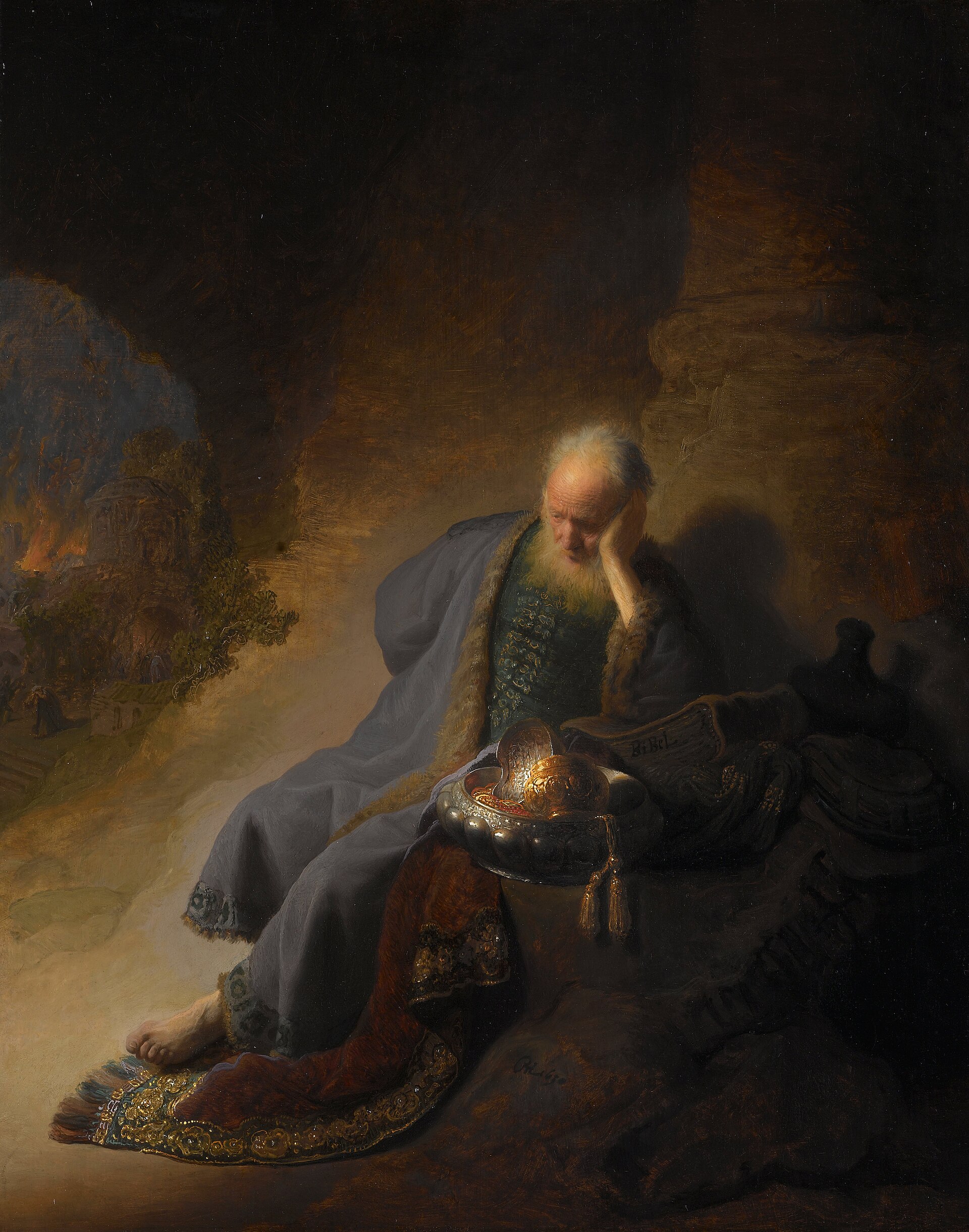
Jeremiah must stand at the gate the kings of Judah use and preach one commandment. The fathers heard the same command, and “they stiffened their necks”. Obedience would bring kings into a city “inhabited forever”, and disobedience “an unquenchable fire in its gates”.
This site's exposition
But if you do not listen to Me
The gates where the loads came in become the place where the fire starts. Jamieson, Fausset and Brown read it as punishment, the scene of the offense made the scene of judgment, and point to Jeremiah 52:13. Matthew Henry notes that the Chaldean army fulfilled it.
The record, by era
The Puritans and the Awakening3 voices
This was fulfilled by the army of the Chaldeans, ch. lii. The profanation of the sabbath is a sin for which God has often contended with a people by fire.
The people had asked ( ch. xvi. 10 ), What is our iniquity, and what is our sin? as if they could not be charged with any thing worth speaking of, for which God should enter into judgment with them; their challenge was answered there, but here we have a further reply to it, in which, I.
But if ye will not hearken unto me,....
The Nineteenth Century2 voices
A commentator
Jamieson, Fausset & Brown1802–1910
Commentary Critical and Explanatory on the Whole Bible (1871)
proposed
burden . . . in . . . gates . . . fire in the gates--retribution answering to the sin. The scene of their sin shall be the scene of their punishment (Jer 52:13;
quarantine:debris (2026-07-29) — starts-lowercase+unbalanced-parens
But if ye will not hearken - Then their sin lay at their own door. How fully were they warned; and how basely did they reject the counsel of God against themselves!
How the passage was read
On Jeremiah 17:19-27On Jeremiah 17:19-27
Burdens through the gates
Jeremiah stands in Jerusalem's gates and warns: “bear no burden on the sabbath day, nor bring it in by the gates of Jerusalem.” The written Sabbath command says “no work”; this prophetic oracle is the clearest Scripture naming CARRYING as the work in view, and it became the root of the tradition's rule against carrying from one domain to another on the Sabbath, the last of the Mishnah's thirty-nine categories of forbidden labor (Shabbat 7:2). The categories are kept by observant Jews to this day, which is why traditional neighborhoods build an eruv, a boundary that legally merges private domains so families can carry outdoors on the day.
This passage is the live background of John 5:10: “It is the sabbath day: it is not lawful for thee to carry thy bed.” The objectors are standing on Jeremiah's oracle as the tradition had built on it. The healed man's mat, not his healing, is what the rule could name.
This section is reception history: how the passage was read and kept in the Jewish tradition. Where a reading parts from an essential of the Christian faith, the section says so at that point.
Sources: Mishnah Shabbat 7:2 (the thirty-nine categories; carrying is the last)
The words behind it
24 Hebrew wordsEvery Hebrew word of this verse in the order it stands, with what it means and the door to its own study. The last column counts the times a word stands in the whole Bible: the rarer the word, the more the places it appears belong together.
| Hebrew | Sound | Meaning | Word study | In the Bible |
|---|---|---|---|---|
| וְאִם־ | veim- | and if | H518 → | 1069 times |
| לֹ֨א | lo' | not | H3808 → | 5168 times |
| תִשְׁמְע֜וּ | tishmeu | you will listen | H8085 → | 1159 times |
| אֵלַ֗י | ʾelai | to me | H413 → | 5510 times |
| לְקַדֵּשׁ֙ | lekadesh | to set apart as holy | H6942 → | 171 times |
| אֶת־ | ʾet- | <obj.> | H853 → | 10935 times |
| י֣וֹם | yom | [the] day of | H3117 → | 2304 times |
| הַשַּׁבָּ֔ת | hashabat | the sabbath | H7676 → | 110 times |
| וּלְבִלְתִּ֣י׀ | ulevilti | and to not | H1115 → | 112 times |
| שְׂאֵ֣ת | seet | to carry | H5375 → | 656 times |
| מַשָּׂ֗א | masa' | a burden | H4853 → | 66 times |
| וּבֹ֛א | uvo' | and to go | H935 → | 2568 times |
| בְּשַׁעֲרֵ֥י | beshaarei | in [the] gates of | H8179 → | 374 times |
| יְרוּשָׁלִַ֖ם | yerushalim | Jerusalem | H3389 → | 643 times |
| בְּי֣וֹם | beyom | on [the] day of | H3117 → | 2304 times |
| הַשַּׁבָּ֑ת | hashabat | the sabbath | H7676 → | 110 times |
| וְהִצַּ֧תִּי | vehitzati | and I will kindle | H3341 → | 29 times |
| אֵ֣שׁ | ʾesh | a fire | H784 → | 378 times |
| בִּשְׁעָרֶ֗יהָ | bishareiha | in gates its | H8179 → | 374 times |
| וְאָֽכְלָ֛ה | veakhelah | and it will consume | H398 → | 810 times |
| אַרְמְנ֥וֹת | ʾarmenot | [the] fortresses of | H759 → | 32 times |
| יְרוּשָׁלִַ֖ם | yerushalim | Jerusalem | H3389 → | 643 times |
| וְלֹ֥א | velo' | and not | H3808 → | 5168 times |
| תִכְבֶּֽה׃ פ | tikhbeh | it will be extinguished | H3518 → | 24 times |
וְאִם־and if
veim-H518 →1069 times
לֹ֨אnot
lo'H3808 →5168 times
תִשְׁמְע֜וּyou will listen
tishmeuH8085 →1159 times
אֵלַ֗יto me
ʾelaiH413 →5510 times
לְקַדֵּשׁ֙to set apart as holy
lekadeshH6942 →171 times
אֶת־<obj.>
ʾet-H853 →10935 times
י֣וֹם[the] day of
yomH3117 →2304 times
הַשַּׁבָּ֔תthe sabbath
hashabatH7676 →110 times
וּלְבִלְתִּ֣י׀and to not
uleviltiH1115 →112 times
שְׂאֵ֣תto carry
seetH5375 →656 times
מַשָּׂ֗אa burden
masa'H4853 →66 times
וּבֹ֛אand to go
uvo'H935 →2568 times
בְּשַׁעֲרֵ֥יin [the] gates of
beshaareiH8179 →374 times
יְרוּשָׁלִַ֖םJerusalem
yerushalimH3389 →643 times
בְּי֣וֹםon [the] day of
beyomH3117 →2304 times
הַשַּׁבָּ֑תthe sabbath
hashabatH7676 →110 times
וְהִצַּ֧תִּיand I will kindle
vehitzatiH3341 →29 times
אֵ֣שׁa fire
ʾeshH784 →378 times
בִּשְׁעָרֶ֗יהָin gates its
bishareihaH8179 →374 times
וְאָֽכְלָ֛הand it will consume
veakhelahH398 →810 times
אַרְמְנ֥וֹת[the] fortresses of
ʾarmenotH759 →32 times
יְרוּשָׁלִַ֖םJerusalem
yerushalimH3389 →643 times
וְלֹ֥אand not
velo'H3808 →5168 times
תִכְבֶּֽה׃ פit will be extinguished
tikhbehH3518 →24 times
A shaded row is a word that stands 400 times or fewer in the Bible.
The walk
8 stopsEach card is a verse this one points to, and under it the verses that one points to in turn. Where several paths arrive at the same place, that place is listed first: the text keeps returning to it.
Through
Jeremiah 21:14I will punish you as your deeds deserve, declares the LORD. I will kindle a fire in your forest that will consume everything around you.’”
it leads to
- Isaiah 3:10–11
Tell the righteous it will be well with them, for they will enjoy the fruit of their labor.
- Jeremiah 32:19
the One great in counsel and mighty in deed, whose eyes are on all the ways of the sons of men, to reward each one according to his ways and according to the fruit…
- Isaiah 3:10–11
Through
Ezekiel 22:8You have despised My holy things and profaned My Sabbaths.
it leads to
- Ezekiel 23:38–39
They have also done this to Me: On that very same day, they defiled My sanctuary and profaned My Sabbaths.
- Ezekiel 20:13
Yet the house of Israel rebelled against Me in the wilderness. They did not follow My statutes and they rejected My ordinances—though the man who does these things will live by them—and they utterly…
- Ezekiel 22:26
Her priests do violence to My law and profane My holy things. They make no distinction between the holy and the common, and they fail to distinguish between the clean and the unclean. They…
- Ezekiel 23:38–39
Through
Jeremiah 7:20Therefore this is what the Lord GOD says: Behold, My anger and My fury will be poured out on this place, on man and beast, on the trees of the field and the produce…
it leads to
- Jeremiah 42:18
For this is what the LORD of Hosts, the God of Israel, says: ‘Just as My anger and wrath were poured out on the residents of Jerusalem, so will My wrath be poured out…
- Lamentations 2:3–5
In fierce anger He has cut off every horn of Israel and withdrawn His right hand at the approach of the enemy. He has burned in Jacob like a flaming fire that consumes everything…
- Jeremiah 42:18
Through
2 Kings 25:9He burned down the house of the LORD, the royal palace, and all the houses of Jerusalem—every significant building.
it leads to
- Amos 2:5
So I will send fire upon Judah to consume the citadels of Jerusalem.”
- Amos 2:5
Where this verse is studied
About Jeremiah
Who and where
1 name in this verse with a page on the site.
This page draws on Adam Clarke, Commentary on the Bible; Jamieson Fausset and Brown, Commentary Critical and Explanatory on the Whole Bible; Jamieson, Fausset & Brown, Commentary Critical and Explanatory on the Whole Bible; Jerome, Commentary on Jeremiah; John Gill, Exposition of the Old Testament (1748-1763) and Matthew Henry, Commentary on the Whole Bible.