
Jeremiah 6:15
in Jeremiah 6Are they ashamed of the abomination they have committed? No, they have no shame at all; they do not even know how to blush. So they will fall among the fallen; when I punish them, they will collapse,” says the LORD.
BSB
The same verse in ASV and KJV ▾
ASV
Were they ashamed when they had committed abomination? nay, they were not at all ashamed, neither could they blush: therefore they shall fall among them that fall; at the time that I visit them they shall be cast down, saith Jehovah.
KJV
Were they ashamed when they had committed abomination? nay, they were not at all ashamed, neither could they blush: therefore they shall fall among them that fall: at the time that I visit them they shall be cast down, saith the Lord.
⋯
This verse in Jeremiah 6
Commentary
7 notes on this verse(Verse 15.) They are confused because they have committed an abomination; rather, they have not been confused by their confusion, and they have not known how to blush. This should be read with greater precision according to the Hebrew. And when, he says, they have done so much, are they confused? Have they blushed for their sins? Rather, they have increased sin through contempt, and they have not known how to blush. However, here 'nescierunt' is used in place of 'noluerunt': either due to excessive contempt and the vice of accustomed evil, they were not even able to understand.
This site's exposition
houses shall be turned unto others
on Jeremiah 6:12-15
The corruption named at 5:31 is restated here as total, from the least of them even unto the greatest, prophet and priest included, before it produces the book's most quoted false comfort, they have healed also the hurt of the daughter of my people slightly, saying, Peace, peace; when there is no peace, a diagnosis papered over rather than treated. Were they ashamed, neither could they blush names a conscience past the point of feeling its own wound, which the bench reads as worse than the sin itself, since shame at least still argues for a cure.
The record, by era
The Puritans and the Awakening3 voices
7 As a fountain casteth out her waters, so she casteth out her wickedness: violence and spoil is heard in her; before me continually is grief and wounds. 8 Be thou instructed, O Jerusalem, lest my soul depart from thee; lest I make thee desolate, a land not inhabited. Judgment threatened against Judah and Jerusalem.
quarantine:scripture (2026-07-29) — scripture-overlap:94%@v6-8
Were they ashamed when they had committed abomination?....
Some refer this to the priests and prophets, who had healed the people slightly and told them that they should have peace, and yet were not ashamed of their treachery and falsehood, no, not when the event disproved them and gave them the lie. Those that are shameless are graceless and their case is hopeless.
The Nineteenth Century2 voices
A commentator
Jamieson, Fausset & Brown1802–1910
Commentary Critical and Explanatory on the Whole Bible (1871)
proposed
ROSENMULLER translates, "They ought to have been ashamed, because . . . but," &c.; the Hebrew verb often expressing, not the action, but the duty to perform it (Ge 20:9; MAURER translates, "They shall be put to shame, for they commit abomination; nay (the prophet correcting himself), there is no shame in them" (Jer 3:3;
quarantine:debris (2026-07-29) — unbalanced-parens
A commentator
Albert Barnes1798–1870
Notes, Explanatory and Practical, on the Old and New Testaments (1832-1869)
proposed
They are brought to shame because They have “committed abomination:” Shame nevertheless they feel not; To blush nevertheless they know not; “Therefore they shall fall among” the falling; “At the time” when “I visit them, they shall” stumble, “Saith Yahweh.” The fact is expressed that their conduct was a disgrace to them, though they did not feel it as such. “Abomination” has its usual meaning of idolatry Jer 4:1.
How the passage was read
What the Jewish commentators add
On the verses either side of this one
easily It is easy for the false prophets to pronounce with their mouths and to say, “You shall have peace,” and with this thing they heal with their speech the breach destined to come upon them.
This section is reception history: how the passage was read and kept in the Jewish tradition. Where a reading parts from an essential of the Christian faith, the section says so at that point.
Texts and citation data: Sefaria; each excerpt follows its version’s licence. 5 further sources are cited on this chapter that carry no English text this site may quote or only restate the verse.
The words behind it
20 Hebrew wordsEvery Hebrew word of this verse in the order it stands, with what it means and the door to its own study. The last column counts the times a word stands in the whole Bible: the rarer the word, the more the places it appears belong together.
| Hebrew | Sound | Meaning | Word study | In the Bible |
|---|---|---|---|---|
| הֹבִ֕ישׁוּ | hovishu | are they ashamed? | H954 → | 127 times |
| כִּ֥י | ki | that | H3588 → | 4482 times |
| תוֹעֵבָ֖ה | toevah | an abomination | H8441 → | 117 times |
| עָשׂ֑וּ | ʾasu | they have done | H6213 → | 2628 times |
| גַּם־ | gam- | neither | H1571 → | 769 times |
| בּ֣וֹשׁ | boosh | at all <ashamed> | H954 → | 127 times |
| לֹֽא־ | lo'- | not | H3808 → | 5168 times |
| יֵב֗וֹשׁוּ | yevooshu | they are ashamed | H954 → | 127 times |
| גַּם־ | gam- | nor | H1571 → | 769 times |
| הַכְלִים֙ | hakhlim | to exhibit shame | H3637 → | 38 times |
| לֹ֣א | lo' | not | H3808 → | 5168 times |
| יָדָ֔עוּ | yadau | they know | H3045 → | 945 times |
| לָכֵ֞ן | lakhen | <to> therefore | H3651 → | 771 times |
| יִפְּל֧וּ | yipelu | they will fall | H5307 → | 435 times |
| בַנֹּפְלִ֛ים | vanofelim | among <the> [those who] fall | H5307 → | 435 times |
| בְּעֵת־ | beet- | at [the] time | H6256 → | 296 times |
| פְּקַדְתִּ֥ים | pekadtim | [when] I have visited them | H6485 → | 303 times |
| יִכָּשְׁל֖וּ | yikashelu | they will stumble | H3782 → | 62 times |
| אָמַ֥ר | ʾamar | he says | H559 → | 5305 times |
| יְהוָֽה׃ ס | yahweh | Yahweh | H3068 → | 6520 times |
הֹבִ֕ישׁוּare they ashamed?
hovishuH954 →127 times
כִּ֥יthat
kiH3588 →4482 times
תוֹעֵבָ֖הan abomination
toevahH8441 →117 times
עָשׂ֑וּthey have done
ʾasuH6213 →2628 times
גַּם־neither
gam-H1571 →769 times
בּ֣וֹשׁat all <ashamed>
booshH954 →127 times
לֹֽא־not
lo'-H3808 →5168 times
יֵב֗וֹשׁוּthey are ashamed
yevooshuH954 →127 times
גַּם־nor
gam-H1571 →769 times
הַכְלִים֙to exhibit shame
hakhlimH3637 →38 times
לֹ֣אnot
lo'H3808 →5168 times
יָדָ֔עוּthey know
yadauH3045 →945 times
לָכֵ֞ן<to> therefore
lakhenH3651 →771 times
יִפְּל֧וּthey will fall
yipeluH5307 →435 times
בַנֹּפְלִ֛יםamong <the> [those who] fall
vanofelimH5307 →435 times
בְּעֵת־at [the] time
beet-H6256 →296 times
פְּקַדְתִּ֥ים[when] I have visited them
pekadtimH6485 →303 times
יִכָּשְׁל֖וּthey will stumble
yikasheluH3782 →62 times
אָמַ֥רhe says
ʾamarH559 →5305 times
יְהוָֽה׃ סYahweh
yahwehH3068 →6520 times
A shaded row is a word that stands 400 times or fewer in the Bible.
The walk
8 stopsEach card is a verse this one points to, and under it the verses that one points to in turn. Where several paths arrive at the same place, that place is listed first: the text keeps returning to it.
Through
Philippians 3:19Their end is destruction, their god is their belly, and their glory is in their shame. Their minds are set on earthly things.
it leads to
- Romans 16:18
For such people are not serving our Lord Christ, but their own appetites. By smooth talk and flattery they deceive the hearts of the naive.
- Romans 8:5–7
Those who live according to the flesh set their minds on the things of the flesh; but those who live according to the Spirit set their minds on the things of the Spirit.
- 2 Peter 2:3
In their greed, these false teachers will exploit you with deceptive words. The longstanding verdict against them remains in force, and their destruction does not sleep.
- Colossians 3:2
Set your minds on things above, not on earthly things.
- Romans 16:18
Through
Matthew 15:14Disregard them! They are blind guides. If a blind man leads a blind man, both will fall into a pit.”
it leads to
- Luke 6:39
Jesus also told them a parable: “Can a blind man lead a blind man? Will they not both fall into a pit?
- Isaiah 56:10
Israel’s watchmen are blind, they are all oblivious; they are all mute dogs, they cannot bark; they are dreamers lying around, loving to slumber.
- Luke 6:39
Through
Jeremiah 3:3Therefore the showers have been withheld, and no spring rains have fallen. Yet you have the brazen look of a prostitute; you refuse to be ashamed.
it leads to
- Leviticus 26:19
I will break down your stubborn pride and make your sky like iron and your land like bronze,
- Jeremiah 5:24
They have not said in their hearts, ‘Let us fear the LORD our God, who gives the rains, both autumn and spring, in season, who keeps for us the appointed weeks of harvest.’
- Leviticus 26:19
Where this verse is studied
On this page
Studies1
About Jeremiah
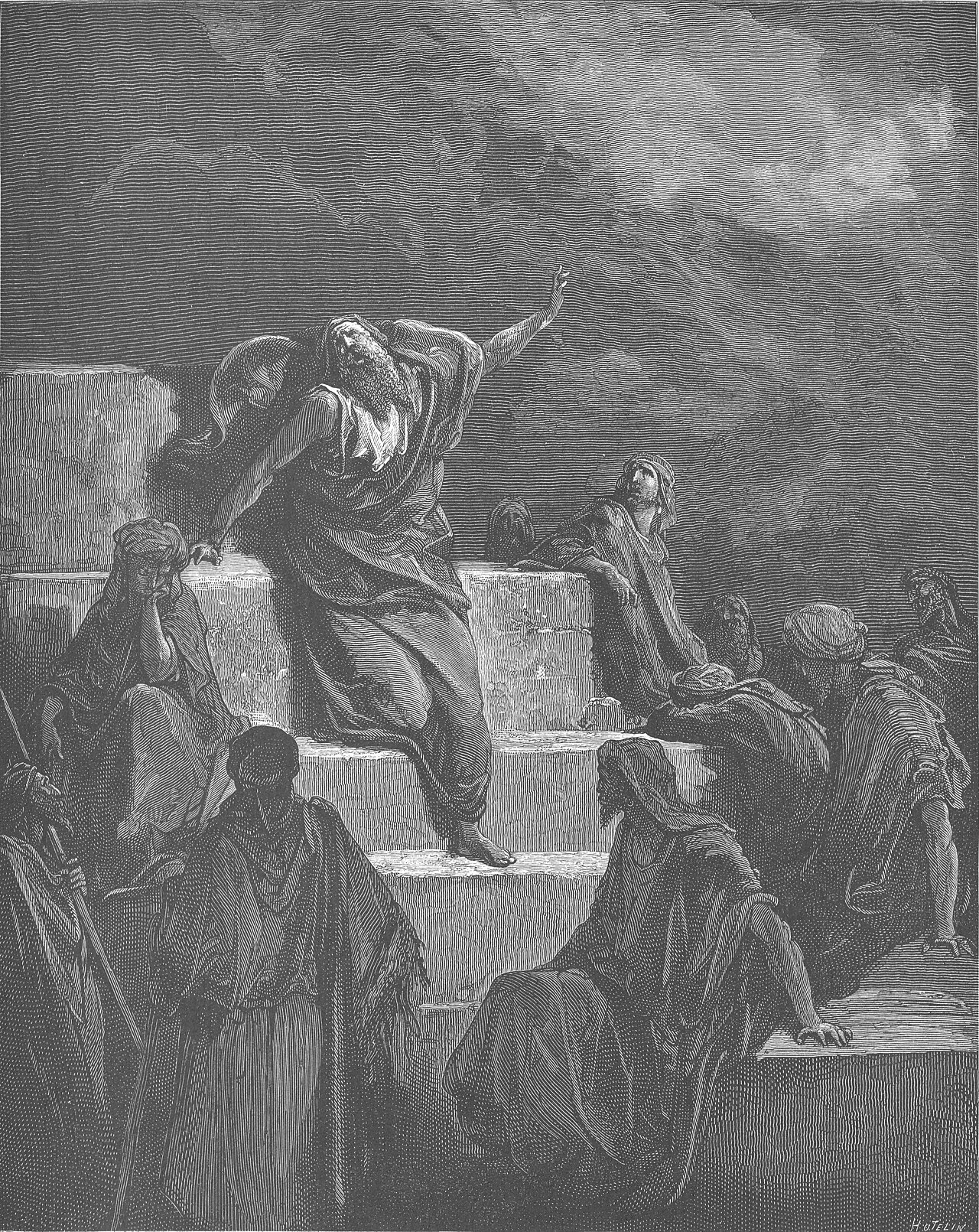
This page draws on Albert Barnes, Notes, Explanatory and Practical, on the Old and New Testaments (1832-1869); Jamieson, Fausset & Brown, Commentary Critical and Explanatory on the Whole Bible; Jerome, Commentary on Jeremiah; John Calvin, Commentary on Jeremiah and Lamentations; John Gill, Exposition of the Old Testament; John Gill, Exposition of the Old Testament (1748-1763) and Matthew Henry, Commentary on the Whole Bible.