
Jeremiah 48:37
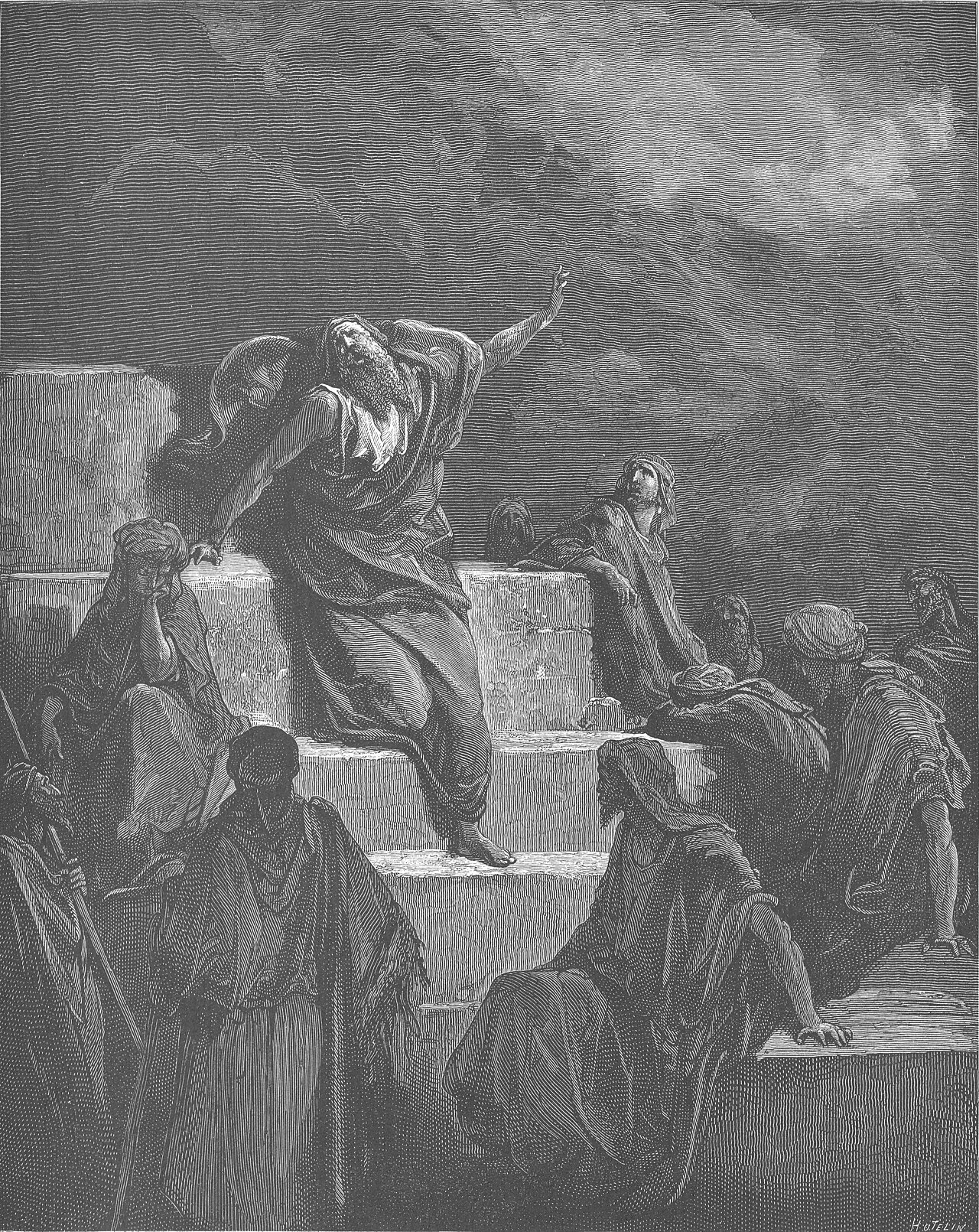
in Jeremiah 48For every head is shaved and every beard is clipped; on every hand is a gash, and around every waist is sackcloth.
BSB
The same verse in ASV and KJV ▾
ASV
For every head is bald, and every beard clipped: upon all the hands are cuttings, and upon the loins sackcloth.
KJV
For every head shall be bald, and every beard clipped: upon all the hands shall be cuttings, and upon the loins sackcloth.
⋯
This verse in Jeremiah 48
Commentary
5 notes on this verseThis site's exposition
the pride of Moab
on Jeremiah 48:29-39
The indictment is piled in synonyms, his loftiness, and his arrogancy, and his pride, and the haughtiness of his heart, and much of this section speaks in Isaiah 15 and 16's own words, two prophets carrying one burden a century apart, which the commentators set side by side. The strange thing is who weeps: therefore will I howl for Moab, I will weep for thee with the weeping of Jazer, mine heart shall sound for Moab like pipes, the judge mourning inside his own sentence, and the bench pauses here, because the oracle's compassion is the Lord's own. The vintage fails with none to tread with shouting, every head bald and every beard clipped, and Moab is broken like a vessel wherein is no pleasure.
The record, by era
The Puritans and the Awakening2 voices
), which were expressions of a desperate grief, such as tempted men to be even their own destroyers. Job indeed rent his mantle and shaved his head, but he did not cut himself. When the flood of passion rises ever so high wisdom and grace must set bounds to it, set banks to it, to restrain it from such barbarities.
quarantine:debris (2026-07-29) — leading-punctuation+unbalanced-parens
For every head shall be bald, and every beard clipped,....
The Nineteenth Century2 voices
For every head shall be bald - These, as we have seen before, were signs of the deepest distress and desolation.
A commentator
Albert Barnes1798–1870
Notes, Explanatory and Practical, on the Old and New Testaments (1832-1869)
proposed
Cuttings - Compare Jer 16:6, and marginal references.
The words behind it
14 Hebrew wordsEvery Hebrew word of this verse in the order it stands, with what it means and the door to its own study. The last column counts the times a word stands in the whole Bible: the rarer the word, the more the places it appears belong together.
| Hebrew | Sound | Meaning | Word study | In the Bible |
|---|---|---|---|---|
| כִּ֤י | ki | for | H3588 → | 4482 times |
| כָל־ | khol- | every | H3605 → | 5413 times |
| רֹאשׁ֙ | rosh | head | H7218 → | 599 times |
| קָרְחָ֔ה | karechah | [will be] baldness | H7144 → | |
| וְכָל־ | vekhol | and every | H3605 → | 5413 times |
| זָקָ֖ן | zakan | beard | H2206 → | |
| גְּרֻעָ֑ה | geruah | [will be] clipped | H1639 → | |
| עַ֤ל | ʾal | [will be] on | H5921 → | 5755 times |
| כָּל־ | kol- | all | H3605 → | 5413 times |
| יָדַ֙יִם֙ | yadayim | hands | H3027 → | 1618 times |
| גְּדֻדֹ֔ת | gedudot | cuts | H1417 → | |
| וְעַל־ | veal- | and [will be] on | H5921 → | 5755 times |
| מָתְנַ֖יִם | matenayim | loins | H4975 → | 47 times |
| שָֽׂק׃ | sak | sackcloth | H8242 → | 49 times |
כִּ֤יfor
kiH3588 →4482 times
כָל־every
khol-H3605 →5413 times
רֹאשׁ֙head
roshH7218 →599 times
קָרְחָ֔ה[will be] baldness
karechahH7144 →
וְכָל־and every
vekholH3605 →5413 times
זָקָ֖ןbeard
zakanH2206 →
גְּרֻעָ֑ה[will be] clipped
geruahH1639 →
עַ֤ל[will be] on
ʾalH5921 →5755 times
כָּל־all
kol-H3605 →5413 times
יָדַ֙יִם֙hands
yadayimH3027 →1618 times
גְּדֻדֹ֔תcuts
gedudotH1417 →
וְעַל־and [will be] on
veal-H5921 →5755 times
מָתְנַ֖יִםloins
matenayimH4975 →47 times
שָֽׂק׃sackcloth
sakH8242 →49 times
A shaded row is a word that stands 400 times or fewer in the Bible.
The walk
8 stopsEach card is a verse this one points to, and under it the verses that one points to in turn. Where several paths arrive at the same place, that place is listed first: the text keeps returning to it.
Through
Jeremiah 16:6“Both great and small will die in this land. They will not be buried or mourned, nor will anyone cut himself or shave his head for them.
it leads to
- Deuteronomy 14:1
You are sons of the LORD your God; do not cut yourselves or shave your foreheads on behalf of the dead,
Reached by 2 separate paths from here.
- Jeremiah 41:5
eighty men who had shaved off their beards, torn their garments, and cut themselves came from Shechem, Shiloh, and Samaria, carrying grain offerings and frankincense for the house of the LORD.
Reached by 2 separate paths from here.
- Jeremiah 47:5
The people of Gaza will shave their heads in mourning; Ashkelon will be silenced. O remnant of their valley, how long will you gash yourself?
- Deuteronomy 14:1
Through
Jeremiah 41:5eighty men who had shaved off their beards, torn their garments, and cut themselves came from Shechem, Shiloh, and Samaria, carrying grain offerings and frankincense for the house of the LORD.
it leads to
- 1 Kings 16:24
He bought the hill of Samaria from Shemer for two talents of silver and built a city there, calling it Samaria after the name of Shemer, who had owned the hill.
- Joshua 18:1
Then the whole congregation of Israel assembled at Shiloh and set up the Tent of Meeting there. And though the land was subdued before them,
- 2 Kings 25:9
He burned down the house of the LORD, the royal palace, and all the houses of Jerusalem—every significant building.
- 1 Kings 16:24
Through
Jeremiah 47:5The people of Gaza will shave their heads in mourning; Ashkelon will be silenced. O remnant of their valley, how long will you gash yourself?
it leads to
- Jeremiah 25:20
all the mixed tribes; all the kings of Uz; all the kings of the Philistines: Ashkelon, Gaza, Ekron, and the remnant of Ashdod;
- Jeremiah 25:20
Through
Genesis 37:34Then Jacob tore his clothes, put sackcloth around his waist, and mourned for his son many days.
it leads to
- Genesis 37:29
When Reuben returned to the pit and saw that Joseph was not there, he tore his clothes,
- Genesis 37:29
About Jeremiah
This page draws on Adam Clarke, Commentary on the Bible; Albert Barnes, Notes, Explanatory and Practical, on the Old and New Testaments (1832-1869); Carl Friedrich Keil, The Prophecies of Jeremiah; John Gill, Exposition of the Old Testament (1748-1763) and Matthew Henry, Commentary on the Whole Bible.