
Jeremiah 10:19
in Jeremiah 10Woe to me because of my brokenness; my wound is grievous! But I said, “This is truly my sickness, and I must bear it.”
BSB
The same verse in ASV and KJV ▾
ASV
Woe is me because of my hurt! my wound is grievous: but I said, Truly this is my grief, and I must bear it.
KJV
Woe is me for my hurt! my wound is grievous: but I said, Truly this is a grief, and I must bear it.
⋯
This verse in Jeremiah 10
Commentary
4 notes on this verse(Verse 19.) Woe is me for my brokenness, my grievous wound. LXX: Woe is you for your brokenness, your grievous wound. According to the Hebrew text, Jerusalem itself speaks, expressing that it has been heavily afflicted and endures an incurable wound. However, according to the LXX, it is the Prophet who speaks to Jerusalem and laments over its brokenness and its wound. But I say, truly this is my weakness (or my wound), and I will bear it (or it seizes me).
This site's exposition
Woe is me for my hurt
on Jeremiah 10:19-21
The prophet speaks now in the city's own voice, my wound is grievous, my tabernacle is spoiled, my children are gone forth of me and they are not, tent-imagery of a nomad's home undone, cords broken with no one left to pitch the curtains again. Verse 21 names the cause the book will return to across its shepherd oracles, for the pastors are become brutish, and have not sought the Lord, and therefore they shall not prosper, and all their flocks shall be scattered, the same charge chapter 23 brings against the kings by name.
The record, by era
The Nineteenth Century2 voices
A commentator
Albert Barnes1798–1870
Notes, Explanatory and Practical, on the Old and New Testaments (1832-1869)
The lamentation of the daughter of Zion, the Jewish Church, at the devastation of the land, and her humble prayer to God for mercy. Jer 10:19 Grievous - Rather, “mortal,” i. e., fatal, incurable. A grief - Or, “my grief.” Jer 10:20 tabernacle - i. e., “tent.” Jerusalem laments that her tent is plundered and her children carried into exile, and so “are not,” are dead Mat 2:18, either absolutely, or dead to her in the remote land of their captivity.
A commentator
Jamieson, Fausset & Brown1802–1910
Commentary Critical and Explanatory on the Whole Bible (1871)
Judea bewails its calamity. wound--the stroke I suffer under. I must bear--not humble submission to God's will (Mic 7:9), but sullen impenitence. Or, rather, it is prophetical of their ultimate acknowledgment of their guilt as the cause of their calamity (La 3:39).
The words behind it
12 Hebrew wordsEvery Hebrew word of this verse in the order it stands, with what it means and the door to its own study. The last column counts the times a word stands in the whole Bible: the rarer the word, the more the places it appears belong together.
| Hebrew | Sound | Meaning | Word study | In the Bible |
|---|---|---|---|---|
| א֥וֹי | ʾo | woe! | H188 → | 24 times |
| לִי֙ | li | to <the> me | ||
| עַל־ | ʾal- | on | H5921 → | 5755 times |
| שִׁבְרִ֔י | shivri | fracture my | H7667 → | 45 times |
| נַחְלָ֖ה | nachlah | [is] severe | H2470 → | 76 times |
| מַכָּתִ֑י | makati | wound my | H4347 → | 48 times |
| וַאֲנִ֣י | vaani | and I | H589 → | 874 times |
| אָמַ֔רְתִּי | ʾamarti | I said | H559 → | 5305 times |
| אַ֛ךְ | ʾakh | surely | H389 → | 161 times |
| זֶ֥ה | zeh | this | H2088 → | 1180 times |
| חֳלִ֖י | choli | [is] a sickness | H2483 → | |
| וְאֶשָּׂאֶֽנּוּ׃ | veesaenu | and I will endure it | H5375 → | 656 times |
א֥וֹיwoe!
ʾoH188 →24 times
לִי֙to <the> me
li
עַל־on
ʾal-H5921 →5755 times
שִׁבְרִ֔יfracture my
shivriH7667 →45 times
נַחְלָ֖ה[is] severe
nachlahH2470 →76 times
מַכָּתִ֑יwound my
makatiH4347 →48 times
וַאֲנִ֣יand I
vaaniH589 →874 times
אָמַ֔רְתִּיI said
ʾamartiH559 →5305 times
אַ֛ךְsurely
ʾakhH389 →161 times
זֶ֥הthis
zehH2088 →1180 times
חֳלִ֖י[is] a sickness
choliH2483 →
וְאֶשָּׂאֶֽנּוּ׃and I will endure it
veesaenuH5375 →656 times
A shaded row is a word that stands 400 times or fewer in the Bible.
The walk
8 stopsEach card is a verse this one points to, and under it the verses that one points to in turn. Where several paths arrive at the same place, that place is listed first: the text keeps returning to it.
Through
Micah 7:9Because I have sinned against Him, I must endure the rage of the LORD, until He argues my case and executes justice for me. He will bring me into the light; I will see…
it leads to
- 1 Corinthians 4:5
Therefore judge nothing before the appointed time; wait until the Lord comes. He will bring to light what is hidden in darkness and will expose the motives of men’s hearts. At that time each…
- Psalms 37:6
He will bring forth your righteousness like the dawn, your justice like the noonday sun.
- 1 Corinthians 4:5
Through
Jeremiah 14:17You are to speak this word to them: ‘My eyes overflow with tears; day and night they do not cease, for the virgin daughter of my people has been shattered by a crushing blow,…
it leads to
- Jeremiah 8:21
For the brokenness of the daughter of my people I am crushed. I mourn; horror has gripped me.
- Lamentations 2:13
What can I say for you? To what can I compare you, O Daughter of Jerusalem? To what can I liken you, that I may console you, O Virgin Daughter of Zion? For your…
- Lamentations 1:15–16
The Lord has rejected all the mighty men in my midst; He has summoned an army against me to crush my young warriors. Like grapes in a winepress, the Lord has trampled the Virgin…
- Jeremiah 9:1
Oh, that my head were a spring of water, and my eyes a fountain of tears! I would weep day and night over the slain daughter of my people.
- Jeremiah 13:17
But if you do not listen, I will weep in secret because of your pride. My eyes will overflow with tears, because the LORD’s flock has been taken captive.
- Jeremiah 8:21
Through
Jeremiah 4:31For I hear a cry like a woman in labor, a cry of anguish like one bearing her first child—the cry of the Daughter of Zion gasping for breath, stretching out her hands to…
it leads to
- Isaiah 1:15
When you spread out your hands in prayer, I will hide My eyes from you; even though you multiply your prayers, I will not listen. Your hands are covered with blood.
- Isaiah 1:15
Where this verse is studied
On this page
Studies1
About Jeremiah
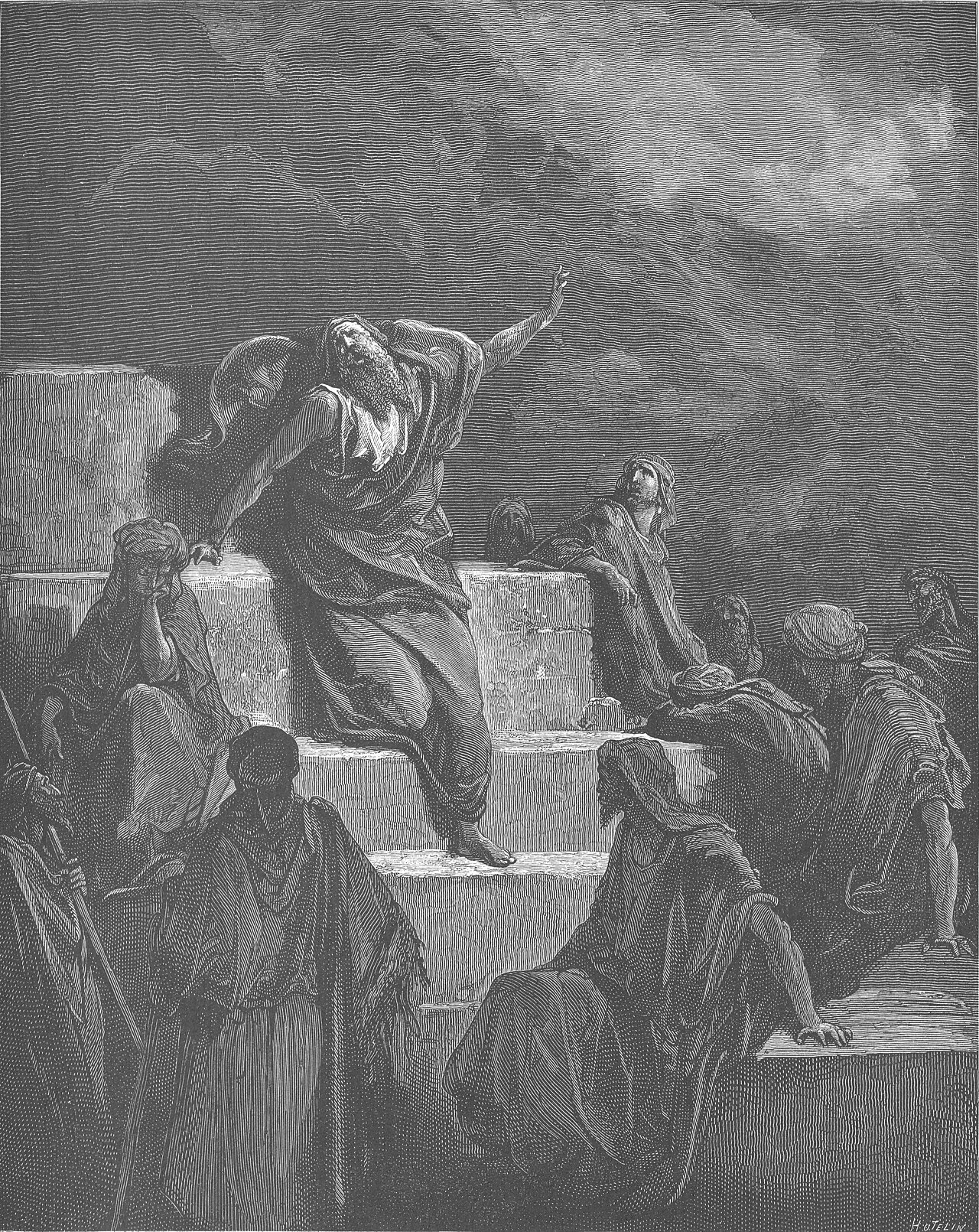
This page draws on Albert Barnes, Notes, Explanatory and Practical, on the Old and New Testaments (1832-1869); Carl Friedrich Keil, The Prophecies of Jeremiah; Jamieson, Fausset & Brown, Commentary Critical and Explanatory on the Whole Bible; Jerome, Commentary on Jeremiah and Matthew Henry, Commentary on the Whole Bible.