
Judges 7:13
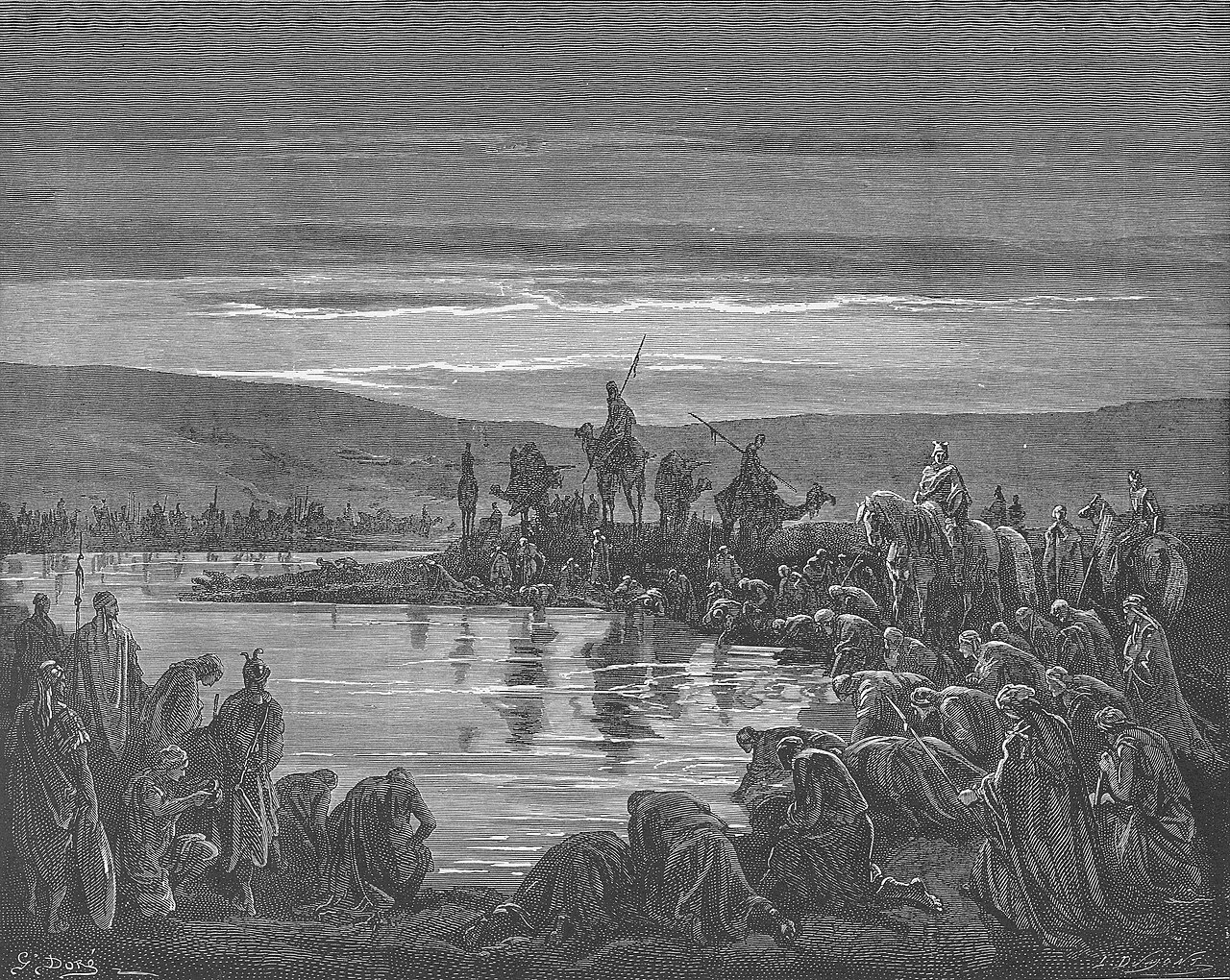
in Judges 7And as Gideon arrived, a man was telling his friend about a dream. “Behold, I had a dream,” he said, “and I saw a loaf of barley bread come tumbling into the Midianite camp. It struck the tent so hard that the tent overturned and collapsed.”
BSB
The same verse in ASV and KJV ▾
ASV
And when Gideon was come, behold, there was a man telling a dream unto his fellow; and he said, Behold, I dreamed a dream; and, lo, a cake of barley bread tumbled into the camp of Midian, and came unto the tent, and smote it so that it fell, and turned it upside down, so that the tent lay flat.
KJV
And when Gideon was come, behold, there was a man that told a dream unto his fellow, and said, Behold, I dreamed a dream, and, lo, a cake of barley bread tumbled into the host of Midian, and came unto a tent, and smote it that it fell, and overturned it, that the tent lay along.
⋯
This verse in Judges 7
Commentary
9 notes on this verseA commentator
Albert Barnes1798–1870
Notes, Explanatory and Practical, on the Old and New Testaments (1832-1869)
A cake of barley bread - i. e. such a cake as could hardly be eaten by men, it was so vile: a term expressive of the contempt of the Midianites for the people of Israel. A tent - The tent, meaning, probably, the tent of the king of Midian, or of the captain of the host.
This site's exposition
in the valley like a swarm of locusts
on Judges 7:12-14
Barley was the poor man's grain and the food of beasts, and 6:11 had Gideon hiding his wheat from them, so the "loaf of barley bread" is the cheapest bread a stripped country could bake. The comfort comes from a Midianite who names him and says "God has delivered Midian and the whole camp into his hand", so the outcome is stated in the enemy camp first.
This site's exposition
a loaf of barley bread
Albert Barnes reads the barley loaf as a Midianite term of contempt for Israel. He takes the tent as the tent of the king of Midian or of the captain of the host. The despised loaf overturns the chief tent.
The record, by era
The Puritans and the Awakening2 voices
And when Gideon was come,....
In multitudes of dreams there are divers vanities, says Solomon, Eccl. v. 7 . One would wonder what odd incoherent things are often put together by a ludicrous fancy in our dreams. (2.) The other, it may be between sleeping and waking, undertakes to interpret this dream, and the interpretation is very far-fetched: This is nothing else save the sword of Gideon,
The Nineteenth Century3 voices
A commentator
Jamieson, Fausset & Brown1802–1910
Commentary Critical and Explanatory on the Whole Bible (1871)
The circumstance of the cake, too, was very significant. Barley was usually the food of the poor, and of beasts; but most probably, from the widespread destruction of the crops by the invaders, multitudes must have been reduced to poor and scanty fare.
THE Midianites were devastating the land of Israel. These wandering tribes purposely kept away during the times of plowing and sowing and allowed the helpless inhabitants to dream that they would be able to gather in a harvest. But no sooner did there come to be anything eatable by man or beast, than these Bedouin hordes came up like locusts and devoured everything! Imagine a country like Israel which had, at one time, been powerful, so greatly reduced as to be unable to keep off these desert rangers! They were brought so low that the cities and villages were empty and the inhabitants were hidden in the hills, in the watercourses and in the huge caverns of the rocks. God had forsaken them for their sins and, therefore, their own manhood had forsaken them and they hid themselves from enemies, whom, in better days, they had despised. In her extremity, the guilty nation began to cry to Jehovah, her God, and the answer was not long delayed. An angel came to Gideon and announced to him that the Lord had delivered Midian into his hands and that he should smite them as one man. Gideon was a man of great faith—his name shines among the heroes of great faith in the 11th Chapter of the Epistle to the Hebrews—and you and I will do well if we attain to the same rank in the peerage of faith as he did. But for all that, the best of men are men at the best—and men of strong faith are often men of strong conflicts—and so it was with Gideon. This man's great faith and great weakness of faith both showed themselves in a desire for signs. Once assure him that God is with him, and Gideon has no fear but hastens to the battle, bravest of the brave! With a handful of men, he is quite prepared to go against a host of adversaries, but he pines for a sign. Again and again he asks for it.
THE Midianites were devastating the land of Israel. These wandering tribes purposely kept away during the times of plowing and sowing and allowed the helpless inhabitants to dream that they would be able to gather in a harvest. But no sooner did there come to be anything eatable by man or beast, than these Bedouin hordes came up like locusts and devoured everything! Imagine a country like Israel which had, at one time, been powerful, so greatly reduced as to be unable to keep off these desert rangers!
1 more voice on this verse
The Nineteenth Century1 voice
Told a dream - Both the dream and the interpretation were inspired by God for the purpose of increasing the confidence of Gideon, and appalling his enemies.
The words behind it
27 Hebrew wordsEvery Hebrew word of this verse in the order it stands, with what it means and the door to its own study. The last column counts the times a word stands in the whole Bible: the rarer the word, the more the places it appears belong together.
| Hebrew | Sound | Meaning | Word study | In the Bible |
|---|---|---|---|---|
| וַיָּבֹ֣א | vaiyavo' | and he came | H935 → | 2568 times |
| גִדְע֔וֹן | gidon | Gideon | H1439 → | 39 times |
| וְהִ֨נֵּה־ | vehineh- | and there! | H2009 → | 843 times |
| אִ֔ישׁ | ʾish | a man | H376 → | 1663 times |
| מְסַפֵּ֥ר | mesaper | [was] recounting | H5608 → | 159 times |
| לְרֵעֵ֖הוּ | lereehu | to neighbor his | H7453 → | 188 times |
| חֲל֑וֹם | chalom | a dream | H2472 → | 65 times |
| וַיֹּ֜אמֶר | vaiyomer | and he said | H559 → | 5305 times |
| הִנֵּ֧ה | hineh | here! | H2009 → | 843 times |
| חֲל֣וֹם | chalom | a dream | H2472 → | 65 times |
| חָלַ֗מְתִּי | chalamti | I have dreamed | H2492 → | |
| וְהִנֵּ֨ה | vehineh | and there! | H2009 → | 843 times |
| צְלִ֜יל | tzelol | a round loaf of | H6742 → | |
| לֶ֤חֶם | lechem | bread of | H3899 → | 298 times |
| שְׂעֹרִים֙ | seorim | barley<s> | H8184 → | |
| מִתְהַפֵּךְ֙ | mithapekh | [was] tumbling | H2015 → | 94 times |
| בְּמַחֲנֵ֣ה | bemachaneh | in [the] camp of | H4264 → | 215 times |
| מִדְיָ֔ן | midyan | Midian | H4080 → | 59 times |
| וַיָּבֹ֣א | vaiyavo' | and it came | H935 → | 2568 times |
| עַד־ | ʾad- | to | H5704 → | 1261 times |
| הָ֠אֹהֶל | haohel | the tent | H168 → | 345 times |
| וַיַּכֵּ֧הוּ | vaiyakehu | and it struck it | H5221 → | 499 times |
| וַיִּפֹּ֛ל | vaiyipol | and it fell | H5307 → | 435 times |
| וַיַּהַפְכֵ֥הוּ | vaiyahafkhehu | and it overturned it | H2015 → | 94 times |
| לְמַ֖עְלָה | lema'lah | <to> upwards <towards> | H4605 → | |
| וְנָפַ֥ל | venafal | and it fell | H5307 → | 435 times |
| הָאֹֽהֶל׃ | haohel | the tent | H168 → | 345 times |
וַיָּבֹ֣אand he came
vaiyavo'H935 →2568 times
גִדְע֔וֹןGideon
gidonH1439 →39 times
וְהִ֨נֵּה־and there!
vehineh-H2009 →843 times
אִ֔ישׁa man
ʾishH376 →1663 times
מְסַפֵּ֥ר[was] recounting
mesaperH5608 →159 times
לְרֵעֵ֖הוּto neighbor his
lereehuH7453 →188 times
חֲל֑וֹםa dream
chalomH2472 →65 times
וַיֹּ֜אמֶרand he said
vaiyomerH559 →5305 times
הִנֵּ֧הhere!
hinehH2009 →843 times
חֲל֣וֹםa dream
chalomH2472 →65 times
חָלַ֗מְתִּיI have dreamed
chalamtiH2492 →
וְהִנֵּ֨הand there!
vehinehH2009 →843 times
צְלִ֜ילa round loaf of
tzelolH6742 →
לֶ֤חֶםbread of
lechemH3899 →298 times
שְׂעֹרִים֙barley<s>
seorimH8184 →
מִתְהַפֵּךְ֙[was] tumbling
mithapekhH2015 →94 times
בְּמַחֲנֵ֣הin [the] camp of
bemachanehH4264 →215 times
מִדְיָ֔ןMidian
midyanH4080 →59 times
וַיָּבֹ֣אand it came
vaiyavo'H935 →2568 times
עַד־to
ʾad-H5704 →1261 times
הָ֠אֹהֶלthe tent
haohelH168 →345 times
וַיַּכֵּ֧הוּand it struck it
vaiyakehuH5221 →499 times
וַיִּפֹּ֛לand it fell
vaiyipolH5307 →435 times
וַיַּהַפְכֵ֥הוּand it overturned it
vaiyahafkhehuH2015 →94 times
לְמַ֖עְלָה<to> upwards <towards>
lema'lahH4605 →
וְנָפַ֥לand it fell
venafalH5307 →435 times
הָאֹֽהֶל׃the tent
haohelH168 →345 times
A shaded row is a word that stands 400 times or fewer in the Bible.
The walk
8 stopsEach card is a verse this one points to, and under it the verses that one points to in turn. Where several paths arrive at the same place, that place is listed first: the text keeps returning to it.
Through
1 Corinthians 1:27But God chose the foolish things of the world to shame the wise; God chose the weak things of the world to shame the strong.
it leads to
- James 2:5
Listen, my beloved brothers: Has not God chosen the poor of this world to be rich in faith and to inherit the kingdom He promised those who love Him?
- Matthew 11:25
At that time Jesus declared, “I praise You, Father, Lord of heaven and earth, because You have hidden these things from the wise and learned, and revealed them to little children.
- 1 Corinthians 1:20
Where is the wise man? Where is the scribe? Where is the philosopher of this age? Has not God made foolish the wisdom of the world?
- Psalms 8:2
From the mouths of children and infants You have ordained praise on account of Your adversaries, to silence the enemy and avenger.
- Luke 21:15
For I will give you speech and wisdom that none of your adversaries will be able to resist or contradict.
- James 2:5
Through
Judges 3:31After Ehud came Shamgar son of Anath. And he too saved Israel, striking down six hundred Philistines with an oxgoad.
it leads to
- Judges 5:6
In the days of Shamgar son of Anath, in the days of Jael, the highways were deserted and the travelers took the byways.
- Judges 5:6
Through
Judges 4:9“I will certainly go with you,” Deborah replied, “but the road you are taking will bring you no honor, because the LORD will be selling Sisera into the hand of a woman.” So Deborah…
it leads to
- 1 Samuel 2:30
Therefore, the LORD, the God of Israel, declares: ‘I did indeed say that your house and the house of your father would walk before Me forever. But now the LORD declares: Far be it…
- Judges 2:14
Then the anger of the LORD burned against Israel, and He delivered them into the hands of those who plundered them. He sold them into the hands of their enemies all around, whom they…
- 1 Samuel 2:30
Where this verse is studied
On this page
About Judges
Who and where
1 name in this verse with a page on the site.
This page draws on Adam Clarke, Commentary on the Bible; Albert Barnes, Notes, Explanatory and Practical, on the Old and New Testaments (1832-1869); Albert Barnes, Notes on the Old Testament; Albert Barnes, Notes, Explanatory and Practical, on the Old and New Testaments; Charles Spurgeon, The Metropolitan Tabernacle Pulpit, Sermon No. 1873: “The Dream of the Barley Cake” (lightly modernized text, CCEL edition); Jamieson, Fausset & Brown, Commentary Critical and Explanatory on the Whole Bible; John Gill, Exposition of the Old Testament (1748-1763) and Matthew Henry, Commentary on the Whole Bible.