
Judges 7:12
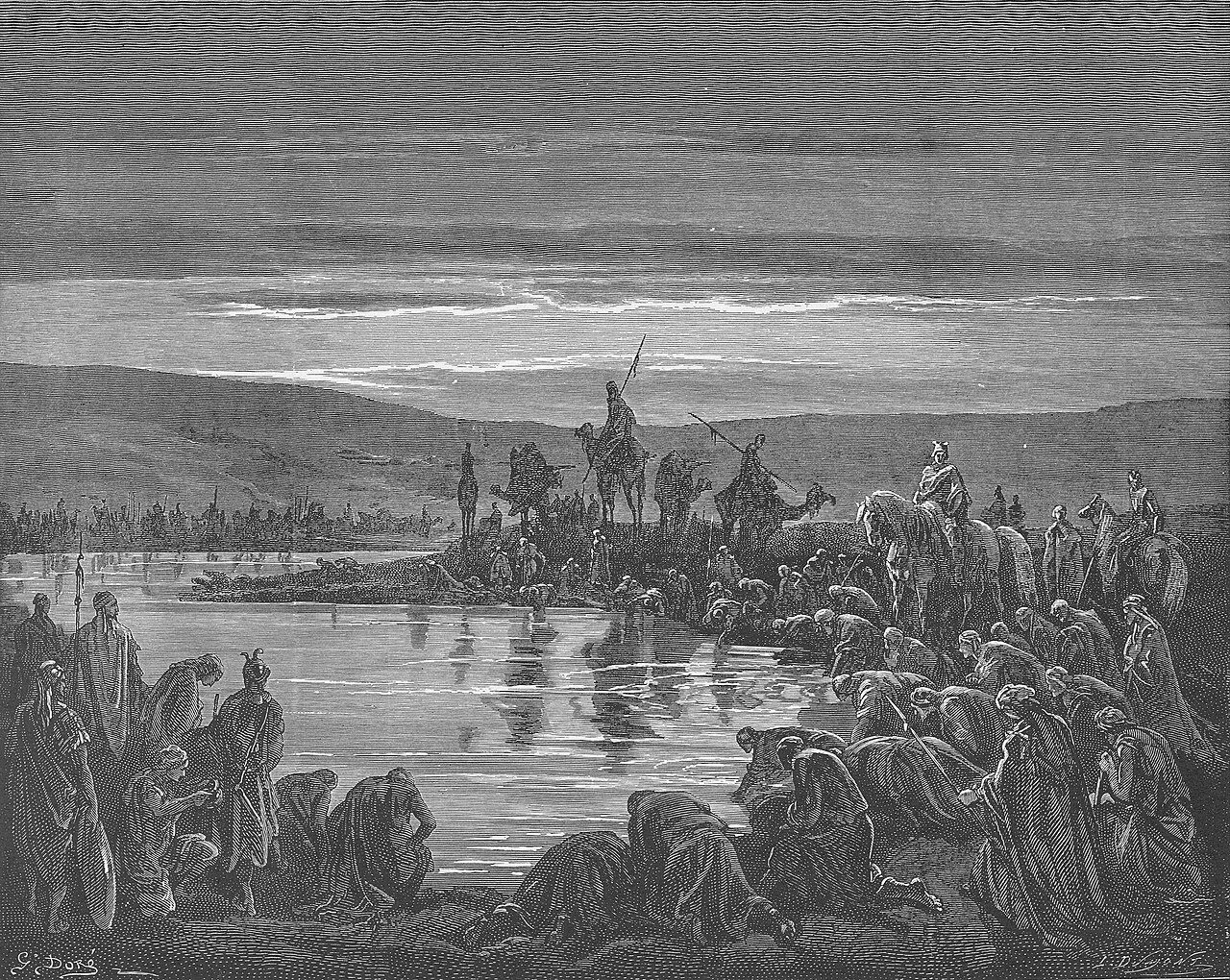
in Judges 7Now the Midianites, Amalekites, and all the other people of the east had settled in the valley like a swarm of locusts, and their camels were as countless as the sand on the seashore.
BSB
The same verse in ASV and KJV ▾
ASV
And the Midianites and the Amalekites and all the children of the east lay along in the valley like locusts for multitude; and their camels were without number, as the sand which is upon the sea-shore for multitude.
KJV
And the Midianites and the Amalekites and all the children of the east lay along in the valley like grasshoppers for multitude; and their camels were without number, as the sand by the sea side for multitude.
⋯
This verse in Judges 7
Commentary
3 notes on this verseThis site's exposition
in the valley like a swarm of locusts
on Judges 7:12-14
Barley was the poor man's grain, so the "loaf of barley bread" is the cheapest bread a stripped country could bake. The comfort comes from a Midianite who says "God has delivered Midian and the whole camp into his hand". The outcome is stated in the enemy camp first.
The record, by era
The Puritans and the Awakening2 voices
), the men like grasshoppers for multitude, and they proved no better than grasshoppers for strength and courage; the camels one could not count, any more than the sand. He causes him to hear that which was to him a very good omen; and when he had heard it he went back again immediately, supposing he now had what he was sent thither for.
quarantine:debris (2026-07-29) — leading-punctuation+unbalanced-parens
And the Midianites and the Amalekites, and the children of the east,....
The words behind it
17 Hebrew wordsEvery Hebrew word of this verse in the order it stands, with what it means and the door to its own study. The last column counts the times a word stands in the whole Bible: the rarer the word, the more the places it appears belong together.
| Hebrew | Sound | Meaning | Word study | In the Bible |
|---|---|---|---|---|
| וּמִדְיָ֨ן | umidyan | and Midian | H4080 → | 59 times |
| וַעֲמָלֵ֤ק | vaamalek | and Amalek | H6002 → | 39 times |
| וְכָל־ | vekhol | and all | H3605 → | 5413 times |
| בְּנֵי־ | benei- | [the] people of | H1121 → | 4930 times |
| קֶ֙דֶם֙ | kedem | [the] east | H6924 → | 87 times |
| נֹפְלִ֣ים | nofelim | [were] lying | H5307 → | 435 times |
| בָּעֵ֔מֶק | baemek | in the valley | H6010 → | 69 times |
| כָּאַרְבֶּ֖ה | kaarbeh | like <the> locust[s] | H697 → | |
| לָרֹ֑ב | laro | for multitude | H7230 → | 149 times |
| וְלִגְמַלֵּיהֶם֙ | veligmaleihem | and [belonged] to camels their | H1581 → | 54 times |
| אֵ֣ין | ʾein | not | H369 → | 789 times |
| מִסְפָּ֔ר | mispar | number | H4557 → | 134 times |
| כַּח֛וֹל | kachol | like the sand | H2344 → | |
| שֶׁעַל־ | sheal- | that [is] on | H5921 → | 5755 times |
| שְׂפַ֥ת | sefat | [the] shore of | H8193 → | |
| הַיָּ֖ם | haiyam | the sea | H3220 → | 396 times |
| לָרֹֽב׃ | laro | for multitude | H7230 → | 149 times |
וּמִדְיָ֨ןand Midian
umidyanH4080 →59 times
וַעֲמָלֵ֤קand Amalek
vaamalekH6002 →39 times
וְכָל־and all
vekholH3605 →5413 times
בְּנֵי־[the] people of
benei-H1121 →4930 times
קֶ֙דֶם֙[the] east
kedemH6924 →87 times
נֹפְלִ֣ים[were] lying
nofelimH5307 →435 times
בָּעֵ֔מֶקin the valley
baemekH6010 →69 times
כָּאַרְבֶּ֖הlike <the> locust[s]
kaarbehH697 →
לָרֹ֑בfor multitude
laroH7230 →149 times
וְלִגְמַלֵּיהֶם֙and [belonged] to camels their
veligmaleihemH1581 →54 times
אֵ֣יןnot
ʾeinH369 →789 times
מִסְפָּ֔רnumber
misparH4557 →134 times
כַּח֛וֹלlike the sand
kacholH2344 →
שֶׁעַל־that [is] on
sheal-H5921 →5755 times
שְׂפַ֥ת[the] shore of
sefatH8193 →
הַיָּ֖םthe sea
haiyamH3220 →396 times
לָרֹֽב׃for multitude
laroH7230 →149 times
A shaded row is a word that stands 400 times or fewer in the Bible.
The walk
8 stopsEach card is a verse this one points to, and under it the verses that one points to in turn. Where several paths arrive at the same place, that place is listed first: the text keeps returning to it.
Through
Judges 6:3Whenever the Israelites would plant their crops, the Midianites, Amalekites, and other people of the east would come up and invade them,
it leads to
- Judges 6:33
Then all the Midianites, Amalekites, and other people of the east gathered together, crossed over the Jordan, and camped in the Valley of Jezreel.
- Judges 3:13
After enlisting the Ammonites and Amalekites to join forces with him, Eglon attacked and defeated Israel, taking possession of the City of Palms.
- Genesis 29:1
Jacob resumed his journey and came to the land of the people of the east.
- 1 Kings 4:30
Solomon’s wisdom was greater than that of all the men of the East, greater than all the wisdom of Egypt.
- Job 1:3
and he owned 7,000 sheep, 3,000 camels, 500 yoke of oxen, 500 female donkeys, and a very large number of servants. Job was the greatest man of all the people of the East.
- Judges 6:33
Through
Judges 6:5For the Midianites came with their livestock and their tents like a great swarm of locusts. They and their camels were innumerable, and they entered the land to ravage it.
it leads to
- Judges 8:10
Now Zebah and Zalmunna were in Karkor with their army of about fifteen thousand men—all that were left of the armies of the people of the east. A hundred and twenty thousand swordsmen had…
- Isaiah 60:6
Caravans of camels will cover your land, young camels of Midian and Ephah, and all from Sheba will come, bearing gold and frankincense and proclaiming the praises of the LORD.
- Judges 8:10
Through
Joshua 11:4So these kings came out with all their armies, a multitude as numerous as the sand on the seashore, along with a great number of horses and chariots.
it leads to
- 1 Samuel 13:5
Now the Philistines assembled to fight against Israel with three thousand chariots, six thousand horsemen, and troops as numerous as the sand on the seashore. They went up and camped at Michmash, east of…
- 1 Samuel 13:5
Where this verse is studied
About Judges
This page draws on Albert Barnes, Notes on the Old Testament; Jamieson, Fausset & Brown, Commentary Critical and Explanatory on the Whole Bible; John Gill, Exposition of the Old Testament (1748-1763) and Matthew Henry, Commentary on the Whole Bible.