
Judges 7:11
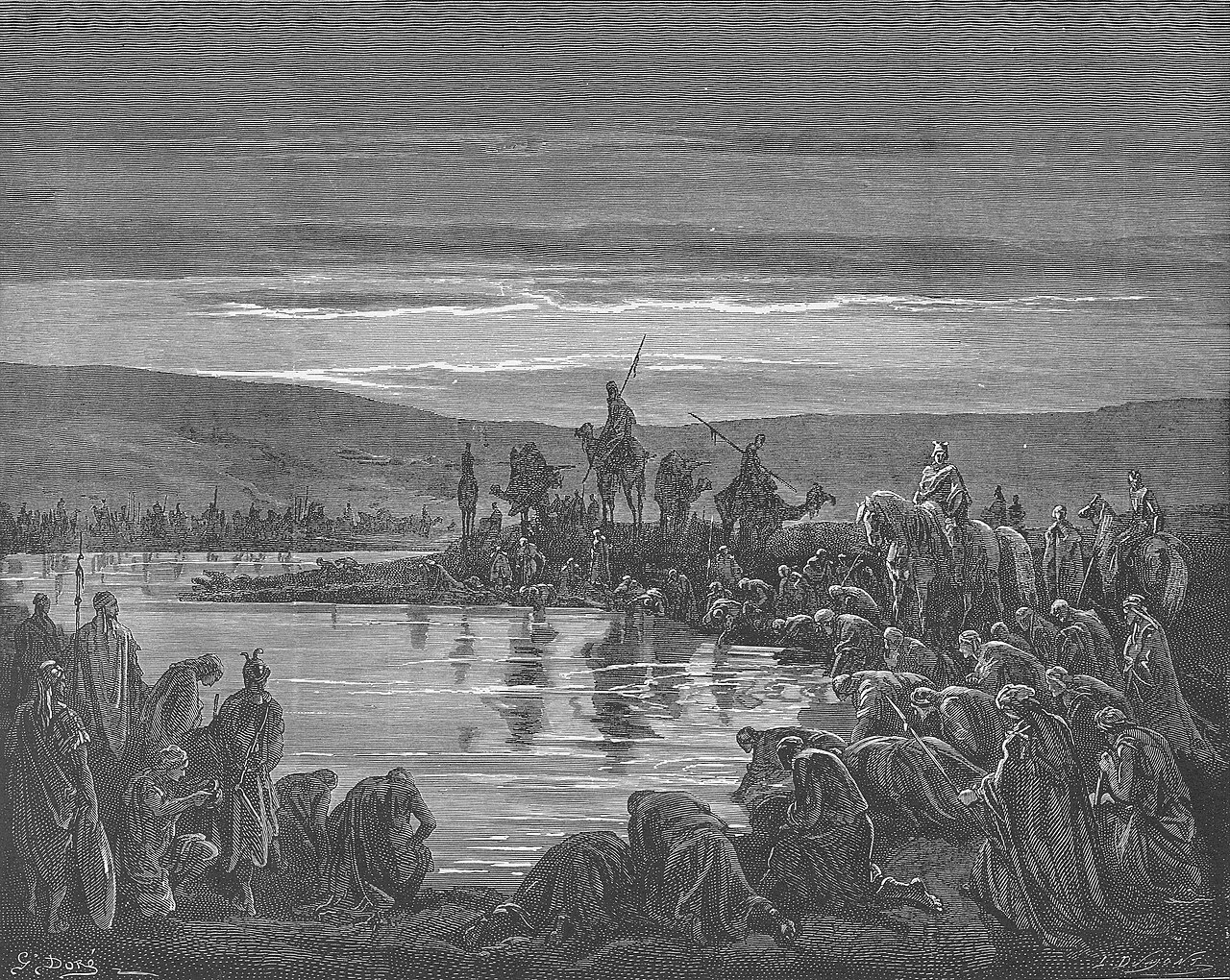
in Judges 7and listen to what they are saying. Then your hands will be strengthened to attack the camp.” So he went with Purah his servant to the outposts where armed men were guarding the camp.
BSB
The same verse in ASV and KJV ▾
ASV
and thou shalt hear what they say; and afterward shall thy hands be strengthened to go down into the camp. Then went he down with Purah his servant unto the outermost part of the armed men that were in the camp.
KJV
And thou shalt hear what they say; and afterward shall thine hands be strengthened to go down unto the host. Then went he down with Phurah his servant unto the outside of the armed men that were in the host.
⋯
This verse in Judges 7
Commentary
7 notes on this verseA commentator
Albert Barnes1798–1870
Notes, Explanatory and Practical, on the Old and New Testaments (1832-1869)
The armed men - The word is rendered harnessed in Exo 13:18 (see the note). The most probable meaning of the word is arrayed in divisions or ranks.
This site's exposition
Get up and go down against the camp
on Judges 7:9-11
Verse 10 puts the condition before Gideon speaks, "But if you are afraid to do so", so the strengthening comes as an offer. In chapter 6 he had asked for confirmation three times, at 6:21, 6:37 and 6:39, and a fourth now comes unasked. Verse 3 had sent the fearful home, and the man left in command is met at the point of the same fear.
This site's exposition
where armed men were guarding the camp
Albert Barnes connects the word for armed men with the word rendered harnessed at Exodus 13:18. He takes its most probable meaning as arrayed in divisions or ranks. Gideon and Purah reach the outposts of that ordered camp.
The record, by era
The Puritans and the Awakening2 voices
And thou shalt hear what they shall say,....
He must take his servant with him, because two are better than one and a little help is better than none. Being so, he orders him the sight of something that was discouraging.
The Nineteenth Century2 voices
A commentator
Jamieson, Fausset & Brown1802–1910
Commentary Critical and Explanatory on the Whole Bible (1871)
proposed
the outside of the armed men that were in the host--"Armed," means embodied under the five officers established by the ordinary laws and usages of encampments. The camp seems to have been unprotected by any rampart, since Gideon had no difficulty in reaching and overhearing a conversation, so important to him.
quarantine:debris (2026-07-29) — starts-lowercase
Unto the outside of the armed men - No doubt the vast multitudes of Midianites, etc., which came merely for plunder, were wholly unarmed; but they had a guard of armed men, as all the caravans have, and those guards were on the outside of the multitudes; it was to these that Gideon and his servant came.
The words behind it
17 Hebrew wordsEvery Hebrew word of this verse in the order it stands, with what it means and the door to its own study. The last column counts the times a word stands in the whole Bible: the rarer the word, the more the places it appears belong together.
| Hebrew | Sound | Meaning | Word study | In the Bible |
|---|---|---|---|---|
| וְשָֽׁמַעְתָּ֙ | veshama'ta | and you will hear | H8085 → | 1159 times |
| מַה־ | mah- | what? | H4100 → | 752 times |
| יְדַבֵּ֔רוּ | yedaberu | will they speak | H1696 → | 1141 times |
| וְאַחַר֙ | veachar | and after | H310 → | 715 times |
| תֶּחֱזַ֣קְנָה | techezaknah | they will be strong | H2388 → | 291 times |
| יָדֶ֔יךָ | yadeikha | hands your | H3027 → | 1618 times |
| וְיָרַדְתָּ֖ | veyaradta | and you will go down | H3381 → | 381 times |
| בַּֽמַּחֲנֶ֑ה | bamachaneh | in the camp | H4264 → | 215 times |
| וַיֵּ֤רֶד | vaiyered | and he went down | H3381 → | 381 times |
| הוּא֙ | hu' | he | H1931 → | 1879 times |
| וּפֻרָ֣ה | ufurah | and Purah | H6513 → | |
| נַעֲר֔וֹ | naaro | servant his | H5288 → | 239 times |
| אֶל־ | ʾel- | to | H413 → | 5510 times |
| קְצֵ֥ה | ketzeh | [the] edge of | H7097 → | 97 times |
| הַחֲמֻשִׁ֖ים | hachamushim | those arrayed for battle | H2571 → | |
| אֲשֶׁ֥ר | ʾasher | who | H834 → | 5497 times |
| בַּֽמַּחֲנֶֽה׃ | bamachaneh | [were] in the camp | H4264 → | 215 times |
וְשָֽׁמַעְתָּ֙and you will hear
veshama'taH8085 →1159 times
מַה־what?
mah-H4100 →752 times
יְדַבֵּ֔רוּwill they speak
yedaberuH1696 →1141 times
וְאַחַר֙and after
veacharH310 →715 times
תֶּחֱזַ֣קְנָהthey will be strong
techezaknahH2388 →291 times
יָדֶ֔יךָhands your
yadeikhaH3027 →1618 times
וְיָרַדְתָּ֖and you will go down
veyaradtaH3381 →381 times
בַּֽמַּחֲנֶ֑הin the camp
bamachanehH4264 →215 times
וַיֵּ֤רֶדand he went down
vaiyeredH3381 →381 times
הוּא֙he
hu'H1931 →1879 times
וּפֻרָ֣הand Purah
ufurahH6513 →
נַעֲר֔וֹservant his
naaroH5288 →239 times
אֶל־to
ʾel-H413 →5510 times
קְצֵ֥ה[the] edge of
ketzehH7097 →97 times
הַחֲמֻשִׁ֖יםthose arrayed for battle
hachamushimH2571 →
אֲשֶׁ֥רwho
ʾasherH834 →5497 times
בַּֽמַּחֲנֶֽה׃[were] in the camp
bamachanehH4264 →215 times
A shaded row is a word that stands 400 times or fewer in the Bible.
The walk
8 stopsEach card is a verse this one points to, and under it the verses that one points to in turn. Where several paths arrive at the same place, that place is listed first: the text keeps returning to it.
Through
Philippians 4:13I can do all things through Christ who gives me strength.
it leads to
- Isaiah 41:10
Do not fear, for I am with you; do not be afraid, for I am your God. I will strengthen you; I will surely help you; I will uphold you with My right hand…
- 2 Corinthians 12:9–10
But He said to me, “My grace is sufficient for you, for My power is perfected in weakness.” Therefore I will boast all the more gladly in my weaknesses, so that the power of…
- Colossians 1:11
being strengthened with all power according to His glorious might so that you may have full endurance and patience, and joyfully
- Ephesians 6:10
Finally, be strong in the Lord and in His mighty power.
- Isaiah 40:29–31
He gives power to the faint and increases the strength of the weak.
- Isaiah 41:10
Through
Ephesians 6:10Finally, be strong in the Lord and in His mighty power.
it leads to
- Philippians 4:13
I can do all things through Christ who gives me strength.
- Isaiah 40:31
But those who wait upon the LORD will renew their strength; they will mount up with wings like eagles; they will run and not grow weary, they will walk and not faint.
- Joshua 1:9
Have I not commanded you to be strong and courageous? Do not be afraid; do not be discouraged, for the LORD your God is with you wherever you go.”
- Philippians 4:13
Where this verse is studied
About Judges
This page draws on Adam Clarke, Commentary on the Bible; Albert Barnes, Notes, Explanatory and Practical, on the Old and New Testaments (1832-1869); Albert Barnes, Notes, Explanatory and Practical, on the Old and New Testaments; Jamieson, Fausset & Brown, Commentary Critical and Explanatory on the Whole Bible; John Gill, Exposition of the Old Testament (1748-1763) and Matthew Henry, Commentary on the Whole Bible.