
Judges 7:1
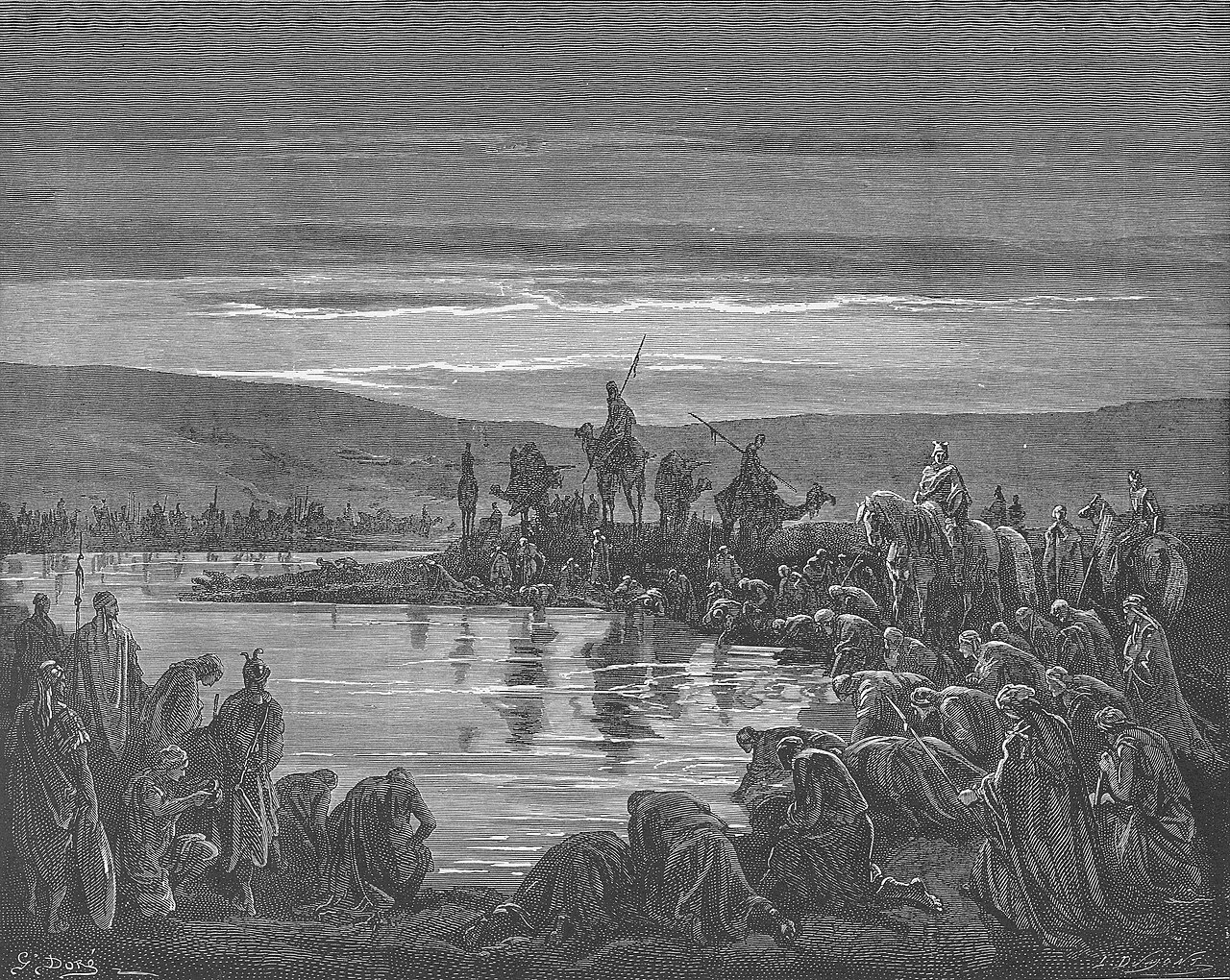
in Judges 7Early in the morning Jerubbaal (that is, Gideon) and all the men with him camped beside the spring of Harod. And the camp of Midian was north of them in the valley near the hill of Moreh.
BSB
The same verse in ASV and KJV ▾
ASV
Then Jerubbaal, who is Gideon, and all the people that were with him, rose up early, and encamped beside the spring of Harod: and the camp of Midian was on the north side of them, by the hill of Moreh, in the valley.
KJV
Then Jerubbaal, who is Gideon, and all the people that were with him, rose up early, and pitched beside the well of Harod: so that the host of the Midianites were on the north side of them, by the hill of Moreh, in the valley.
⋯
This verse in Judges 7
Commentary
8 notes on this verseA commentator
Albert Barnes1798–1870
Notes, Explanatory and Practical, on the Old and New Testaments (1832-1869)
The well of Harod - i. e. of trembling, evidently so called from the people who were afraid Jdg 7:3. It is identified with great probability with Ain Jalud, a spacious pool at the foot of Gilboa; (by Conder, with Ain el Jem’ain (the spring of the two troops)). Moreh was, probably, the little Hermon, the Jebel ed-Duhy of the Arabs, which encloses the plain two or three miles north of Gilboa, which shuts it in on the south.
This site's exposition
Then Jerubbaal, who is Gideon
on Judges 7:1-3
The name Jerubbaal was given at 6:32, after Gideon pulled down his father's altar, and it carries the sense of let Baal plead against him. The man who leads Israel against Midian goes into the field under a name that argues with Baal. Harod means trembling, and the well is named for what happens three verses later when twenty and two thousand men go home afraid. The proclamation at verse 3 is Deuteronomy 20:8 being carried out, where the law told the officers to send the fearful home before a battle.
The record, by era
The Church Fathers1 voice
Against the Midianites, also, who, as the book of Judges relates, had filled all places like locusts, Gideon was ordered to lead a few men into battle. It was not that he did not have many in his army, but that he was forbidden to …
The Puritans and the Awakening3 voices
) and the stream that ran from it; he, or some appointed by him, must observe how they drank. We must suppose they were all thirsty, and were inclined to drink; it is likely he told them they must prepare to enter upon action immediately, and therefore must refresh themselves accordingly, not expecting, after this, to drink any thing else but the blood of their enemies.
quarantine:debris (2026-07-29) — leading-punctuation+unbalanced-parens
Then Jerubbaal, who is Gideon,....
Now that he is sure God is with him he is impatient of delay. He pitched near a famous well, that his army might not be distressed for want of water, and gained the higher ground, which possibly might be some advantage to him, for the Midianites were beneath him in the valley. Note, Faith in God's promises must not slacken, but rather quicken, our endeavours.
The Nineteenth Century1 voice
A commentator
Jamieson, Fausset & Brown1802–1910
Commentary Critical and Explanatory on the Whole Bible (1871)
proposed
It was situated not far from Gilboa, on the confines of Manasseh, and the name "Harod" was bestowed on it with evident reference to the panic which seized the majority of Gideon's troops.
1 more voice on this verse
The Nineteenth Century1 voice
Then Jerubbaal, who is Gideon - It appears that Jerubbaal was now a surname of Gideon, from the circumstance mentioned Jdg 6:32. See Jdg 8:35. The well of Harod - If this was a town or village, it is nowhere else mentioned. Probably, as חרד charad signifies to shake or tremble through fear, the fountain in question may have had its name from the terror and panic with which the Midianitish host was seized at this place.
How the passage was read
What the Jewish commentators add
Of signal valley ridge. Overlooking the plain. This is Targum Yonasan’s interpretation. The ridge overlooked the plain, and was thus suitable as an observation post. הַמּוֹרֶה connotes instruction, observation, as in "instructs by gesturing." 2 Mishlei,:13. From there they would observe, and then signal instructions to the valley.
This section is reception history: how the passage was read and kept in the Jewish tradition. Where a reading parts from an essential of the Christian faith, the section says so at that point.
Texts and citation data: Sefaria; each excerpt follows its version’s licence. 5 further sources are cited on this chapter that carry no English text this site may quote or only restate the verse.
The words behind it
20 Hebrew wordsEvery Hebrew word of this verse in the order it stands, with what it means and the door to its own study. The last column counts the times a word stands in the whole Bible: the rarer the word, the more the places it appears belong together.
| Hebrew | Sound | Meaning | Word study | In the Bible |
|---|---|---|---|---|
| וַיַּשְׁכֵּ֨ם | vaiyashkem | and he rose early | H7925 → | 65 times |
| יְרֻבַּ֜עַל | yerubaal | Jerub-Baal | H3378 → | 14 times |
| ה֣וּא | hu' | that | H1931 → | 1879 times |
| גִדְע֗וֹן | gidon | [is] Gideon | H1439 → | 39 times |
| וְכָל־ | vekhol | and all | H3605 → | 5413 times |
| הָעָם֙ | haam | the people | H5971 → | 1873 times |
| אֲשֶׁ֣ר | ʾasher | which | H834 → | 5497 times |
| אִתּ֔וֹ | ʾito | [was] with him | H854 → | 929 times |
| וַֽיַּחֲנ֖וּ | vaiyachanu | and they encamped | H2583 → | 143 times |
| עַל־ | ʾal- | at | H5921 → | 5755 times |
| עֵ֣ין | ʾein | En | H5878 → | |
| חֲרֹ֑ד | charod | Harod | H5878 → | |
| וּמַחֲנֵ֤ה | umachaneh | and [the] camp of | H4264 → | 215 times |
| מִדְיָן֙ | midyan | Midian | H4080 → | 59 times |
| הָיָה־ | hayah- | it was | H1961 → | 3559 times |
| ל֣וֹ | lo | of <the> him | ||
| מִצָּפ֔וֹן | mitzafon | from [the] north | H6828 → | 153 times |
| מִגִּבְעַ֥ת | migivat | from [the] hill of | H1389 → | |
| הַמּוֹרֶ֖ה | hamoreh | <the> Moreh | H4176 → | |
| בָּעֵֽמֶק׃ | baemek | in the valley | H6010 → | 69 times |
וַיַּשְׁכֵּ֨םand he rose early
vaiyashkemH7925 →65 times
יְרֻבַּ֜עַלJerub-Baal
yerubaalH3378 →14 times
ה֣וּאthat
hu'H1931 →1879 times
גִדְע֗וֹן[is] Gideon
gidonH1439 →39 times
וְכָל־and all
vekholH3605 →5413 times
הָעָם֙the people
haamH5971 →1873 times
אֲשֶׁ֣רwhich
ʾasherH834 →5497 times
אִתּ֔וֹ[was] with him
ʾitoH854 →929 times
וַֽיַּחֲנ֖וּand they encamped
vaiyachanuH2583 →143 times
עַל־at
ʾal-H5921 →5755 times
עֵ֣יןEn
ʾeinH5878 →
חֲרֹ֑דHarod
charodH5878 →
וּמַחֲנֵ֤הand [the] camp of
umachanehH4264 →215 times
מִדְיָן֙Midian
midyanH4080 →59 times
הָיָה־it was
hayah-H1961 →3559 times
ל֣וֹof <the> him
lo
מִצָּפ֔וֹןfrom [the] north
mitzafonH6828 →153 times
מִגִּבְעַ֥תfrom [the] hill of
migivatH1389 →
הַמּוֹרֶ֖ה<the> Moreh
hamorehH4176 →
בָּעֵֽמֶק׃in the valley
baemekH6010 →69 times
A shaded row is a word that stands 400 times or fewer in the Bible.
The walk
8 stopsEach card is a verse this one points to, and under it the verses that one points to in turn. Where several paths arrive at the same place, that place is listed first: the text keeps returning to it.
Through
Ecclesiastes 9:10Whatever you find to do with your hands, do it with all your might, for in Sheol, where you are going, there is no work or planning or knowledge or wisdom.
it leads to
- Colossians 3:23
Whatever you do, work at it with your whole being, for the Lord and not for men,
- Ephesians 5:16
redeeming the time, because the days are evil.
- Romans 12:11
Do not let your zeal subside; keep your spiritual fervor, serving the Lord.
- Psalms 6:5
For there is no mention of You in death; who can praise You from Sheol?
- Ecclesiastes 11:6
Sow your seed in the morning, and do not rest your hands in the evening, for you do not know which will succeed, whether this or that, or if both will equally prosper.
- Colossians 3:23
Through
Judges 6:32So on that day Gideon was called Jerubbaal, that is to say, “Let Baal contend with him,” because he had torn down Baal’s altar.
it leads to
- 1 Samuel 12:11
So the LORD sent Jerubbaal, Barak, Jephthah, and Samuel, and He delivered you from the hands of your enemies on every side, and you dwelt securely.
- 1 Samuel 12:11
Through
Genesis 12:6Abram traveled through the land as far as the site of the Oak of Moreh at Shechem. And at that time the Canaanites were in the land.
it leads to
- Deuteronomy 11:30
Are not these mountains across the Jordan, west of the road toward the sunset, in the land of the Canaanites who live in the Arabah opposite Gilgal near the Oak of Moreh?
- Hebrews 11:9
By faith he dwelt in the promised land as a stranger in a foreign country. He lived in tents, as did Isaac and Jacob, who were heirs with him of the same promise.
- Deuteronomy 11:30
Where this verse is studied
About Judges
Who and where
1 name in this verse with a page on the site.
This page draws on Adam Clarke, Commentary on the Bible; Albert Barnes, Notes, Explanatory and Practical, on the Old and New Testaments (1832-1869); Albert Barnes, Notes on the Old Testament; Jamieson, Fausset & Brown, Commentary Critical and Explanatory on the Whole Bible; John Gill, Exposition of the Old Testament (1748-1763); Keil and Delitzsch, Biblical Commentary on the Old Testament: Joshua, Judges, Ruth; Matthew Henry, Commentary on the Whole Bible and Salvian the Presbyter, THE GOVERNANCE OF GOD 7.8-9.