
Judges 21:14
in Judges 21And at that time the Benjamites returned and were given the women who were spared from Jabesh-gilead. But there were not enough women for all of them.
BSB
The same verse in ASV and KJV ▾
ASV
And Benjamin returned at that time; and they gave them the women whom they had saved alive of the women of Jabesh-gilead: and yet so they sufficed them not.
KJV
And Benjamin came again at that time; and they gave them wives which they had saved alive of the women of Jabesh–gilead: and yet so they sufficed them not.
⋯
This verse in Judges 21
Commentary
6 notes on this verseYet so they sufficed them not - There were six hundred men at Rimmon, and all the young women they saved from Jabesh were only four hundred; therefore, there were two hundred still wanting.
This site's exposition
the whole congregation sent a message of peace
on Judges 21:13-14
Peace is sent to the six hundred at “the rock of Rimmon”, where 20:47 says they stayed four months, and the women are handed over. The four hundred do not cover six hundred, and the text says so, “there were not enough women for all of them”. Jabesh returns twice in Saul's story, rescued by him at 1 Samuel 11 and burying his bones at 1 Samuel 31:11 to 13.
This site's exposition
the women who were spared from Jabesh-gilead
Ambrose notes that the women given here had lost their fathers, killed for the offence of their town. Clarke counts two hundred men still without wives. The elders must look for another way.
The record, by era
The Puritans and the Awakening3 voices
24 And the children of Israel departed thence at that time, every man to his tribe and to his family, and they went out from thence every man to his inheritance. 25 In those days there was no king in Israel: every man did that which was right in his own eyes. We have here the method that was taken to provide the 200 Benjamites that remained with wives.
quarantine:scripture (2026-07-29) — scripture-overlap:83%@v23-25
And Benjamin came again at that time,....
They did not repent of their zeal against the sin; there is a holy indignation against sin, the fruit of godly sorrow, which is to salvation, not to be repented of, 2 Cor. vii. But they repented of the sad consequences of what they had done, that they had carried the matter further than was either just or necessary.
The words behind it
16 Hebrew wordsEvery Hebrew word of this verse in the order it stands, with what it means and the door to its own study. The last column counts the times a word stands in the whole Bible: the rarer the word, the more the places it appears belong together.
| Hebrew | Sound | Meaning | Word study | In the Bible |
|---|---|---|---|---|
| וַיָּ֤שָׁב | vaiyashov | and it returned | H7725 → | 1056 times |
| בִּנְיָמִן֙ | binyamin | Benjamin | H1144 → | 166 times |
| בָּעֵ֣ת | baet | at the time | H6256 → | 296 times |
| הַהִ֔יא | hahi' | <the> that | H1931 → | 1879 times |
| וַיִּתְּנ֤וּ | vaiyitenu | and they gave | H5414 → | 2011 times |
| לָהֶם֙ | lahem | to <the> them | ||
| הַנָּשִׁ֔ים | hanashim | the women | H802 → | 781 times |
| אֲשֶׁ֣ר | ʾasher | whom | H834 → | 5497 times |
| חִיּ֔וּ | chiyu | they had preserved alive | H2421 → | 282 times |
| מִנְּשֵׁ֖י | mineshei | from [the] women of | H802 → | 781 times |
| יָבֵ֣שׁ | yavesh | Jabesh | H3003 → | 24 times |
| גִּלְעָ֑ד | gilad | Gilead | H1568 → | 134 times |
| וְלֹֽא־ | velo'- | and not | H3808 → | 5168 times |
| מָצְא֥וּ | matzeu | they found | H4672 → | 455 times |
| לָהֶ֖ם | lahem | for <the> them | ||
| כֵּֽן׃ | ken | so | H3651 → | 771 times |
וַיָּ֤שָׁבand it returned
vaiyashovH7725 →1056 times
בִּנְיָמִן֙Benjamin
binyaminH1144 →166 times
בָּעֵ֣תat the time
baetH6256 →296 times
הַהִ֔יא<the> that
hahi'H1931 →1879 times
וַיִּתְּנ֤וּand they gave
vaiyitenuH5414 →2011 times
לָהֶם֙to <the> them
lahem
הַנָּשִׁ֔יםthe women
hanashimH802 →781 times
אֲשֶׁ֣רwhom
ʾasherH834 →5497 times
חִיּ֔וּthey had preserved alive
chiyuH2421 →282 times
מִנְּשֵׁ֖יfrom [the] women of
minesheiH802 →781 times
יָבֵ֣שׁJabesh
yaveshH3003 →24 times
גִּלְעָ֑דGilead
giladH1568 →134 times
וְלֹֽא־and not
velo'-H3808 →5168 times
מָצְא֥וּthey found
matzeuH4672 →455 times
לָהֶ֖םfor <the> them
lahem
כֵּֽן׃so
kenH3651 →771 times
A shaded row is a word that stands 400 times or fewer in the Bible.
The walk
8 stopsEach card is a verse this one points to, and under it the verses that one points to in turn. Where several paths arrive at the same place, that place is listed first: the text keeps returning to it.
Through
1 Corinthians 7:2But because there is so much sexual immorality, each man should have his own wife, and each woman her own husband.
it leads to
- Ephesians 5:28
In the same way, husbands ought to love their wives as their own bodies. He who loves his wife loves himself.
- Ephesians 5:33
Nevertheless, each one of you also must love his wife as he loves himself, and the wife must respect her husband.
- 1 Corinthians 7:9
But if they cannot control themselves, let them marry. For it is better to marry than to burn with passion.
- Proverbs 5:18–19
May your fountain be blessed, and may you rejoice in the wife of your youth:
- Proverbs 18:22
He who finds a wife finds a good thing and obtains favor from the LORD.
- Ephesians 5:28
Through
Judges 21:12So they found among the inhabitants of Jabesh-gilead four hundred young women who had not had relations with a man, and they brought them to the camp at Shiloh in the land of Canaan.
it leads to
- Joshua 18:1
Then the whole congregation of Israel assembled at Shiloh and set up the Tent of Meeting there. And though the land was subdued before them,
- Psalms 78:60
He abandoned the tabernacle of Shiloh, the tent He had pitched among men.
- Joshua 18:1
Through
Judges 20:47But 600 men turned and fled into the wilderness to the rock of Rimmon, where they stayed four months.
it leads to
- Jeremiah 14:7
Although our iniquities testify against us, O LORD, act for the sake of Your name. Indeed, our rebellions are many; we have sinned against You.
- Jeremiah 14:7
Where this verse is studied
On this page
Studies1
About Judges
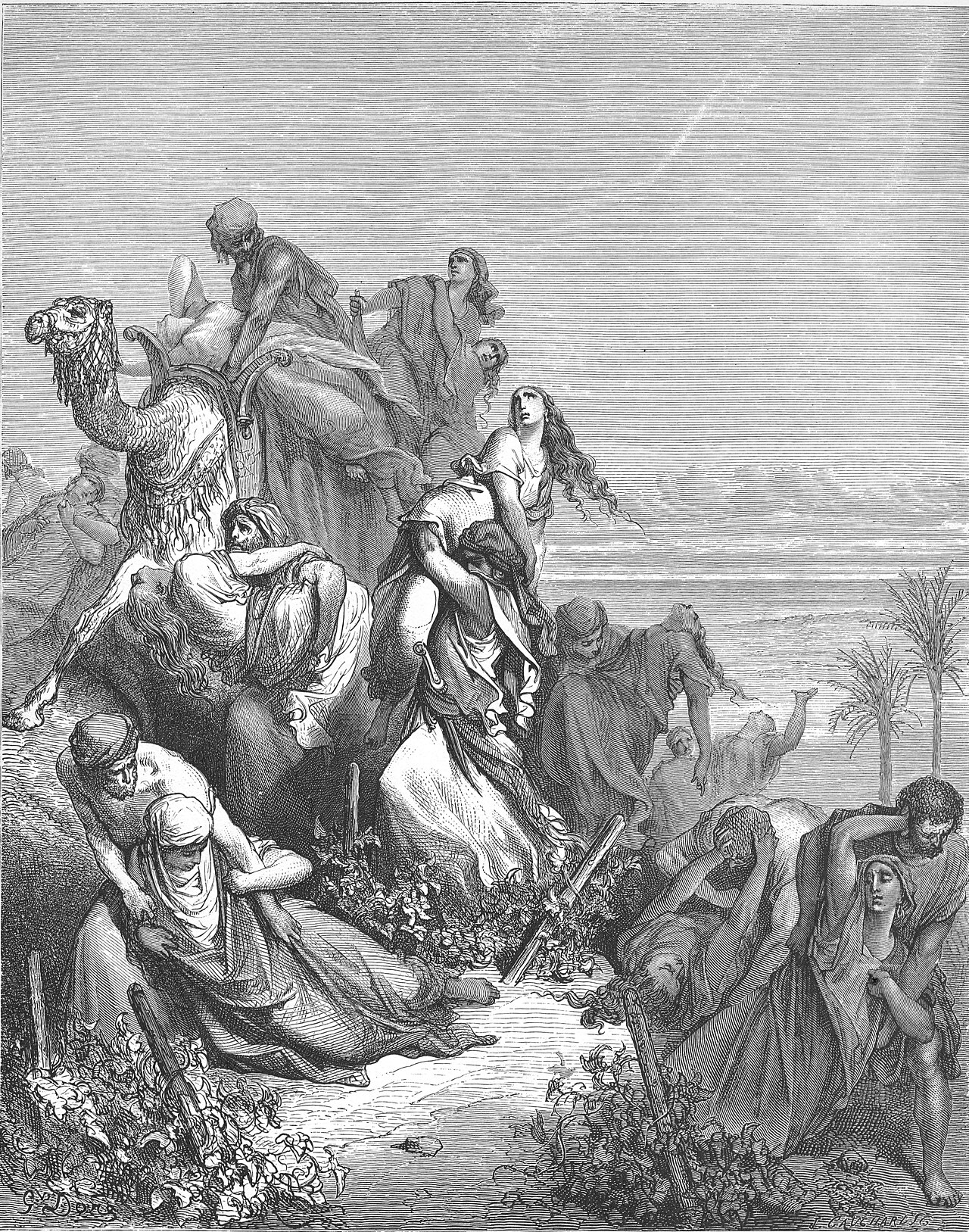
This page draws on Adam Clarke, Commentary on the Bible; Albert Barnes, Notes on the Old Testament; Ambrose of Milan, On the Duties of the Clergy; John Gill, Exposition of the Old Testament (1748-1763) and Matthew Henry, Commentary on the Whole Bible.